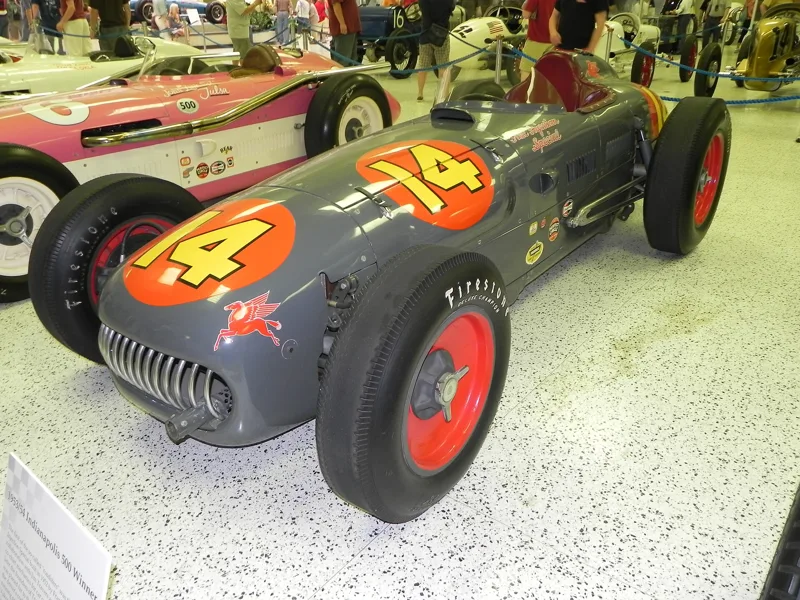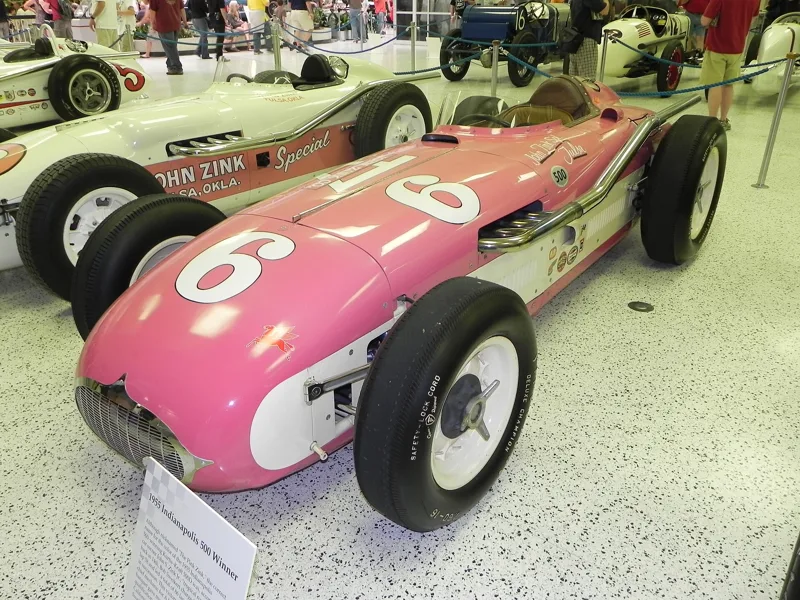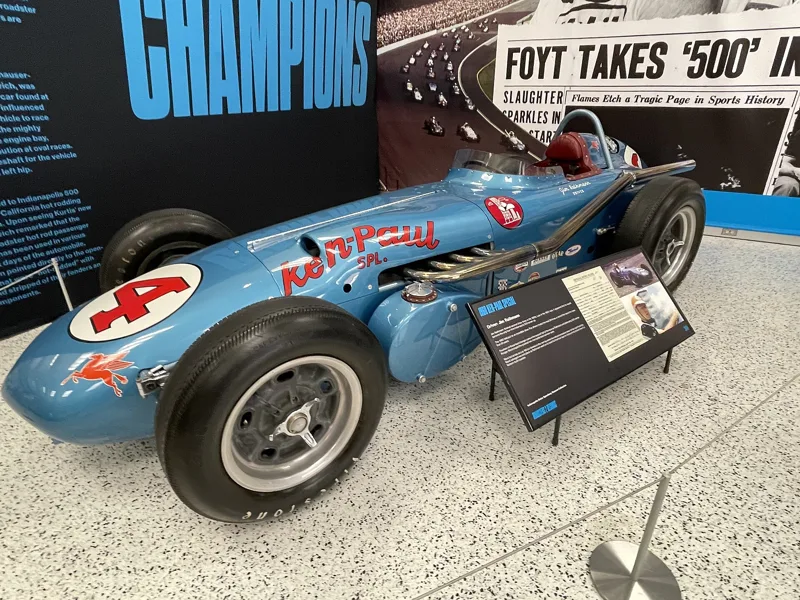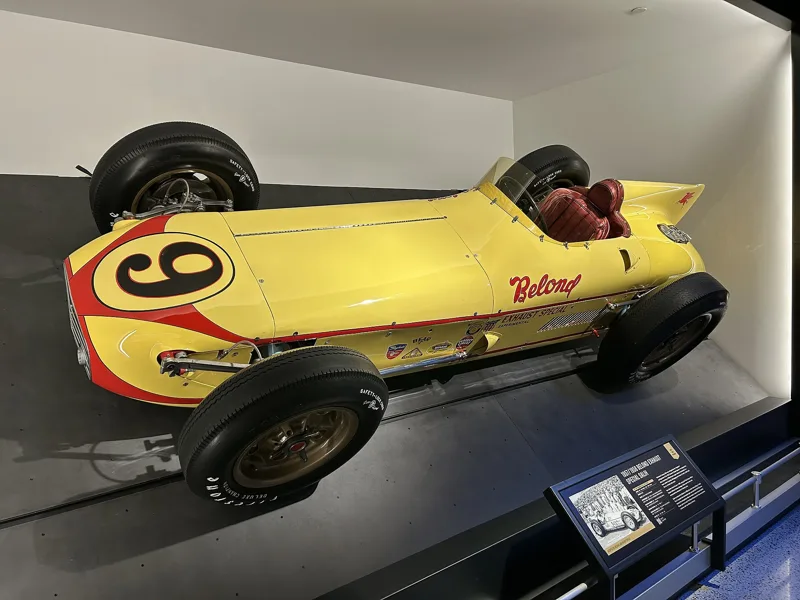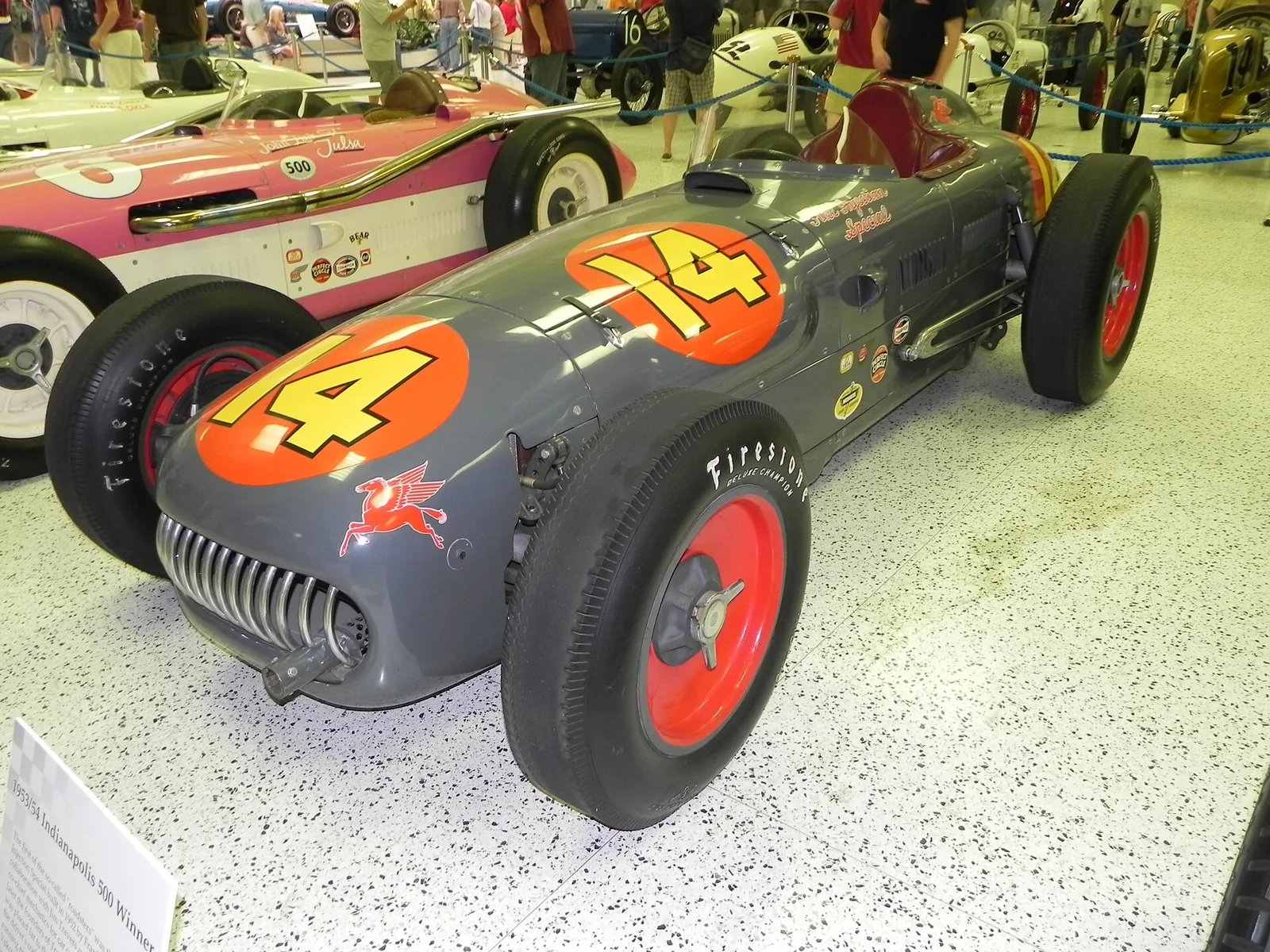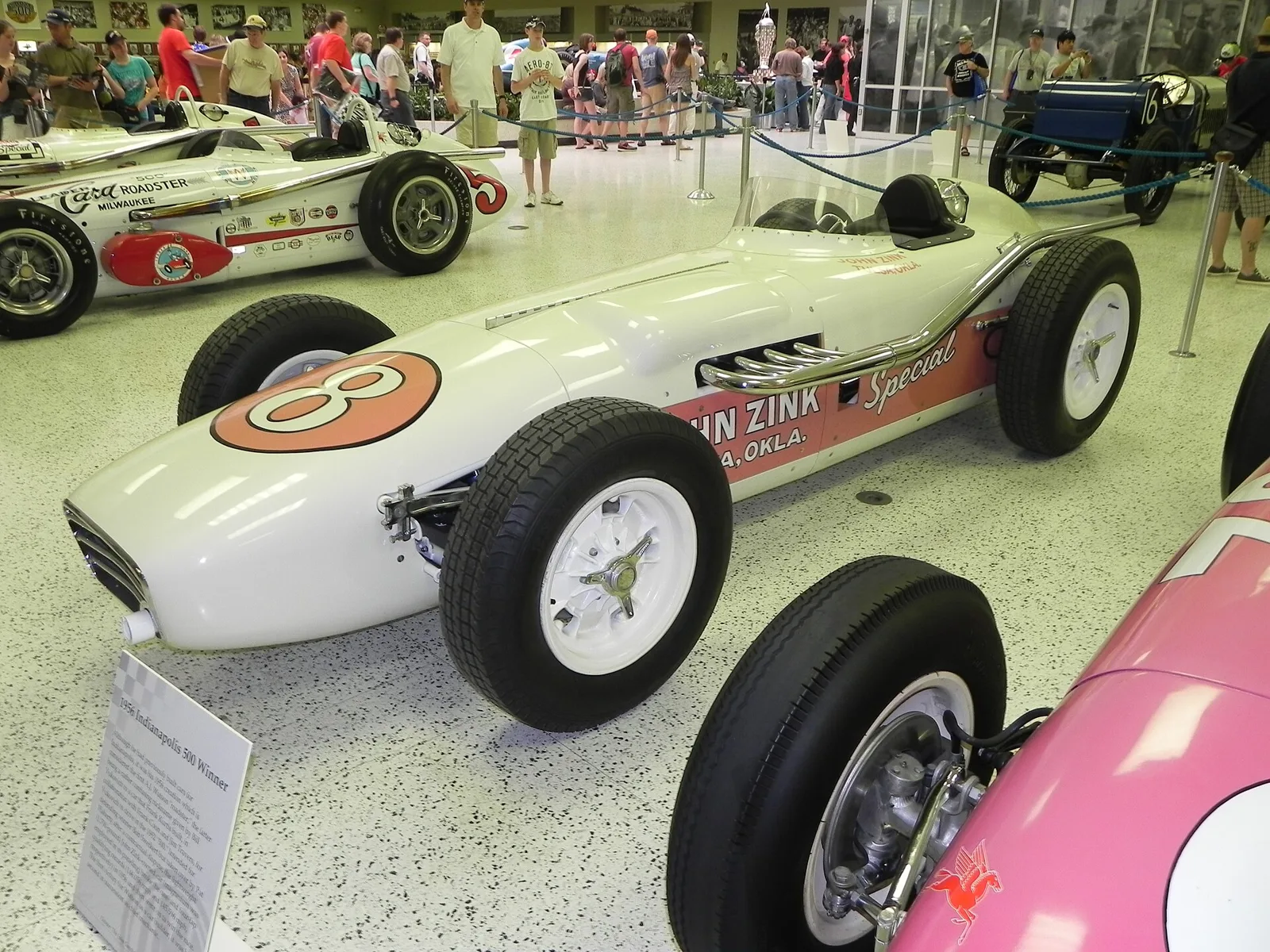
Floodwater, eleven yellow flags and a new asphalt surface shaped a race that Flaherty won by 20.45 seconds from Sam Hanks.
The 1956 Indianapolis 500 went to Pat Flaherty by 20.45 seconds from Sam Hanks, on a new asphalt surface after a week of flooding. It was the first race governed by USAC, and Flaherty's Watson roadster was the first of its make to win there.
Flaherty's John Zink-backed Watson roadster took the 1956 race by 20.45 seconds over Sam Hanks. The race was the first governed by the United States Auto Club, and it was run on an asphalt surface after a week of torrential rain. The race also saw a then-record eleven yellow caution periods.
Who won the 1956 Indianapolis 500?
Flaherty won the 40th International 500-Mile Sweepstakes on Wednesday, 30 May 1956. He led 127 laps and took the lead for good on lap 76, holding it through the long run of caution flags to the chequered flag.
Hanks was in his 12th attempt without a win, and he came home second, just 20.45 seconds adrift. He charged through the second half of the race, but the numerous cautions stopped him from closing the gap on Flaherty.
Don Freeland finished third and Johnnie Parsons fourth. Dick Rathmann completed all 200 laps and was placed fifth, although he crashed in turn one on his cool-down lap.
Floodwater, a record eleven yellow flags and a new surface made the 1956 race a test of patience.
Why is the 1956 race known as Cagle's Miracle?
Torrential rain pummelled the Speedway in the days before the race. The track was full of standing water, the access tunnels were flooded, and the infield became a muddy quagmire. The race was in doubt, and it seemed it might be postponed or cancelled.
Speedway superintendent Clarence Cagle organised a huge clean-up. Hundreds of thousands of gallons of water were pumped from the tunnels and the infield. Cagle and his crew kept at it for two days, some of them without sleep, so that the track was ready on race morning.
The effort gave the race its nickname. Veteran sportswriters described the afternoon as a series of sprint races between yellow lights, and the clean-up had been the first part of it.
What changed about the track in 1956?
The vast majority of the circuit had been paved in asphalt, leaving only a short stretch of about 600 yards of brick along the mainstretch. Speeds were expected to climb, and the qualifying records were expected to fall on the new surface.
The change followed a difficult year for the sport. The AAA had quit auto racing the previous August, following a string of accidents, among them the Le Mans disaster and Bill Vukovich's death at the 1955 race. The United States Auto Club took over the sanctioning.
How did Pole Day go?
Pole Day attracted a record crowd of 125,000 spectators. Flaherty claimed the pole, setting a one-lap record of 146.056 mph and a four-lap figure of 145.596 mph. The new surface had been expected to produce new records, and his qualifying runs delivered them. Ten drivers beat the 1954 track record.
Jim Rathmann and Pat O'Connor completed the front row. Two cars spun during the day, driven by Bob Christie and Jack Turner, but neither driver was hurt and both made the field.
Elisian's first two attempts were waved off, and he got in on a third try. Seventeen cars were in the field at the close of the day.
What happened in the rest of qualifying?
On Sunday 20 May only twelve cars made attempts, and the grid reached 29. Johnny Thomson was the fastest driver of the day at 145.549 mph, only 0.08 seconds slower than Flaherty's pole time, which was the second-fastest speed in the entire field.
Rain then washed out the Saturday of the second weekend. On the final day, Sunday 27 May, USAC had promised at least two hours of qualifying, and 18 cars lined up to make an attempt.
Only six cars got out on track, and five finished their runs. That brought the grid to 33 and bumped Eddie Sachs. Eddie Johnson was the last car out and completed his run in the rain.
Giuseppe Farina, a former world champion, had arrived with a Bardahl-Ferrari, but he could not get the car up to speed and never made a qualifying attempt.
Qualifying had lasted only 57 minutes before more rain arrived, and the 12 remaining cars were left waiting. USAC reopened qualifying at 8am on Monday for exactly 63 minutes, and Novi's chief mechanic, Jean Marcenac, threatened to pull the already-qualified Paul Russo entry as a protest.
Torrential rain then flooded the Speedway on Sunday night and into Monday, and the extra session was cancelled. On Carburetion Day, the Tuesday, the rain had stopped long enough for a 45-minute practice session, but parts of the facility were badly flooded.
Who missed the 1956 field?
Eddie Sachs was the first alternate, in car number 58. When qualifying ended, eleven drivers were still waiting in line and failed to make the field, including Marshall Teague, Eddie Russo, Mike Magill and Bill Cheesbourg.
Clarence Cagle oversaw the clean-up as track superintendent, and the work he and his crew did in the final days allowed the race to go ahead.
How did the race start?
Race day dawned sunny and the track was dry. Showers had fallen overnight, but they had stopped by the time the gates opened at 5am. Tony Hulman gave the start command at 10:56am, and the cars moved off behind the DeSoto pace car.
At the start Jim Rathmann got the jump from the middle of the front row. Pole winner Flaherty was second, and Pat O'Connor was third. O'Connor moved into second on the backstretch, with Tony Bettenhausen following, and Flaherty dropped to fourth.
Rathmann completed the first lap at a record 138.867 mph. On lap four O'Connor took the lead in turn three, and by lap 11 Paul Russo led in the Novi machine, with O'Connor second and Flaherty third.
Russo was quick from the outset, averaging 142.255 mph over the first 20 laps, a race record. He also set the fastest lap of the race on lap 19 at 144.416 mph.
What happened in the first half?
On lap 22 Russo blew a right rear tyre going into turn one. The car spun and hit the outside wall, but he was not seriously hurt. Pieces of the tyre reached the grandstands, where two spectators were lightly hurt.
The first yellow came out with O'Connor now in the lead. Under the caution Johnny Thomson lost control at the south end of the mainstretch, hit the inside pit wall and swerved into the path of other cars. A pit crew member suffered a broken leg, and the yellow stayed on for over 15 minutes to clear an oil spill.
The green came back on lap 31 with O'Connor leading, and Flaherty stayed close behind. After 40 laps the order was Flaherty, O'Connor, Parsons, Bettenhausen and Rathmann.
A spin by Ray Crawford at the north end of the mainstretch brought out the second caution. After a round of pit stops Parsons led, and Don Freeland moved into second before taking the lead when Parsons made his stop on lap 72.
Al Herman's car locked up and crashed near the start-finish line on lap 75, which brought out the third yellow. Tony Bettenhausen suffered a small fire in the pits, which was put out quickly. When the green returned on lap 88, Flaherty was back in front.
Why did so many tyres fail?
Tyre problems hit numerous drivers. Firestone officials believed the high track temperature was responsible. Lee Wallard, who was watching on the radio network, thought the drivers were racing too hard and wearing out their tyres.
Wallard suggested that some drivers would not pit for new tyres because they did not want to lose track position. Keith Andrews blew a right-front tyre, spun on the mainstretch and later dropped out with transmission failure.
Halfway through the race Flaherty led, with Sam Hanks second and Bob Sweikert third. Sweikert shredded a right-rear tyre on lap 130 and brushed the outside wall on the backstretch, but he limped back to the pits on the rim.
How did the race end?
At the 150-lap mark the order was Flaherty, Freeland and Hanks. Jimmy Daywalt crashed hard on lap 149, starting a small fire at the exit of turn two. The yellow stayed out, and Flaherty's lead was about 30 seconds.
Tony Bettenhausen blew a right-rear tyre and crashed in the south shortchute on lap 159. Jim Rathmann's car began smoking noticeably, and he pulled into the garage on lap 176 with engine failure due to low oil pressure.
Hanks began to charge on the green, cutting into Flaherty's lead to about 18 seconds, before Eddie Russo stalled on the track and brought out a two-minute yellow. With twenty laps to go, Flaherty led Hanks and Freeland, and his lead grew back to about 26 seconds.
O'Connor retired with magneto failure with 13 laps remaining, and in the last ten laps Hanks could not close the gap. Flaherty took the chequered flag by 20.45 seconds.
Results and class placings
| Position | Driver | Note |
|---|---|---|
| 1 | Pat Flaherty | Winner, 20.45 seconds clear |
| 2 | Sam Hanks | Second, in his 12th attempt |
| 3 | Don Freeland | Third |
| 4 | Johnnie Parsons | Fourth |
| 5 | Dick Rathmann | Fifth, crashed on his cool-down lap |
What made Flaherty's win stand out?
Flaherty won for the John Zink team, and it was the first Indianapolis 500 victory for the Watson roadster. He led 127 laps in total.
He was the last winner to race in a t-shirt rather than a fire-resistant suit. Every winner after him has worn a flame-retardant uniform. He also wore a green shamrock on his helmet, which broke the long-standing Indianapolis tradition against green.
Flaherty said that his throttle linkage broke just after he crossed the line, so he could not take the extra insurance laps that many drivers used to run in those days.
How did the race fit the world championship?
The 1956 race was round three of eight on the world championship. Few Grand Prix drivers took part, and Farina, the former world champion, was unable to qualify.
Flaherty earned 8 points towards the world championship. He skipped the other championship rounds yet still finished fifth in the final standings, the best result of any Indianapolis winner in the 11 years the race counted.
How was the race broadcast?
The IMS Radio Network carried the race live, with Sid Collins as chief announcer. The broadcast went on the air at 10:45am, fifteen minutes before the start, and over 280 affiliates carried it, with Armed Forces Radio also airing it.
It was the final broadcast from the old wooden Pagoda, which came down after the race. Senator William E. Jenner was among the booth visitors, and Lee Wallard, the 1951 winner, joined as guest commentator, and he visited the booth several times to offer colour commentary.
Only two turn reporters covered the race that year, one for the south turns and one for the north. From 1957 the crew would expand to a reporter in each of the four turns.