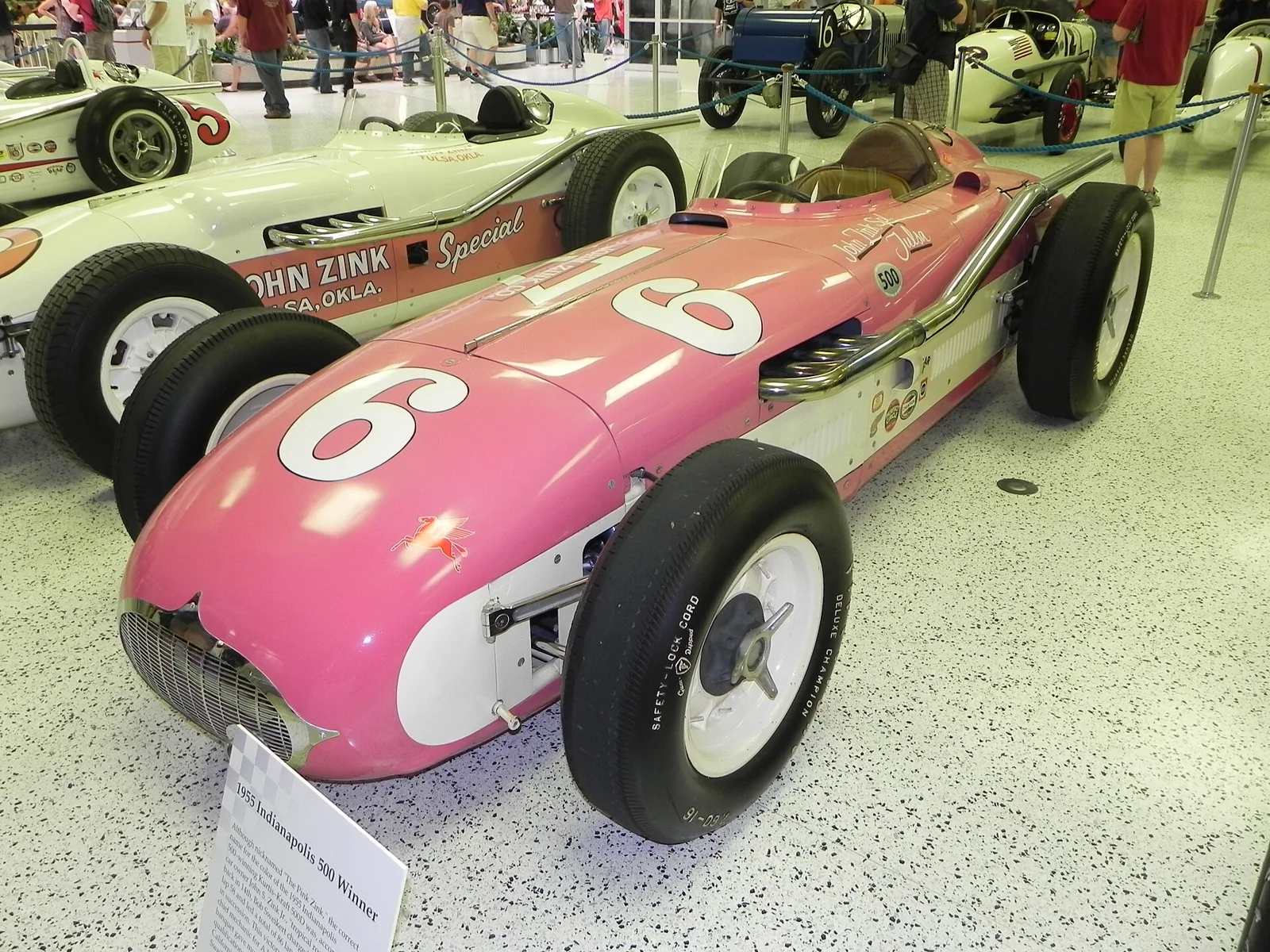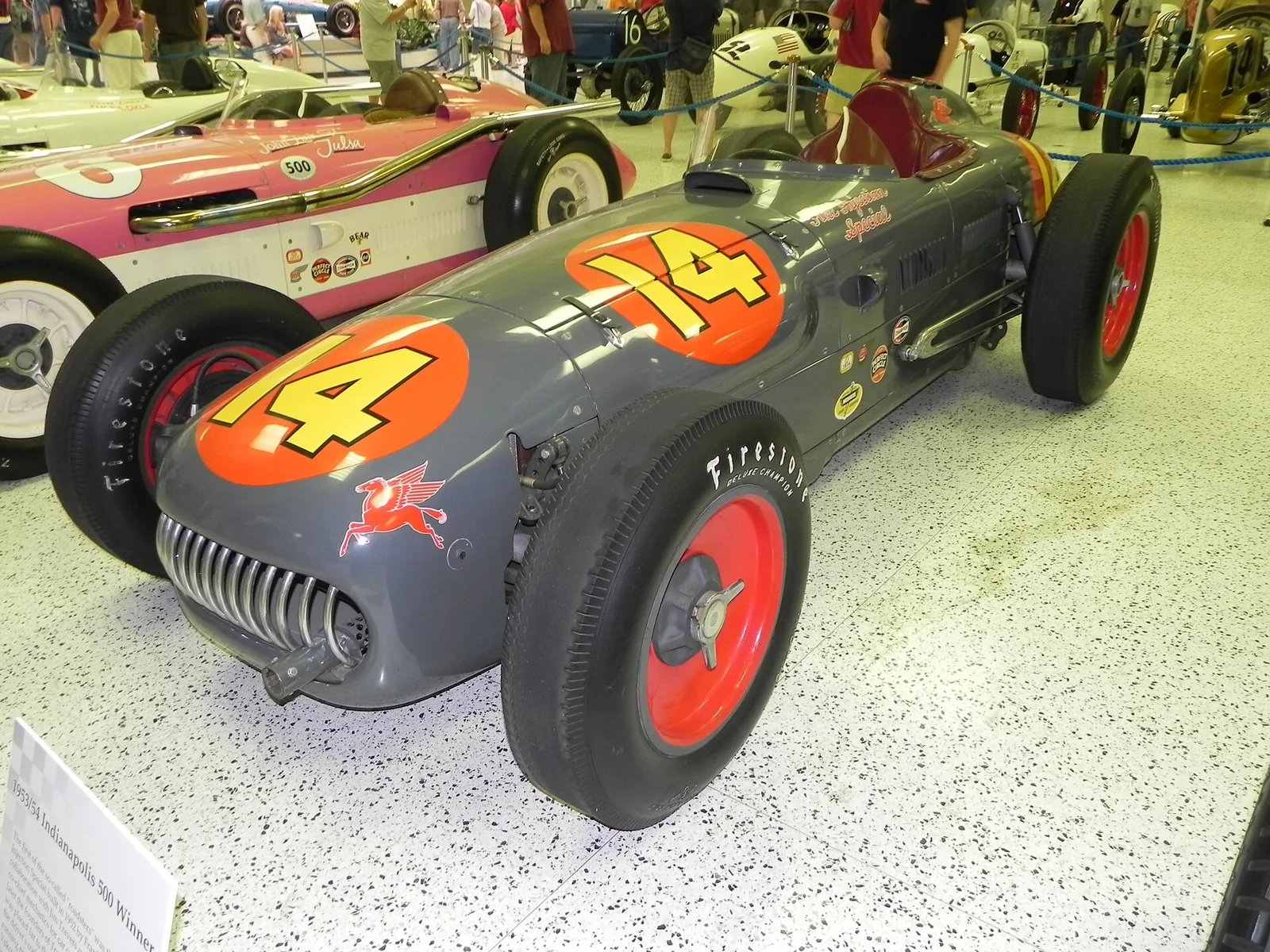
Bill Vukovich led 195 of 200 laps in searing heat, with only twelve cars still running at the finish of the 1953 race.
The 1953 Indianapolis 500 was held on 30 May 1953. Bill Vukovich led 195 of its 200 laps and won by about three laps from Art Cross, in temperatures in the high 90s Fahrenheit, a race remembered as the Hottest 500.
The 1953 Indianapolis 500 was the 37th International 500-Mile Sweepstakes and the second round of that year's World Championship of Drivers. Run on 30 May in extreme heat, it was won by Bill Vukovich, who led almost the whole race from pole and drove the full distance without a relief driver.
What was the 1953 race and where was it held?
The race was held at Indianapolis Motor Speedway on Saturday 30 May 1953 and formed part of the AAA National Championship. It was round two of nine in the 1953 World Championship of Drivers, a series that counted the Indianapolis event among its rounds from 1950 through 1960.
The race was sanctioned by AAA until 1955 and by USAC from 1956. In 1953 the United States had no Grand Prix of its own, and Indianapolis Motor Speedway's vice president and general manager, Theodore "Pop" Meyers, lobbied for the 500 to represent the country in the world championship.
Vukovich ran the entire 500 miles alone in the hottest race Indianapolis had seen.
How did time trials shape the starting grid?
Tragedy came before qualifying began. On Friday 15 May, sixteen-year race veteran Chet Miller died in a crash at turn one. Miller had held the one-lap and four-lap track records, both set in 1952, and he was killed when his car turned right and struck the outside wall.
Rain delayed the start of time trials on Sunday 17 May until about 2:20 p.m. Just twelve drivers got out on the circuit, and seven finished a qualifying run. Manny Ayulo was the first driver into the field at 136.384 mph. Bill Vukovich then took pole with a four-lap average of 138.392 mph. He completed his run as a downpour began and held on through a slide into turn one.
The third day, Saturday 23 May, was busy. With 66 cars in the paddock, the schedule was extended to 7 p.m., and 27 cars made a qualifying run. The grid reached 33 starters, and a single car missed out. Johnnie Parsons was the fastest of the day at 137.667 mph, but as a third-day qualifier he started eighth. Art Cross threw a rod during his first attempt, took over Jimmy Reece's car and qualified 12th.
Bump day followed on Sunday 24 May. Six cars were bumped, and Bill Holland, the 1949 winner, returned after a suspension and took over John Finch's machine. He ran 137.868 mph, the second fastest car in the field. Johnnie Tolan's 134.852 mph was too slow, and Eddie Johnson, who had been bumped, became the first alternate.
Why was it called the Hottest 500?
The race is often remembered as the Hottest 500 because of the conditions. Temperatures climbed into the high 90s Fahrenheit, and the track temperature was above 130 F (54 C). During the final practice on Tuesday 26 May, the ambient temperature had already reached 89 F (32 C), with the track at 113 F (45 C), and the hot weather was forecast to continue on race day.
The heat hit drivers and crews hard, and it reached spectators too. An infield doctor described the number of people needing treatment as beyond comprehension, and at least eleven members of the Purdue Band who had performed before the race were among them. Only twelve cars were still running at the finish, and many starters needed relief drivers during the race.
How did the race unfold?
The engines started at 10:54 a.m., and Vukovich took the lead from pole into turn one. Manny Ayulo and Tony Bettenhausen fought for second, while Vukovich pulled clear. On lap four Andy Linden crashed at turn three, and Jerry Hoyt spun onto the infield grass to avoid him, but Linden was not hurt and the yellow stayed out for about one lap.
Vukovich surrendered the lead at his first pit stop on lap 48, when Fred Agabashian led for a lap, followed by Jim Rathmann and then Sam Hanks. Vukovich returned to the front on lap 54, when Gene Hartley spun at turn four and brought out the second caution of the day.
The conditions were now taking a toll. Jimmy Davies arrived in the pits with no brakes and scraped the inside wall to slow down, and he eventually finished tenth several laps down. On lap 70 Carl Scarborough pulled into the pits, unwell from the heat and the fumes. A small fuel fire broke out, and after he climbed over the pit wall and collapsed onto a chair, Bob Scott took over his car. Scarborough was taken to the infield hospital with a recorded temperature of 104 F (40 C). Attempts at open-heart massage failed, and he died of what was reported as heat prostration.
At 80 laps Vukovich still led, with Art Cross second and Agabashian third. Don Freeland lost a wheel at turn one on lap 81 and spun onto the grass, Johnnie Parsons dropped out with a blown engine on lap 86, and Duane Carter retired with ignition trouble.
Agabashian was overcome by the heat and fumes during a stop on lap 104 and was replaced by Paul Russo. Jim Rathmann handed his car to Eddie Johnson on lap 113. Vukovich made his second stop on lap 112, and Hanks followed four laps later, leaving Vukovich with a 50-second lead.
Pat Flaherty hit the wall in the northchute on lap 118, and the yellow ran for six minutes and 50 seconds while the oil and fluids were cleaned up. Tony Bettenhausen came in after 115 laps signalling for a relief driver, collapsed from the heat, and was replaced by Chuck Stevenson. Rathmann later returned to the race, but a magneto failure ended his run.
By lap 150, which equals 375 miles, Vukovich had lapped the entire field. Ayulo was second and Hanks third, but Ayulo's engine failed after 184 laps. Hanks needed relief on lap 151, and Duane Carter took over, although a broken exhaust pipe cost time. Marshall Teague needed help getting out of his car on lap 169, and an oil leak finished the day for Cal Niday's car.
Did Vukovich drive the whole race alone?
Yes. Vukovich made his final pit stop on lap 171, when Henry Banks was standing by in his pit with a helmet on, ready to take over. Vukovich refused the help. He drank some water, poured some down the back of his shirt, and rejoined the race. Radio reporter Luke Walton labelled him the ironman of the race for that decision.
Vukovich ran the final 30 laps with a comfortable margin and won his first 500 by 3 minutes 30 seconds, about three laps, over Art Cross. Duane Carter, driving the car of Sam Hanks, came home third, and Paul Russo, in the car of Fred Agabashian, took fourth. Gene Hartley crashed while driving Tony Bettenhausen's car, and Duke Nalon also went off, and officials flagged the race once the first eight cars had finished.
What was the result and who finished where?
| Finish | Driver | Notes |
|---|---|---|
| 1st | Bill Vukovich | Pole, led 195 of 200 laps, drove solo |
| 2nd | Art Cross | Ran the full distance solo, about three laps down |
| 3rd | Duane Carter | Relief driver in the car of Sam Hanks |
| 4th | Paul Russo | Relief driver in the car of Fred Agabashian |
| 10th | Jimmy Davies | Lost his brakes at mid-race, several laps down |
Officials flagged the race once eight cars had finished, with four others still running, which made twelve cars on the track at the end.
How did the race count in the world championship?
Vukovich earned nine points toward the World Championship, eight for the win and one for fastest lap. He did not compete in any other championship round, yet still finished seventh in the final season standings. Regular Grand Prix competitors did not take part in the race, so the event drew little attention from the wider world championship field.
What were the race records and prize money?
Vukovich's pole was set at a four-lap average of 138.392 mph, and his fastest lead lap was 1:06.240. The purse for first place was $89,496, and the winner also received a pet dog and a year's supply of dog food.
The broadcast ran flag to flag on the Indianapolis Motor Speedway Radio Network. Rather than being produced by a single station, it pooled staff from five Indianapolis stations, anchored by Sid Collins, who left the booth for victory lane near the end. Charlie Brockman called the final laps, and the broadcast reached 135 stations in at least 35 states, along with the Armed Forces Network in Europe and Asia.
What did the 1953 race mean for Vukovich?
The win was the first of two consecutive Indianapolis 500 victories for Vukovich, and it came after he had nearly won the race a year earlier. His performance in the heat, leading from pole and running solo, defined the day for the crowd and for radio listeners across the country.