A Swatch idea that became a Mercedes-Benz microcar brand, lost heavily, was sold to Mercedes-Benz and then moved into a Geely venture in China.
Smart began in 1994 as a venture between the Swatch company and Daimler-Benz, and its Fortwo went on sale in October 1998. The brand was later absorbed into Mercedes-Benz, and in 2019 a Geely tie-up shifted its production base to China, where it now builds small electric vehicles.
Smart is a microcar marque founded in 1994 as a joint venture between the Swatch watch company and Daimler-Benz. It began with the Fortwo, a small two-seater that reached showrooms in October 1998, and it was later absorbed into Mercedes-Benz before a 2019 partnership with Geely moved its future production to China.
Where did the Smart idea come from?
The idea started with Nicolas Hayek, the chief executive of SMH, the company behind the Swatch brand. In late 1982 he began developing a new car that used the same manufacturing and personalisation methods that had popularised Swatch watches. He believed the car industry had ignored customers who wanted a small and stylish city car, and the concept was nicknamed the Swatchmobile.
Hayek's private firm, Hayek Engineering AG, took on the design work for SMH. The brief asked for two seats and a hybrid drivetrain. The name Smart was coined later by Manfred Gotta, a choice that reflected the brand's roots in Swatch.
A Swatch idea that became a Mercedes-Benz microcar, then a Geely venture built in China.
Why did Volkswagen and Daimler-Benz become involved?
Hayek preferred to cooperate with an established carmaker rather than compete with one, because that would also spare SMH the cost of building a dealer network. On 3 July 1991 he reached an agreement with Volkswagen to share development of the project.
That partnership did not last. By 1993 Ferdinand Piech had become Volkswagen's chief executive and moved to end the project, since Volkswagen was developing its own three-litre car. Hayek had expected this, and he had already approached other manufacturers. After being rebuffed by several companies, he reached an informal agreement with Daimler-Benz.
The partners went public on 4 March 1994, at an event in Stuttgart hosted by Mercedes-Benz. The two companies founded Micro Compact Car AG, or MCC, with 50 million Swiss francs of initial capital. SMH provided 49 per cent and Daimler-Benz the remaining 51 per cent. A head office was set up in Biel/Bienne, Switzerland, by the end of April 1994.
What was the name Smart based on?
The name Smart was an acronym that MCC had used internally, standing for Swatch, Mercedes and Art. Its origin was the Swatch Mercedes ART partnership at the heart of the venture, and the name was chosen in the end because it was neutral.
Nicolas Hayek had wanted the car to keep some trace of Swatch, with names such as Swatchmobile or Swatch Car floated. Daimler-Benz refused those names and pushed for a neutral one. The compromise was Smart, which kept the Swatch link in the acronym while sounding like a product of a major carmaker.
How did the Smart plant and supply chain work?
The co-directors of MCC were Johann Tomforde, a designer and engineer from Daimler-Benz, the financial administrator Christoph Baubin, and the marketing manager Hans Jurg Schar, who had worked on the original Swatch campaigns. The final plant site was announced on 20 December 1994 at Hambach in France. The factory soon picked up the nickname Smartville.
In 1995 Tomforde designed the assembly approach around modules. Under the scheme, outside firms built their own modules and fitted them on the line using their own staff. That reduced the cost to the parent companies and moved the financial and legal liabilities for those parts onto the suppliers.
Almost every part of the car came from outside suppliers. Seats came from Faurecia, interiors from VDO, chassis and door modules from Magna, door panels from Dynamit Nobel and suspension from Krupp. The arrangement also let MCC share development costs with its suppliers rather than funding the whole project itself.
Why was the Smart launch delayed?
MCC still needed more capital, and Daimler-Benz recapitalised the company to raise its share to 81 per cent by 1996. The assembly plant opened on 27 October 1997, with a ribbon-cutting by French President Jacques Chirac and German Chancellor Helmut Kohl. The new City-Coupe had been planned for March 1998.
Dynamic instability in the prototypes forced Daimler-Benz to postpone the launch until October 1998. Johann Tomforde was replaced as chief engineer by Gerhard Fritz, who lowered the centre of gravity, widened the track, stiffened the suspension and changed the steering. He also added ballast to the front to improve stability in emergency avoidance manoeuvres, including the Swedish moose test.
The car launched successfully in nine European countries in October 1998. Hayek had hoped for a hybrid drivetrain, but the production car used a relatively conventional gasoline engine, and his expectations were not met. Shortly afterwards Daimler-Benz bought out SMH's remaining stake.
What were the Fortwo and Forfour?
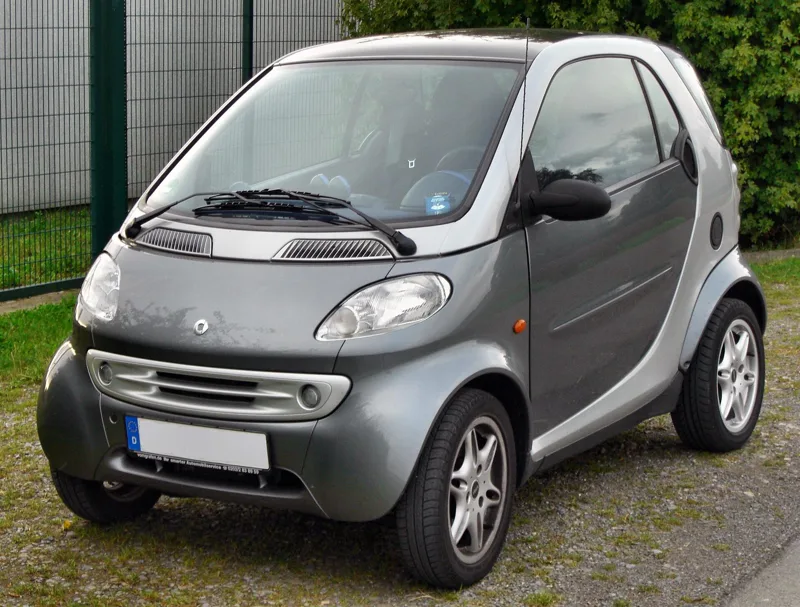
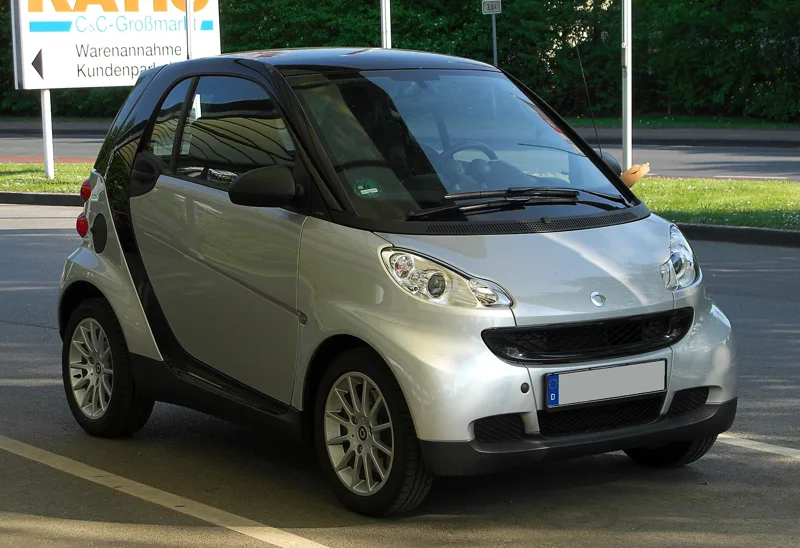
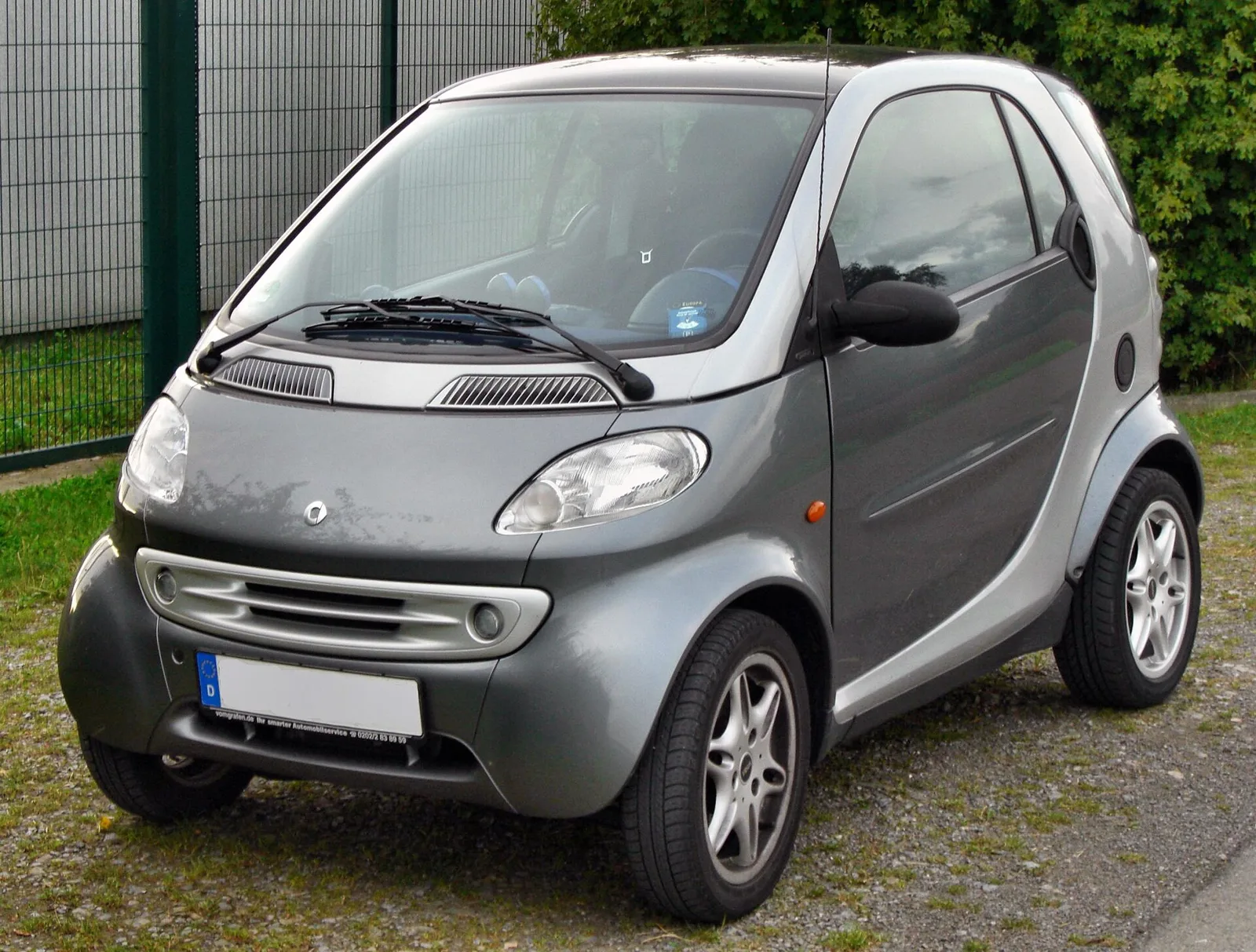
The Fortwo was the original City-Coupe, renamed to fit a new naming scheme when the range grew. It was a two-seat microcar, and it was the model that gave the brand its identity. The first Smart models were then followed by a rear-engine, rear-drive Roadster.
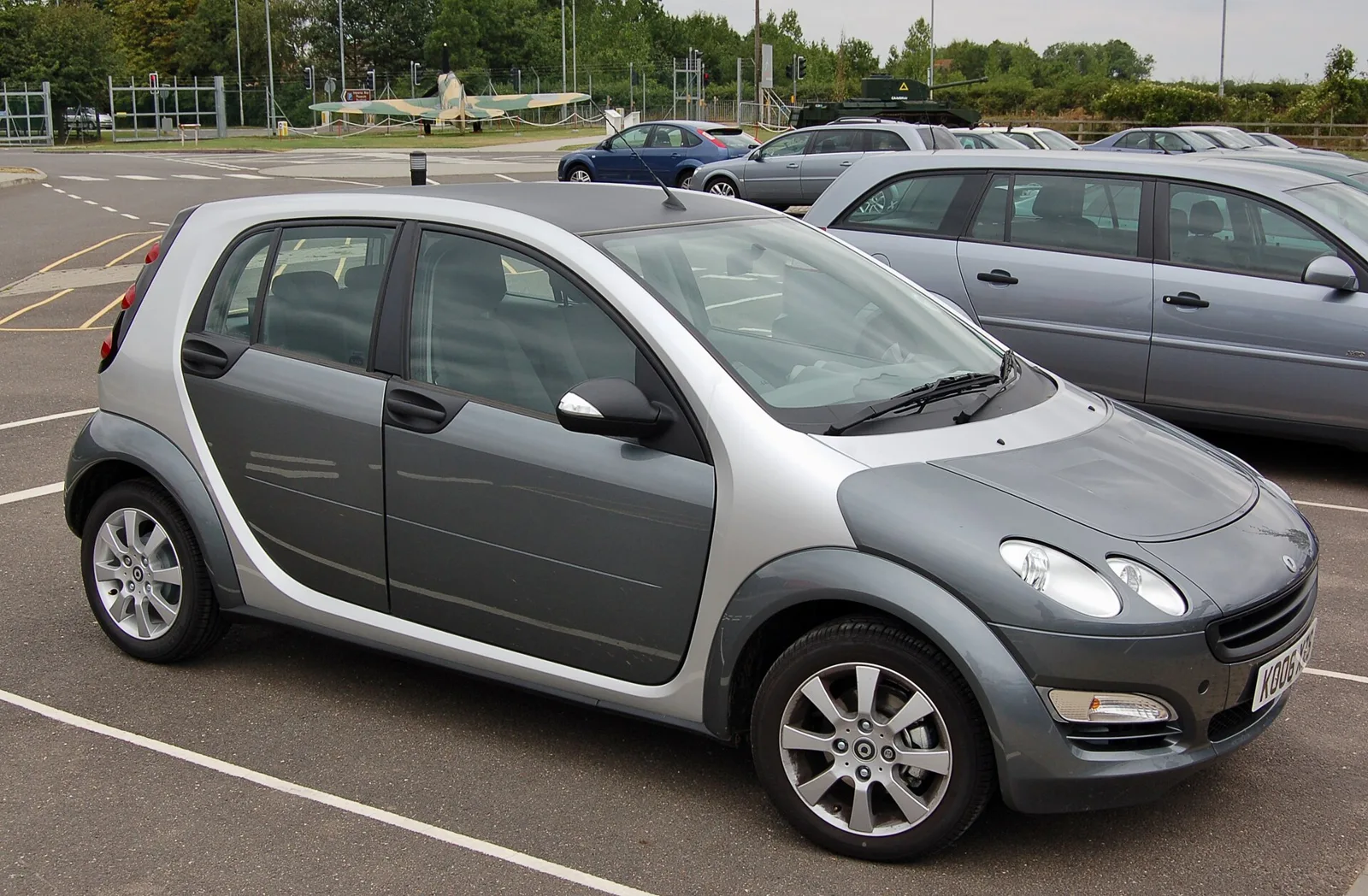
The model line also grew to include the Forfour, a four-door, four-seat supermini. The Forfour was built at the NedCar plant in the Netherlands. The Roadster was discontinued in 2005, and the Forfour's production ended once Daimler declined to buy a 50 per cent share in NedCar that year.
Why did Smart lose so much money?
Smart GmbH lost nearly four billion euros from 2003 to 2006, and the expansion did not raise profits. Plans were drawn up to make the company profitable and to integrate it with Daimler, which was then DaimlerChrysler.
A planned SUV called the Formore was cancelled at the eleventh hour in 2005, even as tooling was being installed in the assembly plant. The cancellation was blamed on unfavourable exchange rate swings and spending cuts driven by losses elsewhere in the group.
In 2006, after falling sales and heavy losses, Smart GmbH was liquidated and its operations were absorbed directly by DaimlerChrysler. Until April 2019, the brand sat within the Mercedes-Benz Cars division, offering the Fortwo coupe, the Fortwo convertible and the Forfour hatchback.
How did Smart move to Geely?
In 2019 Daimler announced a joint venture with Chinese automaker Geely. The deal was worth about $830m USD, and it involved a new plant in China to build a new generation of Smart-branded vehicles. The venture is headquartered in Ningbo, and its Smart Europe GmbH distribution arm is based in Stuttgart.
The first result of the partnership was Concept #1, unveiled at the Munich Motor Show in 2021. Built on Geely's SEA platform, the concept carried design details from existing Smart models, including a panoramic glass roof, frameless rear doors and a 12.8-inch (33 cm) touchscreen. The brand's production has since shifted towards small battery electric vehicles built in China.
Who led Smart?
Smart's leadership changed several times as the brand moved between owners. Andreas Renschler led the company from 1999 to 2004, followed by Ulrich Walker from 2005 to 2006. Annette Winkler held the role from 2010 to 2018, Katrin Adt from 2018 to 2019, and Tong Xiangbei has led the company since 2020.
The earlier figures behind the car matter as much as the managers. Nicolas Hayek brought the Swatch concept, Johann Tomforde shaped the original car, and Gerhard Fritz rebuilt its handling after the launch problems.
Which Smart concepts were shown?
Smart showed a steady run of concepts over the years. These included the Tridion 4 in 2001, the Crosstown and Formore in 2005, the Forspeed and Forvision in 2011, the For-Us and Forstars in 2012, and the Fourjoy in 2013. The Crossblade was a limited production of 2000 cars before it was discontinued.
More recently, the brand showed Concept #1 in 2021, Concept #5 in 2024 and Concept #2 in 2026. The later concepts reflected the move towards battery vehicles that the Geely partnership was built to produce.
How did Smart sell in Canada?
The Fortwo arrived in Canada in late 2004 and was sold through Mercedes-Benz dealers. Demand was strong at first, with waiting lists of up to six months in major cities in the spring of 2005. The car proved popular with commuters and small-car enthusiasts.
The strongest month ever recorded in Canada was April 2007, when more than 500 units were sold. The Canadian Fortwo cdi was a diesel, and the sales rebounded with the second generation. Canada ended Smart sales in 2019, when Daimler announced that the year would be the last for the country.
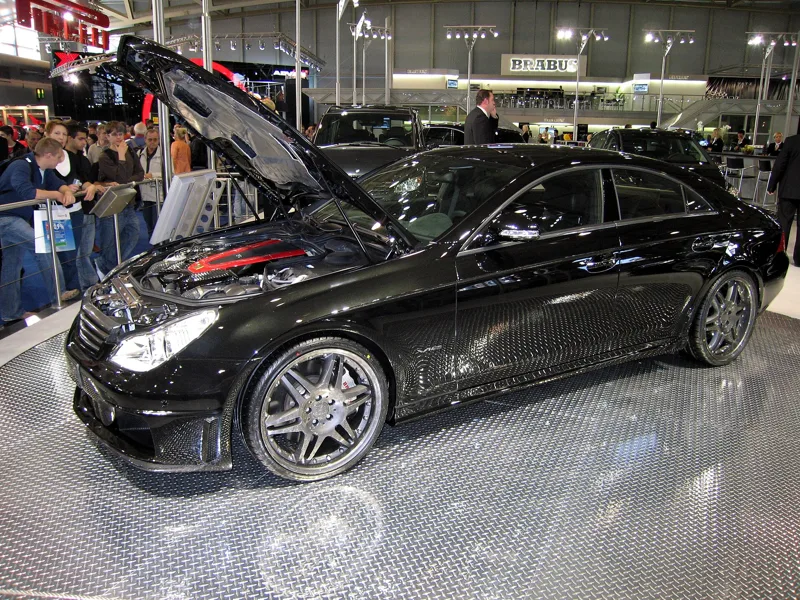
Canada also produced a special run of tailor-made cars. Brabus built at least 16 Tailor-Made cars to Canadian specification at its factory in Bottrop, Germany, starting from standard cars stripped to the shell and repainted and retrimmed to customers' tastes.
How did Smart fare in the United States?
Before 2008, Smart cars reached the United States only as grey-market imports, modified to meet American standards. In June 2006 DaimlerChrysler confirmed that Smart would launch officially in the first quarter of 2008, through a dealership group called Penske Automotive Group. The starting price for the gasoline Fortwo was around US$12,000.
Mercedes-Benz USA took over distribution, sales and marketing from Penske on 1 July 2011. The third-generation Fortwo coupe, the C453, arrived as a 2016 model in September 2015, and the cabrio followed in 2016. In February 2017 the company said that gasoline models would end after 2017, and the brand moved to an all-electric strategy from 2018.
The 10th anniversary electric Fortwo coupe edition was announced in January 2018 to mark a decade of US sales. Smart left the American market after the 2019 model year, citing slow sales and the high cost of homologating the Fortwo for the US.
How did Smart perform in Asia and Latin America?
In Japan, first-generation models with engines under 660 cc fitted the kei car class, and an official version called the Smart K was released for that market. In China, Smart appeared at the 2008 Beijing Auto Show, and pre-sales of the Fortwo began in October 2008.
In Latin America the car arrived in Mexico in 2003, Brazil in 2009 and Argentina in 2010. Brazil stopped selling the car in 2016, and Smart later announced plans to return there by 2026 with electric cars. Smart also returned to Australia in May 2024, after leaving the market in March 2015.
What did the safety tests show?
The Fortwo was a very small car with a short front crumple zone, and it had no rear seats, so the second generation was not tested for child occupants. The second generation earned 4 out of 5 stars in the Euro NCAP adult test and 2 out of 4 for pedestrian protection, while the original car received 3 out of 5 for adult occupants.
The engineering centred on a rigid structure called the Tridion Safety Cell, which the maker said would activate the crumple zones of a colliding vehicle. In an April 2009 offset crash test, the Fortwo went airborne and turned around 450 degrees, and the IIHS rated it Poor.
Did Smart compete in motorsport?
No motorsport record is listed for the Smart marque, so its story is one of road cars and business decisions rather than racing.
The UK hosts an annual Smart Festival at Mercedes-Benz World in Weybridge, near the historic Brooklands circuit, which was the world's first purpose-built motor racing track.
What are the Smart specifications?
Smart's core product was a very small two-seat city car. The table below sets out the main figures for the original and later generations, including engines, safety ratings and key financial milestones.
| Specification | Detail |
|---|---|
| Founded | 1994, Micro Compact Car AG |
| Initial capital | 50 million Swiss francs |
| Ownership at launch | SMH 49 per cent, Daimler-Benz 51 per cent |
| Plant | Hambach, France, opened 27 October 1997 |
| First model | Fortwo, released October 1998 |
| Forfour | Four-door, four-seat supermini |
| Original Fortwo engine | 799 cc cdi diesel in Europe |
| North American engine | 999 cc Mitsubishi-sourced petrol, 70 hp (52 kW) |
| Euro NCAP adult rating | Original 3 out of 5, second generation 4 out of 5 |
| Pedestrian rating | Second generation 2 out of 4 |
| Losses | Nearly four billion euros, 2003 to 2006 |
| Geely venture | About $830m USD, 2019 |
| Canadian peak | More than 500 units in April 2007 |