A longer, roomier Fortwo with Mitsubishi three-cylinder petrol engines, two facelifts and an electric Smart ED built on the same body.
The Smart Fortwo W451 was the second generation of the compact city car, built from 2007 to 2015. It grew 20 cm in length, lifted boot space to 206 litres and gained three-cylinder petrol engines from Mitsubishi, a change that drew criticism for consumption.
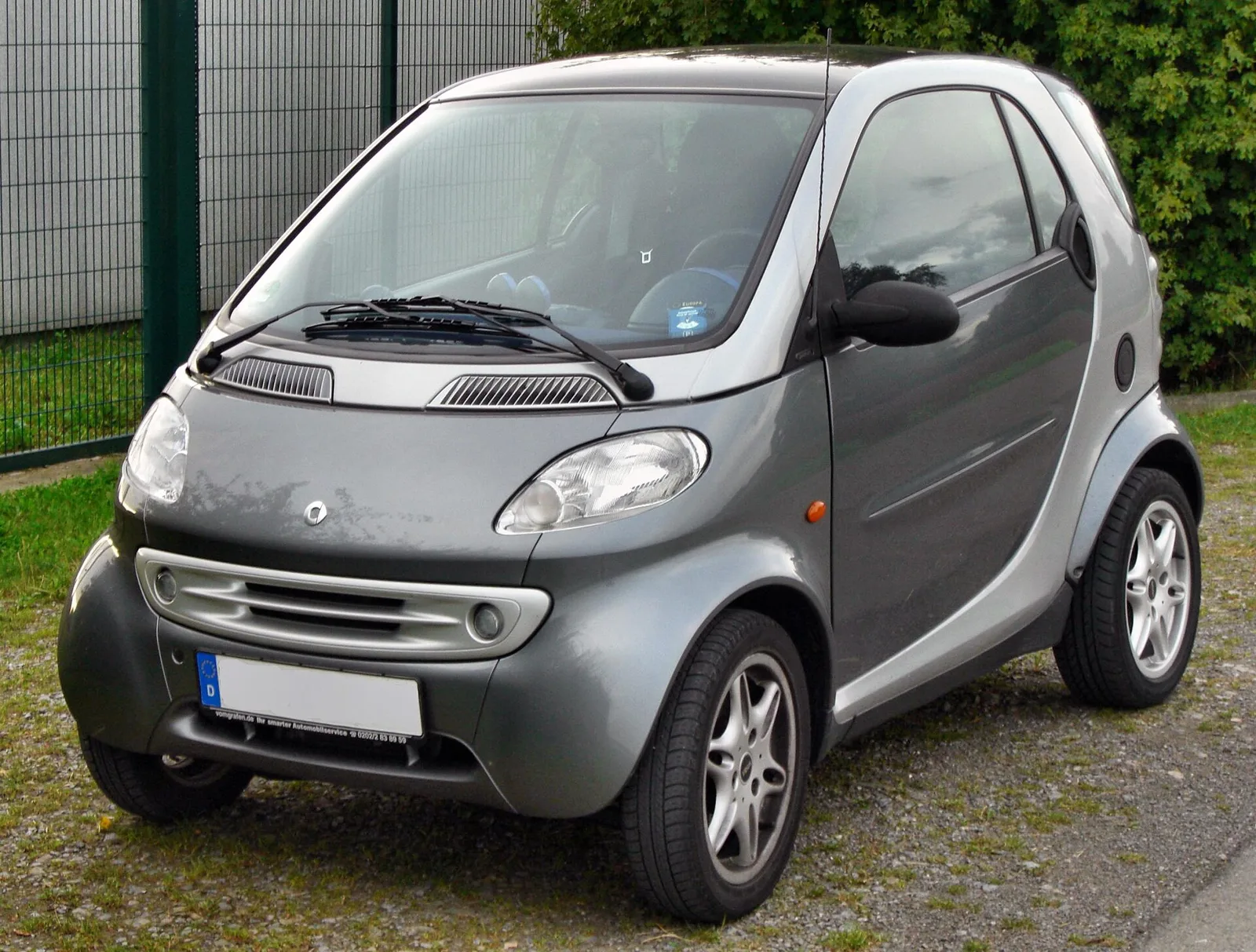
Smart's second Fortwo arrived in spring 2007 with the same basic recipe: a body taller than it was wide and under three metres long. The engineers set out to cure the first car's running noise, weak comfort and slow gear changes, and the result was a longer, roomier city car.
Why was the second Fortwo developed?
The second Fortwo was developed to fix the first car's running noise, reduced comfort and slow gear changes, and to improve road stability. The first model sold well, but its development costs were so far above what the list price could recover that it brought in thin profits.
The first Fortwo, project code W450, was no real flop, although the heavy losses were a real burden. Interior room was another target. The first series already offered good habitability for its size, and the team wanted to push it further.
A longer body that stayed under three metres, and an electric Smart that grew out of the same shell.
How did the W451 change its shape?
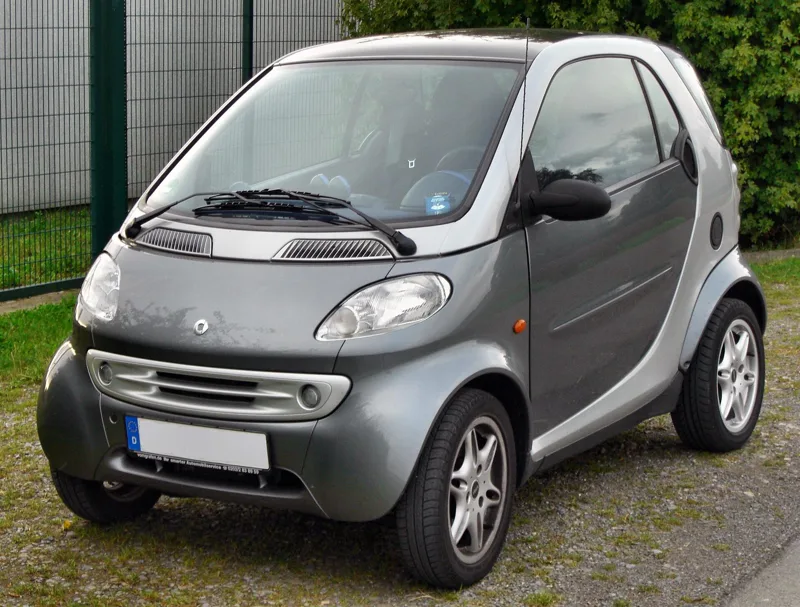
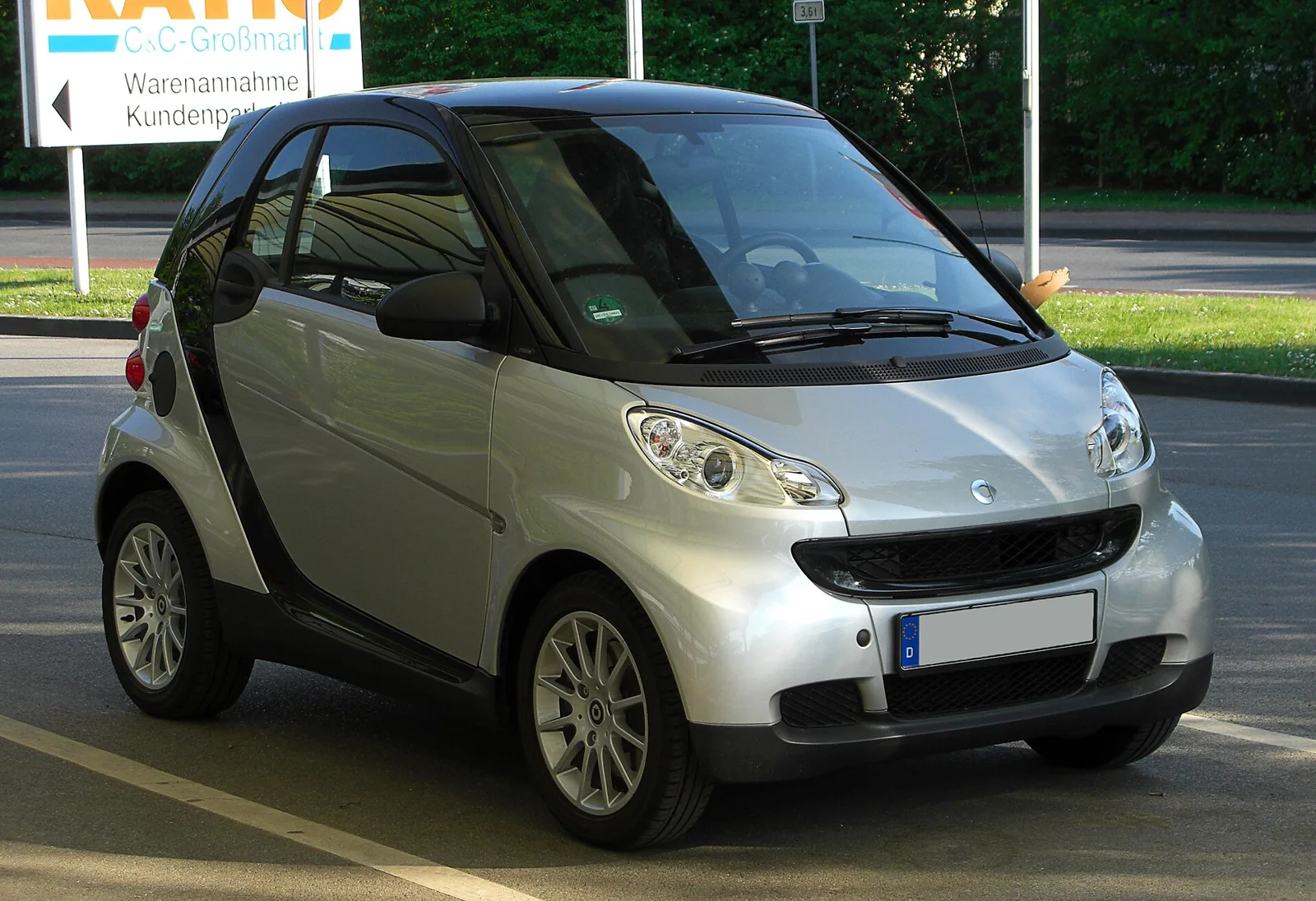
The W451 kept the tall, short body of the Fortwo but stretched it. The wheelbase grew by 6 cm and the overall length by 20 cm, reaching 2.70 m (8.9 ft) against 2.50 m (8.2 ft) before. It stayed well under three metres, which kept it easy to park in spaces other cars could not use.
The stretch let the designers reshape the doors and the front. The door handles now run horizontally, and the nose gained new light units with a more frowning look, plus a redrawn grille and a new bumper.
The side view kept the stylistic cues of the previous Fortwo, redrawn and brought up to date. At the rear the rear window is more steeply inclined, and each light cluster has two circular elements instead of three, as on the W450. The side air intake changed shape, and the high-strength tridion shell remains partly exposed to the air.
The cabin also gained room. The longer wheelbase and a redrawn, more linear dashboard gave both occupants more space, and boot capacity rose to 206 litres with both seats in use, up from 150.
Key specifications
| Specification | Figure |
|---|---|
| Length | 2.70 m (8.9 ft) |
| Wheelbase | 6 cm longer than the first series |
| Boot | 206 litres with both seats usable, up from 150 |
| Petrol engine | 999 cc (61.0 cu in), three-cylinder, Mitsubishi |
| Naturally aspirated output | 61 or 71 PS (60 or 70 hp) |
| Turbocharged output | 84 PS (83 hp) |
| Diesel | OM660, 799 cc (48.8 cu in), 45 PS (44 hp) |
| Gearbox | Five-speed sequential, automatic in Passion trim |
| Electric top speed | 100 km/h (62 mph) |
How well did the chassis and safety improve?
Refinement of the chassis gave limited results. The second Fortwo kept the tridion shell and the differentiated tyres front and rear, and its Euro NCAP rating beat the first series, but impact absorption was not greatly improved.
Most of the extra length went into the front and rear overhangs, to absorb frontal impacts and rear-end collisions better. Much of the damping of a crash, however, still fell to passive safety devices, above all the airbags.
Ride comfort gained no significant ground. On cobbled city streets the noise stays high, though lower than before, and the car was not made more comfortable overall by the suspension work.
How did the W451 handle on the road?
Stability, grip and steering response improved slightly, though they were far from ideal. Steering remained poorly communicative because it is too geared down, so the car gave the driver little feedback through the wheel.
The ESP system does what it can on poorer surfaces, while the ABS is calibrated gently so that it does not upset the set-up further. To partly make up for these drawbacks, the W451 kept the differentiated tyres between front and rear axles.
Which engines did the W451 use?
The new petrol engines were still three-cylinder, but Mitsubishi now built them instead of Mercedes-Benz. Mitsubishi was then still part of the DaimlerChrysler group. All were 999 cc, and they came naturally aspirated or with a turbocharger.
Naturally aspirated versions produced 61 or 71 PS (60 or 70 hp), and the turbocharged version reached 84 PS (83 hp). The public criticised these petrol units as less frugal than the earlier Mercedes-Benz engines, a point that drew public criticism.
The diesel was the classic three-cylinder OM660 of 799 cc (48.8 cu in), carried over from the first series. Output rose from 41 PS (40 hp) to 45 PS (44 hp) as delivery was improved.
The gearbox was still a sequential unit, but now with five ratios, and the richest trim, still called Passion, offered an automatic mode. Shift times were shorter.
Production, Start and Stop, and the iQ rival
Production restarted at Hambach in northern France, in the same trims and body configurations. In May 2008 the naturally aspirated one-litre engine received Start and Stop, and those cars took the name Fortwo mhd, where mhd stands for micro hybrid drive. A few years later the term micro-hybrid was also used for the e-HDi engines made by the PSA group.
Until 2008 the Fortwo had practically no rivals. That year Toyota launched the iQ, a 2.99 m car, almost 30 cm longer than the Fortwo. The iQ could rival it fully, especially in its 1-litre version with 68 PS (67 hp), although it had only makeshift seats at the back.
What did the 2010 and 2012 facelifts change?
The 2010 facelift mainly reworked the interior, with new upholstery and some redrawn details, and the body colour range grew from six to seven shades. The 2012 facelift, shown at Geneva, was more marked on the outside, with more aggressive bumpers, a new grille and LED daytime running lights.
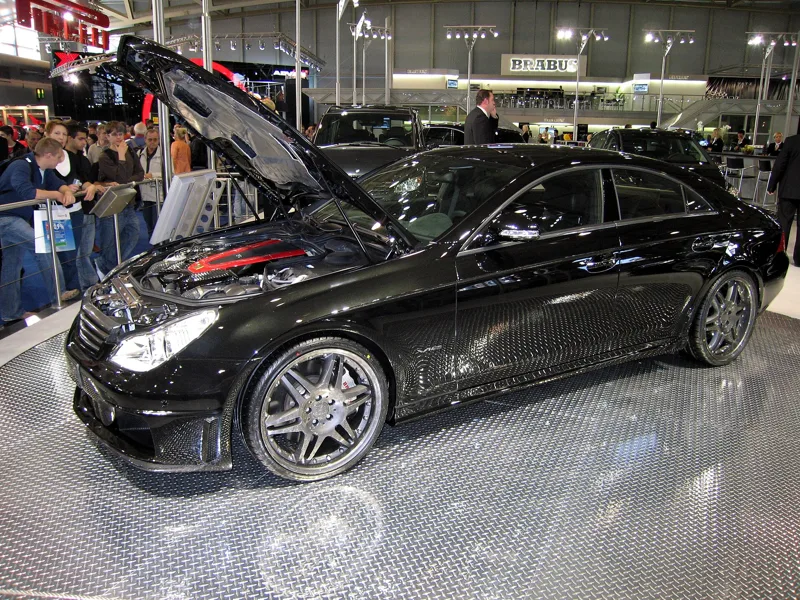
In July 2009 the 0.8-litre CDI diesel went from 45 PS (44 hp) to 54 PS (53 hp), with consumption unchanged and polluting emissions slightly lower. The 2010 engine updates aimed only at consumption and emissions, and the Brabus version rose from 98 to 102 PS (97 to 101 hp).
The 2012 grille was taken from the new electric Smart ED shown on the same occasion, and new side skirts were added. The colour range and fabrics were updated again. Sales were extended to Indonesia in 2010.
When did the W451 leave production?
The closed-body W451 was retired in the second half of 2014, when the third series arrived. The cabriolet stayed in the price list for almost all of the following year, and its production ended in autumn 2015, with the model leaving the lists at the end of that year.
Reports in 2012 said work on the third generation of the Fortwo was already well advanced.
How did the electric Smart ED develop?
The electric Fortwo began with the first-generation electric Smart, built by Zytek in 2007 on the W450 basis. A second generation arrived in 2009, produced directly at Hambach, with a Tesla Motors electric motor and batteries of 14 to 16.5 kWh. It offered 27 PS (27 hp), with 40 PS (39 hp) of peak power for two minutes, a top speed of 100 km/h (62 mph) and a range of 135 km.
The car was offered first through rental contracts and tests in some large German cities. Of the 300 cars first built, 100 went to Berlin. In 2010, 1,500 more were built for tests on the roads of other big European cities, among them Rome, Milan, Pisa, Paris, Madrid, Zurich and London.
Another 250 went to large cities in the United States and Canada late in 2010, and tests were carried out in some Asian cities in 2011.
At Geneva in 2012 the car known as the third generation of the Smart ED appeared, though it was still based on the second-series Fortwo. It had a 17.6 kWh battery for a range of 140 km, a 74 PS (73 hp) motor and a top speed of 120 km/h (75 mph). Brabus also showed a high-performance variant there. Its arrival on the road was due only at the end of the summer, in 30 cities around the world.