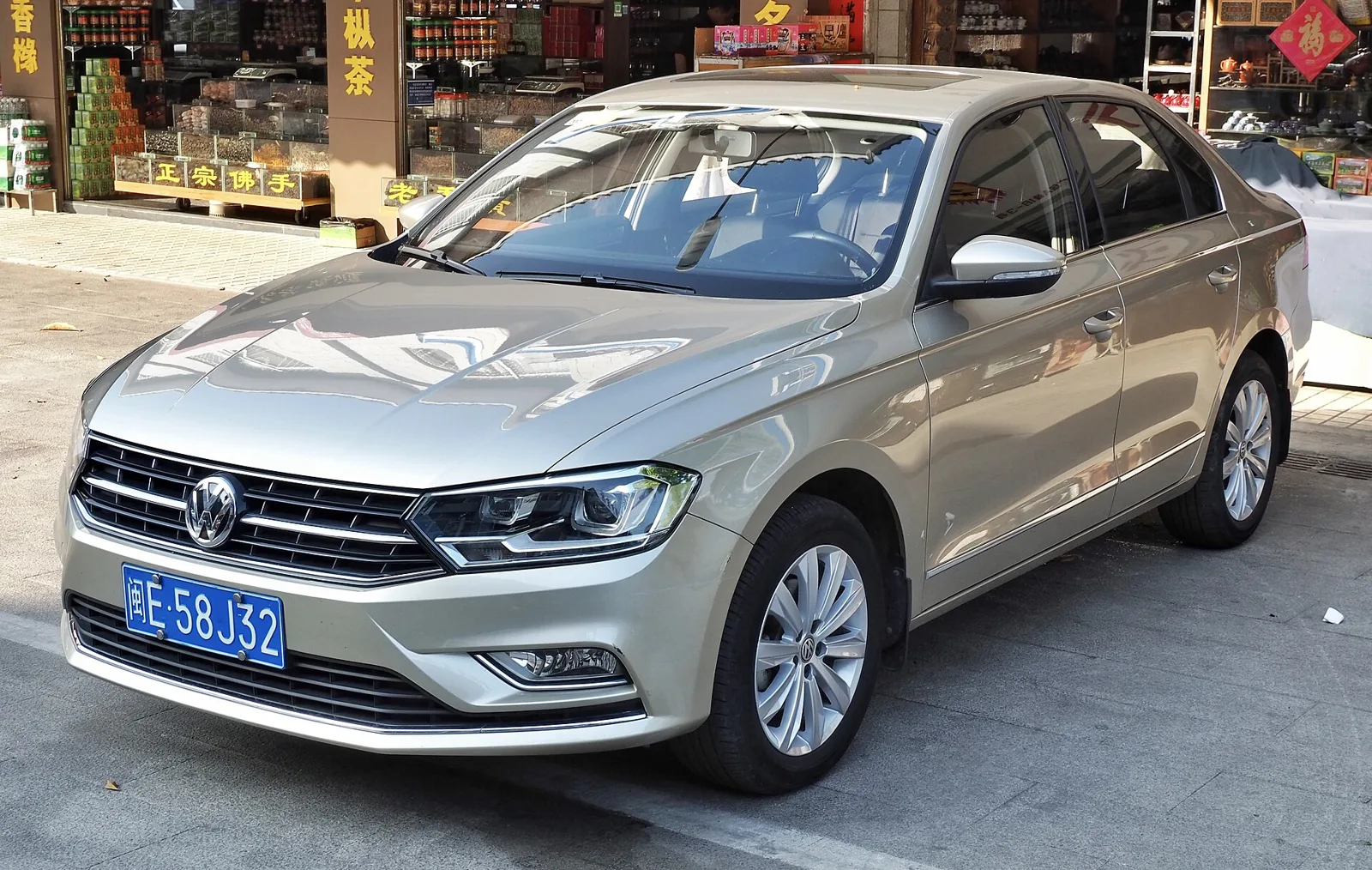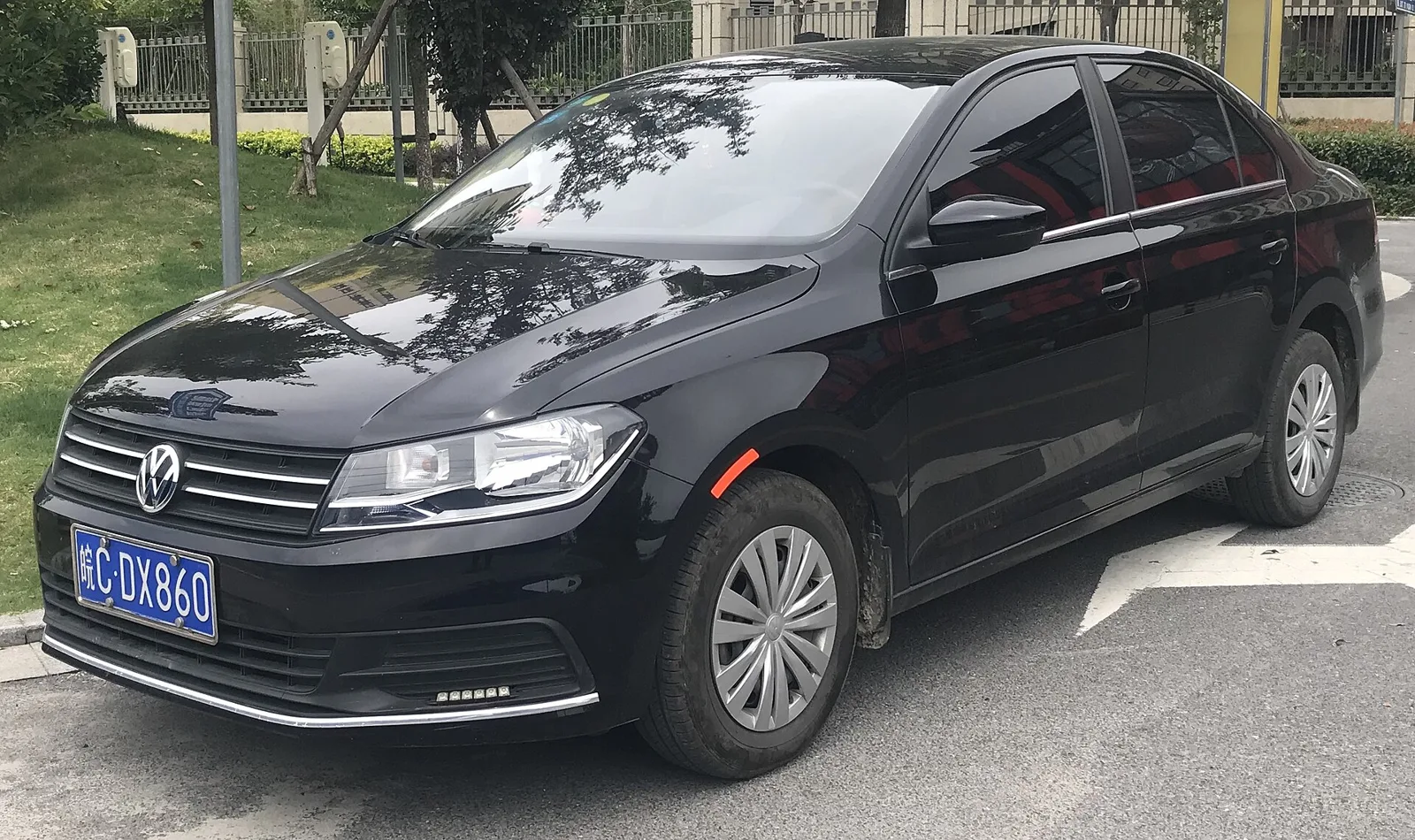
A Passat-based sedan that Europe renamed in 1985 became a taxi and police staple in Shanghai, then two joint ventures built the Bora and Lavida on its success.
The Santana, built in China from 1983 by the Shanghai Volkswagen joint venture, reached 3,213,710 units by May 2009 and made Volkswagen a mass-market name there. The Bora from FAW-Volkswagen and the Lavida from Shanghai Volkswagen then extended that position with locally developed compact sedans.
By May 2009 Shanghai Volkswagen had built 3,213,710 Santanas since the first kits arrived in 1983. Europe, which had created the car, dropped the Santana name in 1985 and produced only 198,505 of them in all.
That one sedan began Volkswagen's story in China, and two later nameplates carried it forward: the Bora from FAW-Volkswagen and the Lavida from Shanghai Volkswagen. Together they trace how a German design became a Chinese taxi staple, then a locally designed family car, and finally a pair of rival compact sedans from two joint ventures.
The VW Santana in China: from knock-down kits to taxi rank
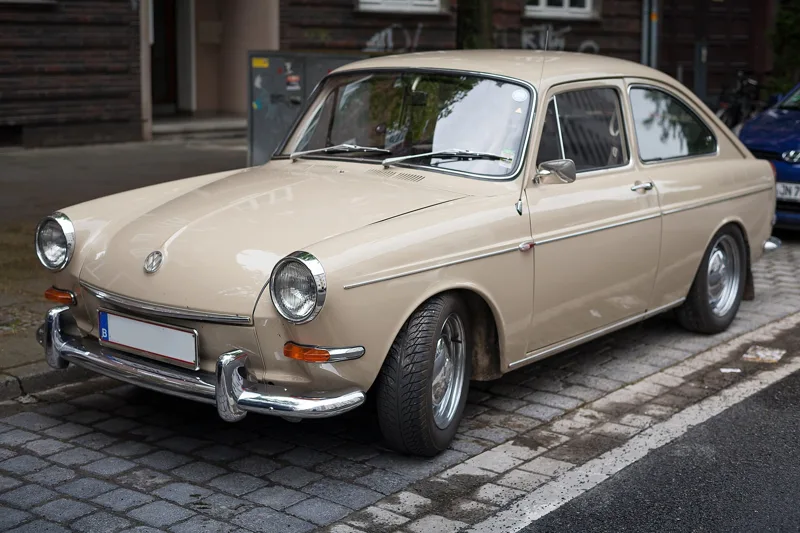
In 1981 the Santana appeared in Europe as a four-door saloon built on the second-generation Passat, known as the B2. The name came from the Santa Ana winds. Volkswagen wanted it positioned above the Passat, with better equipment and interior materials, but it worried about taking sales from the Audi 80, and the two cars shared a sales channel. Sales fell short of expectations. From January 1985 the car was sold as a Passat notchback in Europe, except in Spain.
China was another story. The Shanghai Tractor Automobile Corporation, predecessor of SAIC Motor, had been trial-building the Santana on a small scale since 1982. The first 100 cars came from knock-down kits delivered from Germany, and a Shanghai Auto team assembled the first one in April 1983. In October 1984 Volkswagen, the Shanghai company, the China National Automotive Industry Corporation and the Bank of China formed the Shanghai Volkswagen Automotive joint venture.
Production began in September 1985, and a month on the Santana's first assembly line started up. By September 1986 the 10,000th Chinese-built car was finished. The car and the venture are described as the groundwork for China's mass motorisation.
Localisation: from six percent to 89 percent
The drive to localise production became the impetus for the Chinese parts industry. In 1986 less than six percent of the parts in a Chinese Santana were made in China. By 1995 the local content figure had climbed to 89 percent.
The first cars were simple. A 1.6-litre petrol engine and a four-speed manual gearbox were standard, with a 1.8-litre unit following in 1987 and a Variant station wagon in April 1992. The Santana became a common taxicab from 1987 onwards, and police and other government services used it as well. Later updates brought Bosch electronic fuel injection, a five-speed manual, a third brake light, a hydraulic clutch, radios that played MP3 and CD, and ABS with electronic brake distribution.
The Santana sold 3,213,710 cars in China by May 2009, against 198,505 in Europe.
Santana generations in China: 2000, 3000, Vista and the new Santana
Volkswagen began developing the second generation, the Santana 2000, in 1991 with help from Volkswagen do Brasil, and launched in 1994. It reached mass production in April 1995, riding on a longer wheelbase than the Brazilian car and with rear doors.
On 2 March 2004 the joint venture launched a heavily facelifted version, the Santana 3000, which was the first design its own Shanghai designers had completed. It added optional ABS, an electronic differential, a multi-function display and a sunroof from the German firm Webasto. A 2.0-litre engine came in June 2006.
The Santana Vista arrived on 6 January 2008 in Zhijun passenger and Changda taxi forms, with new front and rear styling and minor chassis changes. In May 2011 the German-designed original was still on sale beside the Vista, and both found favour with taxi firms, police forces and private buyers alike. A 1.6-litre Vista (1,595 cc, 70 kW or 95 PS) was added at the bottom of the range.
Shanghai Volkswagen nonetheless decided to discontinue the Santana in 2012, though a Santana sedan and a Gran Santana hatchback stayed in production until 2022. The last original car was assembled on 15 January 2013. The Vista taxi left service in October 2018, replaced by 100 electric cabs for Shanghai's taxi fleet and by the Volkswagen Touran, which offered passengers more comfort.
The 2012 Santana
The all-new Santana was introduced in Wolfsburg on 29 October 2012 as a subcompact B-segment car built for Chinese demand. It is made in Anting and Urumqi on the Volkswagen Group A05+ platform, which it shares with the New Jetta, another Chinese-built Volkswagen. Production started in December 2012. A hatchback called the Gran Santana went on sale after a facelift from June 2015, and the Cross Santana followed a year later.
The Philippines received the Santana in May 2018, alongside the Tiguan, Lavida and Lamando, under the ASEAN-China Free Trade Agreement. Stock there was still sold until September 2025, when the distribution agreement between AC Industrials and the Volkswagen Group ended. In China the Santana's role passed to the Lavida XR, launched on 7 June 2023 and based on the Virtus.
The Santana beyond China: Nissan in Japan and a long run in Brazil
China was not the only place the car travelled. Nissan's then president, Takashi Ishihara, wanted a full partnership with Volkswagen and saw building the Santana for Japan as a stepping stone. Talks began in 1981, and by February 1984 Nissan was assembling knock-down kits at its Zama plant in Kanagawa, giving the car the internal code M30. It cost far less than an imported Volkswagen.
The Japanese car carried several local changes. It had a right-hand-drive wiper layout and, to stay under a Japanese tax on cars wider than 1690 mm, it was 5 mm narrower than its German counterpart. At launch there were three engines: a 100 PS (74 kW) 1,781 cc four, a 110 PS (81 kW) 1,994 cc five and a 72 PS (53 kW) 1,588 cc turbodiesel. A DOHC version of the two-litre five with 140 PS (103 kW) arrived with the 1987 facelift.
Sales never matched the plan. Nissan aimed for 4,000 to 5,000 a month and reached only about 50,000 in total, so it ended production in October 1989 and sold off stock until May 1990. It then sold the third-generation Passat through its dealers instead, until Volkswagen began cooperating with Toyota in 1991 and the Nissan dealer sales stopped.
In Brazil the story ran longer. Production began in June 1984, first as a four-door and a two-door sedan, with the Santana Quantum station wagon added in July 1985 and a two-door coupe sold only there. The engine was a 1.8-litre EA827 that ran on ethanol or petrol, with a 2.0-litre option from May 1988. In 1991, under the AutoLatina joint venture with Ford, Volkswagen do Brasil kept the Passat B2 shape rather than adopting the newer B3. The updated car was also sold as the Ford Versailles in Brazil and the Ford Galaxy in Argentina, and ABS brakes and catalytic converters appeared that year, both firsts for the Brazilian car industry. The Santana was retired in June 2006 after 22 years and 548,494 units.
Santana output in China against Europe, Brazil and Japan
| Market | Production period | Output | Notes |
|---|---|---|---|
| Europe | 1981 to 1984 | 198,505 | 174,900 petrol, 23,600 diesel; sold as a Passat notchback from 1985 except in Spain |
| Brazil | 1984 to 2006 | 548,494 | Also sold as Ford Versailles and Ford Galaxy under AutoLatina |
| Japan (Nissan) | 1984 to 1989 | About 50,000 sold in total | Sales had been aimed at 4,000 to 5,000 a month |
| China | 1983 onwards | 3,213,710 by May 2009 | Count includes kit assembly from 1983; last original car built on 15 January 2013 |
The Volkswagen Bora in China: FAW-Volkswagen's compact
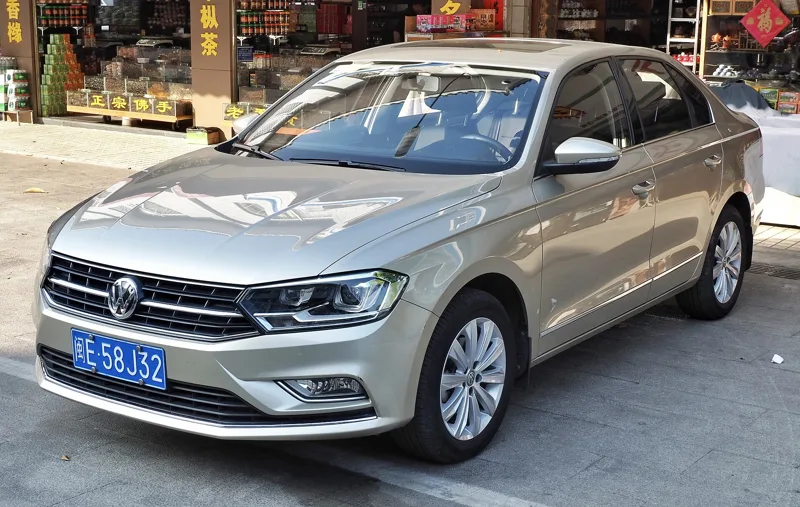
The Bora is made by FAW-Volkswagen and has been on sale in China since 2001. It started as a rebadged fourth-generation Jetta, the Jetta in North America and the Bora in other markets, and its Chinese run carried on with heavy facelifts long after the international Bora went out of production.
A summer 2006 facelift gave the Chinese car a face resembling the Passat Mk5.5, based on the City Jetta, and a hatchback called the Bora HS was built from 2006 to 2008. The second generation came in 2008 as the New Bora, and from 2010 simply the Bora. FAW-Volkswagen developed it on the Golf IV platform, with some components from the newer PQ35. Engines were a 1.4-litre TSI of 96 kW (131 PS) for the Sport, a 2.0-litre of 88 kW (120 PS) and a 1.6-litre of 75 to 77 kW (101 to 104 PS). A December 2012 facelift added the sportier Bora Sportline.
Third and fourth generations
March 2016 brought a completely redesigned exterior on the previous platform, engines and interior. The 1.6-litre made 110 PS (81 kW) and 155 Nm (114 lb ft), and the 1.4-litre turbo made 131 PS and 225 Nm (166 lb ft), with a seven-speed dual-clutch gearbox on the turbo. As of May 2019 this generation was still on sale as the Bora Classic in three trim levels at 106,800 to 116,800 yuan (15,440 to 16,890 USD). FAW-Volkswagen also launched a lifted wagon version called the C-Trek.
The fourth generation, revealed in April 2018, moved to the MQB platform and went on sale in September of that year from around 115,000 yuan. It offered a 1.4-litre turbo of 110 kW (150 PS) with 250 Nm (184 lb ft), or a 1.5-litre of 84 kW (115 PS). A June 2022 facelift cancelled the 1.5 and left a 1.2-litre turbo of 85 kW (116 PS) and the 1.4, with manual and dual-clutch automatic gearboxes on offer.
The Volkswagen Lavida: a Chinese-designed family car
Auto China 2008 in Beijing saw the Lavida's debut, and it is regarded as the first mass-produced small family Volkswagen designed mainly by its Chinese partner. In 2010 it was the best-selling car in China, with 251,615 delivered. Shanghai Volkswagen builds it on the PQ34 platform, and it competes with the Bora from the other joint venture, FAW-Volkswagen.
Launch engines were a 1.6-litre and a 2.0-litre. A Lavida 1.4 TSI Sport joined at Auto Shanghai 2009 with a five-speed manual or seven-speed DSG, and the 1.4 could reach 100 km/h in 9.6 seconds and 190 km/h (118.1 mph). The 1.6-litre topped out at 180 km/h (111.8 mph). The first-generation car sold more than 700,000 units until it was replaced in April 2012. In 2010 Shanghai Volkswagen had shown an E-Lavida electric concept at Auto China.
New Lavida, estates and electric versions
The second generation was shown at the Beijing Auto Show in 2012 as the New Lavida, with more notchback styling, the 2.0-litre dropped and 96 kW (131 PS) from the 1.4 TSI and 77 kW (105 PS) from the 1.6. It kept a 2,610 mm wheelbase and sits on a stretched version of the first-generation Skoda Octavia's platform. A hatchback called the Lang Xing was added. The Gran Lavida compact estate followed from the Anting plant in May 2013, and the Cross Lavida in November 2013.
Auto China 2018 saw the third generation on the MQB platform, with a wheelbase 78 mm longer and a choice of 1.5-litre petrol (116 hp) or 1.4 TSI (150 hp). An all-electric e-Lavida with a 38.1 kWh battery came in 2019 from the SAIC-Volkswagen joint venture. A 2022 facelift restyled the front and rear bumper and lightly revised the interior.
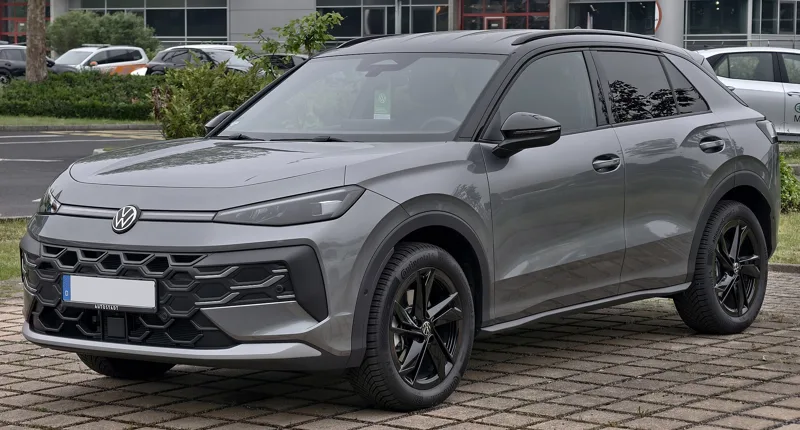
The Lavida XR, which is the Virtus under a Chinese name, arrived in June 2023 and targets younger customers with a 1.5-litre MPI engine of 79 kW (108 PS) and a six-speed automatic. In China it took over from the second-generation Lavida and the Santana. The fourth-generation Lavida Pro launched on 17 November 2025 on the MQB Evo platform, restyled and longer.
What Volkswagen's Chinese compacts mean for buyers and riders
Prices show where these cars sit. The Bora Classic cost between 106,800 and 116,800 yuan in 2019, and the fourth-generation Bora started from around 115,000 yuan when it went on sale in September 2018. A battery-powered Lavida joined the range in 2019 for buyers who wanted to skip petrol.
Riders met the Santana before most buyers did. Its life as a Shanghai taxi lasted until October 2018, when the Vista cabs gave way to 100 electric ones and the Touran.