Braked and unbraked figures, GVM, GCM and tow ball weight: how the numbers fit together and why the brochure figure is only the start.
Towing capacity is the maximum trailer weight a vehicle can pull, and it comes in braked and unbraked versions. GVM caps the vehicle with its load, while GCM caps vehicle, passengers, cargo and trailer together. Tow ball weight, generally 10 to 15 percent of the trailer rating in North America, keeps the trailer stable.
In 2004 more than 65,000 crashes in the United States involved passenger vehicles towing trailers, a rise of nearly 20 percent on the year before, according to the country's National Highway Traffic Safety Association. Two years later a safety study found that most trailer owners believed they knew what they were doing, while 70 percent were short of the full picture on how to tow correctly.
The gap sits between a number in the brochure and the weight actually behind the vehicle.
Towing capacity: the number in the paperwork
Towing capacity describes the heaviest trailer a vehicle may pull, quoted in pounds or kilograms. In some countries trucks and buses must display the maximum trailer weight, and sometimes length, near the coupling. The cooling system can also pull the declared figure down below what the rest of the vehicle could handle.
The hitch has limits of its own: one for tongue weight, the load pressing down on the hitch, and one for trailer weight, meaning the whole trailer plus whatever is inside it. Where the hitch is a factory option, its capacity normally appears in the vehicle documentation as a towing specification, and the car itself carries no marking.
Know the trailer you are pulling
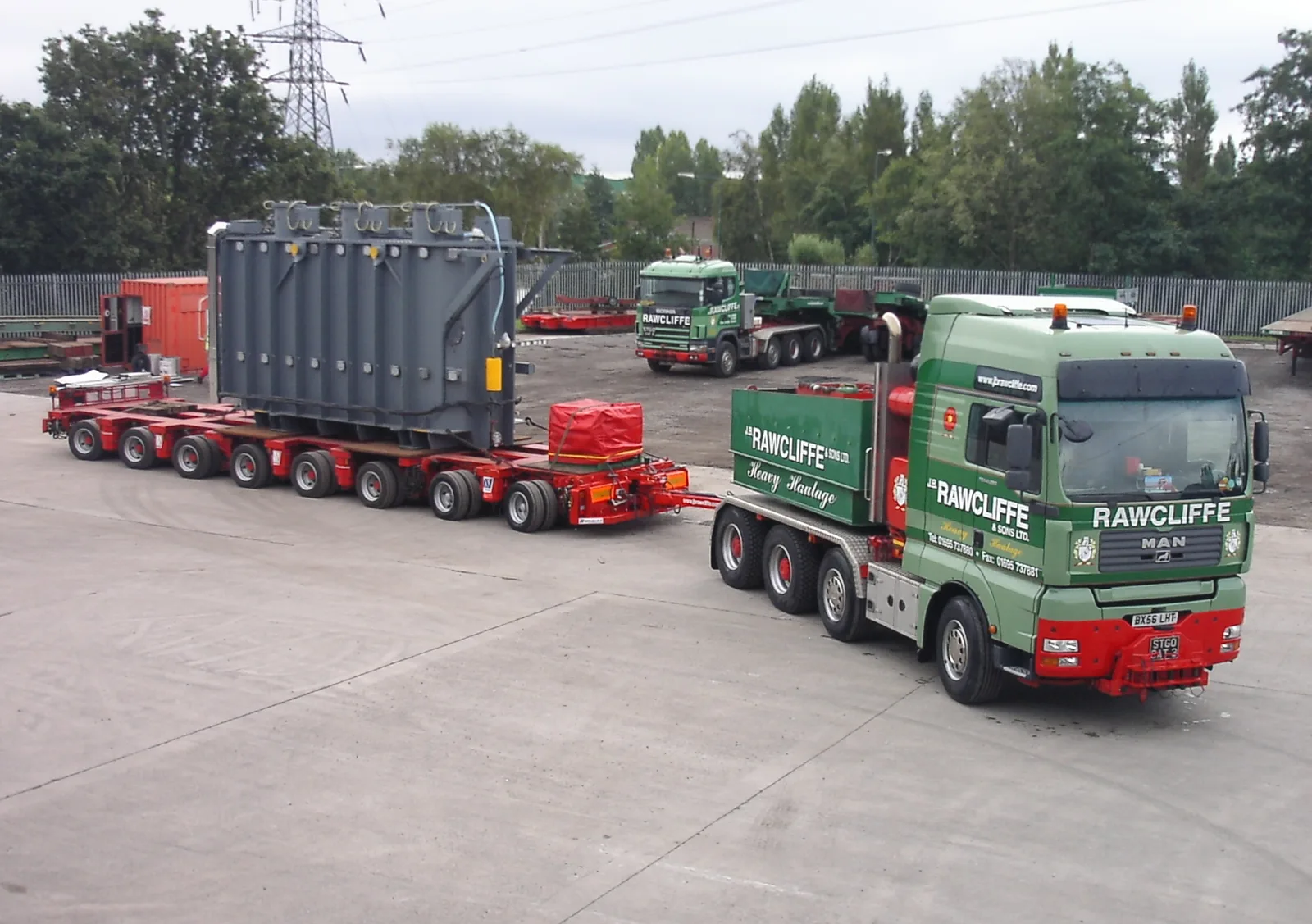
Small trailers behind cars and light trucks fall into a few families. Enclosed trailers have four sides and a roof, protect their contents from weather and are used for livestock or rented for moving boxes and furniture. Boat trailers are open and shaped to hold and secure a hull, and they are chosen to suit the particular boat. Recreational vehicle trailers, which the United Kingdom calls caravans, are built for camping and road trips, although some RVs are self-propelled. Bigger trailers belong to the 18-wheel world: flat beds, tank trailers for liquids such as milk, water or fuel, and container trailers.
The towing figure covers the trailer. The GCM covers the whole rig, passengers and luggage included.
Braked towing capacity and unbraked: why the gap is so wide
Every towing figure comes in two versions. Braked towing capacity applies when the trailer carries its own brakes, usually wired into the vehicle's braking system through the trailer cable. Unbraked towing capacity applies when the trailer has no braking system of its own.
The braked figure usually comes out far higher than the unbraked one, because the trailer then shares the work of stopping. One measurement route is the SAE standard J2807. A single towing number in an advertisement can therefore mean two quite different things, and the gap between them can be large.
What GVM and GCM mean
Two further ratings do much of the real limiting. The gross vehicle weight rating, called gross vehicle mass or GVM in Australia and elsewhere, is the top operating weight the manufacturer allows for the vehicle itself. It adds up the chassis, body, engine, fluids, fuel, accessories, driver, passengers and cargo, and leaves out any trailer. Weight shifts with passengers, cargo and even the fuel level, which is why a fixed ceiling exists.
The gross combined weight rating, also called gross combination mass or GCM, covers the whole rig. It is the maximum allowable combined mass of the tow vehicle, the passengers and cargo inside it, and the trailer with its cargo. The manufacturer sets it, and the figure is a function of several parts working together: engine torque, the transmission's capacity and ratios, the driving axles and tyres, the radiator, and a chassis strong enough to take that torque.
| Rating | Also known as | What it covers |
|---|---|---|
| GVM | Gross vehicle weight rating (GVWR) | The vehicle with fluids, fuel, driver, passengers and cargo, excluding any trailer |
| GCM | Gross combined weight rating (GCWR), gross train weight | The tow vehicle with its occupants and load, plus the trailer and its cargo |
| GTWR | Gross trailer weight rating | The loaded trailer, including itself, fluids and cargo, that the vehicle is rated to tow |
| GAWR | Gross axle weight rating | The maximum distributed weight an axle may support, marked FR for front or RR for rear |
Why a loaded vehicle runs out of room
Because the GCM counts everything inside the tow vehicle as well as everything behind it, the weight of passengers and cargo comes out of the same total as the trailer. A towing figure quoted for a trailer alone says nothing about how much of the combined ceiling is already used by people, luggage and fuel. The same is true of the GVM, which includes the driver, the passengers and the cargo.
Weight terms add another trap. Curb weight, or kerb weight, is the vehicle with standard equipment and the consumables it needs to run, but no passengers or cargo. European Union makers add a 75-kilogram driver and luggage to follow their directive. Dry weight strips the consumables out too. It has no standard, and quoting it can flatter a car against rivals that publish kerb weight.
Tow ball weight: what keeps a trailer straight
Tongue weight, the figure usually called tow ball weight, is how hard the trailer pushes down on the tow vehicle's hitch. Too little and the trailer can sway from side to side. Too much and the tow vehicle suffers. For the United States and Canada, a static tongue load of 10 to 15 percent of the gross trailer weight rating is the general recommendation.
Sway, also called fishtailing, can become dangerous at high speed. A weight-distributing hitch is one answer. Spring bars and chains held under tension shift part of the hitch load off the tow vehicle's rear axle and onto its front axle and the trailer's axles, which can cut both sway and hop. Hop is the jerking motion that can be passed to the tow vehicle. Most vehicle manufacturers allow a maximum trailer weight of 2,300 kg (5,000 pounds) and a tongue weight of 230 kg (500 pounds) without one.
Loading matters in both directions. To tow safely, the vehicle and trailer must be a correct pairing, and the load must sit correctly, horizontally and vertically, on the tow ball.
Hitch classes: what the labels allow
| Class | Rated up to | Typical use | Receiver tube |
|---|---|---|---|
| I | 910 kg (2,000 pounds) | Light loads | 31.8 mm |
| II | 1,600 kg (3,500 pounds) | Light loads | 31.8 mm |
| III | 2,300 kg (5,000 pounds) | Larger loads such as campers and boats | 50.8 mm |
| IV | 4,500 kg (10,000 pounds) | Larger loads such as campers and boats | 50.8 mm |
| V (not in the 2014 SAE J684) | 7,700 kg (17,000 pounds) | Construction equipment | 50.8 or 63.5 mm |
These are the North American classes defined by the Society of Automotive Engineers. Converted exactly, the same ratings are 907, 1,588, 2,268 and 4,536 kg, so small differences in the kilogram figures are rounding. Some manufacturers market Class V hitches, but no such standard appeared in the 2014 edition of SAE J684.
Beyond the classes, a larger gooseneck ball of 76.2 mm is typically used above 4.5 tonnes. Fifth wheel and gooseneck hitches suit flat deck and pickup trucks pulling trailers of 4.5 to 13.6 tonnes, for agriculture, industry and large recreational trailers. A gooseneck sits in the middle of the truck bed, turns tighter and copes with heavier loads, but it takes up bed space when not in use.
The ball is not the only coupling. A pintle hook with a lunette ring makes a more secure joint on rough terrain and is common in agriculture, industry and the military, though the clearance between the two lets the load slam into the tow vehicle at every push and pull. An offroad hitch swivels through 360 degrees in pitch and roll for the extreme angles met when rock crawling or mudding.
The ball itself sits on a ball mount, which slips into a receiver on a receiver-type hitch and comes with different rise or drop to keep the trailer level. Bumper or fixed-drawbar hitches are one-piece units with a hole for the ball mount and are generally not compatible with hitch-mounted accessories. Front hitches, mounted straight to the frame, are used on pickup trucks, full-size SUVs and RVs for accessories such as winches and snowplows, and they give a driver better visibility when placing a trailer.
The European picture
Outside North America, the ISO standard tow ball adopted in most of the world is 50 mm in diameter. European Union rules require hitches to be type approved under directive 94/20/EC for vehicles first registered from 1 August 1998. Across Europe around 25 percent of vehicles have tow balls, with higher shares in the Benelux countries and Scandinavia. In Sweden about 2.2 million of around 4.3 million cars have one, and in the United Kingdom caravans are behind a large share of four-wheel drive vehicles carrying hitches.
How modern cars sense a trailer
Since the early 2000s, CAN bus networks have allowed a car to detect a trailer or caravan. Most of the resulting features are conveniences, such as muting the rear fog light and the parking sensors, but a trailer stability program is a genuine safety feature. It spots the snaking of a trailer and fights it by braking individual wheels, trimming engine torque and slowing the vehicle. Adaptive cruise control may allow a greater braking distance when it senses a trailer, and some suspension systems level the vehicle when load comes onto the hitch.
Bypassing a vehicle's trailer detection can cause problems, because the car may be designed to behave differently with a trailer attached. Wiring standards matter too. The older 12N socket is a 7-pin lighting connector to ISO 1724 and is not waterproof, so worn pins can burn out. The 12S socket adds a permanent 12 V supply, and usually a switched one for the fridge, mainly for caravans. The ISO 11446 13-pin socket is waterproof, twists on and off, and has been fitted to all new UK caravans and trailers sold since 2009; reversing lights became required on every trailer and caravan from October 2012.
Bypass kits offer a cheaper route to trailer lighting on cars that do not rely on sensing a trailer. They take a small signal from the lighting harness to trigger a relay, so a fault in the trailer wiring cannot overload the car's own lights. They do not talk to the vehicle, so they will not switch on any safety or convenience systems, and some manufacturers ban connections to the lighting harness altogether.
Axle weight and the road
Axle ratings exist for a reason beyond the vehicle. Road damage is estimated, as a rule of thumb for reasonably strong pavement, to be proportional to the fourth power of axle weight, so doubling axle weight multiplies road damage 16 times. In the European Union a tractor can generally carry 10 tonnes on a single axle, and in the United States single-axle restrictions are generally 9,100 kg (20,000 pounds). Those legal limits apply independently of what a manufacturer rates.
Licence limits that cap the rig
Weight also determines who can drive. An Australian car licence covers vehicles up to a GVM of 4,500 kg, and many small trucks rated at 5,000 to 7,000 kg are sold with an option just under 4,500 kg so they can be driven on a car licence. A standard UK class B licence limits the holder to 3,500 kg for tests passed on or after 1 January 1997, while drivers who passed in or before 1996 may drive vehicles up to 7,500 kg. In the United States, key GVWR thresholds are 6,000, 8,500 and 26,000 pounds, and a commercial driver licence is generally needed above 26,000 pounds. On vehicles built for North America, the GVWR is printed on the Vehicle ID Plate, usually on the B-pillar inside the driver's door.
Where this goes next
Trailer-aware systems are spreading, with stability programs described as the main new safety feature now appearing on some cars. A few manufacturers are bringing in retractable tow balls as an option. On the regulatory side, the European Union's directive 94/20/EC is no longer in force and has been replaced by Regulation (EU) 2019/2144, in force since 6 July 2022, which covers type-approval requirements for vehicles and their trailers.