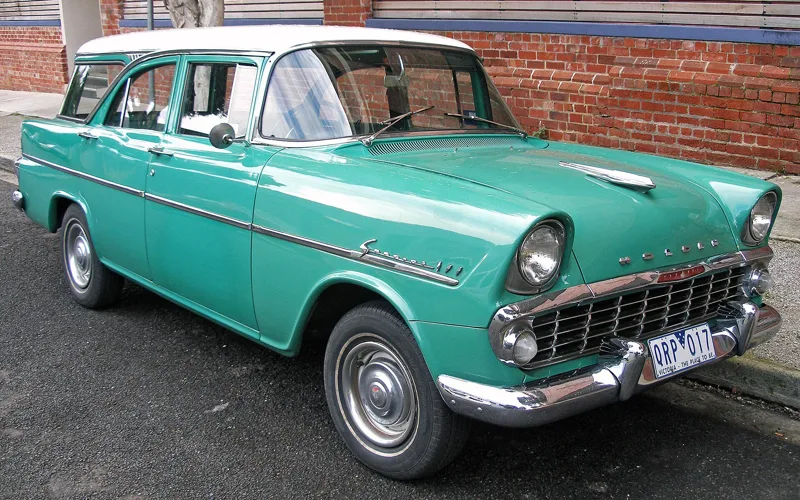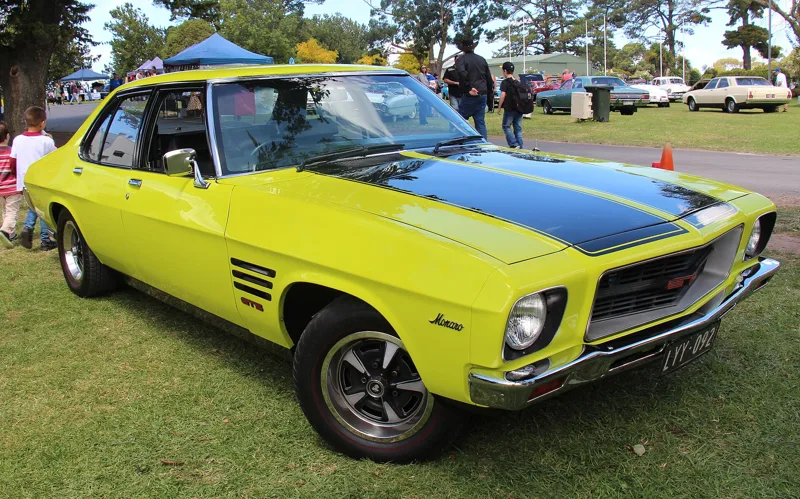
How a trim level born beside the FJ in 1953 became the middle rung of Holden's ladder, and what the HR of 1966 to 1968 added to it.
Holden made the HR in Australia between April 1966 and January 1968, building 252,352. Special was a trim name that debuted as the top grade of the 1953 FJ range, and by the time of the HR it was the middle grade between Standard and Premier.
Between April 1966 and January 1968 Holden built 252,352 examples of the HR, and it was the last of the family Holdens to wear the plain Standard and Special badges. When the HK arrived, those two names were retired in favour of Belmont and Kingswood, and a name that had begun life in 1953 disappeared from the middle of the range.
What was the Holden HR?
The Holden HR was an Australian-built family car, produced from April 1966 until January 1968. It replaced the HD, which had been in production since 1965, and it was itself replaced by the HK series. Production reached 252,352 vehicles, and the Special was one of its three trim levels.
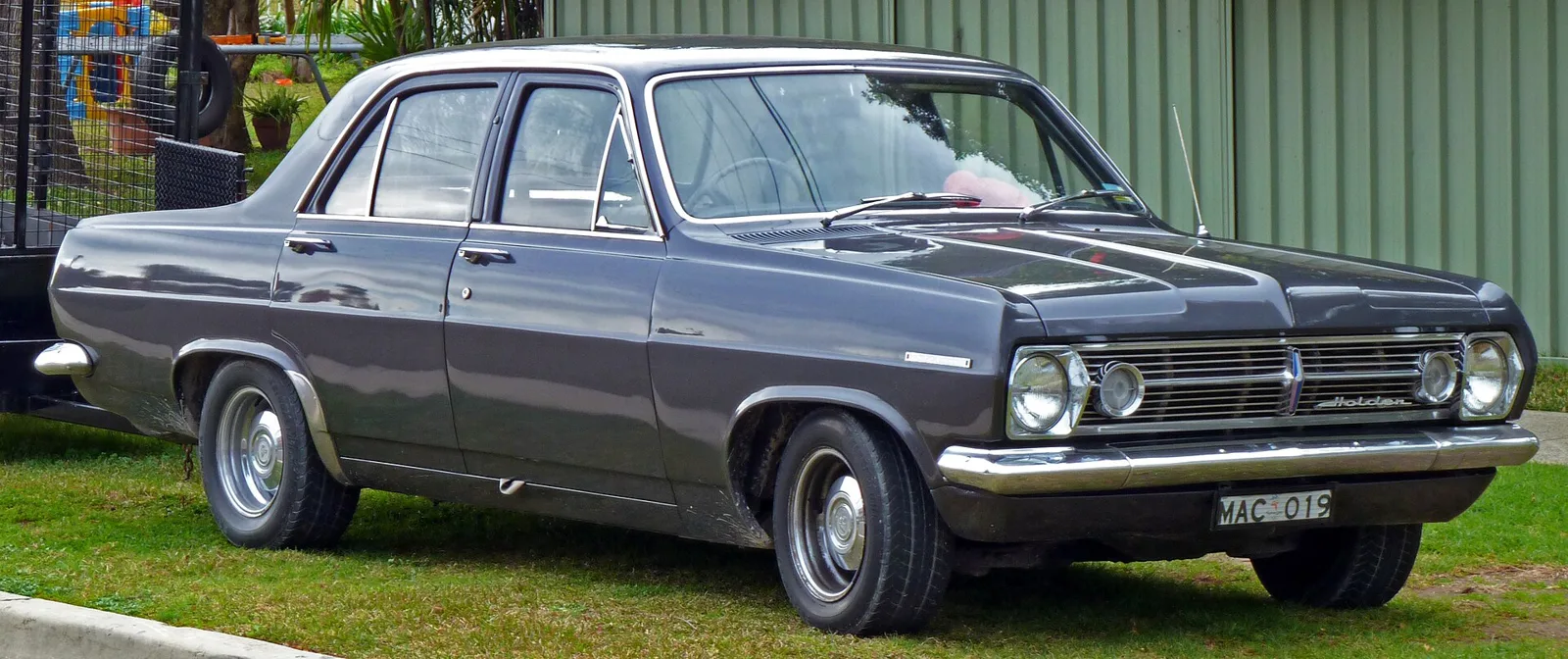
The HR was a development of the HD rather than a clean sheet. Holden changed the grille and reworked the roofline on the sedans, giving them a larger rear window. The rear lights were revised on sedans and wagons alike, and almost every exterior panel was altered in some way. Parked next to an HD, the newer car looked different at a glance.
Underneath, the front suspension moved to a ball joint layout and the track was widened. Inside, the trim was improved, and the Premier models gained a woodgrain finish on the interior. These were modest changes by the standards of a full new model, but the HR was the last of its generation before the HK arrived in 1968.
The Special spent the years from 1953 to the HR climbing down from the top rung of the range to the middle one.
What did the HR add for safety?
Six months after launch, every HR was given a safety upgrade. The package covered belts for the front seats, washers for the windscreen, reversing lights, padded sun visors and an interior mirror made to resist shattering. The changes applied across the whole range, whichever trim the buyer had chosen.
That list reads modestly today. Holden folded the lot into the existing models without waiting for a new series, so a car built after the upgrade carried equipment that the earliest cars off the line did not.
What models made up the HR range?
The passenger range offered a four-door sedan and a five-door station wagon, each in three trim levels, which made six models. Holden sold the wagon under the name Station Sedan. The commercial range added a two-door coupe utility and a two-door panel van, so the HR was a family of eight body and trim combinations in all.
HR Trim Levels and Model Codes
| Trim | Sedan | Station Sedan | Standard engine |
|---|---|---|---|
| Standard | HR 215 | HR 219 | 161 cu in (2.6 L), 114 bhp |
| Special | HR 225 | HR 229 | 161 cu in (2.6 L), 114 bhp |
| Premier | HR 235 | HR 239 | 186 cu in (3.0 L), 126 bhp |
What engines did the Holden HR use?
Every HR was powered by an inline six from the Holden Red family, carried over from the HD. Both versions were enlarged and given a higher compression ratio of 9.2:1. The 161 cu in (2.6 L) six made 114 bhp and went into every model except the Premier, which took the 186 cu in (3.0 L) engine with 126 bhp.
Compression ratio is simply how hard the engine squeezes its fuel and air before the spark, and a higher figure squeezes more energy from each charge. Holden also listed a lower-compression 161, at 8.2:1, as a further choice in the range.
The strongest engine was the 186 fitted with twin carburettors, known as the X2, rated at 145 bhp and offered as an option on every model at launch. A carburettor is the device that mixes fuel into the incoming air, so two of them feed the engine more freely than one. The X2 did not last the whole run. In June 1967 Holden used up its remaining X2 intake manifolds, and the engine was replaced by the 186S, which also made 145 bhp but used a single two-barrel carburettor.
Which gearboxes could you order?
The standard gearbox was a three-speed manual with a column-mounted change, synchronised on the top two ratios. A two-speed Powerglide automatic was available as an option. From June 1967 Holden also offered a four-speed manual gearbox sourced from Opel, giving buyers a fourth ratio that the original three-speed did not have.
Powerglide had replaced the earlier three-speed Hydramatic in the HD, so the HR simply inherited the arrangement. The June 1967 date matters because it coincides with the engine change above: by the middle of 1967 the HR had a revised top-power engine and a new manual gearbox available at the same time.
What did an HR cost?
At release, the price was A$2286 for the Special Sedan with the 161 cu in (2.6 L) engine and a manual gearbox. A Premier Station Sedan with a manual box cost A$2856. Those two figures give a feel for the spread between a Special at the cheaper end and a Premier wagon.
Where else was the HR built or sold?
In 1967 the HR became the first Holden put together at the new General Motors New Zealand factory at Trentham. It also reached South Africa, where the engineering was altered to suit the local market, with Chevrolet power and a German-built gearbox in place of the Australian parts.
The South African engine was a Chevrolet six of 194 cu in (3.2 L), introduced for the 1967 model year and followed later by a 230 cu in (3.8 L) unit. The Chevrolet engine was longer than the Holden Red, so the firewall had to be scalloped out to make room. It was paired with a fully synchronised, column-shifted three-speed manual gearbox sourced from Opel in West Germany.
Not every South African car changed. The Premier Automatic sold there kept the Australian engine, at least until 1969. Power-assisted front discs were standard on the local Special from 1967.
Where did the Holden Special come from?
Holden built the Special as a mid-size car for Australia and New Zealand. It was introduced as the top trim of the new FJ range in 1953, alongside an entry-level Standard and a mid-range Business. The Special stayed a trim level on a shared body rather than becoming a separate model.
The Business was in fact already on sale. It had arrived in July 1953 as part of the 48 series first seen in 1948, and the FJ followed only three months later. That left Holden with a three-model line-up built around one car. The 48 series also had a Standard-type variant, though it had been marketed simply as the Holden.
The Business sedan was a specialist. It was a four-door only, aimed squarely at the taxi trade, and its upgrades read like a working cab's wish list: grab rails for passengers, pulls on the doors, kick plates on the seats, tougher seats, floor mats, a beefier battery and a handle on the boot lid. In its 48 form it carried the model number 48-215-257 and a 132.5 cubic inch six-cylinder engine. After the FJ arrived, the FJ Business was designated FJ-217.
How did the Special's line-up change in the 1950s?
The FE series of July 1956 kept Standard, Business and Special sedans but brought new styling, a wheelbase longer by 2 inches (51 mm) at 105 inches, and 70 bhp, up 10 bhp (7.5 kW). Electrics, steering and interior trim were revised too. The FC facelift followed in May 1958.
Utility and panel van versions had arrived earlier, the coupe utility in 1951 on the 48 and the panel van in 1953 with the FJ. Both were based on the Standard, though neither was badged that way, and collectively the pair were sold as Holden's utility and panel van.
In March 1957 a five-door station wagon joined the sedans, marketed as the Station Sedan. It was offered only in Standard and Special trim. Then, in mid-1959 during the FC run, the Business sedan was dropped, leaving only the Standard and the Special as the choices on the price list.
What did the FB and EK do for the Special?
The FB arrived in January 1960 with the Business sedan gone, so the Standard and Special were the only Holden sedans on sale. Holden built 174,747 FBs. The Special sedan was coded FB/225 and the Special station wagon FB/229, against FB/215 and FB/219 for the Standard equivalents.
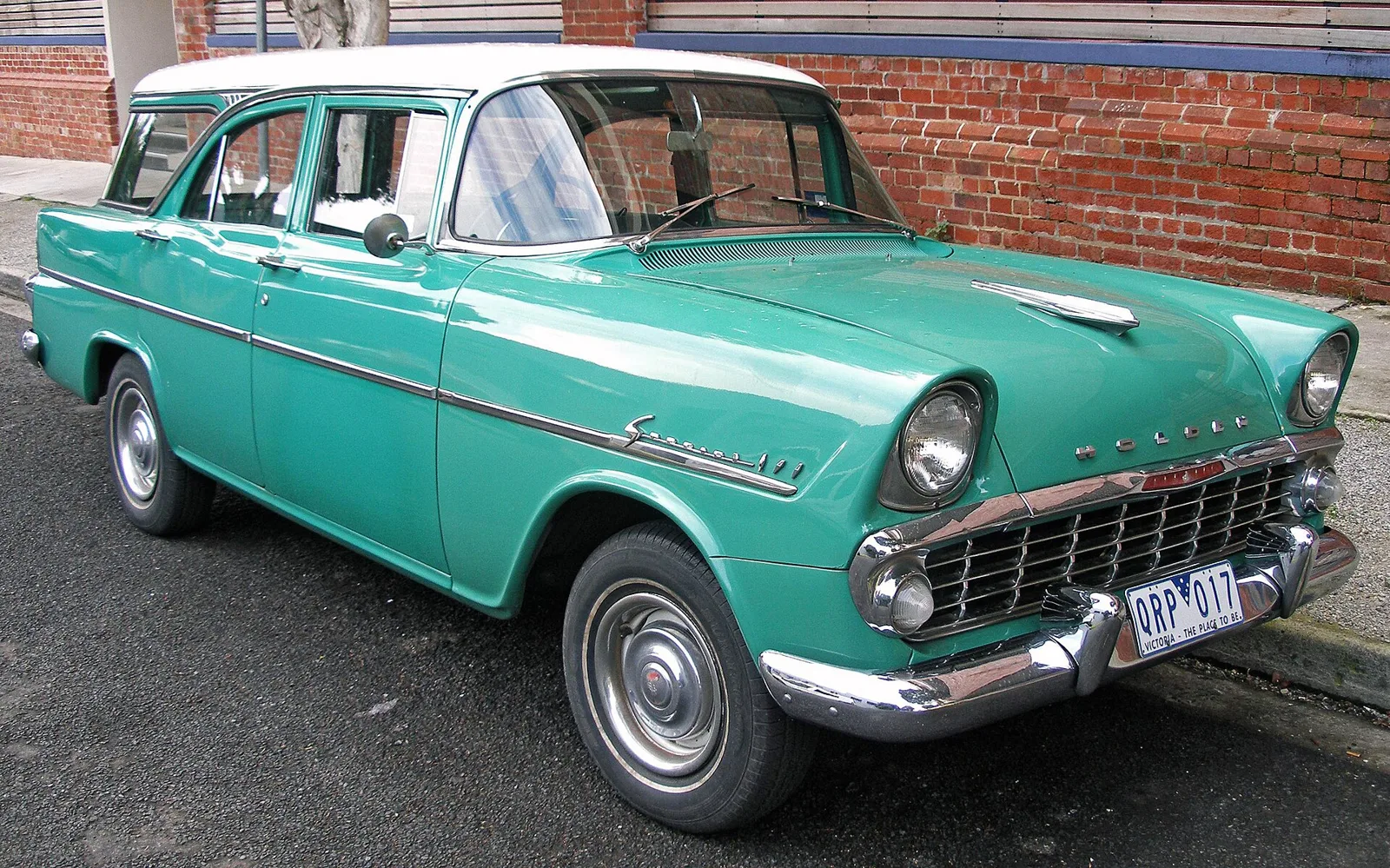
The FB was a notable car for its styling. It borrowed heavily from American design, with pointed twin rear fins, a wrap-around windscreen pillar and a dashboard carrying a speedometer with an orange band in place of a needle. It had 27 percent more glass area than the FC, and it was lower, wider and longer. Holden's mid-size car, sitting between the larger American and the smaller English alternatives, had a lot in common with the bigger Chevrolet and Pontiac models.
The paint changed in 1960 as well. Nitrocellulose lacquer, known as Duco, ended, and in May 1960 Holden introduced Magic Mirror acrylic. The old colours included Alpine Blue, Buckskin, Mandan Red and Royal Glow, among others. Because those shades were only available for a five-month production window, they are rare today.
The FB panel van sold well to commercial buyers. It was the first Holden van with a high roof, where the FC version had been little more than a station wagon without side windows. The FB also became the first Holden exported with left-hand drive, the first cars going to Hawaii.
The EK of May 1961 was mostly a cosmetic update of the FB, but it brought the first factory-fitted automatic transmission offered on a Holden. That was the Hydramatic, imported in full from the United States, where it was used in many General Motors cars. Holden built 150,214 EKs. The automatic mostly went to the Special sedan (EK/225) and the Special station sedan (EK/229); even so, dealer paperwork survives for at least one Standard sedan, a Snowcrest White car from Sydney with body number 57.
Other EK changes were small. Electric wipers replaced the vacuum wipers of the FB, stronger ElastoFab seat material was adopted after FB seat trim split at the seams, and there was a new grille, a larger set of bumper over-riders and different badging and side trim.
When did the Premier push the Special to the middle?
In 1962 Holden launched the EJ with a new, lower-profile body, more interior space, foam-padded seats and better visibility. It also introduced the Premier, which became the flagship, and the Special moved to the middle of the range. The Premier name was tied to luxury Holdens for the next 16 years.
The EJ Premier came with metallic paint and automatic transmission as standard, plus leather bucket seats, a heater, carpet, a floor console and whitewall tyres. The whole EJ range had Duo Servo brakes, a strengthened front suspension and anchorages for safety belts.
The EH of 1963 was the first Holden to use the new Red engine. It had a crankshaft with 7 main bearings, instead of 4 in the earlier Grey engine, which means the crankshaft was supported at more points along its length. That Red engine is the one the HR still used in 1966.
How did the HD set up the HR?
The HD of 1965 brought a completely new body, wider and longer than the EH, with a significant increase in passenger space, load space and equipment. Its styling echoed the FC Victor from Vauxhall, launched the year before, and shared that car's odd concave rear glass. For the first time a Holden could be ordered with disc brakes.
The HD also swapped the optional three-speed Hydramatic used in the EH for the two-speed Powerglide. The HR of 1966 inherited all of this, then put a new roofline and larger rear window on top. In the sedans, that bigger glass was the clearest change for anyone walking round a row of used cars.
What happened after the HR?
The HK series of 1968 reshuffled the trio of models that had run since the EJ. The Standard became the Belmont and the Special became the Kingswood, while the Premier stayed as it was. A new extended-length Brougham joined the line-up and became Holden's topline offering above the Premier.
So the Special that began as the top rung of a three-trim FJ range in 1953 ended its run as a mid-range trim in the HR, then reappeared as the Kingswood. The HR is a convenient place to see the whole ladder at once: Standard at the bottom, Special in the middle, Premier at the top, and the utility and panel van working alongside them.
What should you know if shopping for a Holden HR?
Anyone searching for a Holden HR for sale will find that the model codes are the quickest way into the range. An HR 225 is a Special sedan and an HR 229 a Special Station Sedan. An HR 235 is a Premier sedan, and the 186 cu in engine and woodgrain trim go with it. The Special came with the smaller 161 cu in engine unless the first owner chose the larger one.
The June 1967 changeover also helps date a car. An HR built before then with the optional performance engine would have the twin-carburettor X2, while a later one would have the single-carburettor 186S. A four-speed Opel gearbox, likewise, points to a car built from June 1967 onwards.