Most of Germany's motorway network is unrestricted, yet 130 km/h still decides who pays after a crash. Here is the history, the politics and the data.
Large parts of Germany's autobahn carry no legal cap for cars, only a 130 km/h (81 mph) recommendation. Going faster is lawful but can add to your share of blame in a crash. About 70% of the network was advisory-only in 2015, and repeated attempts at a national cap have failed.
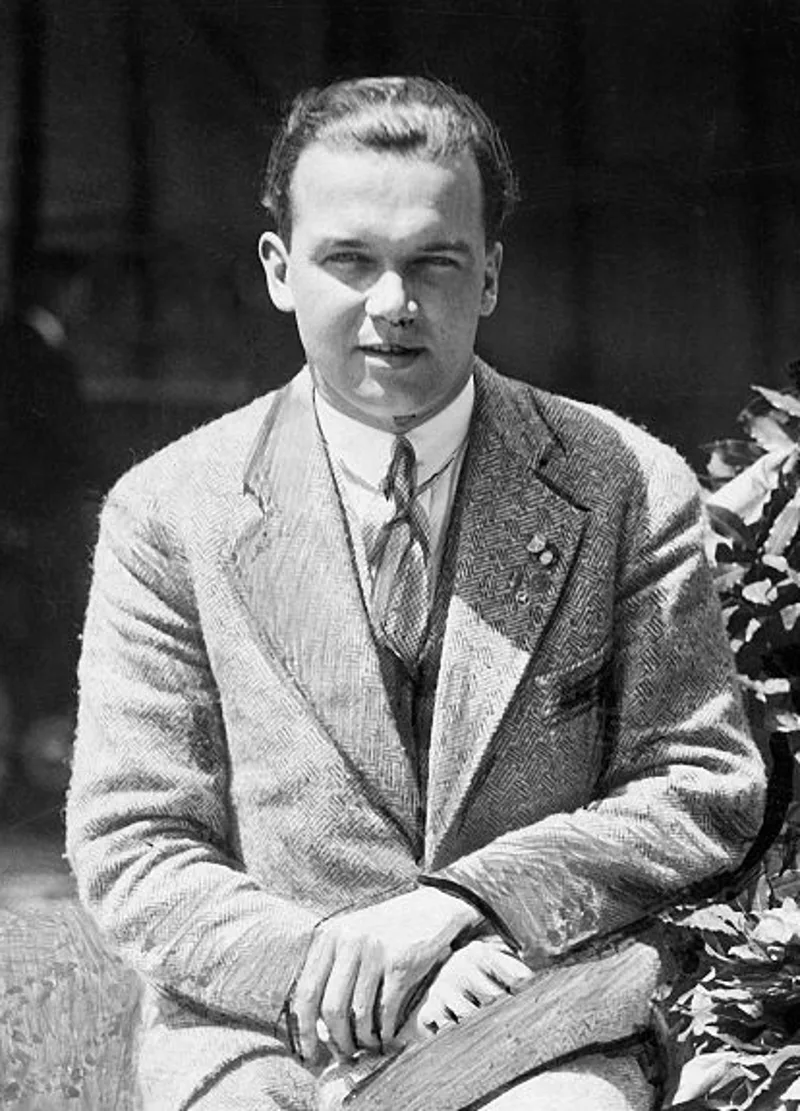
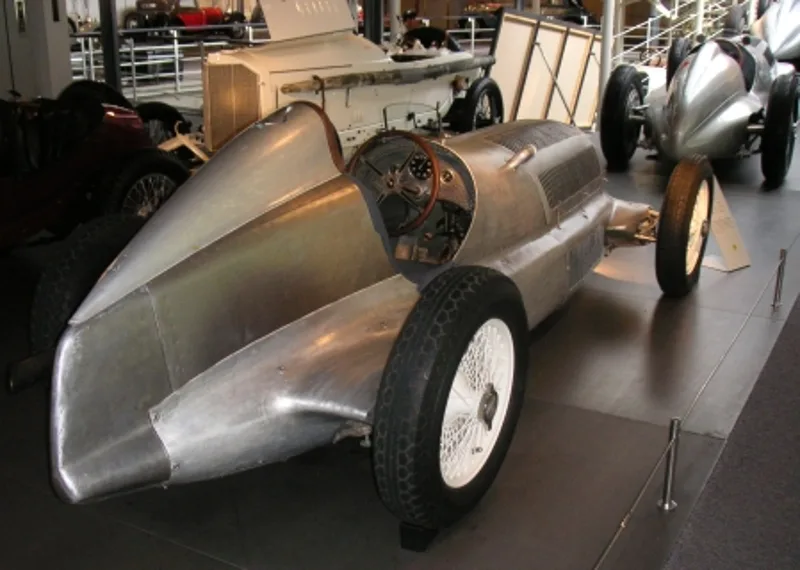
In the late 1930s Rudolf Caracciola reached 432 km/h (268 mph) on a German motorway that was open to the public, a mark that still ranks among the highest ever set on one. Germany's autobahn has never lost its reputation for speed.
Is there really no speed limit on the autobahn?
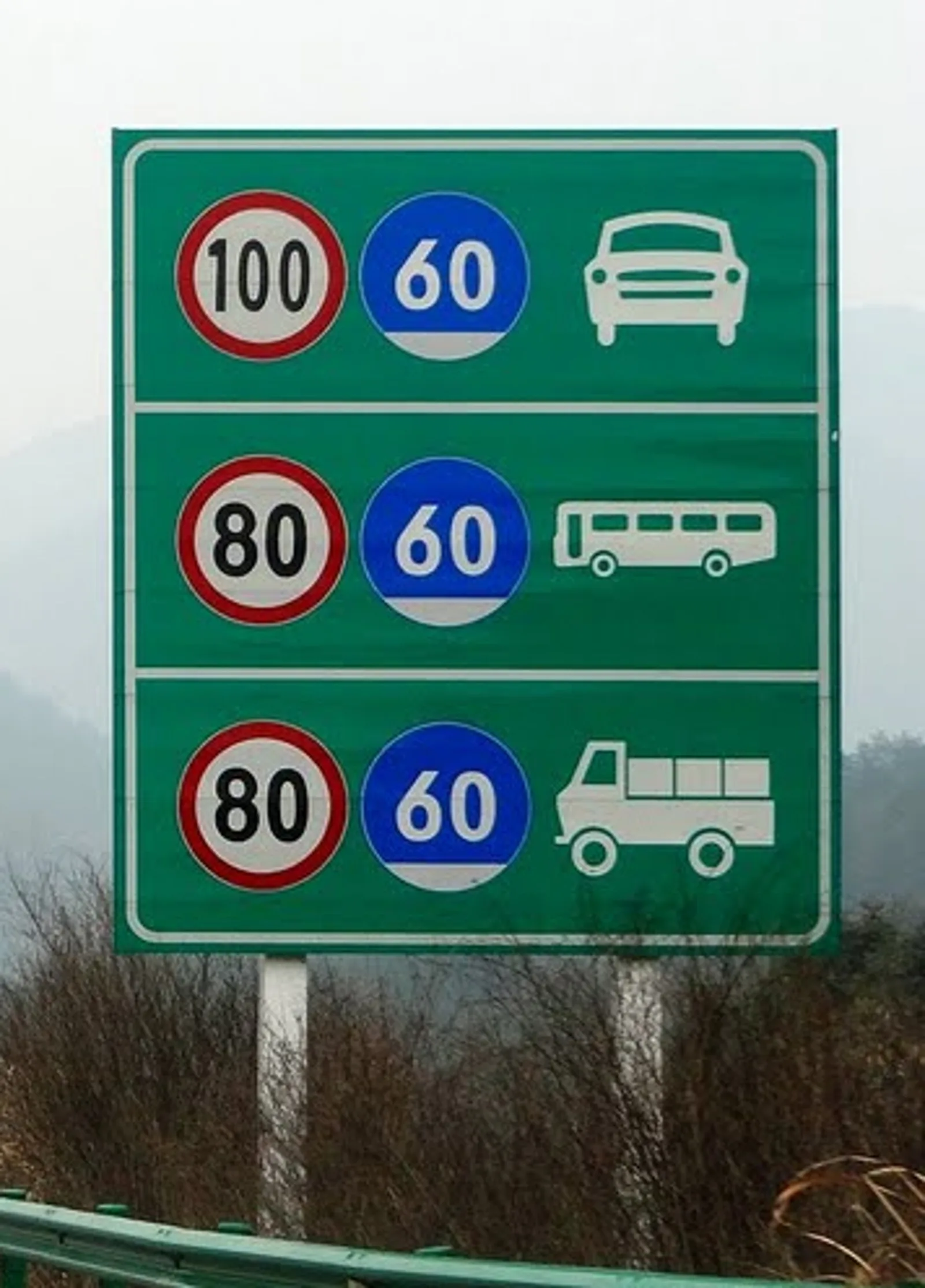
For much of the network, and for some classes of vehicle, there is none. Limits are posted and enforced where the road passes through built-up areas, is substandard, has a record of collisions or is under construction. On the stretches without a number, an advisory speed of 130 km/h (81 mph) applies, and anything above it is legal but carries consequences.
How much of the system is open depends on who is counting. A 2017 report from the Federal Road Research Institute, using 2015 data, found that 70.4% of the network had only the advisory speed, 6.2% had temporary limits for weather or traffic, and 23.4% had permanent limits. Another account puts the limited share at about 30%, made up of roughly 21% with static limits on ordinary signs and a further 9% covered by control systems that can change the limit with time, weather or traffic. Most of those systems are switched off when conditions are good.
On the open stretches, being overtaken by a car or motorcycle doing more than 200 km/h (125 mph) is possible. Measurements from Brandenburg in 2006 put the average speed at 142 km/h (88 mph) on a six-lane section in free-flowing conditions, which is quick, though far from the stuff of legend. And no road in Germany is open to everyone: trucks, buses, trailer-towing cars and small motorised vehicles such as mopeds are held to limits on every German road.
Exceeding 130 km/h breaks no law on an open stretch, but it can decide who pays after a crash.
What does the 130 km/h advisory speed actually mean?
The Richtgeschwindigkeit is a recommendation, not a ceiling. Exceeding it breaks no law on a stretch without a limit. But if a collision happens, the faster driver can be held more liable, and courts have ruled that an ideal driver, one excused from absolute liability for unavoidable accidents, would not go beyond it.
The legal reasoning has two parts. The higher operating risk of fast driving, known as erhoehte Betriebsgefahr in German law, can leave a driver partly responsible for damages. On top of that, the law forbids any speed at which the car's minimum halting distance runs beyond the driver's line of sight. And the traffic regulations open with a rule that applies on every road: drive only as fast as keeps the vehicle under control, adapted to road, traffic, visibility, weather and the vehicle's load.
Where a limit does exist, it is enforced with small margins. In built-up areas a driver doing just 3 km/h (2 mph) over the posted or implied limit has committed an offence. Once the limit reaches 100 km/h (62 mph) the margin becomes 3%. The defaults are 50 km/h (31 mph) in towns and 100 km/h outside them, every limit is a round multiple of ten, and fines follow a federal schedule. The press has nonetheless called the country a speeders' paradise, citing the lack of a continuous limit and low fines.
How did the autobahn end up with no blanket limit?
Because the network was built before any national limit existed. The idea of a car-only road dates from the mid-1920s, in the Weimar years, when a private scheme called HaFraBa planned a route from Hamburg through Frankfurt to Basel. Little was built. The first public road of the kind opened between Cologne and Bonn on 6 August 1932, cut by the city's mayor Konrad Adenauer; it is now the A 555.
Construction accelerated after 1933, when the new government put Fritz Todt in charge of a national programme. By 1936 some 130,000 people worked directly on it and another 270,000 in the supply chain. The first section of the world's first limited-access, high-speed network, from Frankfurt to Darmstadt, opened in 1935. Mercedes-Benz and Auto Union Grand Prix teams used it for record attempts until the fatal crash of Bernd Rosemeyer in early 1938, shortly after Caracciola's run. Design speeds were generous, about 160 km/h (99 mph) on flat ground, with curves good for up to 150 km/h (93 mph).
The road law of 28 May 1934 set Germany's first nationwide limit, 60 km/h (37 mph) in towns, and left rural roads and autobahns alone. Fuel saving brought tougher limits in October 1939: 40 km/h (25 mph) for urban driving, 80 km/h (50 mph) beyond the town signs. Construction stalled during the war, and by 1942 the total stood at 3,800 km (2,400 mi), against a plan for 20,000 km (12,000 mi).
What happened to speed limits after the war?
West Germany went the opposite way from its neighbours at first. In December 1952 the legislature voted to abolish all limits and leave the matter to the states. Rising deaths forced a partial retreat: a 50 km/h urban limit took effect on 1 September 1957, despite resistance from the German Auto Club. By 1970 annual fatalities had passed 19,000, and in 1972 a rural limit of 100 km/h arrived, with motorways exempt.
East Germany took a harder line. A 1956 rule set 100 km/h on its autobahns and 80 km/h outside cities. Why is unknown, and the common claim that poor roads were the reason has no proof behind it. In practice few drivers were tempted, since the most common car, the Trabant, topped out at 110 km/h (68 mph).
Reunification tested both systems. Within two years of 1990, motorised traffic grew by 54% and annual traffic deaths doubled, with powerful cars newly available and the old restrictions still in force. An extensive programme built on four Es, enforcement, education, engineering and emergency response, pulled deaths back down to their pre-unification level within a decade, while the rules were brought into line with western practice. That included the 130 km/h advisory limit on the autobahn.
Why has Germany resisted a national limit?
Politics and a slogan. The motoring club ADAC coined Freie Fahrt fuer freie Buerger, free travel for free citizens, in its fight against a general limit, and the phrase stuck. At present the federal government has nothing planned, even though most Germans say they favour a cap.
In 2019 the Bundestag voted on a 130 km/h limit. Majorities in the CDU/CSU, SPD, AfD and FDP groups rejected it, while the Greens and the Left voted in favour. Overall 70% of members voted no, 18% yes, 1% abstained and 11% did not vote. The SPD said it voted against only because it could not persuade its coalition partner. In 2020 the Bundesrat also turned down a limit proposed by its environmental committee.
| Survey | In favour of a general limit | Against |
|---|---|---|
| Statista, 2020 (2,115 respondents) | 64% for a 130 km/h limit | - |
| Allianz Direct, 2021 | Around 71% | - |
| YouGov, April 2022 (2054 respondents) | 57% | 33% (10% unsure) |
| TUV Mobility Study, 2022 | 56% | 37% |
| ADAC members, internal survey | 56% | 39% |
Who is calling for a speed limit, and at what level?
A long list of organisations, and they do not agree on the number. The Deutscher Verkehrssicherheitsrat, the national road safety council, backed 130 km/h by a narrow margin in May 2020. The Auto Club Europa voted for the same figure in November 2019, and the police union Gewerkschaft der Polizei argues that it would save lives. The Deutsche Verkehrswacht called for 130 km/h in 2023, and a German medical congress did so in 2021.
Others want lower. The Verkehrsclub Deutschland and WWF ask for 120 km/h, as did the federal environment agency in 2021 and a government environmental advisory council as far back as 2005. The Deutsche Umwelthilfe proposes 100 km/h by day and 120 km/h at night. An Evangelical church body submitted a petition for 130 km/h in 2019. A draft from a German mobility task force, the National Platform on the Future of Mobility, also recommended a blanket 130 km/h to curb fuel consumption and carbon emissions.
What do the crash numbers show?
The clearest German figure is from 2012. Crashes classed as speed related numbered 6,587 on the autobahn and killed 179 people, 46.3% of the 387 autobahn deaths that year. The category needs care: excessive speed does not mean the posted limit was broken, only that police decided someone was travelling too fast for the conditions, such as rain, fog, roadworks or heavy traffic.
Researchers separate excess speed, driving over the limit, from inappropriate speed, going too fast for the situation. On an open autobahn only the second is possible, since there is nothing to exceed. Elsewhere, the relationship between speed and harm is steep: it has been posited that a 5% rise in speed goes with 10% more injuries and 20% more deaths. The World Health Organization puts annual road deaths at roughly 1.3 million worldwide and lists speed control among the steps to reduce them.
A study from Brandenburg modelled a 130 km/h limit on the state's unrestricted autobahn sections. It found that accident costs would fall by 22.5 million euros, more than the 17.2 million euros added by longer journey times. The same study concluded that a lane with a limit carries about 100 more cars an hour than one without. Many traffic researchers expect the same effect, because smaller gaps between fast and slow vehicles mean smoother flow and fewer jams, and some think average speeds could even rise.
The economist Stefan Bauernschuster of the University of Passau notes that up to 70% of drivers on unlimited stretches do not go much faster than 130 km/h anyway. In his view a limit would save time for them and for every truck driver, because fewer accidents mean fewer closures. Only those driving significantly faster would lose out.
What other arguments do campaigners make?
Climate comes first. Supporters say a general limit would cut carbon dioxide, and Greenpeace calls it the fastest and cheapest measure available to reduce transport greenhouse gases. A steadier pace would also cut tyre wear and the particulate matter it produces. Electric car drivers, who gain range from a smooth flow of traffic with little braking and accelerating, would benefit as well.
The other argument looks forward. Business Insider has suggested that the lack of a limit holds back self-driving cars in Germany, because huge differences in speed among road users are hard for them to handle. The head of the Deutsche Umwelthilfe, Juergen Resch, says autonomous vehicles cannot be tested properly while a car might shoot past on the left at 250 km/h. He describes it as a danger for the German car industry's future.
There is one counterpoint worth stating from the outside. Elsewhere, measured per distance travelled, inappropriate speed does harm more often on poorer roads, and the American speeding fatality rate on local roads is three times that on Interstates. Excess speed is only one part of the picture, which is why both sides of the German argument keep quoting different data.
What does this mean if you drive on the autobahn?
Treat 130 km/h as the benchmark, because it decides who pays if something goes wrong. Watch for the signs and the overhead displays: they can change with the weather or traffic, and the limit shown is the law, with very little margin. Remember that you may be overtaken at well above 200 km/h, so check the mirror before you pull out, and know that nearly all exits are on the right.
Only motor vehicles able to exceed 60 km/h (37 mph) are allowed on an autobahn at all. If you tow a trailer, drive a bus or hire a truck, specific limits apply to you whatever the road signs show. And the basic rule still hangs over everyone: be able to stop within the distance you can see.
Where this goes next
For now the position is stalemate. Berlin has no plan on the table, the Bundestag voted against a limit in 2019, and the Bundesrat declined a proposal in 2020. The pressure comes from a long list of clubs, medical bodies, environmental groups and a church, plus polls that mostly show a majority in favour.