How the IS 17017 Type 6 connector, derived from CHAdeMO's light-vehicle specification, gives scooters and three-wheelers a simple DC charge point, and how the Bharat Charge Alliance is building a shared network around it.
The IS 17017 Type 6 connector is a DC fast-charge plug for electric two- and three-wheelers in India, derived from CHAdeMO's light-vehicle specification. It delivers 3 kW to 12 kW and is promoted by the Bharat Charge Alliance as a shared standard.
The IS 17017 Type 6 connector, often called LEVDC or Dash-6, is the direct current fast-charging plug used for electric two-wheelers and three-wheelers, mainly in India. Within IS 17017-2 it is one of two DC plugs, the other being the combined AC and DC Type 7. Its simplicity is the main reason it has spread quickly among scooter and three-wheeler makers.
What is the Type 6 connector?
The Type 6 connector is based on the CHAdeMO ePTW specification for electric two-wheelers. It is also recognised internationally as IEC 62196-6, and as Taiwan's TES-0D-01-01 standard. It is designed for low-voltage DC fast charging, and it exists alongside the Type 7 connector, the combined AC and DC option used in India for light electric vehicles.
Because it does one job, the Type 6 connector focuses exclusively on DC charging. Unlike combined AC and DC systems, it offers simplicity, reliability and low cost as its main advantages.
A single, simple DC plug lets scooters and three-wheelers from different makers share one charging network.
Where did the standard come from?
The CHAdeMO Association developed the ePTW specification to define a DC charging method for light electric vehicles, with voltages up to 120 V DC and currents up to 100 A DC. Its target vehicles were small electric machines of many kinds, from e-bikes to e-rickshaws and all-terrain vehicles.
The Bureau of Indian Standards published the specification as IS 17017 (Part 2/Section 6):2021, which made it an official national standard. The companion protocol, IS 17017-25, is derived from IEC 61851-25 and was issued so that chargers from different sources can work together.
| Designation | Body | Scope |
|---|---|---|
| IS 17017-2-6 | Bureau of Indian Standards | Type 6 DC connector, India |
| IS 17017-25 | Bureau of Indian Standards | Communication protocol derived from IEC 61851-25 |
| IEC 62196-6 | International Electrotechnical Commission | Type 6 connector, international |
| TES-0D-01-01 | Taiwan | Electric scooter standard |
How is the connector built?
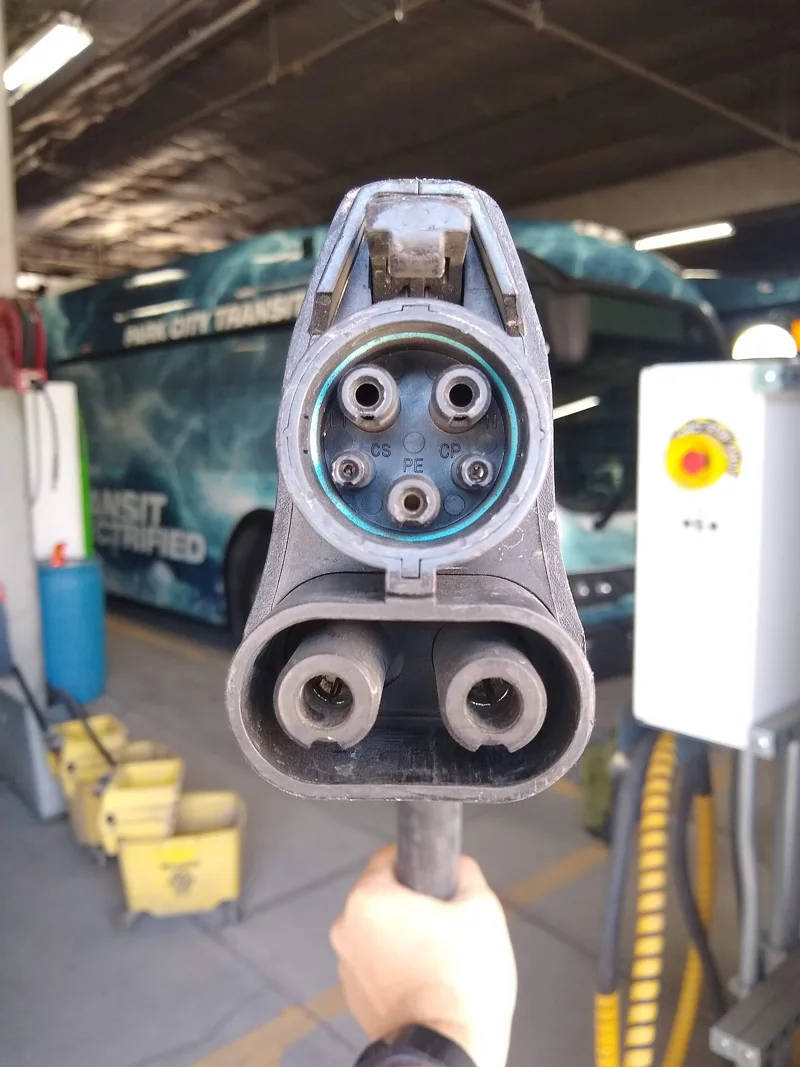
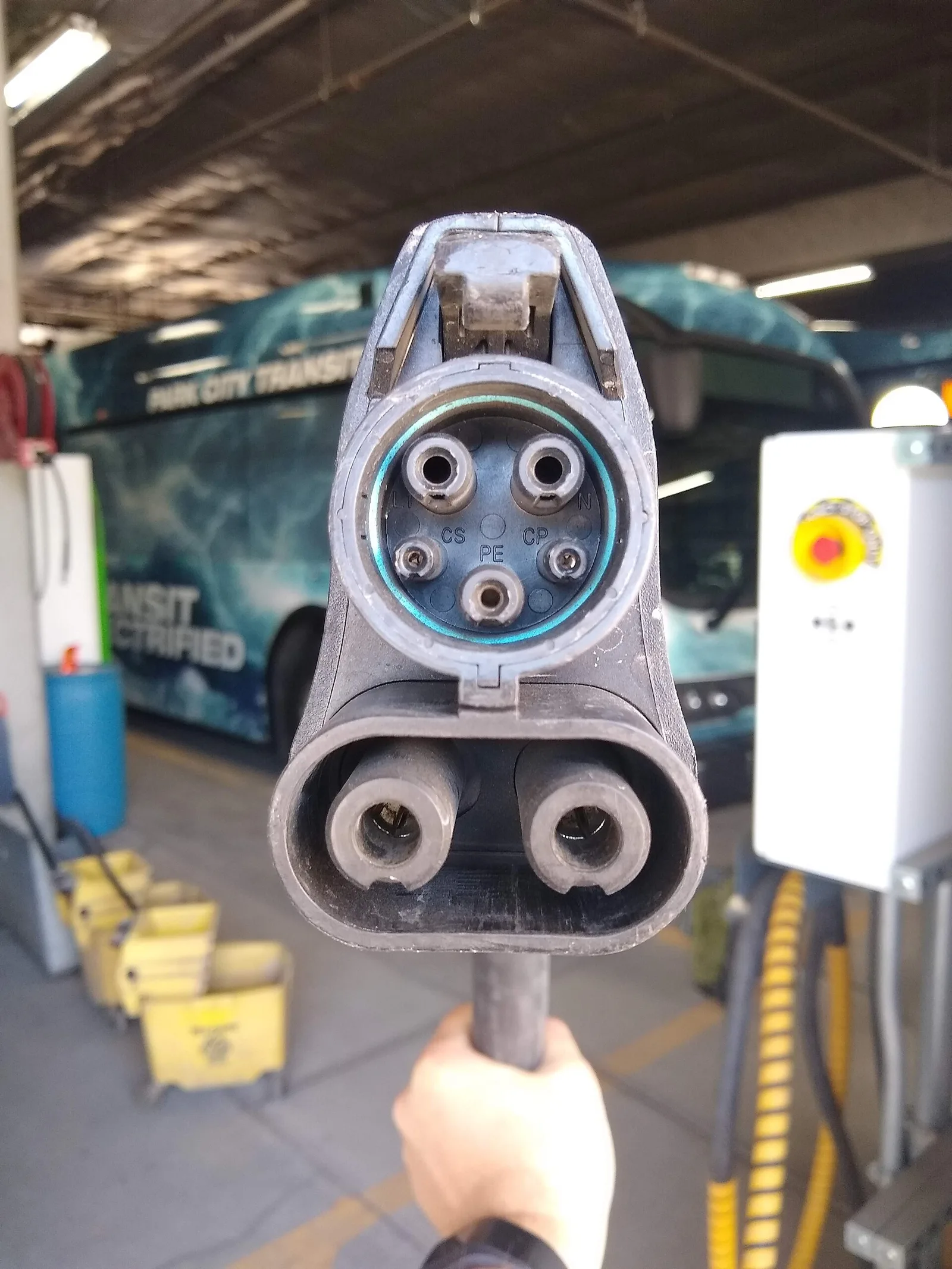
Under IS 17017, the vehicle carries a female inlet, and the charging station has a male connector. That connector may be fitted directly to the charger, or it may be attached to a flexible cable. The Type 6 connector places its latching system on the charger side only, so the vehicle inlet needs no latch. That keeps the vehicle side simple and cheap.
The vehicle needs only simple electronics in its control unit and battery management system. Manufacturers can adopt the connector with little investment and no major change to the vehicle architecture, which is a large part of its appeal to small makers.
What power can the connector deliver?
The connector covers a DC voltage range from 20 V to 120 V. Its continuous current runs from 15 A to 125 A, with a standard rating up to 100 A and an extended rating up to 125 A for vehicles with larger battery packs. Power output ranges from 3 kW to 12 kW.
To put that in practical terms, at 10 kW a 10-minute session adds about 1.6 kWh of energy. For a typical electric scooter that is roughly 40 to 50 km of range. Faster charging is therefore useful for riders who cannot wait long at a station, even if the connector is not designed for four-wheeled cars.
How do the pins and communication work?
The connector has several contacts. The proximity pilot signals before insertion, and the control pilot signals after insertion and carries the initial handshake. The protective earth carries the full current through the earthing system. The CAN High and CAN Low pins handle communication, while DC+ and DC- carry the power.
After the control pilot handshake, the battery management system negotiates the maximum current with the charger over the CAN bus, using the dedicated pins. The protocol follows IS 17017-25. It is deliberately simple, with a control pilot signal for safety, and it leaves out advanced features such as Plug-and-Charge and vehicle-to-grid support.
Which vehicles use the Type 6 connector?
Several major electric vehicle makers have adopted the standard for two-wheelers. Ola Electric uses it on its S1 series, including the S1 Pro. Tork Motors fits it to the Kratos R electric motorcycle, Ultraviolette to its F77 performance motorcycle, and Simple Energy to its Simple One scooter.
Three-wheelers are a particularly strong market. Altigreen, ETO Motors and Surja Automotive all make L5 category electric three-wheelers. Because the connector can support up to 125 A of continuous charging current, it suits those vehicles, which often carry larger battery packs.
How is the charging network growing?
As of 2026 charging infrastructure for the connector is expanding rapidly across India. Ola Electric had installed about 200 charging stations in more than 50 locations, with plans for faster expansion. Tork Motors runs its T-Net fast-charging network for motorcycles, and Ultraviolette offers a boost charger as a portable accessory.
Trinity Cleantech, which trades as Thunder+, plans to set up 2,000 public charging stations across India, and Log9 Materials has partnered with it to build an interoperable network. ChargeZone, operated by Billion Electric, runs a network of over 20 charging networks that support Type 6. Other suppliers include EVQPoint Solutions, which offers Type 6 chargers at 3 kW, 6 kW and 10 kW, and Massive Mobility, which offers versions at 3 kW, 6 kW and 12 kW.
Many operators provide dual-standard chargers that accept both Type 6 and Type 7, so that riders from different brands can use the same station.
How does the Bharat Charge Alliance work?
The alliance was set up in 2024 to push Type 6 as the shared fast-charge standard for light electric vehicles across India. It brings together companies from charging infrastructure and vehicle manufacturing to build a unified charging network. Its founding and supporting members include Log9, Trinity Cleantech, Tork Motors, Altigreen, ETO Motors, Pulse Energy, ChargeZone, EVnnovator and Surja Automotive.
Its goal is more than 5,000 public charging points nationwide, with Type 6 chargers working under the LEV DC protocol, IS 17017-25. It also promotes a Unified Energy Interface payment mechanism powered by the Beckn protocol. That lets a user authenticate and pay across several charge point operators with one account or payment method.
The Automotive Research Association of India, the country's leading testing and certification agency, has built validation capability for the IS 17017-2-6 connector and the IS 17017-25 protocol. Its testing is meant to confirm that compliant products meet safety, performance and interoperability requirements.
What are the trade-offs of a DC-only plug?
A DC-only plug keeps the vehicle side cheap, but it gives up the convenience of one port for every kind of charging. Advanced options are not part of the Type 6 design, so owners who want them will look to a different standard. The protocol relies on the control pilot signal for safety, which is part of why it stays simple. The simplicity is deliberate, and it is the reason the vehicle electronics can stay modest.
Type 7 takes the opposite approach, offering a unified port for AC and DC charging. That flexibility comes at the cost of more change to the vehicle, its protocols and its wiring. For a manufacturer choosing between the two, the question is whether the extra capability is worth the extra integration work. Many operators sidestep the choice by installing dual-standard chargers that accept both connectors.
How does Type 6 compare with Type 7?
Both Type 6 and Type 7 are recognised under India's IS 17017 specifications, and both use CAN bus communication after the initial control pilot handshake. Type 7 offers a single unified port for AC and DC charging. Type 6 is aimed at dedicated DC fast charging, and its supporters argue that it is simpler to integrate.
According to the Bharat Charge Alliance, ease of integration and a smooth transition are the main reasons to favour Type 6. Moving from an existing connector, such as SB 75 or a proprietary design, mainly means replacing the connector and making minor changes to hardware and software, such as adding a microcontroller to monitor charging. Type 7 can demand bigger changes to vehicle architecture, protocols and wiring harnesses.
What came before Type 6 in India?
The Type 6 connector evolved from Bharat DC-001, which was introduced under the FAME programme in 2017. That earlier unit followed China's GB/T protocol and used a pistol-grip plug with two big power pins and smaller signal pins. It delivered up to 15 kW of DC output, at 200 A and about 72 V at maximum, but it became limited as mainstream electric vehicles moved to higher voltages.
The Type 6 connector addresses the needs of modern light electric vehicles with a wider voltage range, from 20 V to 120 V, international standardisation through IEC 62196-6, and an emphasis on interoperability through the alliance.
Global four-wheeler standards such as CCS, CHAdeMO and GB/T serve heavier cars at higher voltages. The Type 6 connector is designed for the lighter weight, lower voltage requirements and tight space of two- and three-wheelers, so it is not a direct substitute for them.
Why does the connector matter for riders?
Before Type 6 and Type 7, the Indian two-wheeler industry used more than 10 different types of charging connector. That created serious compatibility problems and held back infrastructure. A common standard allows cross-brand charging, so vehicles from different makers can use the same equipment.
It also lowers costs. Charging operators can deploy standard equipment, reducing investment, and vehicles need less complexity, which keeps manufacturing costs down. Riders benefit from more widely available chargers that are not restricted by brand, and networks can be built faster because the equipment specifications are simpler.