From the 2008 Sky concept to the Skyactiv-X combustion experiment, Mazda's in-house technology family has reshaped its range and its reputation.
Skyactiv covers Mazda's petrol and diesel engines, its automatic and manual gearboxes and the platforms beneath them. Introduced in vehicles from 2011, it was built to raise fuel efficiency and output. Mazda's Skyactiv-X is a petrol engine that uses compression ignition.
Few carmakers have built a technology brand as broad as Mazda's Skyactiv. The name covers petrol and diesel engines, automatic and manual gearboxes, and the platforms that carry them. Its story includes a bold attempt at a new combustion process, a diesel designed to avoid exhaust treatment, and a set of problems that led to a recall.
What is Skyactiv?
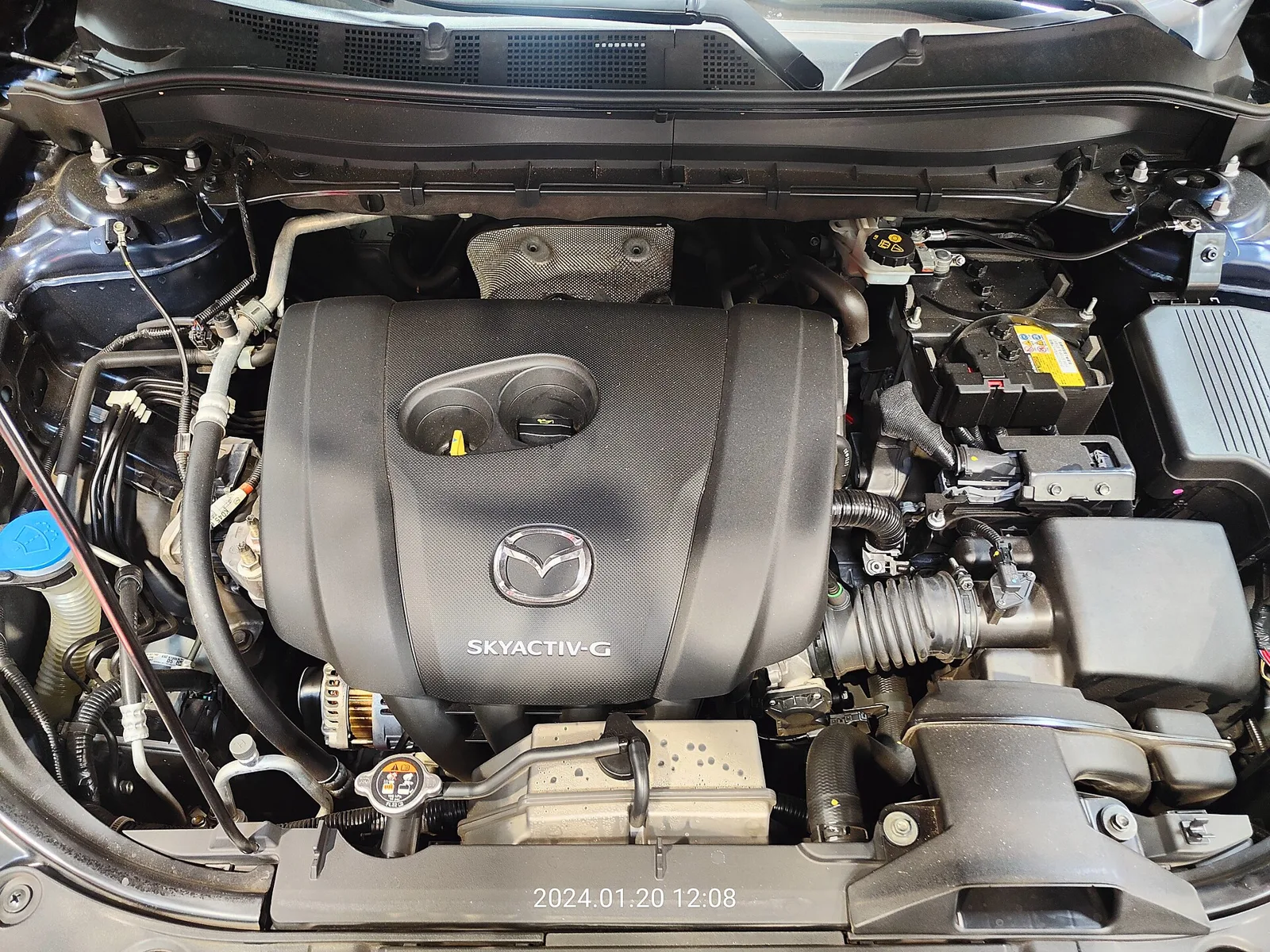
Skyactiv is Mazda's brand for a family of engines, transmissions and vehicle platforms designed to improve fuel efficiency and output. It first appeared in Mazda vehicles from 2011, and its engines include the Skyactiv-G petrol family, the Skyactiv-X petrol engine that uses compression ignition, and the Skyactiv-D diesel family.
Mazda tuned every part of the drivetrain to work as one system, and the diesel story shows how hard that is to get right.
Where did Skyactiv come from?
Skyactiv grew out of Mazda's Sky concepts, which were shown at the 2008 Tokyo Motor Show. Those concepts combined a 2.3 litre petrol direct-injection engine, a 2.2 litre diesel, a new automatic and revised suspension. Mazda's existing chassis for the Mazda3 and Mazda6 carried over into the new vehicles.
The Sky concepts also brought improvements to Mazda's L-series engine, including direct injection, an upgraded exhaust manifold and a higher compression ratio for cleaner burning and better thermal efficiency.
How does Skyactiv-G work?
Skyactiv-G is Mazda's family of petrol engines with direct injection and high compression ratios. Compression reaches up to 14:1, but it drops to 13:1 in the United States so the engines can run on regular fuel. The lower figure costs about 3 to 5 percent in torque and fuel economy.
Knock is the main obstacle at high compression. Mazda reduces residual gas with a 4-2-1 exhaust system, shapes the piston cavities and controls injection. It also shortens combustion through extra airflow, higher injection pressure and multi-hole injector designs.
The engines are all-aluminium, with chain-driven twin overhead camshafts and variable valve timing, and they meet US ULEV emission standards.
Which Skyactiv-G engines were built?
The Skyactiv-G family spans displacements from 1.3 litres to a 3.3 litre inline-six. The table sets out the main engines, their outputs and their best-known applications. Outputs vary by market and fuel, so the US figures are used where a range is given.
| Engine | Displacement | Output | Typical use |
|---|---|---|---|
| 1.3 L (P3-VPS) | 1,298 cc | 62 kW (83 hp), 113 N m | Mazda2 and Demio, paired with a CVT |
| 1.5 L | 1,496 cc | 85 kW (114 hp) at 6,000 rpm, 150 N m at 4,000 rpm | Mazda3, Mazda2 and MX-5 Roadster |
| 2.0 L (PE-VPS) | 1,998 cc | 116 kW (155 hp) at 6,000 rpm, 200 N m at 4,600 rpm | Mazda3, CX-5 and CX-30 |
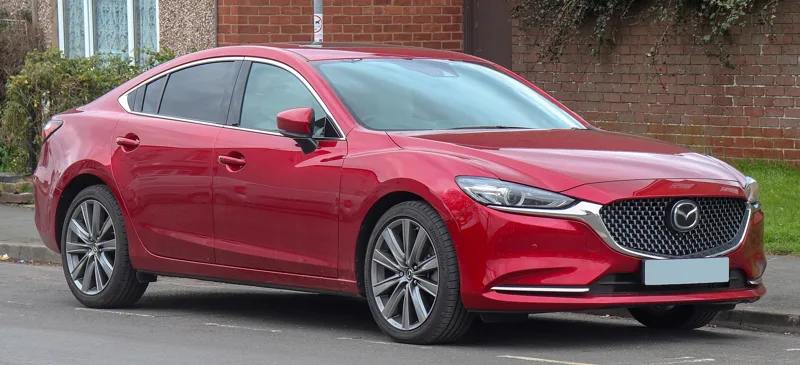
| 2.5 L (PY-VPS) | 2,488 cc | 139 kW (187 hp) at 6,000 rpm, 252 N m at 4,000 rpm | Mazda6, CX-5 and PHEV models |
| 2.5 L turbo (PY-VPTS) | 2,488 cc | 190 kW (255 hp) on premium fuel, 430 N m at 2,500 rpm | Mazda3, CX-5, CX-30 and CX-50 |
| 3.3 L (H3T) | 3,283 cc | 254 kW (341 hp) on premium fuel, 500 N m | CX-60, CX-70, CX-80 and CX-90 |
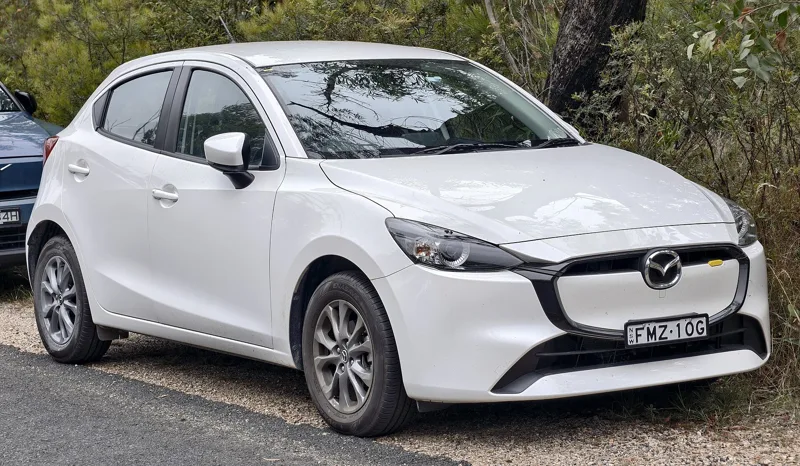
The 1.3 litre was unveiled in 2011 and paired with a CVT in the Mazda2. The 1.5 litre arrived in the 2014 Mazda3 and improved on the earlier MZR 1.5 for both power and economy.
In the 2.0 litre version, city fuel use dropped to 8.4 L/100 km from the 10.2 of the previous 2011 Mazda3 engine. A flexible-fuel variant runs on E85 and makes 121 kW (162 hp) with 210 N m.
The turbocharged 2.5 litre uses butterfly valves and specially shaped exhaust passages to reduce turbo lag. On regular fuel it drops to 169 kW (227 hp), and maximum boost is 120 kPa (17 psi). In the CX-60 the 2.5 is paired with a 100 kW electric motor and a 17.8 kWh battery, reaching 241 kW (323 hp) with 500 N m of torque combined.
What is Skyactiv-X and why was it ambitious?
Skyactiv-X is the first commercial petrol engine to use homogeneous charge compression ignition, or HCCI. In HCCI a lean mixture ignites when compressed, rather than when a spark fires. Mazda aimed for 20 to 30 percent greater fuel efficiency, with a compression ratio of 16:1.
HCCI is hard to control, so Skyactiv-X adds spark-controlled compression ignition, known as SPCCI. The engine draws in a lean mixture and compresses it toward the point of spontaneous ignition. A dedicated injector then places extra fuel right at the spark plug, and the spark ignites that charge, which sets off compression ignition in the rest of the fuel.
A small Roots-type supercharger feeds in extra air, which widens the window in which the mixture can ignite by compression at higher speeds. The spark plug also lets the engine run as a conventional spark-ignition engine under high-speed, high-load conditions.
Output was revealed on 5 June 2019 at 132 kW (179 PS; 177 hp), with 224 N m (165 lb ft) of torque. Mazda also considered an inline-six Skyactiv-X with 3.0 and 3.3 litre sizes and rear-wheel drive. Mazda Europe later said it had no plans for a rear-drive sedan, because it was prioritising SUVs.
How did Skyactiv-D tackle diesel emissions?
Skyactiv-D is a family of turbocharged diesels built to meet global emissions rules without the NOx and particulate treatment common elsewhere. Mazda lowered the compression ratio to 14.0:1 and added special injectors and a two-stage turbocharger. At its 2012 launch, the engine met Euro 5 limits only.
Cold starting was the technical challenge. Multi-hole piezo injectors with three programmable patterns, along with ceramic glow plugs, help a cold engine fire. The exhaust valves are kept slightly open during start-up, so hot gases return to the cylinders and warm the engine quickly.
A two-stage turbocharger brings a small and a large turbo into use depending on driving conditions. Variable valve lift at the exhaust reopens the exhaust valves during intake, which warms the intake air and helps avoid misfires.
The family grew over time. The 2.2 litre was the first production Skyactiv-D, used first in the CX-5, while the 3.3 litre inline-six arrived in the CX-60 in 2022. An upgraded 2.2 ran in the 2013 Rolex Sports Car Series and helped Mazda win the GX manufacturers' championship.
What went wrong with the early Skyactiv-D?
Early CX-5 diesels showed oil levels rising faster than expected. Mazda first treated it as a matter of checking the dipstick and fixed the reading in part with a software update. The underlying fault lay in the injector seals, which exhaust gas could reach and contaminate the oil.
Owners were told to check the oil every 1,000 km or every month and to return to the dealer if the level rose above the dipstick mark. Later analysis showed that the injector seals did not clamp tightly enough during a low-temperature particulate filter regeneration, which let exhaust leak into the valve cover.
The result could be a clogged oil pickup and engine failure, or a costly loop in which cylinder pressures climbed, the intake clogged and fuel use rose because regeneration happened almost constantly. Mazda has not formally acknowledged the fault, except in Australia, although service documents describe the repair, including M001/007A with its new injector nut and washer procedure.
In September 2016 the company called back 130,000 vehicles in Japan because a fault could cause diesel engine failure. The 2.2 suffered carbon build-up that could block the intake manifold, and a turbo diversion valve fault could require replacing the complete twin turbo unit. The 2012 to 2018 diesel Mazda3, Mazda6 and CX-5 were also recalled for carbon deposits.
The emissions fix also carried a price. The US version gives 125 kW (168 hp) and 390 N m, while the Australian Euro stage V version gives 140 kW (188 hp) and 450 N m, so the American engine trades power and torque for compliance.
How do Skyactiv transmissions work?
Skyactiv-Drive is Mazda's range of automatic transmissions. Rather than adopt a CVT or dual-clutch gearbox, Mazda built a conventional six-speed planetary automatic with a multi-plate lock-up clutch, and later an eight-speed with an electronically controlled wet clutch in place of the torque converter.
Mazda rejected the CVT because of poor throttle response, persistent engine drone and the rubber-band effect caused by belt slip. It also judged dual-clutch boxes weaker than a torque converter at low speeds for refinement.
The six-speed reduced slip with a smaller impeller and turbine and a multi-plate lock-up clutch. That clutch extends lock-up across all six gears, which cuts hydraulic losses in everyday driving.
The 2022 eight-speed was designed for longitudinal rear and all-wheel drive vehicles. Its first gear is 5.258:1 and its eighth is 0.628:1, a spread of 8.37:1 that is 41.2% wider than the six-speed's 5.93:1. Without the torque converter, the transmission has room for an electric motor in the bellhousing.
Plug-in hybrid Large models use a larger motor rated at 129 kW (173 hp), with 270 N m of torque, allowing electric-only driving up to 140 km/h. The 48 volt mild hybrids add 12 kW (16.6 hp), with 153 N m of torque at 900 rpm, which fills in torque at low revs and allows coasting with the engine off.
Skyactiv-MT is the manual family. It raises the lever ratio for lighter effort and uses a module spline to suit the shorter internal stroke. Its triple-shaft gear train puts reverse and first gear on one shaft to save weight, and shift throws are 15 percent shorter.
Which electrified Skyactiv variants exist?
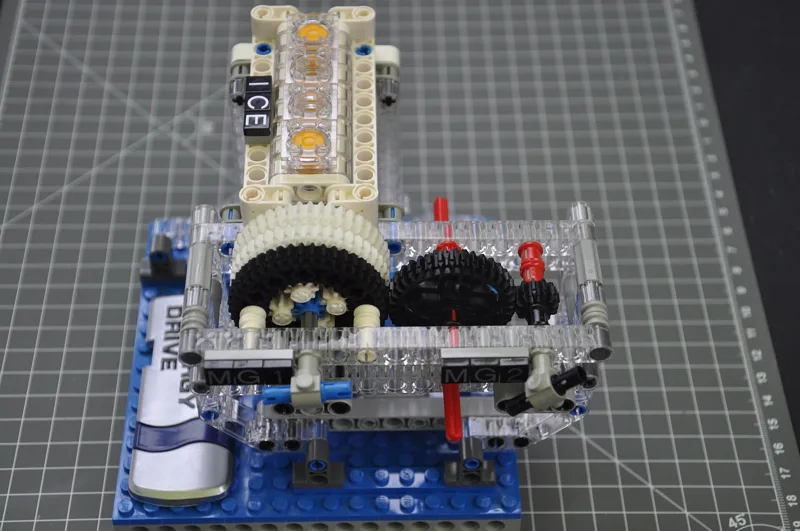
Mazda has used Skyactiv technology in hybrids, a compressed natural gas version, a rotary engine and battery-electric models. The Skyactiv-Hybrid borrowed Toyota's Hybrid Synergy Drive technology, with the first retail version a Mazda3 unveiled in 2013. Each route shares the Skyactiv name but uses different hardware.
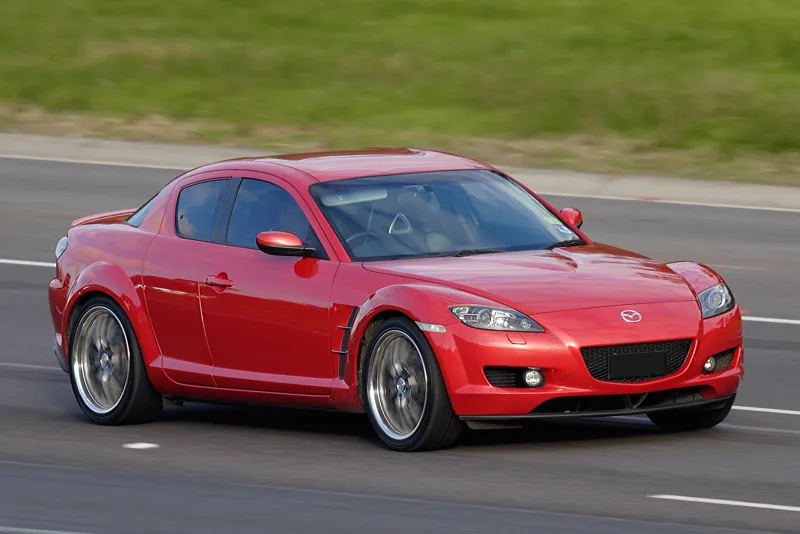
The rotary Skyactiv-R first appeared in the RX-Vision concept, and a later production version powers the MX-30 R-EV. That single-rotor engine has an 830 cc displacement and produces 56 kW (75 hp) at 4,500 rpm.
e-Skyactiv is the battery-electric powertrain, used in the MX-30 from 2020. The mild-hybrid e-Skyactiv G, D and X models pair Skyactiv engines with electric motors. Large group models use a 48 volt motor with a small battery pack, while Small group models use a belt-driven starter generator.
Skyactiv-Z is the next step. It is a 2.5 litre hybrid inline-four designed to replace the G and X engines, and it is aimed at tighter Euro 7, LEV4 and Tier 4 rules while keeping costs suitable for mass-market cars.
How do Skyactiv platforms fit together?
Skyactiv platforms come in two families. The Small Product Group underpins front and all-wheel drive cars with transverse engines, while the Large Product Group supports rear and all-wheel drive vehicles with longitudinal engines. The Large group uses the 8-speed transmission and models such as the CX-60, CX-70, CX-80 and CX-90.
The Small group carries the Mazda3, CX-30, MX-30 and CX-50. Every Large model is electrified as either a mild hybrid or a plug-in hybrid.