How Mercedes-Benz's in-car communications and entertainment system grew from a cassette-and-CD head unit into a hard-disk, MOST-bus platform with smartphone links before MBUX replaced it.
COMAND was a series of Mercedes-Benz head units, from the W220 cassette-and-CD model to the NTG5.0 hard-disk platform. Later versions added phone tethering and app support before MBUX took over the role.
COMAND, short for Cockpit Management and Data system, is the in-car communications and entertainment platform that Mercedes-Benz fitted to its cars for more than two decades. It combined navigation, telephone, radio and media on a dedicated flat screen, and later it took on climate, seat and lighting control. Each generation changed the hardware, the data network and the software, which makes the family a useful record of how car infotainment developed.
What did COMAND do?
COMAND is a Mercedes-Benz system that handles communications and entertainment inside the car. Its software features include GPS navigation, an address book, telephone and radio, and the system uses a dedicated flat display screen. Buyers could add CD and DVD changers, a sound system, a TV receiver and the Linguatronic voice control system as options.
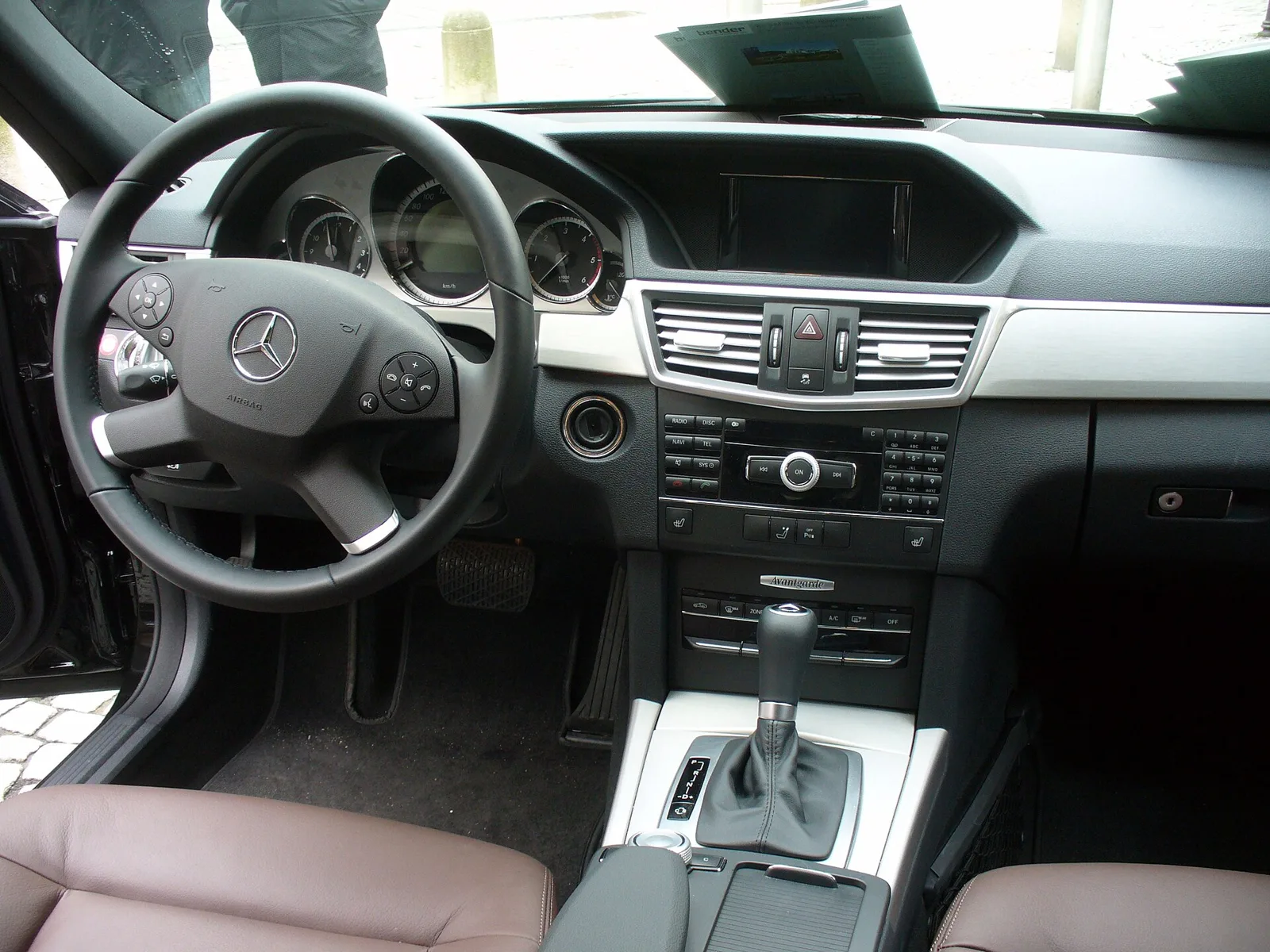
The system also integrated the car's functions. Multimedia, navigation and telephony were linked together, and where a rear seat entertainment package was fitted, the rear displays could show material from the front unit or from local inputs such as composite video. On newer models it went further, controlling the heating and ventilation, the seats and the interior lighting.
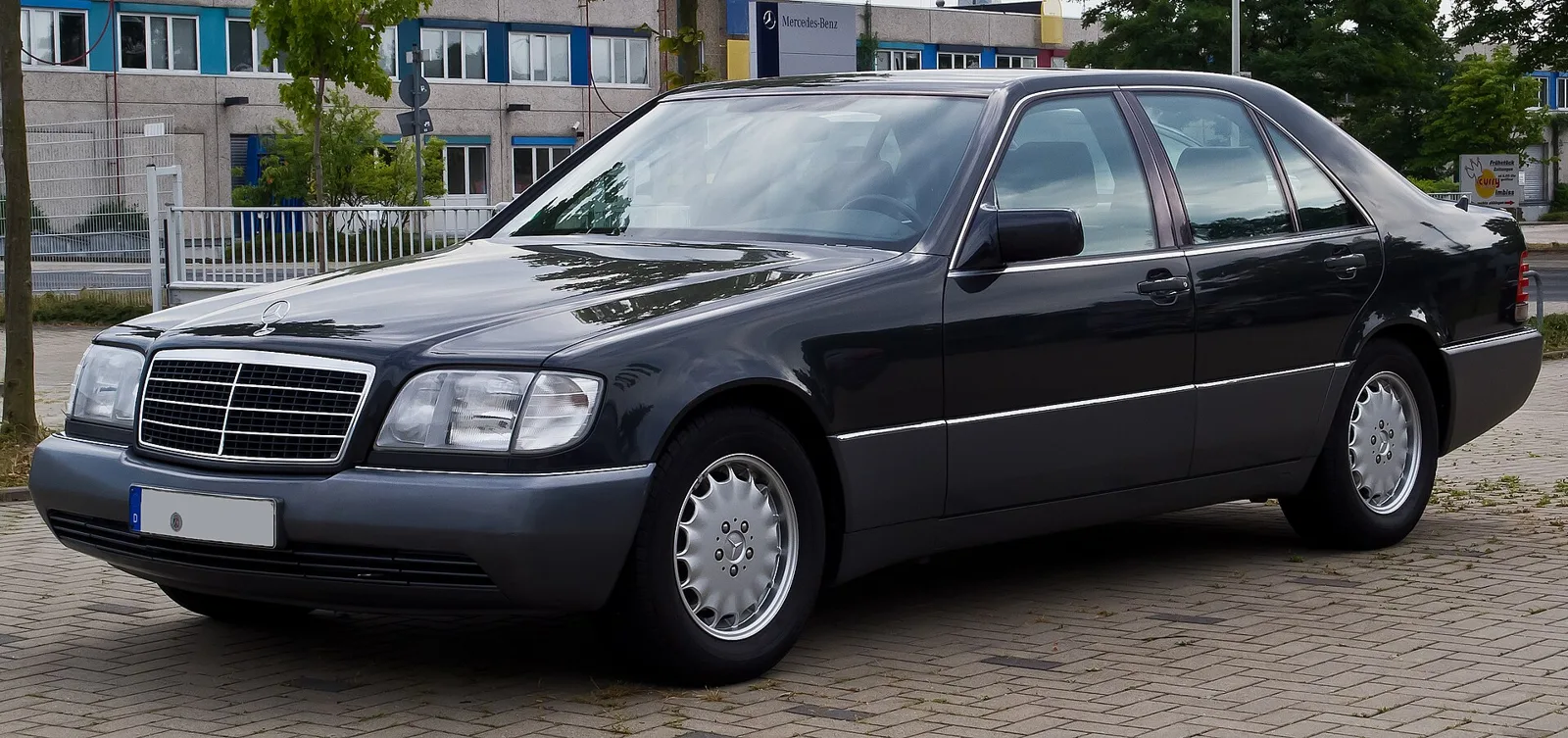
The S-Class and CL-Class were first to receive COMAND, and other models followed. Because the system began on flagships, its later units were sized for a wider range of cars. The cheaper NTG2 and NTG4 units show how the design was adapted for mainstream models.
The idea was simple to describe but hard to build: one screen, one controller and one set of software, shared across the cabin. Each new generation tried to make that idea cheaper, faster or better connected to outside services.
COMAND began as a cassette and CD head unit and ended as a hard-disk platform that could tether a phone, before MBUX took its place.
How did the first COMAND generation work?
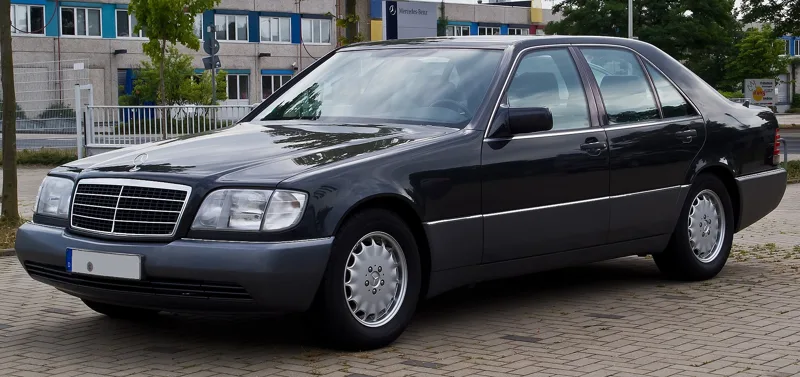
The first generation, which Mercedes-Benz called COMAND 2.5, was introduced on the W220. The label seems to refer to the unit's height of 2.5 DIN. It combined a cassette deck, a CD drive for navigation maps, an FM and AM tuner, a four-channel amplifier and external connectors. Bosch made the unit, and it was an option on almost all models, carried under option code 352.
European models used Tele Atlas map discs. Towards the end of 1999 the system moved to the improved DX type navigation discs. The D2B optical bus linked the external CD changer, the phone, optional Bose audio and the Linguatronic voice option.
| Generation | Introduced | Main change |
|---|---|---|
| COMAND 2.5 | W220 | Cassette drive, CD navigation, D2B optical bus |
| COMAND 2.0 | W210 E-Class | 2 DIN unit with the cassette drive removed |
| COMAND 2.0 MOPF | S-Class, model year 2003 | Widescreen version of COMAND 2.0 |
| COMAND-APS NTG1 | W211 E-Class, model year 2002 | MOST bus replaces D2B, DVD navigation |
| NTG2 | W203 C-Class, W209 CLK | Single double DIN head unit |
| NTG3 and NTG3.5 | W221 S-Class, W216 CL-Class | Hard disk maps, 8 inch TFT display |
| NTG4 | W204 C-Class, 2007 | Reduced-cost NTG3 with 7 inch screen |
| NTG4.5 | W204 model year 2012 | COMAND Online with mobile broadband |
| NTG5.0 | 2013/2014 S-Class, GLA and C-Class | Last COMAND, Intel Atom processor |
Several generations overlapped in production, so the table is best read as a family tree rather than a strict timeline. Older units stayed in use while newer ones appeared.
Why did the COMAND 2.0 units change shape?
The core of the 2.5 design, with DX maps, returned in a slimmer housing called COMAND 2.0. The "2.0" refers to a unit height of 2 DIN, and the cassette drive was removed. The unit first appeared on the W210 E-Class as a rectangular design, and later in a rounder shape for the W203 and R230.
Starting with the 2003 S-Class, a widescreen COMAND 2.0 variant called MOPF took over from the 2.5. The first three versions, 2.5, 2.0 and 2.0 MOPF, are grouped together as "COMAND 2" systems, even though the successor was named COMAND-APS NTG1.
What changed with the NTG1 and NTG2 units?
A ground-up redesign arrived with the W211 E-Class in 2002, swapping the D2B optical ring for MOST, and the Mercedes-Benz option code became 527, a code that the COMAND 2.0 MOPF also carried. The MOST-based systems were called COMAND-APS to tell them apart from the older D2B units.
NTG1 used DVD-based navigation instead of CD, so one disc could cover a whole region such as Europe. It could also play MP3 CDs and DVDs. NTG2 was a cheaper and more integrated version. Its core components sat in a single double DIN head unit, where NTG1 had used three separate parts: an audio gateway, a display head unit and a navigation processor.
That simplification had a cost. NTG2 could not play MP3 discs, and using navigation while listening to an audio disc required the optional CD changer. NTG2 appeared in the W203 C-Class, the W209 CLK, the Vito and Viano, and the Smart Forfour.
How did NTG3 and NTG3.5 raise the bar?
NTG3 was reserved for the top models, the W221 S-Class and the W216 CL-Class. Those cars had COMAND as standard, which allowed deeper integration. The maps were stored on an internal hard disk rather than a DVD, with updates still installed from an update DVD. NTG3 handled audio, video, navigation and telephone functions, and it also reached into the seats, climate control, window shades, locking and lighting.
The display was a large, high resolution 8 inch TFT 16:9 widescreen, mounted higher and more directly in the driver's line of sight. A separate large rotary controller sat on the centre console. NTG3 brought DAB digital radio onto the MOST bus for the first time. Its main controller was a large rotary dial with haptic feedback, supported by buttons and a favourite button that could be given any function.
A premium Harman Kardon Logic7 setup was optional, with 14 speakers and a 600W digital amplifier. A digital TV tuner and a CompactFlash reader for MP3 music were also available, and rear seat entertainment could use the surround sound system instead of headphones.
The model year 2009 W221 S-Class received NTG3.5, which added better Bluetooth support and split view. In split view, a passenger can watch a DVD while the driver sees the navigation map on the same display. NTG3.5 also added a rights function that blocks copied map update discs. That rule means NTG3 vehicles cannot be upgraded to NTG3.5.
What did NTG4 and NTG4.5 offer mid-range buyers?
NTG4 was a reduced-cost version of NTG3 technology. It first appeared when the W204 C-Class launched in 2007, with a 7 inch screen rather than the 8 inch display of the S-Class. It was the first COMAND to support the Mercedes Media Interface, and it stored maps on a hard disk with a card reader for MP3 music. The W204 screen folded in and out electrically, while other versions had a fixed screen. NTG4 also appeared in the Mercedes SLS and the GLK-Class X204.
NTG4 first supported only 5 character UK postcodes, unlike NTG3. Some later units, including those in W212 cars and newer, received a firmware upgrade from dealers that added 7 character postcodes.
NTG4.5 arrived in late 2011, fitted to W204 cars for model year 2012 and then to the W212, W207 and R172 SLK. It became the latest COMAND for non-flagship cars, and it was also called COMAND Online because it could use the phone's mobile broadband to reach Mercedes-Benz internet services. Downloadable apps such as Facebook could run on it. Its 7 inch colour display had a resolution of 800*480 pixels and an SD card slot.
The first version used brown and black graphics, known as GEN1. The colour scheme changed to grey, black and red at the model year 2013 update, which became GEN2, and the firmware for both generations was later merged into one release with the colours set at run time.
How did NTG4.7 and NTG5.0 extend the platform?
COMAND NTG4.7 appeared in vehicles from June 2013 onwards, including the GLK350 of 2015. It supported direct tethering of iPhones and Android phones for internet functions, which had not been possible before, and it added internet radio and changes to route guidance. Its upgrades included new Mercedes apps, a faster CPU and a hard disk increased from 80G to 100G, which made the system run more smoothly.
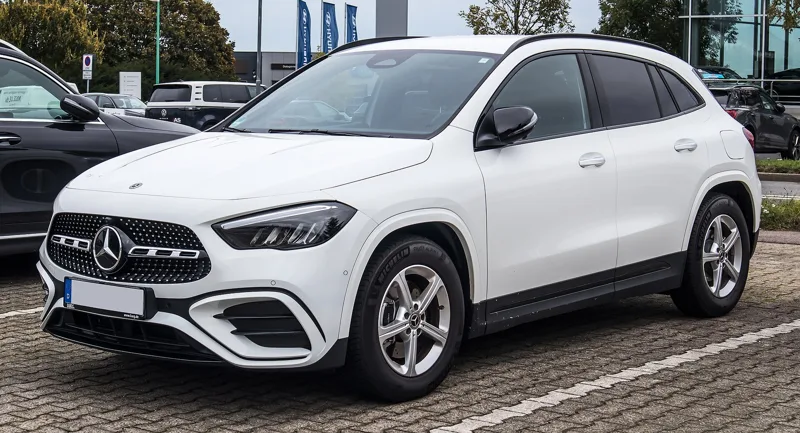
NTG5.0 is the last version to carry the COMAND name. It first appeared on flagship and mainstream models including the S-Class, GLA and C-Class, and it added Mercedes Online Radio, broadcast from Europe 24 hours a day. Its maps zoom more smoothly and carry more graphics, and the core is an Intel Atom processor. Over time there were several variants. NTG5*1 has a keypad and supports Apple CarPlay and Android Auto, while NTG5*2 and NTG5.5 have no keypad.
The file support was broad. NTG 5.0 plays MP3 files at 128 and 320 kbit/s, iTunes AAC-LC audio, uncompressed 16 bit stereo WAV, and video in MPEG-2 DVD format, MPEG-4 AVC H264 with AAC audio, and MP4 files.
Which option codes identify a COMAND unit?
Mercedes-Benz used option codes to mark each COMAND unit. COMAND 2.5 carried code 352, while code 527 covered both NTG1 and the widescreen COMAND 2.0 MOPF. Later, the NTG2.5 unit used 512 for the single drive version and 527 for the version with the optional DVD changer.
That overlap means a code alone does not settle which hardware is fitted. Buyers should also check the head unit's generation, the screen size and the model year, because one code appeared on different units. NTG2.5 stored its navigation maps on an internal hard disk, with spare room for MP3 files.
What replaced COMAND?
The COMAND name is no longer used, and MBUX has replaced it in many Mercedes-Benz vehicles. A successor, My MBUX, is arriving with the new W223 S-Class. The company's marketing for MBUX included a mobile phone commercial produced by OMD, which shows how far the brand had moved from the cassette-and-CD head units of the 1990s.