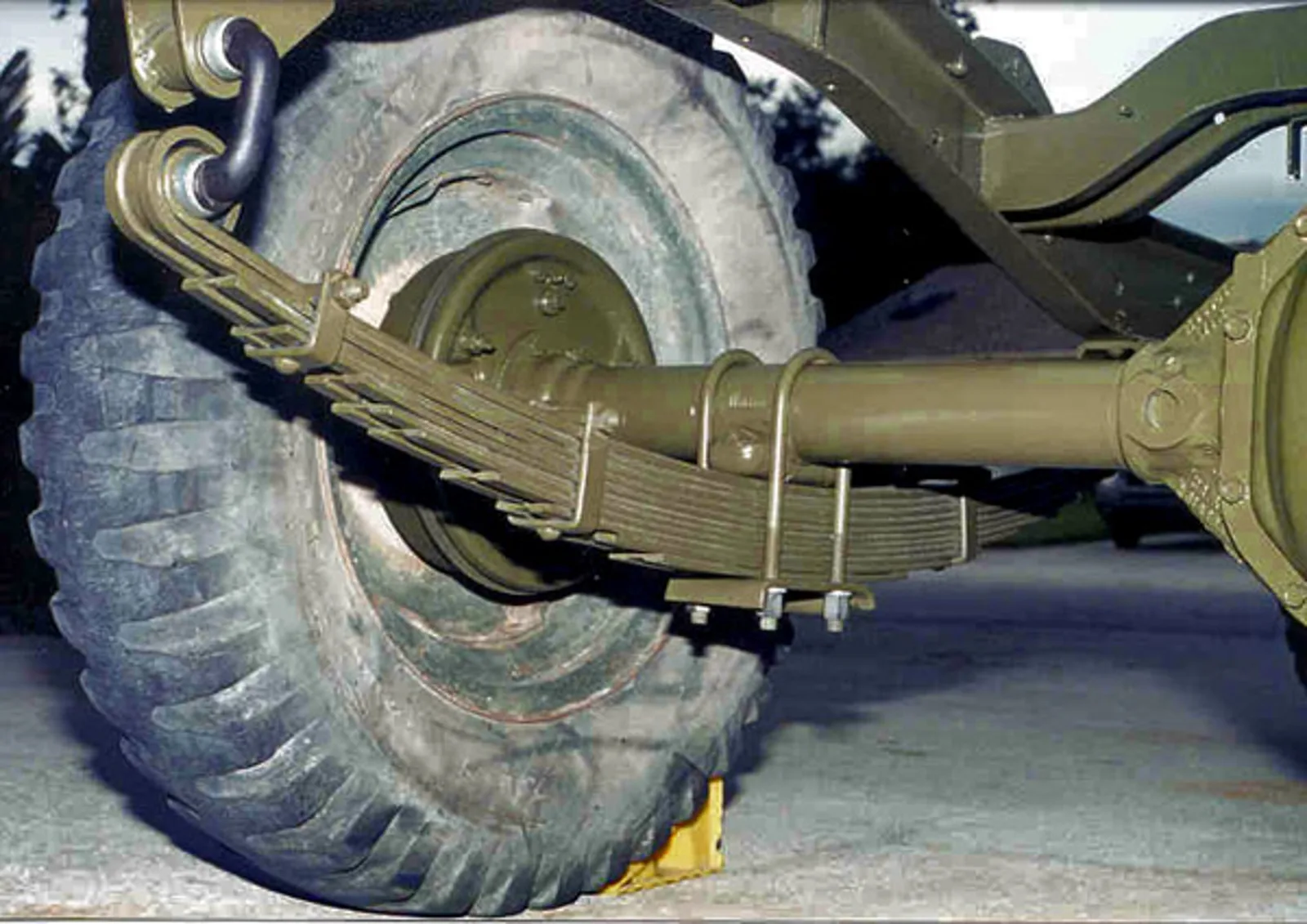
A stack of spring-steel plates that springs the load, locates the axle and damps motion through friction, from carriages in 17th-century France to today's heavy vehicles.
A leaf spring is a stack of arc-shaped spring-steel plates that connects an axle to the frame. It flexes over bumps, locates the axle and damps motion through interleaf friction. Obadiah Elliott patented the modern elliptical form in 1804. It remains common on heavy trucks and vans.
A leaf spring is a stack of narrow, arc-shaped spring-steel plates fixed to an axle and a vehicle's frame. It flexes up and down as the wheels meet bumps, and it is one of the oldest forms of vehicle suspension still in use. A single leaf spring can spring the load, locate the axle and damp motion through friction between its layers.
What is a leaf spring and how does it work?
A leaf spring is one or more thin strips of spring steel that bend as the road pushes up on a wheel. The bend stores energy, and the steel releases it as the wheel drops away again. The centre of the arc carries the axle, and loops at each end, called eyes, bolt to the chassis.
One eye is normally fixed, while the other sits in a hinge or shackle. The shackle is a short swinging arm that lets the spring lengthen as it compresses. That movement makes the suspension softer and stops the spring failing under heavy loads, which is why most leaf packs use one.
Lateral leaf springs, which run the length of the vehicle at right angles to the axle, are the most common arrangement. Transverse springs also exist, and they run across the car instead. Because the spring holds the axle in place, a leaf suspension needs fewer separate linkages than most alternatives.
A simple stack of spring steel that springs, locates and damps the axle, and still carries heavy trucks after more than two centuries.
How is a multi-leaf spring built?
For heavy vehicles, several leaves are stacked in layers, usually with progressively shorter leaves. The longest is the master leaf, and the eyes are formed into it. The other leaves are tapered at their ends, and a centre bolt at mid-length holds the stack together. Clips or notches keep the leaves lined up sideways.
Leaves are numbered in descending order of length, so the longest is the master leaf. Auxiliary or rebound leaves can sit in the main pack as well, with the one closest to the master leaf counted as number one.
Some manufacturers have used mono-leaf springs, a single plate design, to avoid the uneven behaviour of multi-leaf friction. Spring steel is the key material for either design.
Spring steel is the key material. Steel with about 1 percent carbon proved the most efficient, and leaves of 5.2 to 9.5 mm (0.203 to 0.375 in) thick must harden fully through their section. Suitable alloys include 55Si7, 60Si7, 65Si7, 50Cr4V2 and 60Cr4V2.
How are leaf springs manufactured?
Production follows a sequence of forming, heat treatment and finishing. Heat treatment is the central stage, and it has four steps:
- Leaves are heated in an oil-fired furnace to 850 to 950 C until they reach the critical temperature for hardening.
- Hot leaves are bent to a set radius in a hydraulic press, a process called cambering, and checked with gauges.
- They are quenched in an oil bath, which makes the steel very hard. Quench oil should stay below 80 C, and its fire point is about 200 C.
- The leaves are tempered between 540 and 680 C, which reduces brittleness and sets the final hardness.
The hardening step matters because every leaf must become fully martensitic through its whole section, which the choice of steel makes possible. Tempering also relieves internal stresses, and Brinell hardness testing confirms that each leaf meets its target.
Finished leaves then go through shot peening, painting and assembly before marking and packing.
Who invented the modern elliptical leaf spring?
Obadiah Elliott is credited with the modern leaf spring after his 1804 patent for elliptical leaf springs. Those springs were two circular arcs linked at their tips, with the frame attached at the top of the upper arc and the axle at the bottom. The design removed the need for a heavy perch and made carriages faster and cheaper to run over rough roads.
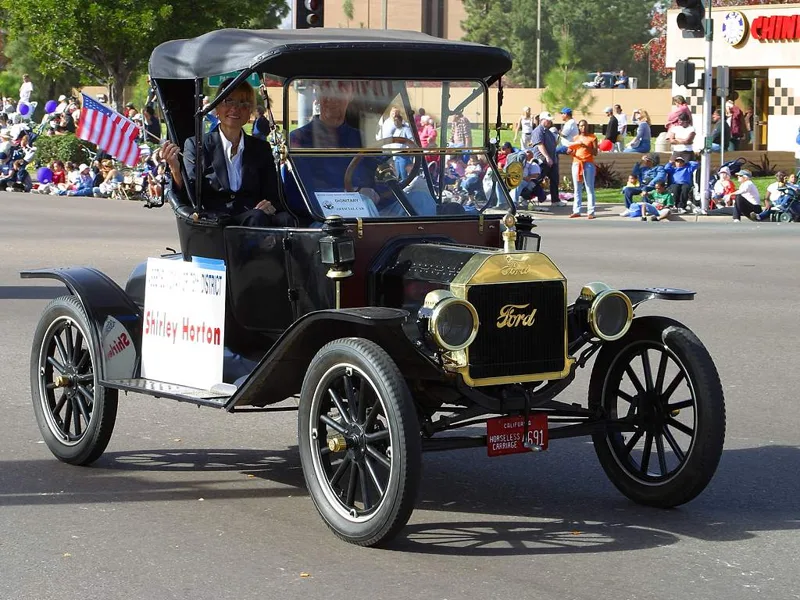
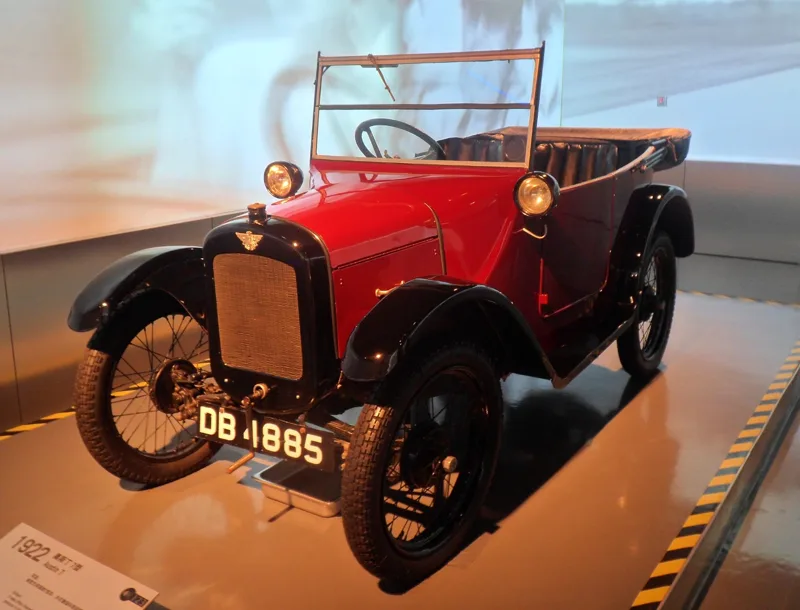
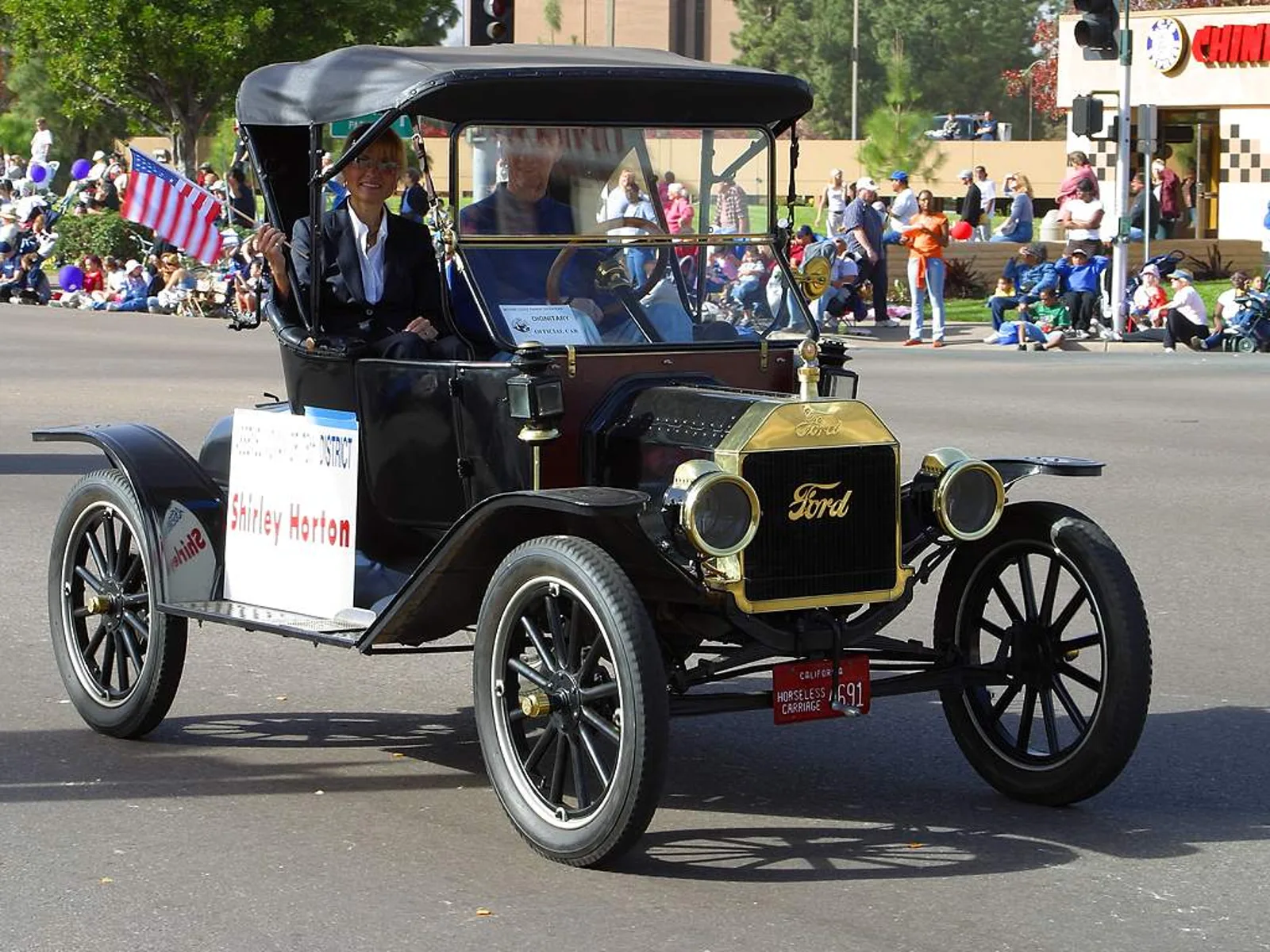
Designers quickly produced variants. The semi-elliptical form used only the lower arc, as in the Hotchkiss drive. Quarter-elliptic springs were fitted to short ladder frames, as on the Austin Seven of the 1920s. The Ford Model T used multiple yoke-shaped springs over its differential, while some makers laid wood or other non-metallic sheets between metal leaves to act as dampers.
When did leaf springs first appear?
The earliest known leaf springs appeared on carriages in France in the mid-17th century, in the form of a two-part elbow spring. They spread to England and Germany, and by about 1750 they were fitted to the carriages of the wealthy in both countries. Richard Lovell Edgeworth won three gold medals in 1768 for showing the value of sprung carriages.
Early leaf springs were wood-and-steel affairs for carriages, but the 19th century turned them into an industrial product. Steel rolling improved, instruments for measuring spring behaviour were developed and better spring alloys appeared, making leaf springs more consistent and cheaper to produce.
By the end of the 18th century, William Felton's 1796 treatise showed that leaf springs were sold regularly by carriage makers. Later engineers, including Clark in 1855, Franz Reuleaux in 1861 and G.R. Henderson in 1894 developed the mechanics and deflection theory that made leaf springs more predictable.
What types of leaf spring are there?
Leaf springs come in several forms, each suited to a different layout. The table below summarises the main variants and where they were used.
| Type | Layout | Notable use or trait |
|---|---|---|
| Full elliptic | Two arcs linked at their tips | Patented by Obadiah Elliott in 1804; needs extra linkage |
| Semi-elliptic | Lower arc only | Hotchkiss drive |
| Quarter-elliptic | Thickest end set into a short ladder frame | Austin Seven of the 1920s |
| Parabolic | Few leaves tapering to a curve | Better ride; widely used on buses |
| Composite plastic | Plastic leaves in place of steel | Needs stronger dampers; GKN and Chevrolet Corvette development |
| Transverse | Straight leaf across the chassis | 1963 Chevrolet Corvette Sting Ray; 2016 Volvo XC90 |
Parabolic springs have fewer leaves whose thickness varies along a curve, so the leaves touch only at the ends and centre. That cuts inter-leaf friction and gives a ride closer to a coil spring, at the cost of load-carrying capacity. Composite plastic leaves go further still, but without inter-leaf friction they need more powerful dampers.
How do leaf springs affect handling and comfort?
A leaf spring locates the axle as well as springing it, which brings a handling problem. Because the flexing spring makes precise control of the axle's unsprung mass difficult, the axle can tramp, bouncing under braking or acceleration. Designs such as the Watts link and the Panhard rod, together with radius arms, locate the axle separately, so the spring can be softer and the ride better, as used in some classic rear suspensions.
The leaf spring acts as its own linkage, holding the axle in position without separate locating arms. The result is a simple and strong suspension, although the combined effect of stiffness and friction makes it less comfortable than coil-sprung alternatives.
Inter-leaf friction damps the spring's motion and reduces rebound, which was a major benefit before shock absorbers became common. The same friction is hard to control, though, and it causes stiction and irregular movement. The stiffness needed to hold the axle also limits comfort, so soft springs are unsuitable.
Where are leaf springs still used?
Passenger cars moved away from leaves once front-wheel drive arrived. Coil springs gave a better ride and allowed more flexible packaging around the drivetrain, so the leaf retreated to heavier vehicles.
Leaf springs were common on cars until the 1970s, when manufacturers moved to front-wheel drive and more sophisticated coil-sprung designs. Today they remain in heavy commercial vehicles, vans, SUVs and railway carriages. For heavy loads they have a clear advantage, because they spread weight along the chassis, while a coil spring concentrates it at one point.
Designers have also adapted the leaf for independent suspension. The 1963 Corvette Sting Ray used a transverse leaf for its independent rear suspension, and a similar concept appeared on the front of the 1984 Corvette. In 2016 the Volvo XC90 used a composite transverse leaf at the rear, tightly secured to the chassis at the centre, with each end bolted to a wheel suspension. The result was smaller, flatter and lighter than a conventional setup.
A leaf spring also guides the end of the spring along a defined path and locates a live rear axle without trailing arms or a Panhard rod. That saves cost and weight in a simple rear suspension, which explains their continued use on trucks and utility vehicles.
How can a leaf spring suspension be upgraded?
Off-road and workshop upgrades usually follow three routes. Adding an extra leaf to the factory pack is cheap and gives more ground clearance and load capacity, although the stiffer spring can make the travel feel harsh. Replacing the pack with a heavier-duty unit adds clearance and capacity, and it can increase rear wheel travel. Swapping the packs for coil springs changes every aspect of the rear suspension, including height, load capacity and wheel travel.
Lift blocks work at the rear but are poor at the front. A block raises the spring above the perch, and the braking force then acts higher above the axle, which can shift the block out of place and cause a loss of control. For off-road vehicles, the emphasis is on longer suspension travel and larger tyres, which add clearance and cushion rough ground.
Where else do leaf springs appear?
Leaf steel is a favourite material for blacksmiths, who make knives and tools from scrapped car springs in countries including India, Nepal, Bangladesh, the Philippines, Myanmar and Pakistan. Hobbyist smiths use it too. Some soft-edge trampolines replace coil springs with leaf springs, which are spaced round the frame as legs and reduce the risk of concussion. The diaphragm in an automotive clutch is also a type of leaf spring.