Autonomous vehicles could cut crashes, free up parking land and reshape jobs, but the estimates conflict and several effects may work against each other.
Self-driving cars could cut crashes caused by human error, free up parking land and change jobs and energy use, but the estimates conflict and depend heavily on adoption rates. Claims range from 25,000 lives saved a year to rising travel, so the overall effects remain debated.
Self-driving cars could change far more than the driving experience. Supporters point to fewer crashes, shorter commutes and land freed from parking, while critics warn of more travel, more sprawl and new security risks. The honest answer is that the effects depend on how fast the technology spreads and how governments regulate it.
The estimates below come from government reports, academic studies, consultancies and early field data. Several of them conflict, and many rest on adoption assumptions nobody can yet confirm, so each claim should be read with its method in mind.
Would self-driving cars make roads safer?
Supporters argue that automated driving would sharply reduce crashes caused by human error, because a US government estimate puts humans at the final critical step in 94% of crashes. Opponents answer that the human-crash figures are overstated and that early autonomous crash rates were not clearly better.
The strongest case rests on that 94% figure. One study estimated that converting 90% of US cars to automated vehicles would save 25,000 lives a year, and some studies claim the technology could save 10 million lives worldwide in each decade of use.
Opponents say the human-crash numbers are taken out of context, and they point to early data. One limited early study recorded 9.1 crashes per million miles, nearly double the human driving rate, although those crashes were less serious. Ars Technica counted 102 crashes over 6 million miles and argued that most were low-impact.
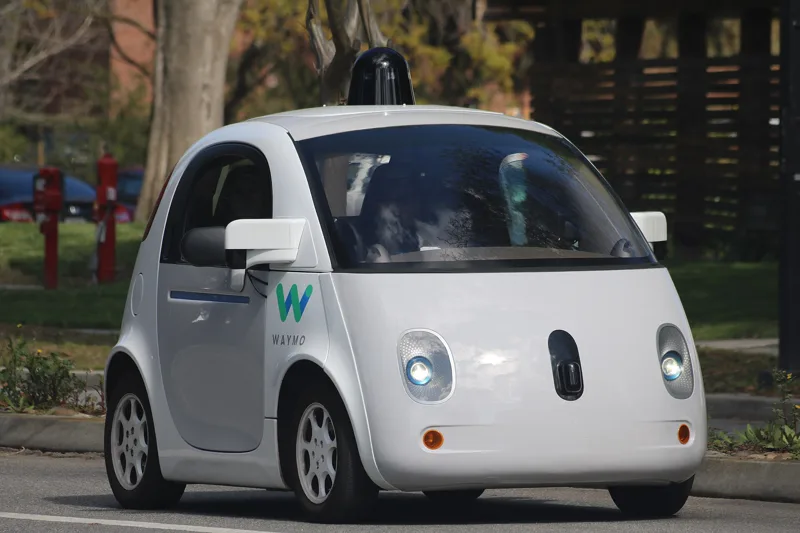
Waymo's own figures pointed the other way. The company claimed 3 injury crashes over 7.1 million miles, a rate it said was nearly twice as safe as human drivers. Figures from one operator cannot settle a question that involves millions of vehicles and very different road conditions, however.
Insurance follows the crash record. Auto insurance costs are expected to decrease as collisions fall, although fewer payouts could also lower demand for insurance in general. The shape of the insurance market would change along with the technology, rather than simply shrinking.
Experts also warn about edge cases. In 2017 no autopilot system was ranked safer than a human driver, and current systems can struggle with situations they were never trained to handle. Human factors add another wrinkle: drivers of automated cars are slower to respond when they must step in during a critical situation.
Self-driving cars promise safer roads and freer land, but the same technology could also mean more travel and new security threats.
What would happen to traffic and highway capacity?
Current rules allow roughly 2,200 passenger vehicles per hour in each lane. One study estimated that automated cars could push that to about 8,200 per hour, and full vehicle-to-vehicle connection could reach 12,000 per hour, assuming 120 km/h and a 6 m (20 ft) gap.
The capacity gain comes from closing gaps. Human highway gaps run from 40 to 50 m (130 to 160 ft), while connected vehicles could follow each other much more closely. That is why the same lane could carry far more cars without a single change to the road surface.
More capacity could ease congestion, particularly in cities where highways are at their limits. Traffic authorities would also gain data and predictable driving behaviour, which could reduce the need for traffic police and even some road signage.
The effect is not one-directional. One review concluded that privately owned autonomous cars might raise total travel, while driverless buses might cut car use. Policy choices will decide which path a city takes, and the same technology can produce either result.
How much land could self-driving cars free up?
Manually driven vehicles are used only 4 to 5% of the time, so most cars sit parked for nearly their whole lives. Autonomous taxis could work almost continuously, which could greatly reduce the need for parking. A 2015 Los Angeles study found 14% of land used for parking, equal to 1,702 hectares (4,210 acres).
That idle time is the core of the argument. A car that spends almost all its life stationary takes up space that a shared fleet could release. Parking in a dense city is therefore not just a nuisance but a large share of the available land.
Self-parking adds to the picture. One study found self-parking vehicles hit kerbs 81% fewer times than human drivers, yet only 25% of surveyed people said they would trust the technology. Trust, rather than capability, may be the bigger obstacle to that particular benefit.
Freed land could become parks, recreation areas, buildings and other uses, which would make cities more liveable. Privately owned self-driving cars could also drop passengers where parking is prohibited, which would be useful for park-and-ride facilities.
What would automation do to jobs and the car industry?
Driving jobs are the most direct casualty. Professional drivers, transit staff and crash repairers could all lose work, and McKinsey forecast $300 to $400 billion in AV revenue by 2035. Thousands of new roles have already appeared in low-income countries that train autonomous systems.
Osborne and Frey's widely cited paper flagged many jobs as at risk, and the reaction from professional drivers and unions is likely to be strong. Public transit services face similar pressure, as do the crash repair shops that depend on collisions.
Industry money has moved in both directions. Argo AI had drawn billions from Ford and Volkswagen before both pulled back from full autonomy by 2022. That retreat suggests the business case for full autonomy was harder to build than the early forecasts assumed.
Ownership could change as well. Shared taxi services could replace many privately owned cars, which would shrink the automotive production industry and its environmental footprint. The shift would hit car makers, dealers and the insurance market at the same time.
How would self-driving cars affect energy use and emissions?
The effect is uncertain. Automation can improve fuel economy and traffic flow, with estimated fuel efficiency gains of 23% to 39%, but induced demand may offset those savings. Sensors and computing loads can also cut electric vehicle range by up to 15%.
Automation could raise congested traffic speeds by 8% to 13%, and smoother flow could lift fuel efficiency by 23% to 39%. Smoother acceleration and braking also waste less energy, so the technical case for efficiency is real.
Those gains can be undone by travel growth. Convenience may encourage people to travel more, and that induced demand may partly or fully offset the efficiency improvement. A shift away from public and active transport would make the picture worse.
Electrification adds its own pressures. Lithium battery demand rises with automated electric vehicles, and the radar, lidar and connectivity hardware draws power. A 2020 Carnegie Mellon study found automation could cut EV range by up to 15%, which means the battery needs may not be as large as earlier assumptions suggested.
Claimed effects and the evidence behind them
| Effect | Claimed figure | Main caveat |
|---|---|---|
| Road safety | Humans are the final critical element in 94% of crashes | Government estimate; opponents say it is overstated |
| Lives saved | 25,000 a year at 90% automation | One study; estimates vary widely |
| Highway capacity | 2,200 rising to about 8,200 vehicles per hour per lane | Assumes automated cars and tight gaps |
| Parking land | 14% of Los Angeles land used for parking | 2015 study of one city |
| Fuel efficiency | 23% to 39% gain from smoother traffic | Can be offset by induced demand |
| Industry revenue | $300 to $400 billion by 2035 | Forecast, not a measured outcome |
Could self-driving cars affect privacy and security?
Yes. Vehicles that sense their surroundings collect large amounts of data, which could support mass surveillance if third parties gain access. The same connectivity opens hacking routes through vehicle-to-vehicle and vehicle-to-infrastructure protocols, and US lawmakers have said autonomous vehicles should be defended against hacking.
Vehicles' awareness could help police, yet it could enable crime too. Someone could use an automated car to deliberately crash into another vehicle or a pedestrian, which is why the data and the software both need protection.
Location data is another concern. When a vehicle's position is visible to other people through an interface, privacy suffers. A sensor-based infrastructure could become an all-encompassing surveillance apparatus that tells manufacturers a great deal about a user's lifestyle.
Terrorism is also raised as a scenario, in which a car is turned into a bomb. Hacking through shared information protocols is a risk that regulators have to plan for. Security is therefore part of the safety case, not a separate topic.
What would self-driving cars mean for public health?
A 2020 Annual Review of Public Health paper concluded that AVs would likely reduce deaths and injuries from crashes if properly regulated, while raising some risks such as air pollution, noise and inactivity. One unexpected cost is a smaller supply of organ donors, since 13% of US donations come from crash victims.
The review's reasoning is that fewer crashes would cut morbidity and mortality, and that cities could be reshaped to support healthier urban life. Those gains depend on sensible regulation, and they are not automatic.
The downsides are real. Air pollution, noise and a sedentary lifestyle could all increase, and a car that makes living far from work easier could encourage the very inactivity that public health specialists worry about.
Emergency services stand to gain as well. Rescue and military use has already reduced deaths, and future emergency vehicles could operate without drivers. That would free crews for work that still needs a human in the loop.
Lives saved by avoiding crashes are estimated at over $200 billion a year in the US. Set against that figure, the organ donation effect is small but striking, because it shows that fewer crashes would also mean fewer donors.
Older people, people with disabilities, children and low-income households could gain mobility, although the extent depends on the specific designs and rules adopted. These groups are often the ones poorly served by current transport, so the equity question matters as much as the headline numbers.