How electric racing grew from La Jamais Contente to electric Pikes Peak winners, TT Zero motorcycles and Formula E, and where it still trails the petrol engine.
Electric motorsport is the competitive use of battery and other electric vehicles, from one-off record attempts to Formula E. Electric cars held speed records as early as 1899, and in 2015 an electric car won Pikes Peak outright.
Electric motorsport covers racing with battery-powered and other electric vehicles, either in championships made up entirely of electric machines or in open events where they meet rivals with other engines. The idea is older than most fans expect, because electric cars once held speed records before petrol engines overtook them by 1924.
Today the field runs from Formula E single-seaters to electric motorcycles, rally cars and student projects. In a growing number of events, electric machines now beat their petrol rivals outright.
What is electric motorsport?
Electric motorsport is the competitive use of electrically powered vehicles, including cars, motorcycles and other machines. It takes place in all-electric championships such as Formula E, and in open events where electric entries race against vehicles with other powertrains, such as the Pikes Peak hill climb.
Organisers keep these categories apart because the technology has distinct strengths. Electric drive delivers torque and throttle response with ease, yet its batteries still hold less energy per kilogram than petrol, which limits how far a car can run before stopping.
Electric cars held the speed record before petrol overtook them, and today electric machines are winning races outright again.
How did electric cars hold early speed records?
Electric machines were among the first vehicles to reach serious speeds. In 1899 the streamlined La Jamais Contente became the first road vehicle to pass 100 km/h (62 mph), running on Fulmen batteries and two direct-drive motors.
The car had light alloy torpedo-shaped bodywork and Michelin tyres. Its two Postel-Vinay motors, rated at 25 kW each, ran at 200 V and drew 124 amps apiece for about 68 hp in total, and the record fell at Acheres, near Paris, on 29 April or 1 May 1899.
Electric cars did not keep the lead for long. In 1900 about 38% of US automobiles, or 33,842 cars, were electric, against 40% steam and 22% petrol. Petrol gained ground after the Ford Model T arrived in 1908, and in 1912 Charles Kettering's electric starter removed the hand crank that had been seen as a major drawback.
Electric and steam power held the outright speed record until 1924. Petrol engines then passed them, helped by far greater sales and therefore far more development money.
What revived electric racing in the 21st century?
Battery progress did most of the work. Lithium-ion cells, first commercialised in the early 1990s, gave electric powertrains enough storage to compete again, and higher production volumes brought down the cost of motors and packs.
Electric drag racing is a natural fit, since the cars start from a standstill and aim for the highest speed over a short distance. Organisations such as NEDRA keep certified records of electric drag runs around the world.
Milestones followed quickly. In July 2013 an ETH Zurich electric car beat every combustion car at Formula Student Silverstone, which is believed to be the first time an electric vehicle has beaten combustion cars in an accredited motorsport contest. In 2015 an electric car took every place at the top of the Pikes Peak results.
In January 2017 a purely electric car completed the full 9000 km Dakar Rally route through Argentina, Paraguay and Bolivia. Its 250 kW motor (340 hp) and 150 kWh battery were split into modules that could each be charged separately.
| Year | Event | Result |
|---|---|---|
| 1899 | Land speed | La Jamais Contente passes 100 km/h (62 mph) |
| 2013 | Formula Student, Silverstone | ETH Zurich electric car beats all combustion entries |
| 2015 | Pikes Peak | Drive eO PP03 wins outright in 9:07.222 |
| 2017 | Dakar Rally | Pure electric car completes the 9000 km route |
| 2018 | Pikes Peak | Volkswagen I.D. R sets a record of 7:57.148 |
How do electric cars compare at Pikes Peak?
Electric entries closed the gap quickly at Pikes Peak, the hill climb known as The Race to the Clouds. The electric class broke 16 minutes in 1994 and 10 minutes in 2013, while the unlimited combustion class needed until 2011 to break the 10-minute barrier.
The course runs 19.99 km (12.42 miles) through 156 turns, climbing 1,440 m (4,720 ft) to a finish at 4,300 m (14,110 ft) on average grades of 7.2%. The race has been held since 1916, and electric vehicles have competed since 1983.
In 2014 a Mitsubishi MiEV Evolution III finished second in 9:08.188. The 2015 winner, the Latvian team Drive eO, produced 1020 kW of peak power from a car weighing 1200 kg. The driver, Rhys Millen, said the car lost half its tractive power to heat around the halfway point, and testing had suggested a time 30 seconds quicker.
In 2016 an Acura prototype with four electric motors, based on the NSX, finished third in 9:06:015. The overall winner that year was a petrol-engined Norma piloted by Romain Dumas, clocking 8:51:445.
The electric record fell in 2018, when Romain Dumas took the all-electric Volkswagen I.D. R to 7:57.148. The previous record of 8:13.878 had been set by Sebastien Loeb in a 2013 Peugeot 208 T16.
Can electric motorcycles beat petrol bikes on the Isle of Man?
Electric motorcycles already race for the TT Zero prize at the Isle of Man TT, and Japan's Mugen team won it six years running from 2014 to 2019. Lap speeds in the electric class have been rising by about 2 mph a year, but petrol bikes in the main TT remain quicker on average.
The inaugural 2010 race was won by Mark Miller on a MotoCzysz E1pc in 23 minutes and 22.89 seconds, averaging 96.820 mph over a single 37.733 mile lap of the Snaefell Mountain Course. He was the first American winner since Dave Roper took the 1984 Historic TT.
Mugen joined in 2012 and finished runner-up in its first two seasons before winning in 2014. Its bikes became the first electric motorcycles to average more than 120 mph (190 km/h) around the Snaefell circuit, and the team set four new lap records along the way.
The riders are usually experienced TT competitors who also race petrol classes. Lee Johnston, who tried an electric bike in practice in 2015, described it as stable and peaceful, with no revving to disturb the ride over the mountain.
The trend is clear on paper. TT Zero reached 121.824 mph in 2018, while the mainstream combustion lap speed was 135.452 mph that year. Electric bikes may overtake the petrol bikes, though not before the middle of the next decade.
How did electric cars perform at Le Mans?
Nissan's ZEOD RC, a hybrid electric prototype, took part in the 2014 running of the 24 Hours of Le Mans. Ben Bowlby, who had earlier worked on the DeltaWing, designed the car, and it had to retire in the early hours with a gearbox failure.
The ZEOD RC ran on lithium-ion packs housed in a chassis close to the DeltaWing's design, and it borrowed that car's narrow track for efficiency. Its goals included exceeding 300 km/h and covering one lap on electric power alone, and both were achieved before the retirement.
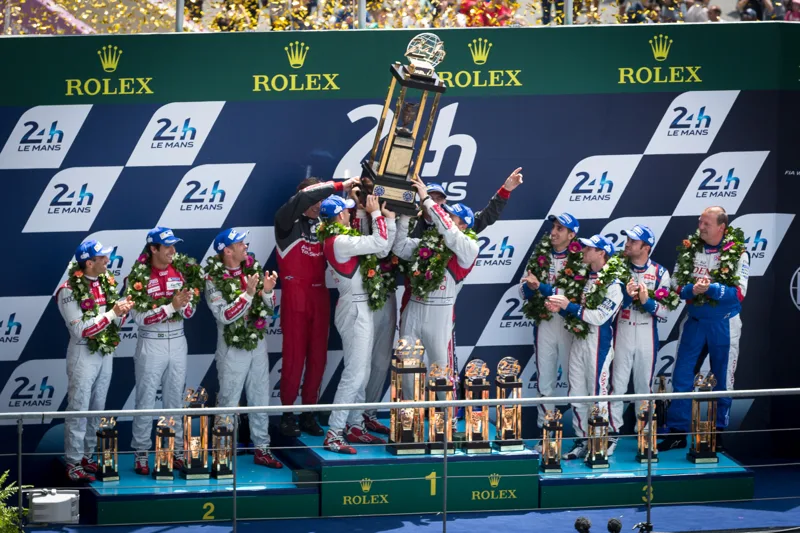
The race sits within the FIA World Endurance Championship, organised by the Automobile Club de l'Ouest and sanctioned by the FIA. In recent years hybrid electric cars have won the 24 Hours of Le Mans overall, showing that hybrid systems now sit at the top of endurance racing.
Which all-electric series are running now?
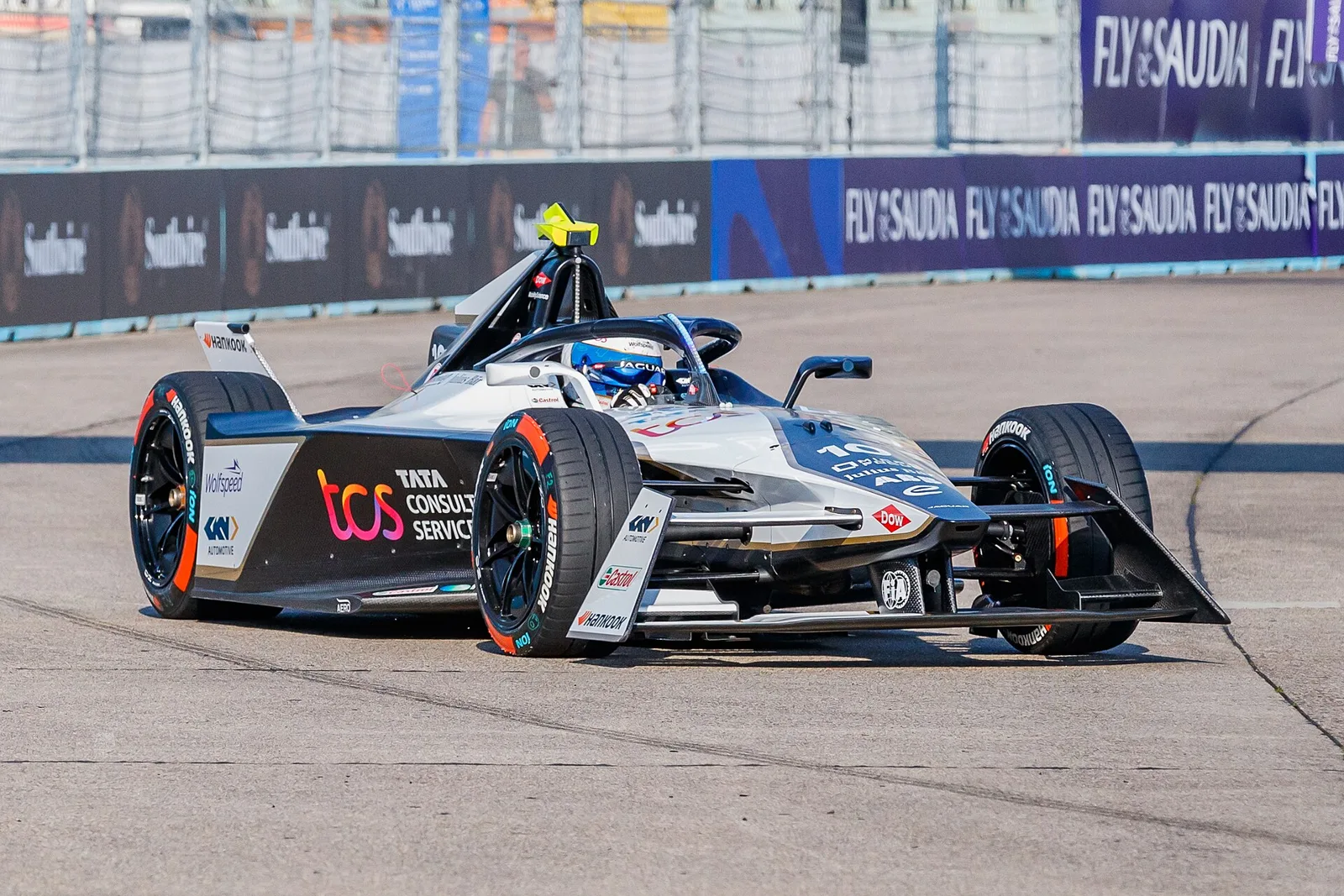
Formula E is the top class for electric single-seaters. It was conceived in 2012, its first championship started in Beijing in September 2014, and it has held FIA World Championship status since the 2020-21 season.
MotoE has been part of the MotoGP calendar since 2019, using the Energica Ego Corsa before switching to Ducati machines in 2023. An electric mountain bike World Cup has covered cross-country and enduro categories since 2023.
Touring cars have been tried too. The FIA ETCR eTouring Car World Cup ran for two seasons, 2021 and 2022, before its promoter cited unresolvable differences. STCC Scandinavia was announced in 2022 as the first national series of its kind, and the NXT Gen Cup began in 2023 for drivers aged 15 to 25.
Off-road and rallycross formats suit electric power well. Extreme E used electric SUVs in remote places such as the Arabian desert and Greenland from April 2021, and it was due to give way to Extreme H, which uses hydrogen-powered cars, after its fourth season in 2024. World RX has run the fully electric RX1e class since the 2022 season.
In July 2021 the FIM unveiled the E-Xplorer World Cup, an electric off-road motorcycle series whose backer, Alejandro Agag, had also been involved with Extreme E, Formula E and E1 racing. Each team pairs a man with a woman, and the two riders race against rival pairs. The first season in 2023 included stops in Catalonia, Crans-Montana, Auvergne and two sand-dune rounds in Sardinia, and Team MIE, with Sandra Gomez and Jorge Zaragoza, took the title.
Ice racing and support series have gone electric as well. The French Andros Trophy on ice tried electric cars from 2007 and opened an electric class in 2010, then ran electric-only fields from the 2019-20 season. Jaguar ran the I-Pace eTrophy as a stock car series supporting Formula E from 2018 to 2020.
Which student competitions use electric power?
Students race electric machines in several contests. MotoStudent Electric, which had its first race in 2016, asks university teams to design electric racing bikes capable of 200 km/h (120 mph), while Greenpower lets students aged 9 to 25 race electric cars on well-known circuits.
The World Solar Challenge crosses 3,021 km (1,877 mi) of Australian outback from Darwin to Adelaide. It has been held every two years since 1987, and it has run twelve races across a 28-year history. Formula SAE, a design competition begun in 1980 at the University of Texas at Austin, rounds out the student calendar.
Will electric racing overtake combustion?
Electric drive has an edge in how power arrives and how a vehicle handles, most of all on motorbikes, but the packs are heavy and range remains a weak point. Early electric challengers have tended to win shorter contests such as hill climbs or fastest-lap runs, while hybrids have proven strong in endurance.
Refuelling is a consideration for combustion teams too. Petrol bikes at the Isle of Man TT stop to refill every second lap, so the range gap is one of degree rather than kind, and it narrows as battery packs improve.
Battery energy density remains the constraint that decides the pace of change, and the sport's direction will depend on how quickly packs improve.