Namco's Fuji Speedway driving game introduced the qualifying lap, rewarded overtaking and became the top earner of its era.
Pole Position is a 1982 arcade racing game from Namco, distributed in North America by Atari. It put a Formula One car on the Fuji Speedway and introduced a qualifying lap before the race. It was the highest-grossing arcade game in North America in 1983 and 1984.
Pole Position was a 1982 arcade racer from Namco that put players in a Formula One car at the Fuji Speedway. It introduced the qualifying lap, rewarded drivers for passing rivals rather than merely staying on the road, and became one of the top-earning arcade games of its era. Its influence on the racing genre is still widely discussed.
Where did Pole Position come from?
Pole Position grew out of Namco's earlier electro-mechanical driving games, especially F-1 from 1976, which had been designed by Sho Osugi. Osugi later assisted development of Pole Position. Galaxian designer Kazunori Sawano came up with the core idea, and Shinichiro Okamoto took it forward as a true driving simulation.
Development ran for three years. Okamoto wanted real-world driving techniques and a 3D perspective, and he chose the Fuji Speedway so that newer players would recognise the track when they first played. Music was composed by Nobuyuki Ohnogi and Yuriko Keino, and the project drew on Namco's experience with coin-operated driving machines from earlier years.
A single lap at Fuji decided the grid, and the whole arcade racing genre followed its lead.
Why was the hardware so hard to build?
The game was too ambitious for older arcade hardware, so the team used two 16-bit processors, an approach unheard of in arcades at the time. Controls were just as hard to perfect, since Okamoto wanted realistic handling. The gear shift ended up with just high and low speeds.
For a while the game was the only video game known to use a Zilog Z8000 CPU. Namco president Masaya Nakamura found the car hard to keep moving in a straight line, and the team argued at length about how quickly the gear shift should respond. Iwatani, creator of Pac-Man, picked the title because it sounded appealing, and filed a trademark soon afterwards.
The track also carried early product placement, with billboards advertising Pepsi, Marlboro and Canon. The pseudo-3D rear view used full-colour landscapes and scaling sprites, and the vanishing point swayed from side to side as the car approached corners, so the road seemed to curve into the distance.
How did a race work?
The player first completes a one-lap time trial inside a time limit. A good time earns bonus points and sets the starting slot among seven computer-controlled cars. The race then runs for a set number of laps, with extra time granted after each lap, and the game ends when time runs out or the final lap is finished.
Puddles can briefly cause a loss of control, and running onto the grass slows the car. Billboards beside the track destroy the car on contact, causing a short delay while a new car is put into play. Players earn bonus points for every car passed and extra points for any time left on the clock.
What set the game apart was its scoring. Earlier three-dimensional arcade driving games emphasised staying on the road and avoiding crashes, while Pole Position rewarded passing rivals and finishing among the leaders. It was the first racing game built on a real circuit and the first to require a qualifying lap before the Grand Prix races.
When and where was it released?
Japan saw the game on 16 September 1982. Atari licensed it for North America, where it debuted at the Chicago show from 18-20 November 1982 before a mass-market release on 30 November 1982. Namco released the game in Europe later that year, and its older electro-mechanical racers were discontinued soon afterwards.
Two cabinets were offered. The standard upright had a steering wheel, a low and high gear shifter and an accelerator pedal, while the environmental cockpit model added a brake pedal. Atari also commissioned a 1983 television commercial that ran only on MTV for its Atari 2600 and 5200 versions, and Pole Position II followed that year.
How well did the game sell?
Pole Position was a huge commercial hit. It was the highest-grossing arcade game of 1982 in Japan, the most popular coin-operated game internationally in 1983 and the top earner in North America in 1983 and 1984. In the US alone, more than 21,000 cabinets sold for an estimated $61 million by 1983.
Weekly earnings were strong too. US coin drop earnings averaged $9.5 million a week, or $450 per machine, and the game topped the upright cabinet charts for seven months in 1983. The chart run was one of the defining arcade hits of that year.
The home versions carried the success further. The Atari 2600 version sold 578,281 units in the United States between 1986 and 1990, while the Atari 5200 and Atari 8-bit versions sold 12,492 and 9,204 units in the same period. The console version also topped UK sales charts in late 1983, and the arcade game was still among the top five earners in 1985.
Critical reception
Video Games magazine listed it among the ten best games at its debut show and compared it favourably with Sega's Turbo, calling it a serious test of driving skill. Electronic Games gave the arcade game its 1983 Coin-Op Game of the Year award, praising the racing, the graphics and the two-heat format. Computer and Video Games praised its exhilarating driving simulation, saying that holding a screaming curve offered thrills comparable to a real racetrack.
Reviews of the home versions were mixed. InfoWorld named the arcade game the best road-race title of 1983 and praised the Atari 8-bit port, but thought the Commodore 64 version looked rushed. Eurogamer's 2007 retrospective was more measured, describing a simulation so faithful that dedicated racing fans might be put off by its difficulty. Entertainment Weekly listed it among the top ten Atari 2600 games in 2013.
Electronic Games also praised the sound effects and the solid, realistic graphics. Reviewers across the period kept returning to the same points: a simulation that rewards skill, visuals that sell the speed and a race that holds attention from the first lap to the finish.
Why is Pole Position still important?
Pole Position is often counted among the most influential video games ever made, and it is frequently described as the most influential racing game. IGN ranked it first among the most influential racing games in 2015, citing its real-world circuit, its qualifying lap and its chase-style camera, and its success helped cement the genre for decades.
The game spawned ports, sequels and even a Saturday morning cartoon, although the cartoon had little in common with the original. Clones followed, including Top Racer from Commodore, which prompted Namco to sue Commodore Japan and seize copies. Parker Brothers published a board game in 1983, and later releases appeared in the Namco Museum series and in Microsoft's Return of Arcade collection.
Flux magazine ranked it 32nd in its 1995 top 100 video games list. Bill Loguce and Matt Barton placed it among the 25 most influential games of all time, and Electronic Games praised the way it rewarded finishing among the leaders. The game returned again in July 2023 through Hamster's Arcade Archives releases on Nintendo Switch and PlayStation 4.
What did players actually see on screen?
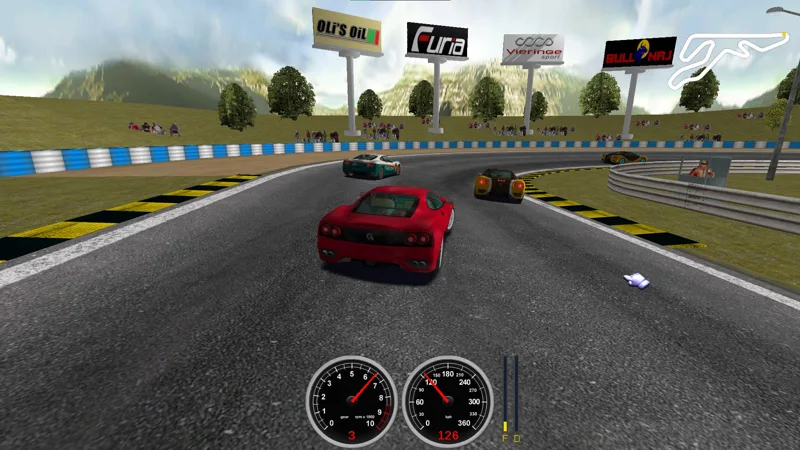
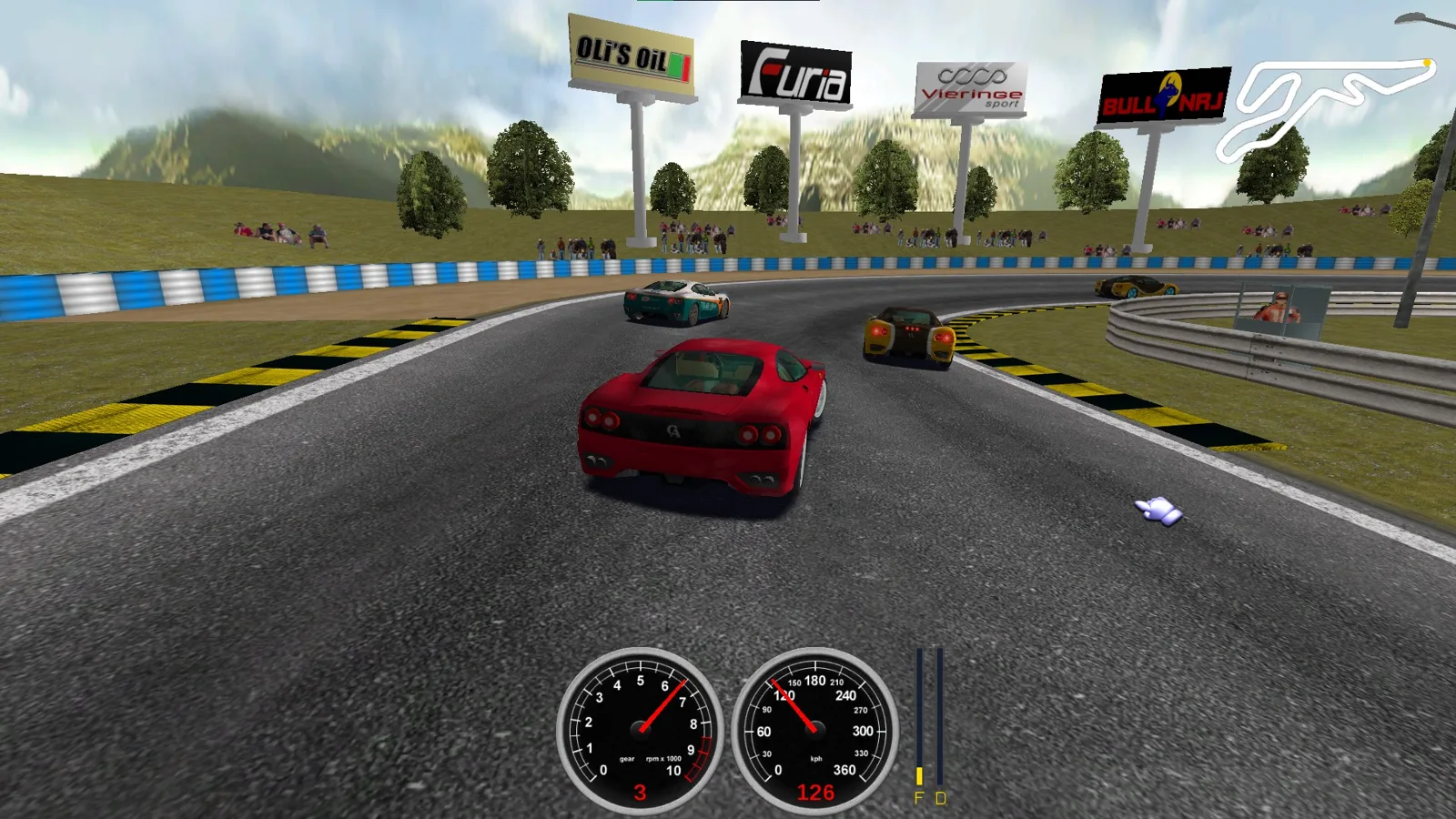
Players saw the track from a rear, third-person viewpoint with a pseudo-3D effect that gave a convincing sense of forward movement. Race cars and roadside signs were drawn as scaling sprites, which grew as the player approached them, and full-colour landscapes filled the background. The result felt fast and detailed at the same time.
The corners were part of that effect. The horizon drifted left and right as the car entered a bend, which mimicked the way a real road reveals itself as you drive into it.
How did the Fuji track shape the game?
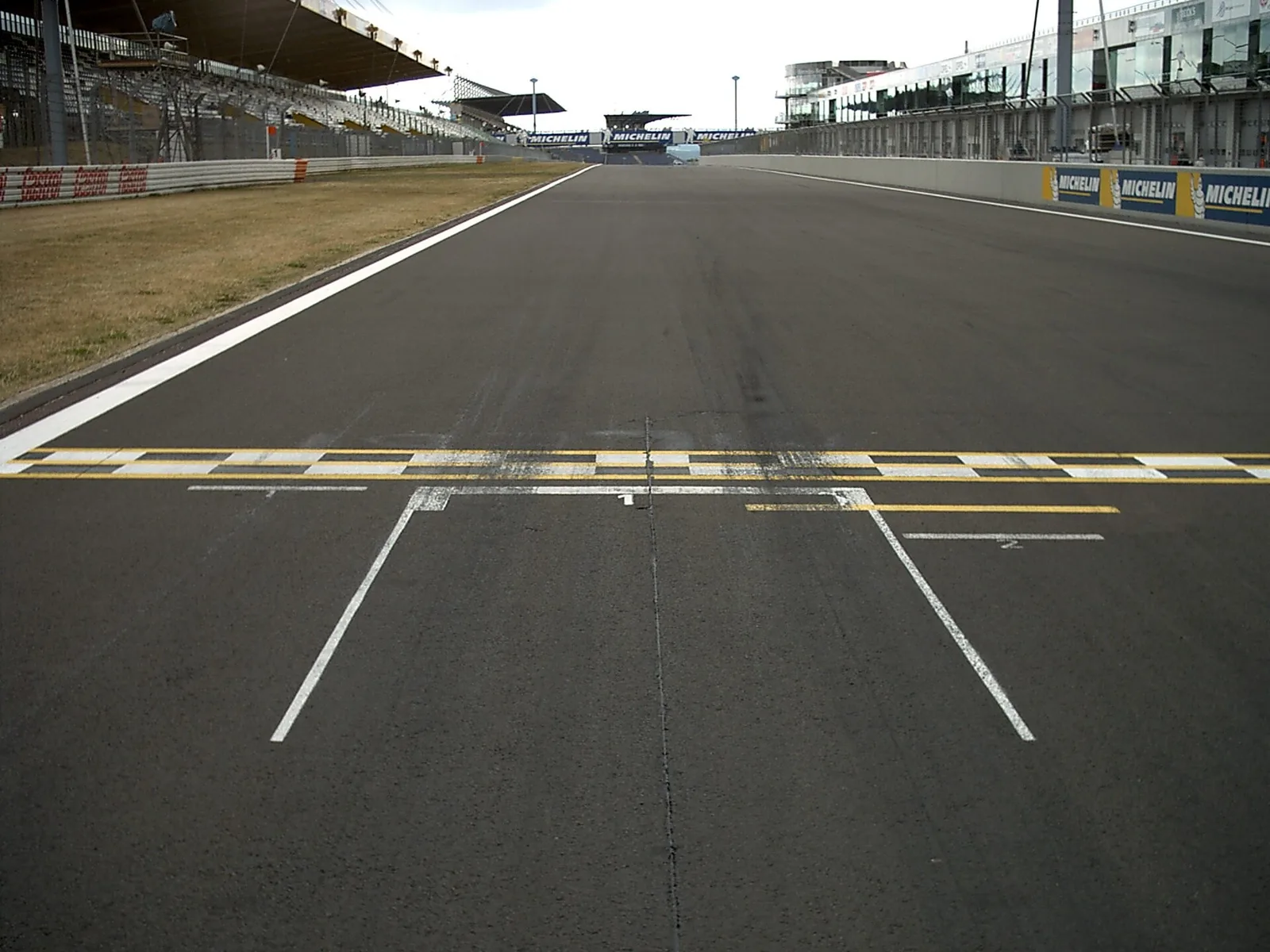
The Fuji Speedway gave the game its identity. Okamoto chose it so that newer players would recognise a real place, and the layout reproduced the circuit as it stood at release. Each lap offered a familiar circuit rather than an abstract course, which made the qualifying lap feel like a genuine test.
The choice gave the machine credibility beyond its cabinet, and Atari's promotion leaned on the same idea, presenting the game as a Formula One experience for players.
Cabinets and controls
Both cabinet types had a steering wheel and a gear shifter, but the cockpit model's brake pedal made the experience feel closer to driving a real car. Namco's team struggled to balance realistic controls with a game people could pick up quickly, and the gear-shift debate reflected that tension.
Why did the game matter to Atari and Namco?
Atari licensed the game for North America and promoted it as a Formula One experience behind a racing wheel. Namco had already decided that the future of arcade racing lay in video games rather than electro-mechanical machines, so Pole Position marked the company's shift to video games.
How did the game shape other racers?
The title set the standards that racing games went on to follow, and its popularity drew a crowd of copycats, which is why so many later titles look and play like it. Namco sued Commodore Japan over the Top Racer clone, which shows how valuable the formula had become.
What did Pole Position II change?
Pole Position II arrived in 1983 with four tracks instead of one, so players could choose among several circuits rather than replaying the same course. That broadened what a racing cabinet could offer, and it was a clear sign that the original formula was ready to be expanded.
The sequel kept the core ideas of qualifying and racing against computer cars, adding variety through its wider range of courses.