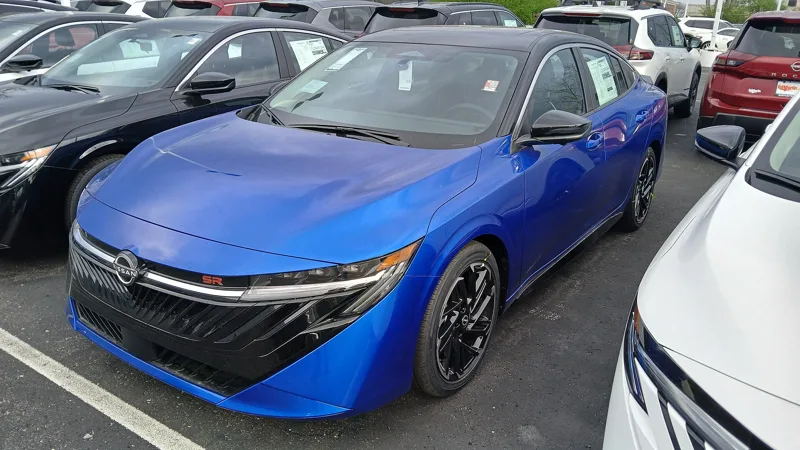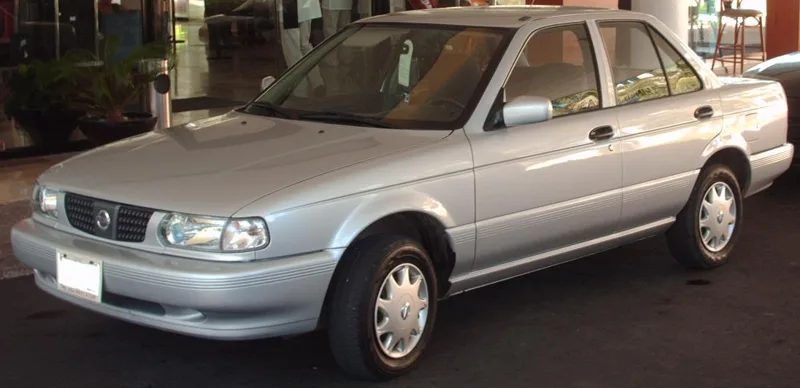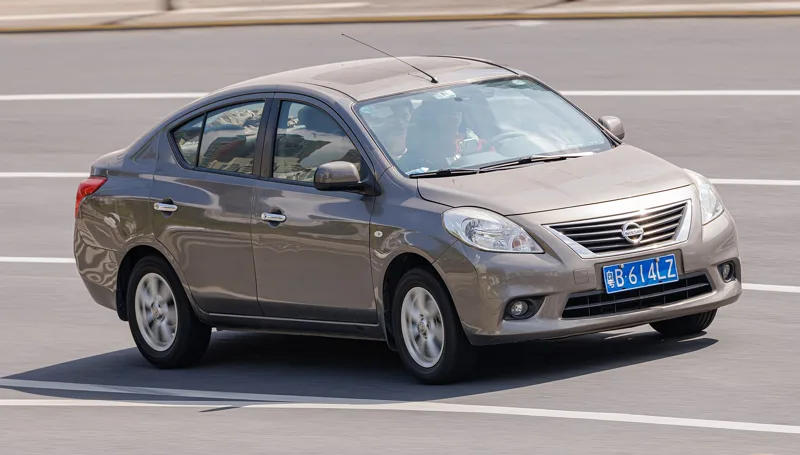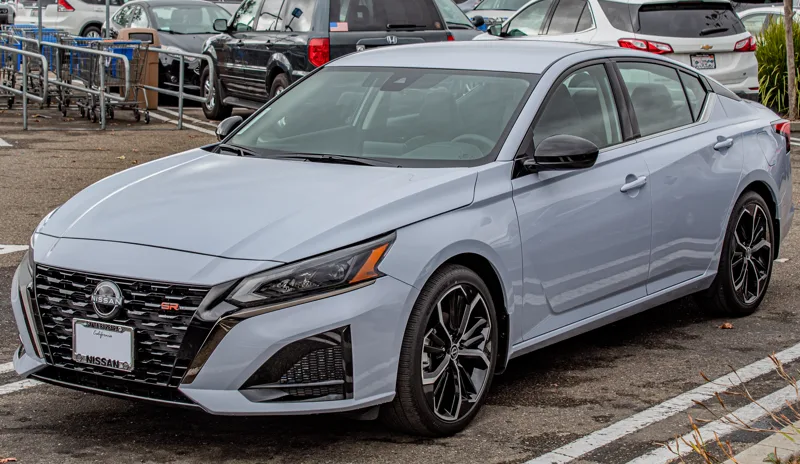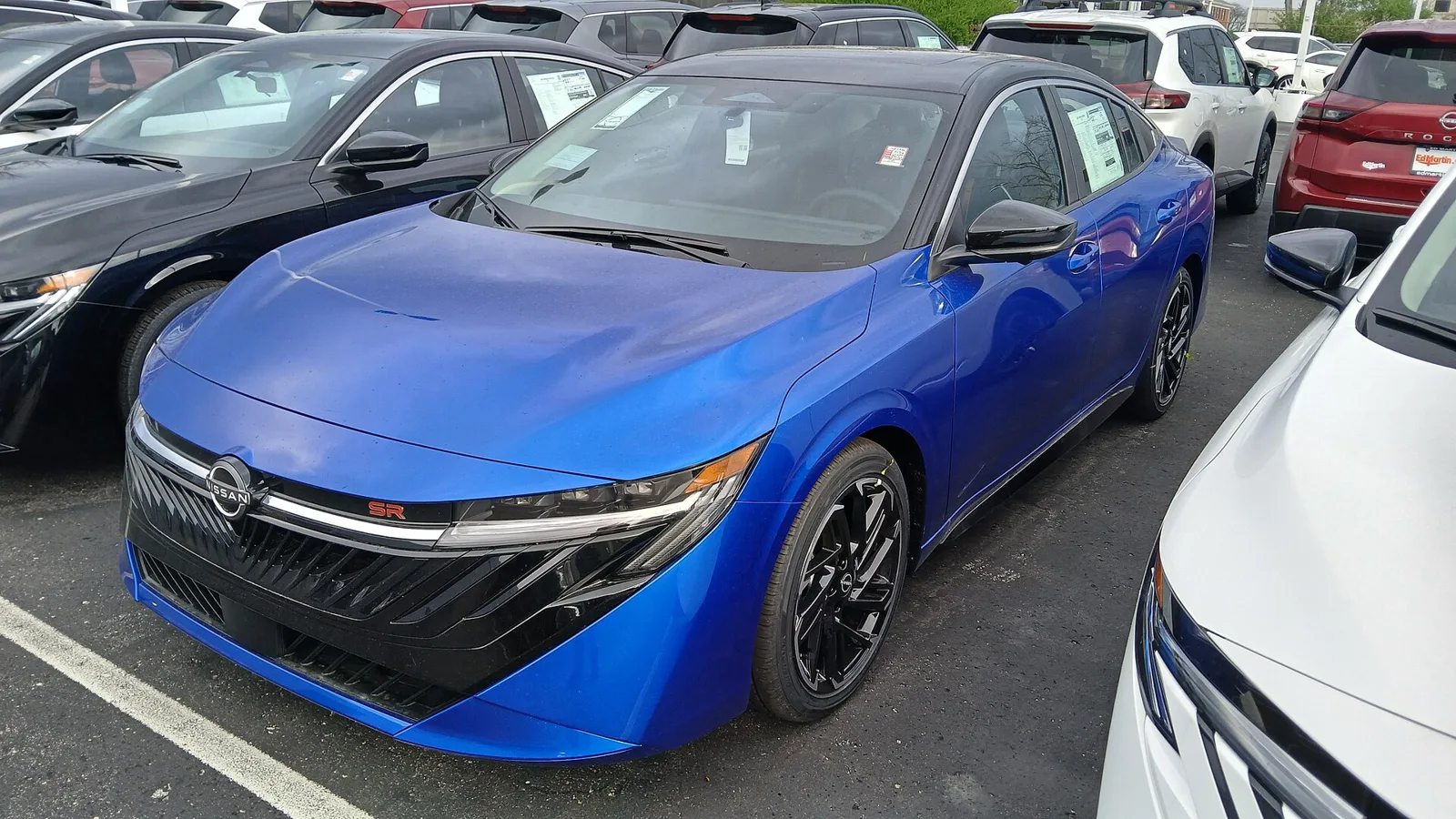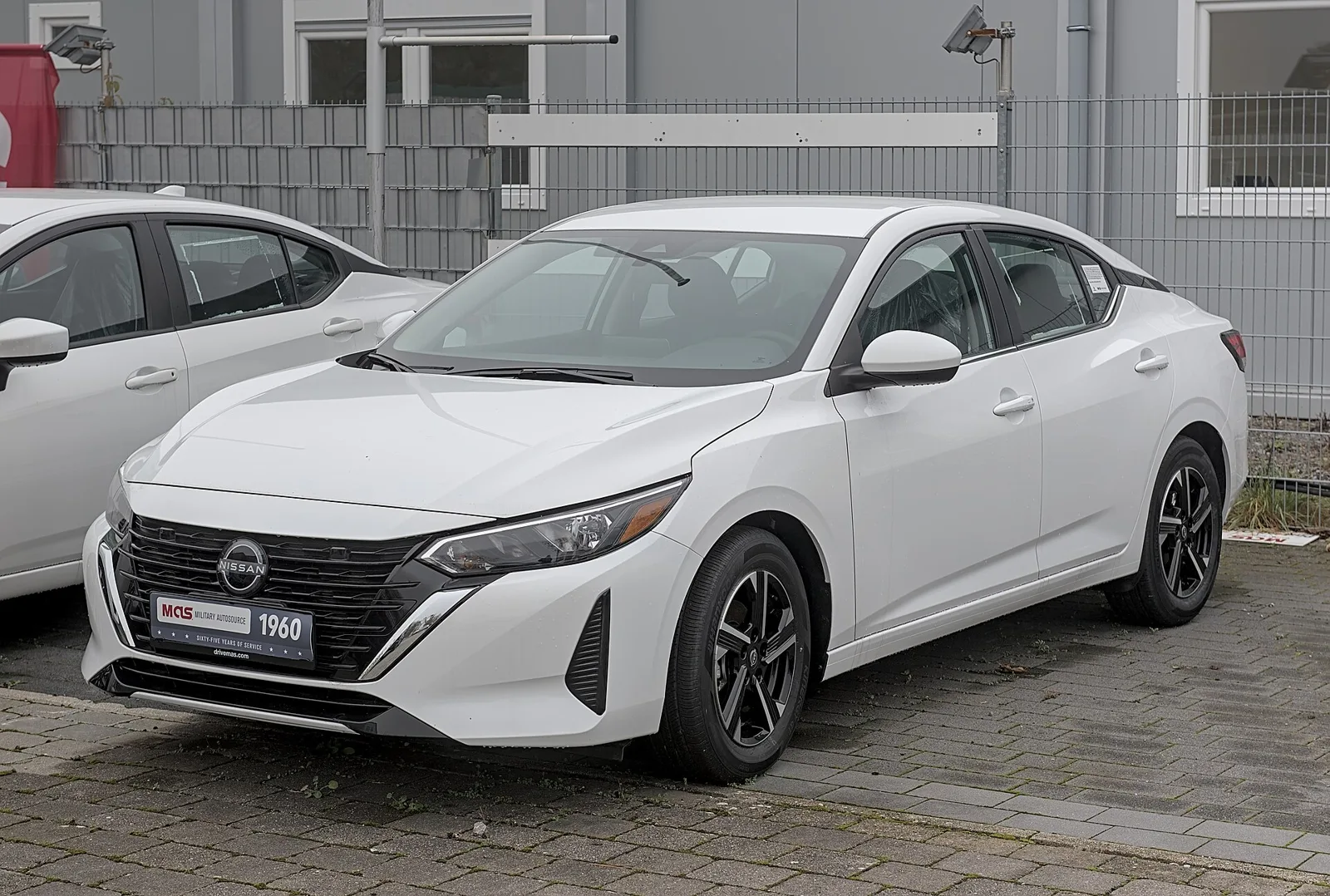
A 1982 Sentra that started life as a 67 hp subcompact against an eleventh-generation Corolla that sold worldwide from 2013 to 2024.
The Nissan Sentra of 1982 was a front-drive compact with a 67 hp engine and strong first-year sales. The Toyota Corolla E170/E180 was the eleventh-generation Corolla, sold internationally from 2013 to 2024 with seven airbags in later facelifts.
The Nissan Sentra and the Toyota Corolla E170/E180 were both compact cars built for families and first-time buyers, but they are almost thirty years apart. The first Sentra arrived in the United States in May 1982 with a 67 hp engine, while the E170 Corolla was sold internationally from 2013 to 2024. Comparing them shows how far small-car expectations moved over three decades, from fuel economy and four-wheel suspension to airbags and multi-market sales.
How did the Sentra start out?
Nissan introduced the first Sentra in the United States in May 1982 as a direct replacement for the Datsun 310. It was imported from Japan, where it was built at the Zama plant, and it was the second car sold in the United States under the Nissan name with a model name rather than a number. The first was the Stanza, which had been shown at the 1981 New York International Auto Show as a 1982 model.
The change that mattered most was the layout. Earlier Sunny models had a front engine and rear-wheel drive, while the B11 Sentra used a front-engine, front-wheel-drive arrangement. The name itself came from Ira Bachrach of NameLab, who linked it to words such as central and sentry, which suggested safety for a small car.
A 67 hp front-drive compact from 1982 set against a Corolla that reached buyers across more than a dozen markets.
What did the first Sentra offer buyers?
The first generation came as a two-door sedan, a four-door sedan, a five-door wagon and a three-door hatchback coupe. Its standard engine was a 1.5 L E15 four-cylinder SOHC with 67 hp (50 kW), replacing the older A-Series OHV unit. Torque peaked at 85 lb-ft (115 N m) at 3,200 rpm, and transmission choices were a four-speed manual, a five-speed manual or a three-speed automatic with lock-up.
Economy was the headline. The Environmental Protection Agency gave the Sentra MPG the best gasoline mileage of any gasoline-powered car marketed at that time, with 43 mpg city, 58 mpg highway and 48 mpg combined. A curb weight of 1,875 lb helped, and the car used a three-way exhaust catalyst with an electronically controlled fuel metering unit.
Trims were Standard, Deluxe and XE. Prices ran from US$4,949 for the base two-door sedan to US$6,899 for the two-door XE hatchback coupe. Every model had four-wheel independent suspension, front disc brakes and rear drums, rack-and-pinion steering and bucket seats. The XE added cut-pile carpet, a quartz clock, a tachometer and power steering, and a sunroof was optional. Even the base cars carried a maintenance-free battery and a rear ashtray.
How well did the first Sentra sell?
In its first year the Sentra became the best-selling import in the United States, and it ranked fourth among all passenger cars when combined with the earlier 210, at 191,312 units for the two models. It finished 1983 as the eighth best-selling passenger car, with 209,889 units. Those figures show how strongly small, economical cars were wanted at the time.
Engines were revised along the way. For 1983 a 1.7 L CD17 diesel inline-four with a four-speed manual joined the range, and the 1.5 L gave way to a 1.6 L E16 rated at 69 hp (51 kW). The diesel was dropped from the US market soon after, and an electronically controlled carburettor arrived later in 1983.
Where was the Sentra built in North America?
Production moved to Nissan's Smyrna, Tennessee plant in April 1985, after an investment of US$85 million. The only body style built in the United States at first was the two-door sedan. The 1985 model year brought aerodynamic headlamps, a revised grille and blackwall tyres, and an SE two-door hatchback with alloy wheels and black lower body paint.
Reviews were kind on reliability. Consumer Reports rated the B11's reliability as better than average in 1985. The Center for Auto Safety ranked the model the seventh safest car in its 1983 study, which looked at National Highway Traffic Safety Administration frontal crash tests at 35 mph.
How did Mexico and other markets treat the Sentra?
In Mexico the car was known as the Nissan Tsuru, a name meaning crane in Japanese, and production began at Nissan Mexicana's Cuernavaca plant in 1984. In Mexico the first three Sentra generations were known as the Tsuru, and 210,565 of the first Tsuru were built before the next generation replaced it in 1987.
The Tsuru II carried on in Mexico from 1987 to 1991, with 343,263 built there. Chile sold the Mexican-built car with Sentra badging from October 1987 until 1993, and it was the best-selling car in the country in 1991 and 1992. South Africa received a Sentra with its own 1.8-litre CA18DE engine rated at 131 hp (98 kW), with a production figure of 720 units given that is unverified.
How did the second-generation Sentra change?
The B12 arrived in the United States in August 1986 for the 1987 model year, and the Smyrna plant went through a five-month conversion before B12 production began on August 12, 1986. The sedan came first, the three-door hatchback followed in December, and the station wagon arrived in January 1987. The B12 retained a reworked four-wheel independent suspension, and all-wheel disc brakes were offered in some markets.
The trim ladder was E as the economy car, then XE, then the GXE as the top four-door, along with the sporty SE coupe. The Sport Coupe was a different car, sharing none of the body parts of the sedan and always imported from Japan. Every Sport Coupe had dual sway bars and a tachometer, and it was only available with the E16i or GA16i engine.
Four-wheel-drive wagons were offered as an option for the 1987, 1988 and 1989 model years. They were rare, with 2,050 sold in 1987, 2,408 in 1988 and 892 in 1989. These cars used an electrically activated single-range transfer case, making them selectable four-wheel drive rather than all-wheel drive.
Did the 1980s Sentra pass crash tests?
The 1987 Sentra earned a single star out of five for the driver in the NHTSA 35-mph full frontal test, the lowest rating available. Nissan changed the car, and the 1988 and later models earned three stars. The B12 also picked up new front lights and a relocated Nissan logo in 1989, along with three-point harnesses for the outboard rear seats from 1990.
What is the Corolla E170/E180?
The E170/E180 is the eleventh generation of the Toyota Corolla and was sold internationally from 2013 to 2024. The North American E170 version debuted first, and a more conservative design followed in other markets later in 2013. Japan and Hong Kong used the smaller, Japanese-made E160 instead, to meet domestic dimension rules.
Its wheelbase was 100 mm (3.9 in) longer than the previous generation's, and it was built on Toyota's New MC platform, while the E160 used the B platform. The E170 family served the ASEAN, Australasian, Middle Eastern, South Asian and North American markets. It was marketed as the Corolla Altis across much of Asia, and it was made mainly in Thailand, Taiwan and North America.
How did the Corolla's engines differ by market?
In India the Altis arrived in April 2014 with a 1.8-litre 2ZR-FE petrol engine and a 1.4-litre (1,364 cc) D-4D diesel with variable nozzle turbo and intercooler. Its range-topping trims had 60/40 reclining rear seats, rain-sensing wipers and LED headlamps. A facelift in March 2017 raised the number of airbags from two to seven, and production there ended on 31 March 2020, since Toyota had not engineered the car to meet the new emissions standard.
Indonesia was the first ASEAN country to receive the Altis, on 8 January 2014. It came with the 1.8-litre Dual VVT-i only, because the 2.0-litre engine was withdrawn after weak sales. In Malaysia the car launched in January 2014 with a seven-speed CVT, and a December 2016 facelift added seven airbags, ABS with EBD and vehicle stability control as standard.
The Gulf states received the Corolla from December 2013, with 1.6 L 1ZR-FE and 2.0 L 3ZR-FE engines depending on the market. Those cars were sourced from Taiwan. In Thailand, CNG kits were offered on the 1.6-litre variants, and an E Sport special edition came only in that market. Pakistan's Toyota Indus launched the eleventh-generation car in July 2014 with eight trim levels, and Singapore began selling the Altis on January 10, 2014 with a 1.6-litre 1ZR-FE and seven-speed Super CVT-i.
How did the Corolla's safety equipment develop?
Airbags were the clearest change over the life of the generation. Facelifts in several markets brought seven airbags, which was a big jump from the two fitted to the early Indian cars. In Malaysia and Singapore the upgrade came with ABS, EBD, brake assist and vehicle stability control, and in Taiwan the October 2016 facelift made the same kit standard across all trims.
The contrast with the 1987 Sentra's one-star result is stark, though the two cars were tested to different standards in different decades. The Corolla's later safety kit reflects a regulatory and market environment that the 1982 Sentra never faced.
Specifications side by side
| Feature | Nissan Sentra (first generation, 1982) | Toyota Corolla (E170/E180) |
|---|---|---|
| Introduced | May 1982 in the United States | 2013 to 2024 international sales |
| Body styles | Two-door sedan, four-door sedan, five-door wagon, three-door hatchback | Sedan (Corolla Altis in Asia) |
| Engine | 1.5 L E15 four-cylinder, 67 hp (50 kW) | 1.6 L and 1.8 L petrol; 2.0 L in some markets; diesel in India |
| Drive layout | Front-engine, front-wheel drive | Not listed |
| Rear suspension | Four-wheel independent suspension | Torsion-beam rear suspension across all trims |
| Transmission | Four-speed manual, five-speed manual or three-speed automatic | Six-speed manual or seven-speed CVT in most markets |
| Economy | 43 mpg city, 58 mpg highway, 48 combined (EPA) | Not listed |
| Curb weight | 1,875 lb | Not listed |
| Wheelbase | Not listed | 100 mm (3.9 in) longer than the previous generation |
| Airbags | Not listed | Two in early Indian cars; seven after facelifts |
| Crash result | Seventh safest in a 1983 study; B12 1-star then 3-star | Not listed |
| Production | Smyrna, Tennessee from April 1985 | Mainly Thailand, Taiwan and North America |
Which compact suits which buyer?
The first Sentra suits a buyer who wants the economy of an early 1980s car with a modern front-drive layout. Its 67 hp engine and 1,875 lb weight made it an efficient small car, and its price, from US$4,949 at launch, placed it in the territory the Datsun 310 had covered.
The Corolla E170/E180 suits a buyer who wants a car sold in a wide range of markets, with a choice of petrol, CVT and manual gearboxes and, in some markets, CNG or diesel. Its airbag and safety upgrades in later facelifts put it firmly in the modern era of small-car expectations.
On the evidence here, neither car takes a clear lead, because they were built thirty-one years apart. The Sentra's strength was its early economy and sales, while the Corolla's was its breadth of markets and its later safety equipment. A buyer wanting a classic economy car will look at the first Sentra, and one wanting a modern compact will look at the Corolla.