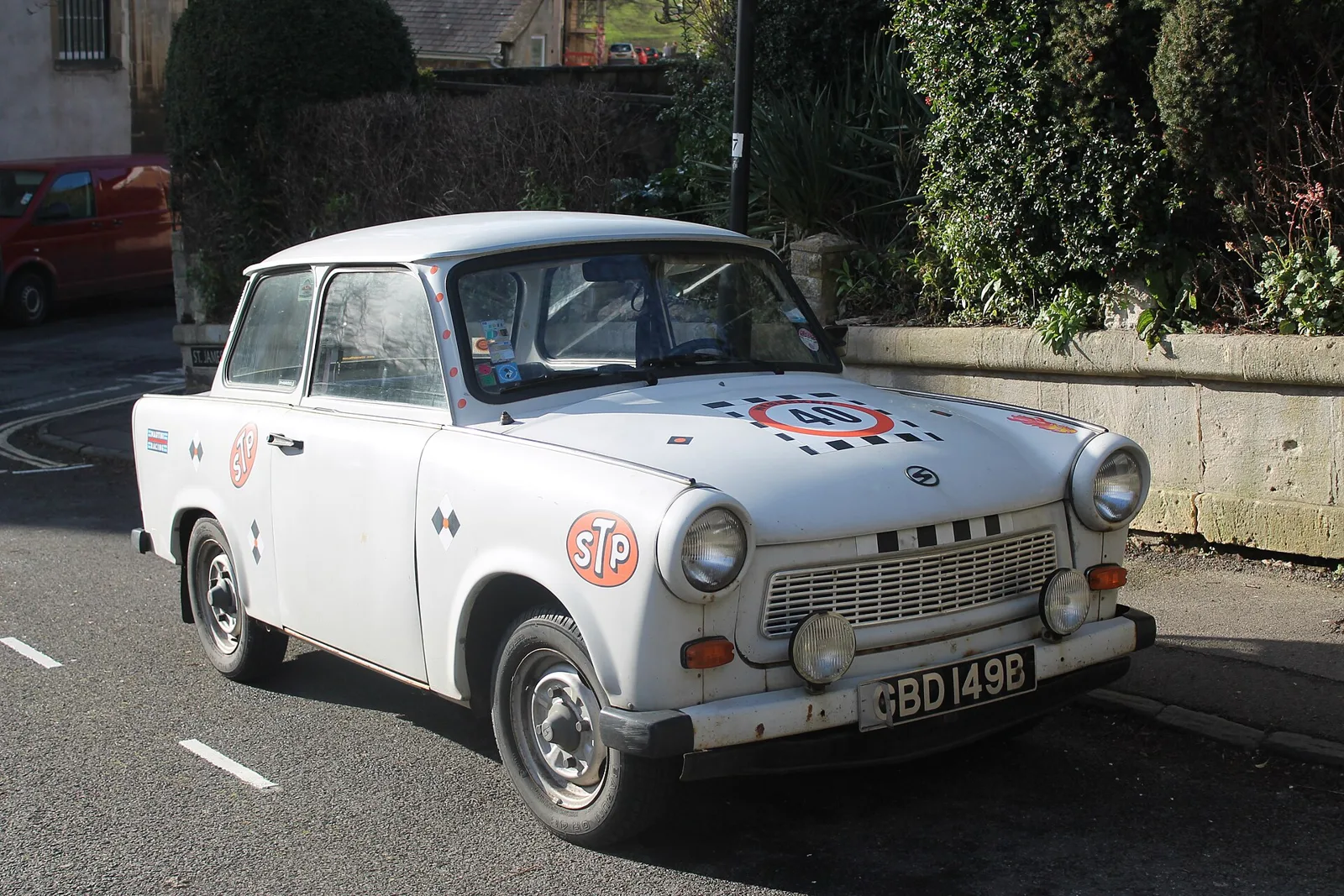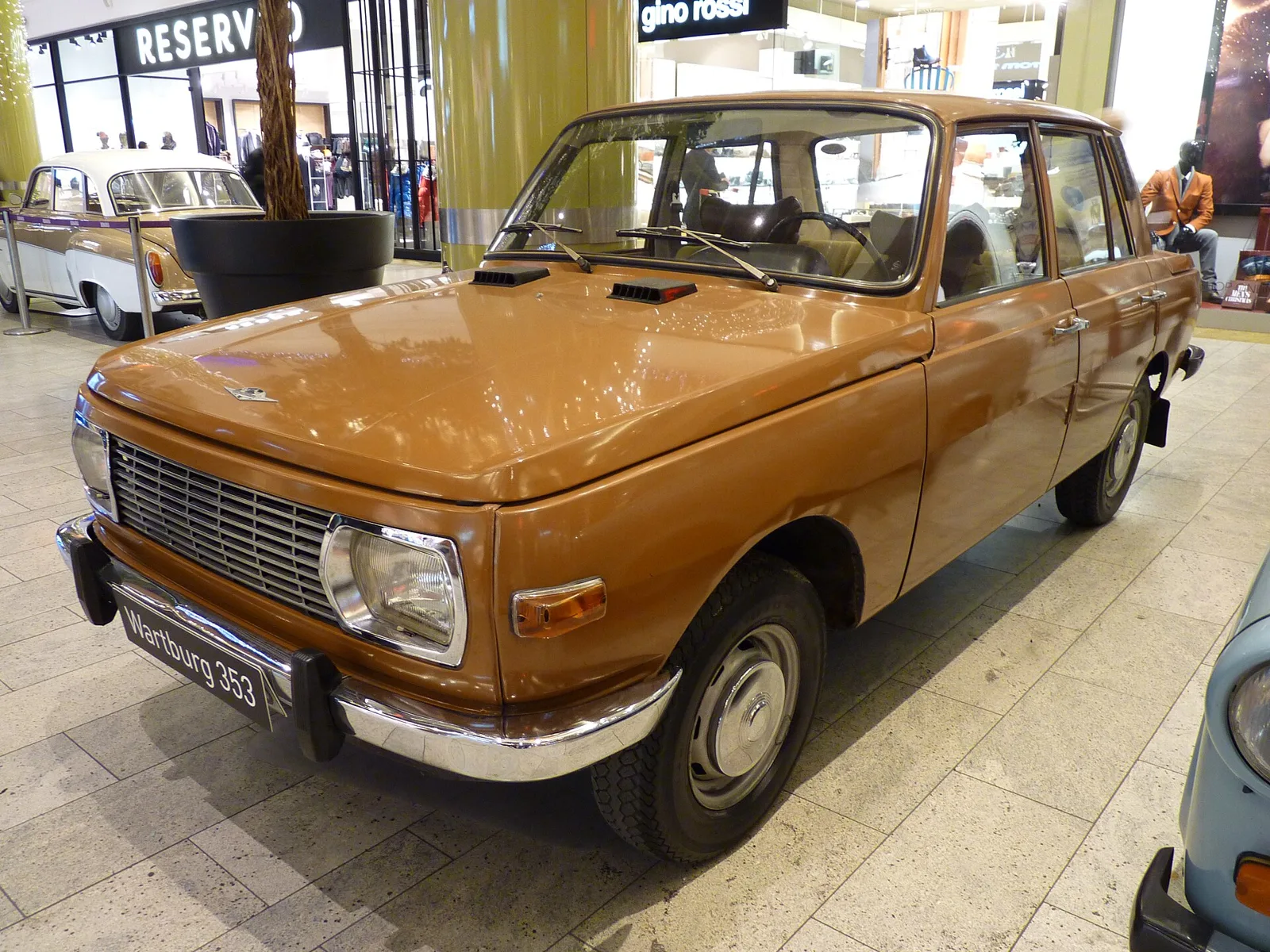
The three-cylinder two-stroke family car from DKW roots, its 1985 facelift and the rally results that outlasted its home market.
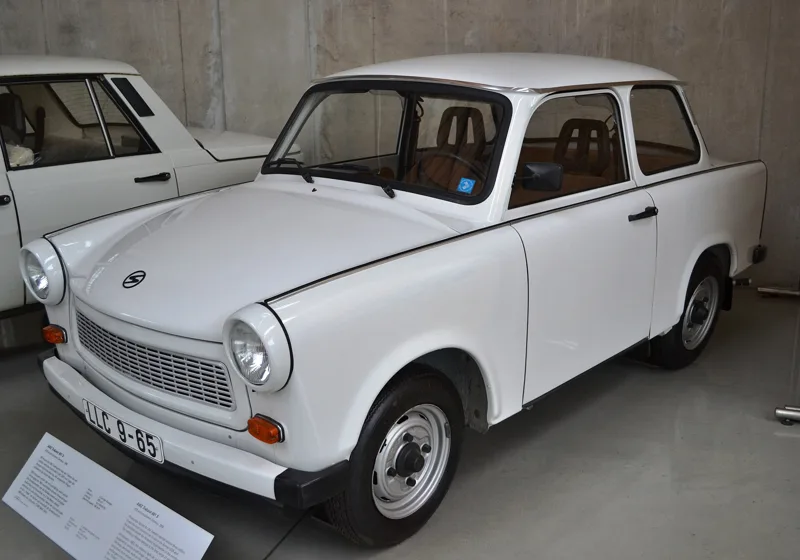
Wartburg's 353 was an East German family saloon, built from 1966 to 1988 with a two-stroke engine. Its roots lay in a DKW design of 1938, and it lasted longer than any other Wartburg model. Over a million were built.
The Wartburg 353 was a medium family car built by the East German maker AWE from 1966 to 1988. It used a three-cylinder two-stroke engine derived from a 1938 DKW design, and it was the longest-running model under the Wartburg name.
Known as the Wartburg Knight in some export markets, the 353 succeeded the 311 and was itself replaced by the Wartburg 1.3. Its low price made it popular across the Eastern bloc, while its dated two-stroke design counted against it in the West.
Where did the Wartburg 353 come from?
The 353 was created at the former BMW production facilities, known as EMW under Soviet occupation. Its origins lay in a 1938 DKW design, and it was first introduced in June 1966. It replaced the Wartburg 311 as the marque's main family car.
A transition model, the Wartburg 312, appeared on 1 September 1965. It combined the 311 body with the underpinnings of the later 353, which bridged the two designs while production switched over.
Under the state planned economy the 353 served government transport, and it was also used as a Volkspolizei police car. Private owners often waited ten to fifteen years for delivery, which made the car hard for ordinary buyers to obtain.
The car was exported to most European markets and to South Africa, where its low price was a major part of its appeal.
Trustworthy Hans: a two-stroke family car that ran from 1966 to 1988 and sold over a million.
How did the two-stroke engine work?
The 353 used a 1-litre three-cylinder two-stroke engine that took almost two decades to refine. The engine had only seven major moving parts, counting three pistons, three rods and one crankshaft. Its output sat between 50 and 55 PS (37 to 40 kW), with the carburettor type changing the figure, and its torque exceeded 100 N-m.
The transmission carried a freewheel, so the car rolled on whenever the throttle was lifted. A switch under the steering column turned the freewheel off for engine braking, though most drivers left it on because gear changes became easier and smoother.
Ignition came from three coils and contact breakers, one per cylinder, with no distributor. The engine ran smoothly enough that owners compared it to a six cylinder four stroke, and they joked that they drove a car but only maintained a motorcycle.
How fast was the 353 and how did it handle?
Early cars had a critical speed of 150 to 155 km/h (93 to 96 mph) and took about 12 seconds to reach 100 km/h (62 mph). Western-market cars were rated at 58 hp, with a top speed of 170 km/h, unusual for an engine of that size.
Owners today tune the cars to beyond 200 km/h (125 mph), a figure far above the original design.
Front-wheel drive gave the 353 typical handling for its layout, with a forward centre of gravity and strong understeer, especially in wet conditions. A rear-wheel ABS regulator was fitted, and the 525-litre boot was spacious for the class.
Why did the 353 sell so widely in the East and West?
Within the Eastern bloc the 353 was a reasonable success, helped by front-wheel drive. Its outmoded two-stroke engine was its main weakness, but Western European buyers found it quite competitive, mainly for its power. Resale values, by contrast, were extremely low.
Low prices meant that owners did not always look after the cars. In Finland, official removal figures gave the Wartburg the shortest average life span of any listed make, at nine years and three months, a result tied to German reunification.
Nicknames told the story. Owners called it Trustworthy Hans or Farty Hans, for its durability and its exhaust smoke when cold or overoiled, and its boomy body gave it the name the barrel.
What changed during the production run?
The 353 changed in steps: the estate Tourist arrived in 1968, the 353 W in 1975 added front disc brakes and safety features, and the 1985 facelift brought a one-piece front and rectangular headlamps. A 1982 carburettor change and the 1984 S trim followed.
The Tourist estate used glass-fibre reinforced plastic for its tailgate and rear fenders. Early versions had a smooth C-pillar until 1970, when forced ventilation outlets were added there.
A new 36.8 kW (50 PS) engine, the 353-1, arrived in 1969, and round instruments replaced the earlier bathroom-scale dials in 1970. Bucket seats followed in 1972, along with an optional floor shifter that did not work well and sold poorly.
The 353 W, first shown in 1974, carried the W for Weiterentwicklung, the German word for development. It gained Czech-made front disc brakes, roll belts, a steering column that collapses, and two-circuit brakes, while the body stayed the same.
In 1982 the carburettor changed to a Jikov unit with pre-heated intake mixture, and the S version replaced the de luxe model in 1984. The S had matt black window frames, imitation leather trim and fog lights, while chrome was replaced by black plastic in a move driven by raw material shortages.
The 1985 facelift moved the radiator from behind the engine to the usual place in front, reversing the DKW layout that had shaped the car from the start. The new front clip was one piece and body-coloured, with slightly swept-back rectangular headlamps.
What replaced the 353?
Wartburg tried several replacements that never reached production, including a 355 with a Renault engine, a 610M developed with Skoda and Trabant, and a 1.6-litre four-stroke. The Wartburg 1.3 finally arrived in 1988, using a Volkswagen-designed four-stroke engine. It came too late to save the company, which did not survive German reunification.
The Wartburg 355 had a 1.4-litre Renault engine and a three-door GRP coupe body, but only six were built before the project ended in 1973. The 1.6-litre four-stroke of 82 PS (60 kW) was cancelled in 1972 in favour of a facelift.
A licence for Volkswagen's 1272 cc four-cylinder came in 1984, and that engine powered the 1.3 when deliveries began in October 1988.
How did the 353 perform in rallying?
The 353 was campaigned mostly as a rally car. A 353 finished tenth overall at the 1976 Acropolis Rally, and its best world championship result was second in the 1973 Polish Rally.
In 1978 all four works Wartburg 353W cars completed the 715 km course at the RAC Rally, the last round of the World Rally Championship that year. The best of the four was 37th, and 107 rival entries failed or retired along the way. The WR specification added a reinforced frame and glass-fibre panels.
Its final WRC appearance came at the 1993 1000 Lakes Rally, when Alpo Saastamoinen took 53rd overall.
What are the Wartburg 353 specifications?
The 353 was a front-wheel-drive, four-door saloon with a three-cylinder two-stroke engine and a flat-floored cabin. The table covers the core figures for the standard car, and lists the competition WR separately. Figures are approximate where a range is given.
| Specification | Detail |
|---|---|
| Production | 1966 to 1988 |
| Production totals | 356,330 (1966 to 1975); 868,860 as the 353 W (1975 to 1988) |
| Engine | 1-litre three-cylinder two-stroke |
| Power | 37 to 40 kW (50 to 55 PS), varying with carburettor |
| Torque | More than 100 N-m, 106 N-m in the last version |
| Western market rating | 58 hp, top speed 170 km/h |
| Acceleration | 12 seconds to 100 km/h (62 mph), original design |
| Transmission | Four- or five-speed, with freewheel (five-speed rare) |
| Boot | 525-litre trunk |
| Successor | Wartburg 1.3, with a Volkswagen 1272 cc four-cylinder from October 1988 |
| WR rally car | 115 PS (85 kW) at 5,500 rpm, 1,147 cc, 188 km/h (117 mph), 815 kg empty |