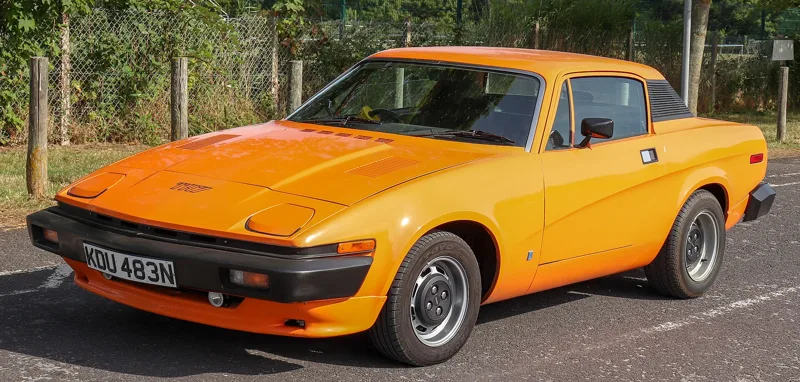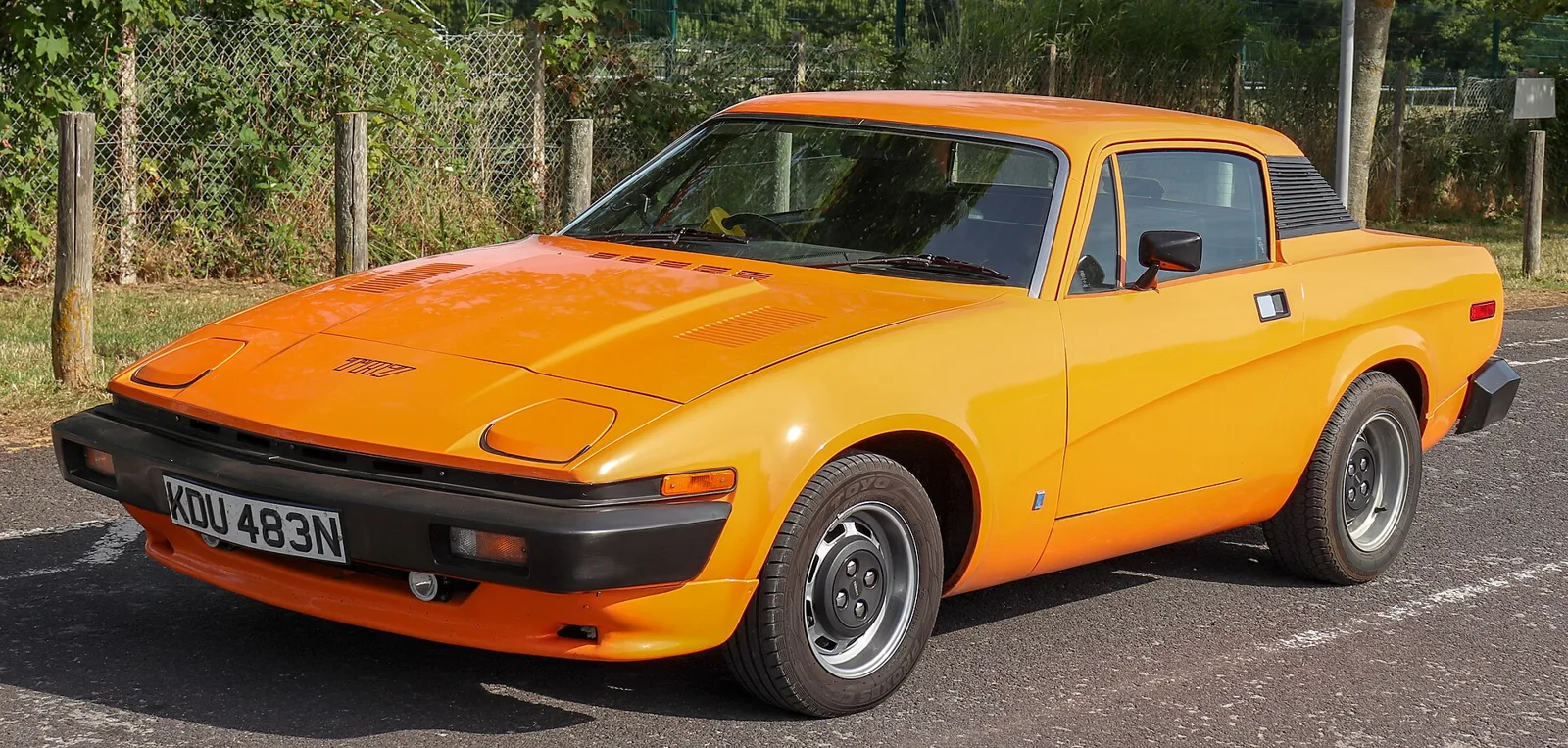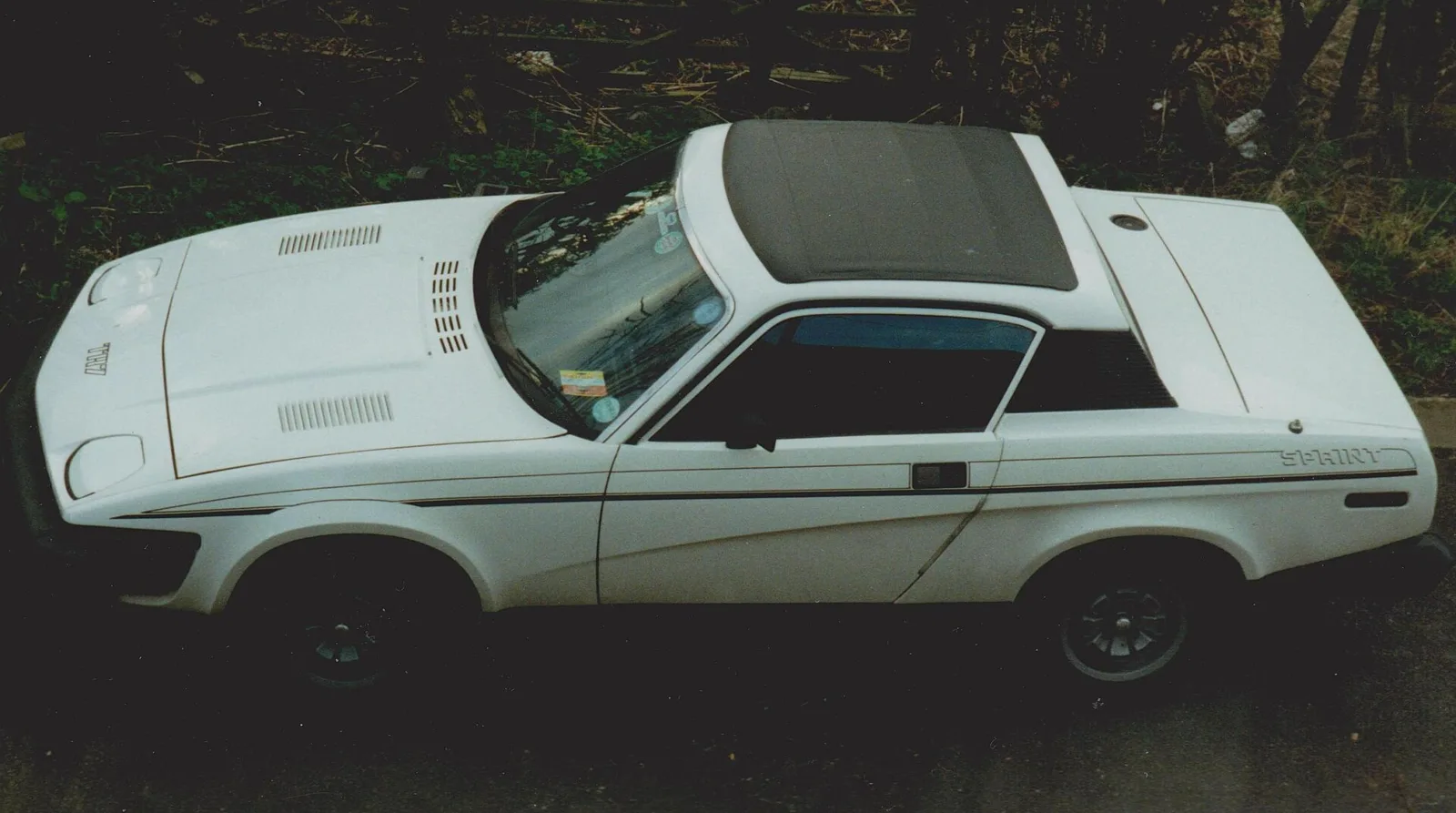
A 16-valve TR7 from 1977 with a disputed production run, a rally past and a cancellation story that is still argued over.
The Triumph TR7 Sprint was a 1977 16-valve coupe from British Leyland, built in very small numbers and never listed in the catalogue. Its 1,998 cc slant-four was rated at an estimated 127 bhp, with 0-60 mph in an estimated 8.5 seconds.
Few late-1970s British sports cars are as elusive as the Triumph TR7 Sprint. British Leyland's 16-valve coupe borrowed the slant-four of the Dolomite Sprint and produced an estimated 127 bhp, against 105 bhp for the standard TR7. Records point to between 58 and 62 cars, because the model never reached the catalogue.
What made the TR7 Sprint different from the TR7?
The Sprint replaced the standard TR7's 8-valve engine with the 16-valve version of the same 2-litre slant-four used in the Dolomite Sprint. That change lifted output and gave the car a stronger upper rev range. Visually it looked almost identical to a regular TR7, so the differences were mostly mechanical and in the detail trim.
The two engines shared a block and much else, which made a 16-valve Sprint look like an obvious next step. Speculation about such a car began early, and some writers went as far as calling it one of the most anticipated sports cars of the 1970s.
Factory cars kept the TR7's five-speed gearbox and final drive, which was 3.9:1 on the production cars. Pre-production examples wore alloy wheels, an option on later TR7s, and the front discs were unique to the Sprint. The calipers and dust shields were borrowed from the TR8, so TR8 discs will fit.
A 16-valve TR7 built in tiny numbers, pressed into rallying and still debated today.
How much power did the TR7 Sprint produce?
The estimated output was 127 bhp at 5200 rpm, with 122 lb ft of torque at 4500 rpm. Those figures put 0-60 mph at an estimated 8.5 seconds and the top speed at around 120 mph. The standard TR7 managed 9.6 seconds and 111 mph.
Spen King, the engineer behind the car, recalled returning from a holiday to find a test engine making 150 bhp, well above the 127 bhp quoted for production. A development engineer said the real test was in-gear times, where the Sprint was significantly superior to the two-valve engine.
Converters often fitted a 3.45:1 final drive from the SD1, or the 3.09:1 ratio from the TR8, to make better use of that power. Converters reported gains from those ratios, which suggests the standard 3.9:1 axle was not the best match for the Sprint.
How did the Sprint compare with the TR8?
The estimated 0-60 mph time of the Sprint, 8.5 seconds, sits close to the 8.4 seconds quoted for the US-specification TR8, and both cars share a 120 mph estimate. The TR8 relied on a 3.5-litre Rover V8, yet one development engineer felt the Sprint challenged it in the mid-range.
A UK-specification TR8 was rated at 153 PS DIN, plus or minus 5%, which is close to the 150 bhp that Spen King described. Had Triumph built both cars to UK specification, as was apparently planned at one stage, the comparison would have been far more direct.
The clearest endorsement came from the engineering team itself. When staff went off site, the preferred car to borrow was the Sprint, ahead of every other vehicle in the range including the TR8. For a model that never made the catalogue, that is a telling verdict.
How many TR7 Sprints were built?
Production records held by the British Motor Industry Heritage Trust cover 58 cars, while another tally counts 62 vehicles. The factory build run ended around the end of June 1977, so the total reflects a short run rather than a full model line. Exact totals remain uncertain.
The chassis numbers fall into three blocks: ACH/4 to ACH/25, ACH/00501 to ACH/00535 and ACH/00700. In the first block at least 11 cars were left-hand drive and three were UK specification. The other 11 are listed as unknown, though they are assumed to be left-hand drive too.
The thirty-car batch numbered SJW 521S to SJW 550S was registered in Birmingham during November 1977. Two white reliability test cars, VVC 696S and VVC 697S, were registered in August 1977. The last car built, ACH/00700, came off the line in October 1977.
Why was the TR7 Sprint cancelled?
No single reason has been confirmed. The most common explanations are a long strike at the Speke plant, a marketing view that the car offered too little extra performance, and the loss of a fuel-injected 16-valve engine that could have met US emissions rules. Each has gaps, which is why the question still attracts debate.
Mike Dale, then BL's vice president of sales and marketing in the United States, tied the Sprint to a cost-reduced, fuel-injected version of the 16-valve engine. That engine had been designed for SD2, a Triumph project that was dropped in 1975. Without it, the 16-valve unit could not meet the emissions rules that mattered most in the US, the main market for the TR7 and TR8.
The 1975 Ryder Report followed the collapse of British Leyland in late 1974 and set out a rescue of almost 3 billion pounds. It also called for a smaller range of models and engine types, which fits the timing of the Sprint's cancellation. The strike came later: a 17-week stoppage at Speke began in early November 1977, and the plant closed in May 1978.
The strike is often blamed, but the main production run had already finished by the time it began. Lord Stokes was replaced by Michael Edwardes as managing director in November 1977, and the unrest that followed is often linked to that change.
How can you tell a genuine TR7 Sprint?
A genuine factory car has a chassis plate starting ACH, where a standard TR7 starts ACG, and an engine prefixed CH rather than GC. Many conversions exist, so documented build records matter more than a badge or a premium asking price from a seller.
Factory cars also carry the same rev counter as the standard TR7, marked to 6500 rpm, so the instrument is no clue. The decals are a better guide. The word SPRINT appeared on the front panel and boot lid in the same font as the TR7 badge, though many photographs of such decals show cars later modified by owners.
Side stripes were designed by John Ashford but were never fitted to a production car. Several companies sell conversion kits online, and sellers often promise the power band of an original TR8 for a fraction of the cost.
Did the TR7 Sprint compete in rallying?
The Sprint itself was not a rally car, but British Leyland's Group 4 TR7s used the same 16-valve engine in tuned form, rated at 225 bhp at 8000 rpm. Those works cars ran from the 1976 Welsh Rally to the 1978 Circuit of Ireland, and they were competitive on asphalt.
The rally team won a number of events, including the 1977 Boucles de Spa rally. Later works cars moved to the Rover V8, and the TR7V8 that followed replaced the four-cylinder rally cars.
How was the TR7 homologated for rallying?
Homologation was the paperwork that let BL race a car that differed from the production model. Bill Price, workshop manager at BL Special Tuning in Abingdon, gained approval for the 16-valve TR7 in October 1975 using a rule for optional kits built in volumes of 100. Approval was loosely related to the production car, which some observers later questioned.
Starting at the close of 1977, the governing body outlawed alternative cylinder heads and dropped the 100-off route. To keep the 16-valve head legal, BL needed a second approval, granted in February 1978 in time for the 1978 Mintex Rally. BL Motorsport director John Davenport remembered that the TR8 approval only arrived on 1 April 1978.
Comparable homologation specials of the period reportedly needed about 50 cars. The rules also expected some 16-valve TR7s to reach ordinary buyers, which goes some way to explaining why so many ended up in private hands.
What happened to the TR7 Sprint cars?
Once the programme ended, most cars were sold to private buyers, and some went to BL staff under the management car scheme. The thirty SJW-registered cars are often linked to the company's press garage, although the evidence for that is thin.
Four SJW registrations were later reused on TR7 V8 works rally cars: SJW 533S, SJW 540S, SJW 546S and SJW 548S. Those rally cars were built on bodies taken from the production line, so only the plates appear to have carried over. A number of cars are known to survive, and ARW 181S, registered in July 1978, was originally meant for a 1977 motor show.
Why do TR7 Sprints still attract attention?
Enthusiasts value the Sprint for its rarity, its link to BL's rally programme and the way its 16-valve engine changed the car's character. Because so few were made, each genuine example carries a story that tends to be argued over in clubs and online forums.
The rarity is partly a matter of records. With only 58 cars in the surviving register and some records lost, owners and historians have to rely on registration documents, club lists and personal recollections. The TR Drivers Club has published lists of known cars, which helps new owners check a car's background.
The car also sits neatly within the TR7 family, between the everyday four-cylinder model and the V8 TR8, which BL intended to replace the TR7 in rallying. That position makes the Sprint a useful reference point for anyone trying to understand how the range was meant to develop.
Triumph TR7 Sprint specifications
| Specification | Detail |
|---|---|
| Engine | 1,998 cc, 16-valve Triumph slant-four |
| Compression ratio | 9.5:1 |
| Carburation | Twin SU HS6 carburettors |
| Maximum power | 127 bhp at 5200 rpm (estimated) |
| Maximum torque | 122 lb ft at 4500 rpm (estimated) |
| 0-60 mph | 8.5 seconds (estimated); standard TR7 9.6 seconds |
| Top speed | 120 mph (estimated); standard TR7 111 mph |
| Transmission | Five-speed gearbox, 3.9:1 final drive |
| Rally engine | Tuned 16-valve, 225 bhp at 8000 rpm |
| Production records | 58 cars; one tally cites 62 |
| Rev limit | 6500 rpm marked on the rev counter |