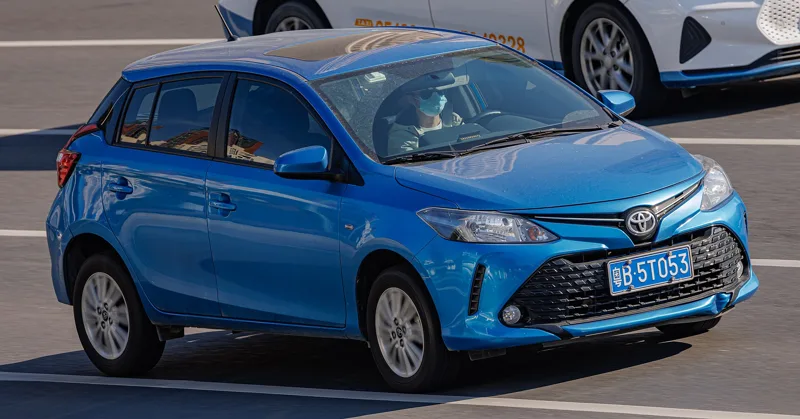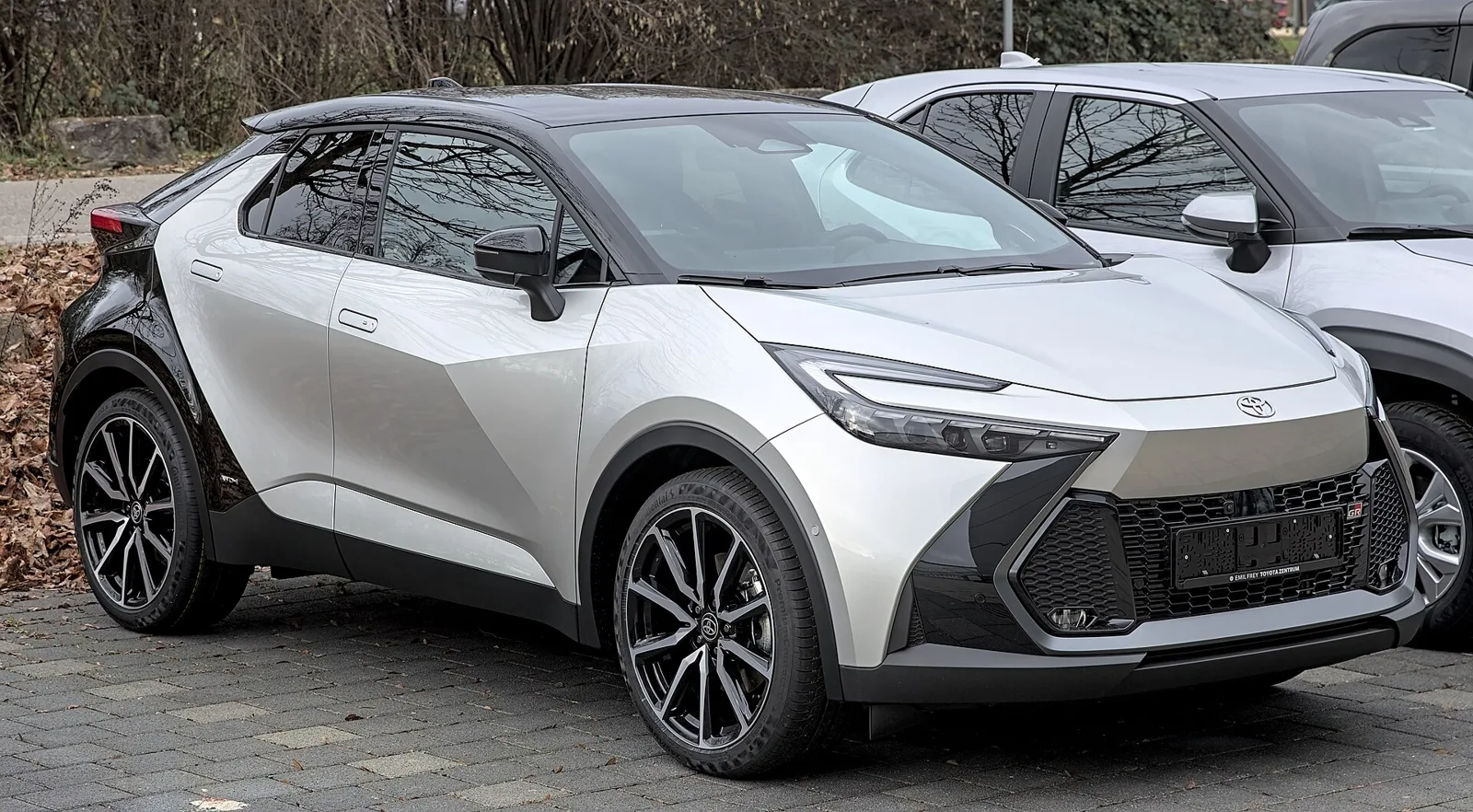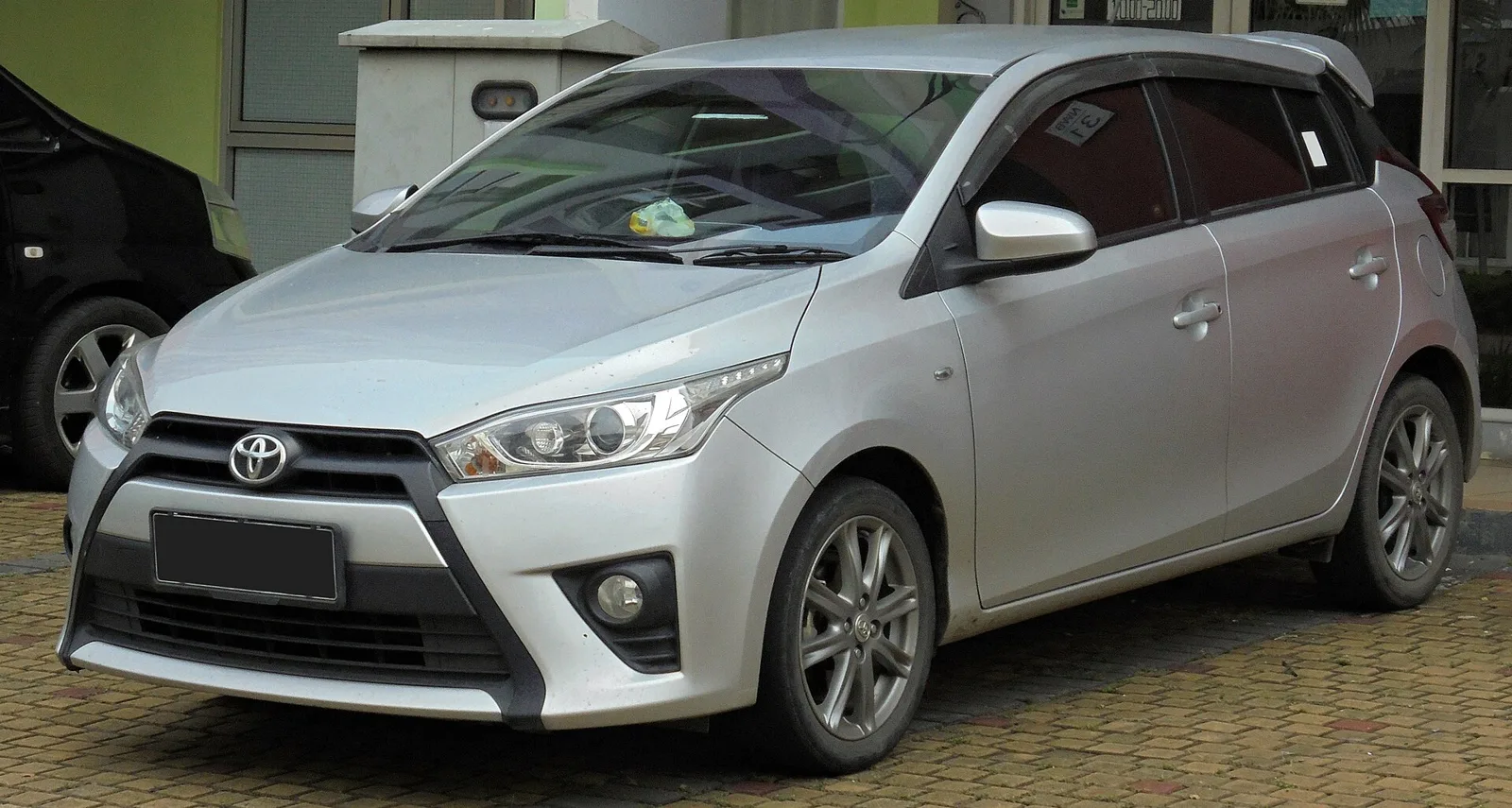
Toyota's XP150 Yaris, built from 2013 for emerging markets, shared its series with the Vios sedan and gained several facelifts across Asia and Latin America.
The Toyota Yaris XP150 is a subcompact hatchback built from 2013 for emerging markets. It shared the XP150 series with the Vios sedan, used engines from 1.2 to 1.5 litres and was sold under local names and grades across Asia and Latin America.
Toyota's XP150 Yaris has been sold since 2013, mainly in emerging markets. It is the hatchback counterpart of the XP150 Vios sedan, and it is larger than the XP130 Yaris sold in Japan, North America, Europe and Australasia.
Where did the XP150 Yaris come from?
The XP150 Yaris previewed as the Dear Qin hatchback concept at the Auto China show in April 2012. Its production debut came at the 15th Auto Shanghai in April 2013, and Toyota rolled the car out to China, Taiwan, Southeast Asia and the Middle East, with later sales in Latin America and South Africa.
The car was also sold as the Yaris Sport in Chile from 2014, and in Mexico and Argentina from 2016. In Chile, Mexico and South Africa it replaced the XP130 Yaris hatchback, and in 2021 South Africa swapped it for the Suzuki-sourced Starlet.
Its size set it apart from the Vitz-based Yaris that Japan, North America, Europe and Australasia knew. The XP150 shared its series with the Vios sedan, and the newer TNGA-based XP210 Yaris took over where the XP150 left off.
Built for emerging markets, the XP150 Yaris became a family of national variants, from Thai eco-car to Brazilian sedan.
What engines did the XP150 Yaris use?
The XP150 came with 1.2, 1.3 and 1.5-litre petrol engines, depending on the market. Thailand used a 1.2-litre 3NR-FE from October 2013, Indonesia used a 1.5-litre 1NZ-FE, and Argentine models used a 1.5-litre unit throughout.
The Philippines launched the car in April 2014 with 1.3 and 1.5-litre engines, the 1.3 E taking a 2NZ-FE and the 1.5 G a 1NZ-FE. In late 2016 both the Yaris and the Vios received Dual VVT-i engines, the 1.3-litre 1NR-FE and 1.5-litre 2NR-FE, and the old four-speed automatic gave way to a CVT.
China sold the car as the Yaris L, with 1.3-litre 6NR-FE and 1.5-litre 7NR-FE engines and a choice of a five-speed manual or four-speed automatic. The facelifted car unveiled at the Auto China show in April 2016 replaced the four-speed with a CVT, and a Vios-based sedan joined the range.
How did Thailand and Indonesia shape the car?
Thailand launched the Yaris in October 2013 under its eco-car programme, with the 1.2-litre engine. Indonesia's plant in Karawang assembled the car from 2014. Both countries went through repeated facelifts, and their trim lists were trimmed back over time.
Thailand's launch models were later simplified to Entry, Sport and Sport Premium. A second facelift in August 2020 added a new front bumper, dual LED projector lenses and daytime running lamps on the Sport and Sport Premium, and both trims received a slight redesign in September 2021.
The Thai car received its third facelift on 9 March 2023, with the Sport, Smart, Premium and Premium S grades, all with the 1.2-litre 3NR-FKE. Toyota Safety Sense came as standard on the Premium and Premium S.
In Indonesia the Yaris was revealed at a Yaris Show Off event on 5 December 2013 and launched on 17 March 2014 with E, G and TRD Sportivo trims, with a manual or automatic gearbox. The update of 3 November 2016 brought the 1.5-litre 2NR-FE and swapped the automatic for a CVT.
The second Indonesian facelift arrived on 8 September 2020, when the E trim was removed. The TRD Sportivo was renamed GR Sport on 9 August 2021, and the G trim was dropped on 10 May 2023.
How did the facelifts change the car?
The XP150 went through several facelifts. Thailand's first came on 14 September 2017 with a body 30 mm (1.2 in) longer and wider, and the Philippines, South Africa, Indonesia and Malaysia each adopted updates over the following years. Later changes focused on bumpers, LED headlamps and driver-assistance equipment.
The 2017 Thai facelift borrowed its front fascia from the Yaris Ativ sedan. Its grades were J ECO, J, E and G, and standard kit included ABS, seven SRS airbags, vehicle stability control and hill-start assist. In November 2019 the hatchback and Ativ received a 92 PS (90.7 hp) 3NR-FKE engine, with Entry, Mid and High grades.
The Philippines version of the first facelift arrived on 20 December 2017 in 1.3 E and 1.5 S trims. South Africa launched the facelifted car on 8 February 2018 with Xi, XS, Sport and Cross grades, and it was imported from Thailand for the first time.
The 2020 facelift reached the Philippines in July 2020 and Thailand in August 2020. Malaysia followed on 17 December 2020, while the Philippine version arrived on 23 December 2020 with redesigned 15-inch alloys and Apple CarPlay and Android Auto as standard.
How did Latin American markets differ?
Latin America had the most varied line-up. Mexico sold the Yaris hatchback, a Yaris Ativ-based sedan and a Mazda2-based Yaris R sedan. Brazil sold 1.3 XL, 1.5 XS and 1.5 XLS hatchbacks, while Argentina offered XS, XLS and S grades.
Brazil's locally built sedan came in XL, XL Plus, XS and XLS grades. The XL could be ordered with a manual or CVT, while the others were CVT-only. The 2NR-FBE engine in the Brazilian car could run on petrol or ethanol. Production of the Brazilian-built sedan stopped at the end of 2024.
The Argentine sedan started as a manual-only XL, with a choice of manual or CVT in the XLS. After the facelift the line-up became an XLS in manual and CVT, plus a fully loaded CVT-only XLS Pack with standard Toyota Safety Sense and 16-inch alloy wheels.
What did the Philippines and Vietnam receive?
The Philippines launched the XP150 in April 2014 in 1.3 E and 1.5 G trims, while Vietnam sold only a 1.5G hatchback with top-spec kit. Both markets went through facelifts over time, and the Philippines later made Apple CarPlay and Android Auto standard.
The first Philippine facelift arrived on 20 December 2017 with 1.3 E trims offering a five-speed manual or CVT, and a 1.5 S with CVT only. All models had an infotainment system supporting MirrorLink. The second facelift in December 2020 kept the same grades, dropped the manual and fitted LED headlamps to the S.
Vietnam's Yaris hatchback came only as the 1.5G, with halogen projector headlamps, rear LED lamps, automatic climate control, an optitron speedometer with a multi-information display and 16-inch rims. It received a facelift in October 2020 with dual LED lens headlamps and a new front bumper.
How did the Malaysian Yaris develop?
Malaysia launched the Yaris on 18 April 2019, after a reveal at the Malaysia Autoshow on 11 April 2019. The car was locally assembled at UMW Toyota's Bukit Raja plant in Klang, and it came in J, E and G trims, all with a CVT.
The second facelift arrived on 17 December 2020 with a digital presentation, alongside the 2021 Vios and the GR Yaris. The front bumper became bolder and wider, the grille and lower intake were fused into one piece, and triple-bezel LED headlamps were standard across the range.
Toyota Safety Sense was available on the E and G, combining a pre-collision system with autonomous emergency braking and a lane departure alert that works from 50 km/h. The kit also included a blind spot monitor with rear cross traffic alert, a 3D 360-degree panoramic view monitor, seven airbags, stability control and hill-start assist, and the E and G had a front digital video recorder.
How did the XP150 score in safety tests?
The most basic Latin American configuration, with two airbags and electronic stability control, earned two stars for adults and four for toddlers from Latin NCAP 2.0 in 2019. The Brazilian or Thai-built car with the same two-airbag set-up scored one star under Latin NCAP 3.0 in 2021.
A 2025 test of the most basic Latin American configuration, now with six airbags, reached two stars under Latin NCAP 3.0. The 2021 and 2025 tests used different airbag counts.
China, India and Pakistan
China sold the XP150 as the Yaris L. The facelifted car from 2016 gained a CVT, and in November 2019 a crossover-inspired Yaris L X was unveiled at Auto Guangzhou, taking design cues from the XP210 Yaris.
India received the Yaris sedan at the 14th Auto Expo in February 2018 and began marketing it in May 2018. It came in J, G, V and VX trims with a 1.5-litre petrol making 106 hp, with a 6-speed manual or CVT. Toyota India discontinued the car in September 2021.
The Yaris sedan launched in Pakistan in March 2020 as a locally assembled model, with 1.3 GLi, 1.3 Ativ and 1.5 Ativ X variants. The 1.5 Ativ X with manual transmission was discontinued in 2024.
What was the Yaris Ativ sedan?
The Yaris Ativ sedan launched in Thailand on 15 August 2017 with the 1.2-litre 3NR-FE and a Super CVT-i automatic. It sat below the Vios in Thailand and used the model codename NSP152. It shared the XP150 Vios platform and roof, but took the facelifted hatchback's front-end cues and its own rear fascia.
Its interior added seven airbags, a revised dashboard, rear door pockets, centre cabin lights, a reverse camera mount, a Follow-Me Home headlight function and blind spot monitoring in some markets. In Singapore the Ativ was sold under the Vios name from 14 December 2017, with a larger 1.5-litre 2NR-FE.
The Ativ-based Vios reached other Southeast Asian markets in 2018. Brunei received it in May 2018, the Philippines on 19 July 2018, and Malaysia on 22 November 2018 at the Kuala Lumpur International Motor Show. The Philippine version gained a mild facelift in July 2020, with redesigned bumper fascia and new double LED headlamps on the G model.
What were the crossover-inspired and concept variants?
Toyota Astra Motor introduced the crossover-inspired Yaris Heykers in Indonesia in late 2016, with different bumpers, black overfenders, roof side ornaments and TRD coil springs. It was discontinued in January 2018 after 7,346 units were sold. Other markets offered similar models called Yaris Cross, Crossover, X Way or X-Urban.
A concept convertible, the Yaris Legian, was based on the pre-facelift hatchback and shown at the 23rd Gaikindo Indonesia International Auto Show in August 2015. It was similar in concept to the XP10 Yaris Cabrio concept shown at the March 2000 Geneva Motor Show.
Specifications and key dates
| Item | Detail |
|---|---|
| Concept | Dear Qin hatchback, Auto China, April 2012 |
| Production debut | 15th Auto Shanghai, April 2013 |
| Thailand launch | October 2013, 1.2-litre 3NR-FE, eco-car programme |
| Indonesia launch | 17 March 2014, 1.5-litre 1NZ-FE, E, G and TRD Sportivo |
| Philippines launch | April 2014, 1.3 E and 1.5 G |
| Malaysia launch | 18 April 2019, assembled at Bukit Raja, Klang |
| Thailand third facelift | 9 March 2023, Sport, Smart, Premium and Premium S |
| Latin NCAP 2021 | One star, basic two-airbag configuration |
| Latin NCAP 2025 | Two stars, basic configuration with six airbags |
| Brazil production | Stopped at the end of 2024 |
| Yaris Heykers | 7,346 units, discontinued January 2018 |