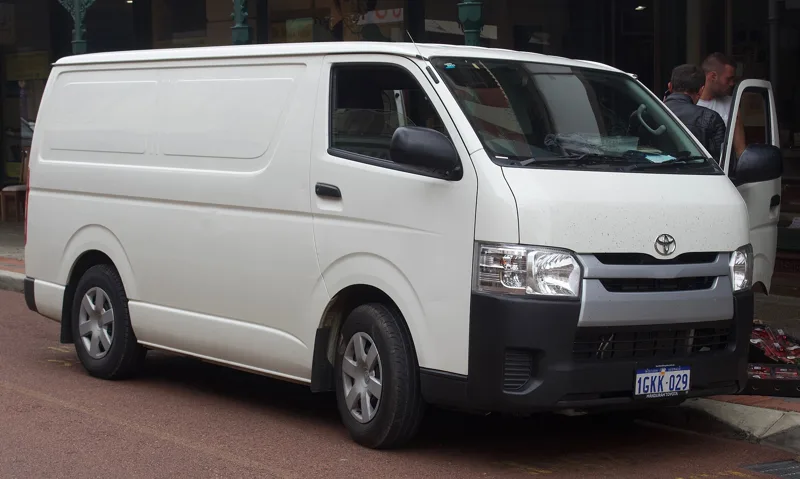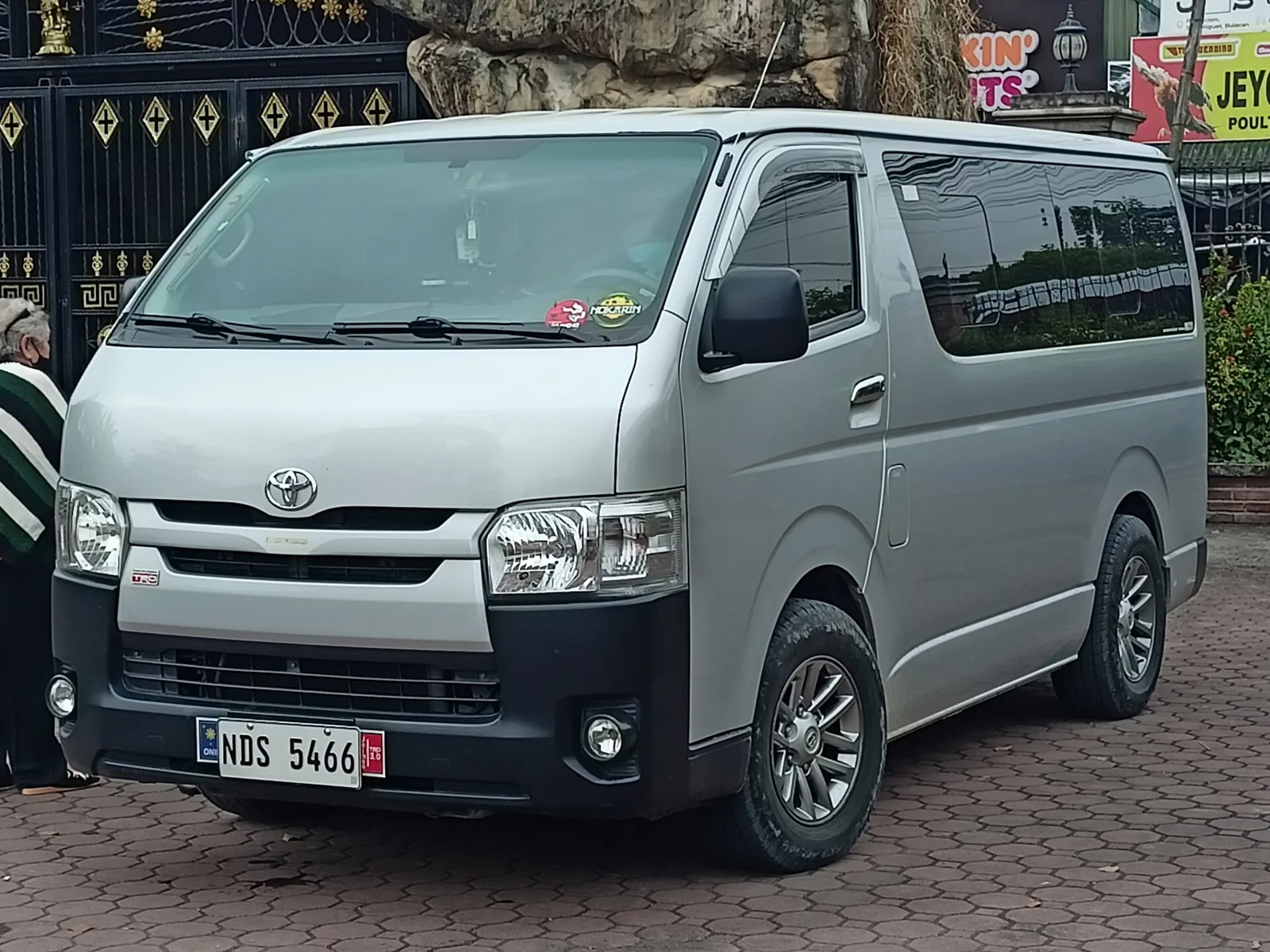
Launched in 2004, the 200 series van went through ten revision types, from diesel engine overhauls to safety and styling updates.
Launched in 2004 and sold for more than 20 years, the H200 van passed through ten revision types. Diesel engines changed at types 2 and 5, and from August 2021 every model sold was automatic only, with no manual option.
The 200 series HiAce is the fifth generation of Toyota's HiAce van and passenger vehicle, and it has been sold for more than 20 years since its 2004 full model change. Its life is divided into ten revision types, each bringing its own engine, safety or styling changes. Buyers in Japan often pick the 200 series for its car insurance and expressway toll advantages.
How long did the 200 series sell?
The 200 series arrived in 2004 and has held the longest sales run in the HiAce's history. The HiAce itself dates to 1967 and has remained the core of Toyota's commercial vans. Traffic infrastructure conditions in Japan have also shaped how the 200 series sells, and the ten revision types stretch from August 2004 to July 2026.
Those type numbers are informal. Toyota Motor never announced them officially, and custom-parts specialists use the labels differently. Some call the fifth type the 4th late, or the 4.5th, so anyone buying or selling should confirm which system is meant.
A van that has sold for more than 20 years, with its diesel engine changed twice along the way.
Which body variants did the 200 series offer?
The 200 series used four body families: long standard-width bodies with a standard or high roof, a long wide body with a mid roof, and super-long wide bodies with a high roof for camper bases and commuters. The standard length was dropped, so long bodies became the new base.
Every 4.7 m or longer model is a wide-body car at 1,880 mm, 190 mm wider than the 100 series. That pushed the small-car class down to the van alone, which carries a 4 number plate. The wider track helps roll resistance and tight manoeuvring, though some people worry about handling and finding parking. The wide-body mid-roof car is 4,840 mm long, its front crumple zone is 150 mm longer, and its interior length matches the standard body.
Commercial vehicles usually wear a generic steel wheel shared across many makers. The 200 series fitted steel wheels with wheel caps as standard on every car, which gives the van a look closer to a passenger car.
What engines did the 200 series use?
Diesel vans and commuters began with a 2.5-litre common-rail turbo diesel, the 2KD-FTV, which met the 2003 new short-term regulations. From August 2007 it gave way to the 1KD-FTV, enlarged to 3.0 litres with a DPR catalyst for the new long-term rules. In November 2017 the diesel became a 2,800 cc (171 cu in) 1GD-FTV with a urea SCR system.
The 1KD-FTV had a serious flaw at launch. Post-injection of fuel, needed to run the DPR, let diesel dilute the engine oil. Both fleet and private owners reported disrupted operation, and private owners needed particular care. The problem affected any diesel that uses post-injection to heat its catalyst, but such engines are not as maintenance-free as older diesel or petrol cars.
Petrol versions came with 1TR-FE 2.0-litre or 2TR-FE 2.7-litre engines. The wagon had no diesel engine.
What did the type 3 update change?
The July 2010 type 3 revision overhauled the 1KD-FTV. Its engineers raised peak output from 100 kW (140 PS; 134 hp) to 106 kW (144 PS; 142 hp) at 3,400 rpm, kept torque at 300 Nm (221 lb ft; 30.6 kgf m) and widened the torque band. Compression fell to 15:1, and injection pressure rose from 180 MPa to 200 MPa.
- Piezo actuator control for the fuel injectors, with a higher supply pump discharge pressure.
- A three-stage swirl control valve, a separate intake manifold and a smaller turbocharger.
- An oxidation catalyst and a fuel additive valve behind the turbocharger for PM combustion and DPF regeneration.
- Dual timing belt cover, revised valve timing and a brushless cooling fan motor.
- Post-injection for DPR was abolished, with fuel now injected into the exhaust pipe, which ended the oil dilution problem.
The update allowed some van models to meet the 2015 fuel economy standard, and petrol vans, except the wide-body 4WD, followed through changes to engine and transmission control and the catalyst.
Type 3 also changed the look. Every front mask gained a new grille, headlamp and bumper shape. The type 1 and type 2 grilles had been interchangeable with each other, but from this type the dimensions changed. DX cars gained power windows that still work after the key is removed, with one-touch operation and anti-pinch protection. The Super GL, GL and Grand Cabin received an Optitron meter redesign, and the Super GL added a front centre console downlight.
Did the 200 series ever offer a manual gearbox?
Yes, until June 2021, but only on the long DX and long DX-GL van packages. The 200 series had a five-speed manual option only on those cars. From August 2021 every model sold was automatic, and the manual disappeared from the range.
The earlier shift lever sat on the floor, but every 200 series car moved it to the dashboard, which opened up the walk-through to the side. The automatic started with four speeds at launch. Petrol cars went to six in December 2014 and diesel cars followed in December 2017. The parking brake returned as a stick-type lever, because it suited walk-through and entry better.
What changed in type 4?
Type 4, released on 27 November 2013, brought the major redesign of the 200 series. Its front mask took on an hourglass shape, reminiscent of the later Lexus spindle grille. Rear lamps were redesigned on several models, the rear side window became a slide type, and an LED low-beam headlamp option was added for all cars.
Inside, the centre cluster was reworked, and a multi-information display showing average fuel economy and outside temperature became standard. Aero stabilising fins were added on several models, and a back door easy closer was offered. Type 4 onward is often called the late 200 series, and its switchgear, sliding-door windows and meter area differ from earlier cars.
How did the later types differ?
Types 6 to 10 kept the type 4 face and added the technology. A digital inner mirror went onto every car, and a panoramic view monitor became standard on the 2026 type 9. The meter became digital, road sign assist and a radar cruise control with curve speed control arrived, and pre-crash detection widened to bicycles and night-time pedestrians.
Type 5 is easy to spot, because its grille has a rectangular cut-out for the millimetre-wave radar. It also brought Toyota Safety Sense P as standard, extended VSC, TRC and hill-start assist to the van, and made an auto alarm standard on every car. Type 7 made parking support brakes standard on all cars and changed the front fog lamps on the van Super GL and wagon GL to LED, and its AdBlue tank grew from 7.4 L to 10.4 L. Type 10 aligned seat strength and head restraint rules with the UN Economic Commission for Europe standard.
How did types 1 and 2 change the van?
Type 1, launched on 23 August 2004, replaced the HiAce emblem on the wagon's nose with Toyota's CI mark, a badge last seen in the 1993 minor change. The van Just Low fitted 70% low-profile tyres of the same size front and rear. Type 2 followed in August 2007 with a revised front grille and an extended trim line-up.
Toyota Modellista International also sold an Aero Tourer wagon, with coloured bumpers, aero parts and optional comfort kit such as power windows and wireless door locks. It was based on the DX wagon and registered as a brought-in vehicle.
Type 2 gave the wagon GL a place between the DX and the Grand Cabin. The GL used the DX wide body and mid roof, but carried Grand Cabin-level equipment. Interior upgrades included armrests on the second-row seats, rear quarter consoles and a fourth row of flip-up seats like the commuter's. Alloy wheels became a factory option on every car.
What did the type 6 to type 8 updates bring?
Type 6, released in May 2020, fitted a digital inner mirror to every car and a 4.2-inch TFT display to the Optitron meter. Type 8, released in January 2024, added an Earth Colour Package to the van Super GL and new wheelchair tie-down types for Welcab vehicles. From type 6 onward the front grille design stayed as it was.
On the type 6 car, the passenger-side fender mirror was dropped, so every model had door mirrors on both sides. Electric folding mirrors on upper grades such as the S-GL changed from a horizontal to a vertical shape. The Regius Ace, sold through Netz stores, was discontinued during type 6 and merged into the HiAce range.
The Earth Colour Package brought a matt-black front grille, dedicated bumpers and two special colours, beige and urban khaki. It was a maker option that came with its own body colour. The DX could be ordered with an easy closer for its sliding and back doors. The new Welcab types, BU and FU, locked the wheelchair in place with a single switch-operated touch on an anchor bar.
What did type 9 change inside?
Type 9, released in February 2026, sharpened the Toyota Safety Sense package and added road sign assist, a delayed-start notice for the car ahead or a signal change, and radar cruise control with curve speed control. The meter went digital, the panoramic view monitor became standard, and the under-mirrors were removed. Bi-Beam LED headlamps became an option on everything except Welcab.
Connected-navigation display audio went onto every car, and the van Super GL, wagon GL and Grand Cabin could upgrade to a Display Audio Plus unit with car navigation and an HDMI input. Seat heaters became standard on the van Super GL, and a passenger airbag that had been a maker option on the van and commuter is now fitted to every car. Automatic air conditioning and steering wheel designs changed too, and the manual air conditioners on lower grades such as the DX got new button layouts.
Why did the wide body matter to buyers?
The wide body gave the cabin more living space and a wider track, but its width raised concerns about handling and parking for some owners. Wide-body cars became the norm for everything over 4.7 m, and only the van kept the small-car class. The super-long wide body with a high roof served the wagon Grand Cabin, the commuter DX and GL, and camper base vehicles.
The mid-roof wide body has a front crumple zone 150 mm longer than the standard body, so its extra length goes to safety structure rather than the cabin, whose interior length matches the standard car. From type 4 the commuter GL could also take a smart entry and start system as an option.
Key specifications
| Specification | Detail |
|---|---|
| Launch | 23 August 2004 (type 1) |
| Diesel engine, type 1 to 2 | 2.5-litre 2KD-FTV, then 3.0-litre 1KD-FTV |
| Diesel engine, type 3 | 106 kW (144 PS; 142 hp) at 3,400 rpm, 300 Nm (221 lb ft; 30.6 kgf m) |
| Diesel engine, type 5 onward | 2,800 cc (171 cu in) 1GD-FTV with urea SCR |
| Petrol engines | 1TR-FE 2.0-litre and 2TR-FE 2.7-litre |
| Wide-body width | 1,880 mm (74.0 in) |
| Wide-body mid roof length | 4,840 mm (190.6 in) |
| AdBlue tank | 10.4 L from type 7 |
| Transmission | Automatic only from August 2021 |
| Type 3 price rise | About 12 to 15 ten-thousand yen, excluding consumption tax |