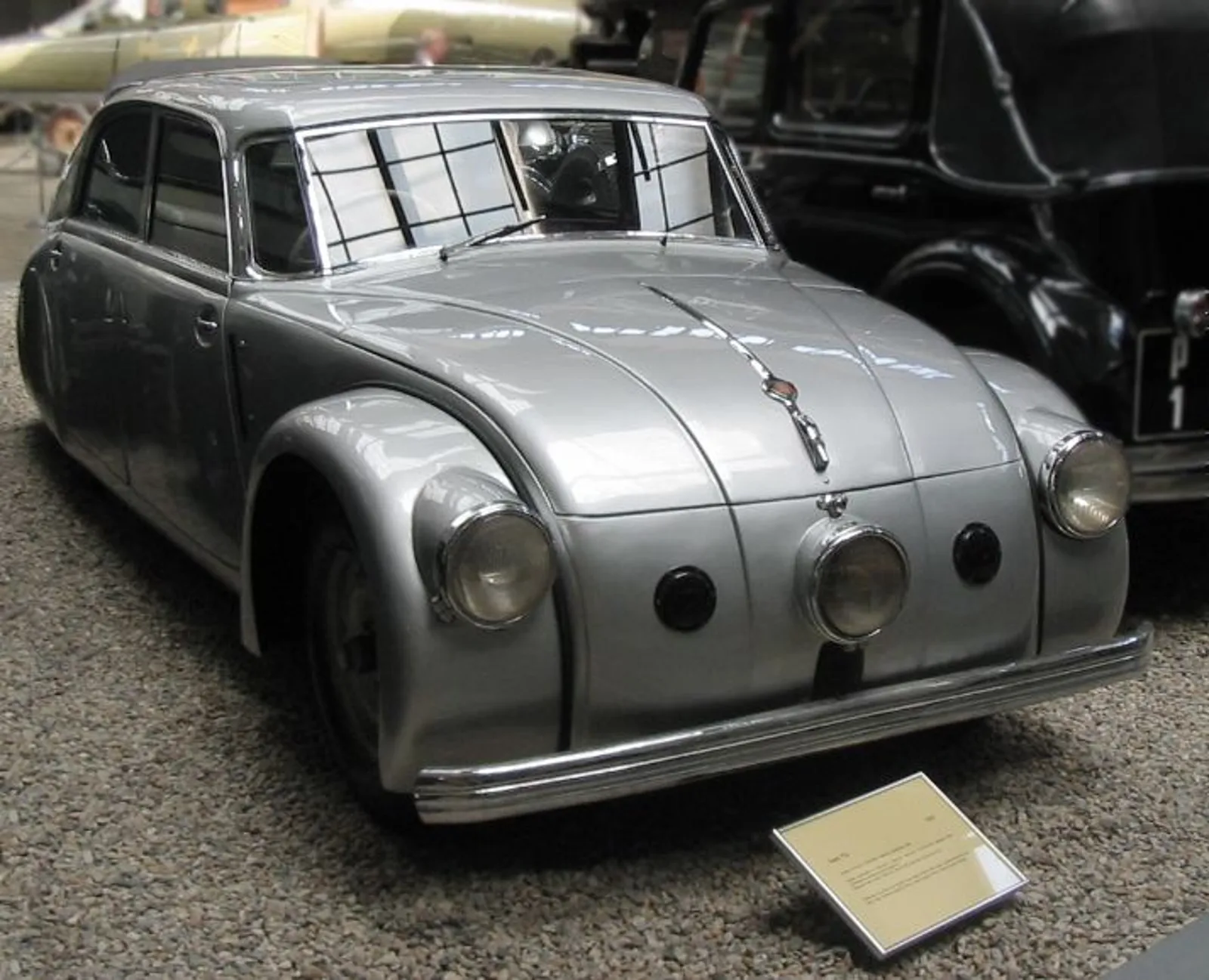
One of the first streamlined cars built in series, with a rear-mounted magnesium V8, a unique valvetrain and a prototype that outran its era.
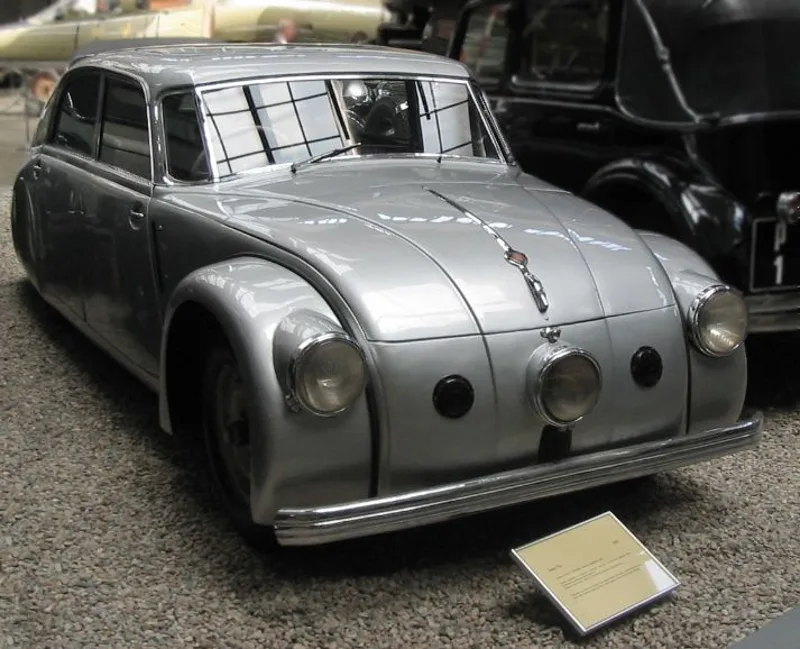
The Tatra 77 was a Czechoslovak luxury car built by Tatra from 1934 to 1938. It used a rear-mounted air-cooled V8, a steel backbone and magnesium alloy parts, and it was one of the first streamlined cars made in series. Its successor, the Tatra 87, arrived in 1936.
The Tatra 77 is a Czechoslovak luxury car built from 1934 to 1938, and it is often counted among the first aerodynamically designed cars put into series production. Its rear-mounted, air-cooled V8 and extensive use of magnesium alloy made it unlike anything else on the road. The later T77a claimed a drag coefficient of 0.212, although that figure is disputed.
Where did the Tatra 77 come from?
Hans Ledwinka led Tatra's design team, Erich Ubelacker handled the body, and the aerodynamicist Paul Jaray acted as consultant. Jaray had worked at Luftschiffbau Zeppelin, where he studied airship design, and he founded a company in 1927 that developed streamlined car bodies and licensed them to manufacturers. Tatra was the only maker to bring his principles into series production, starting with the 77.
Tatra had been making cars since 1897 in Moravia, and it is the third-oldest car maker still in existence. Before the 77, Jaray designed a body for the mid-range Tatra 57, but that prototype never reached production. He also built two prototypes of a beetle-shaped concept called the V570.
Tatra's management saw the streamlined idea as worth pursuing only as a limited, top-of-market luxury car. A cheap and popular Tatra already existed, so Ledwinka's team dropped the V570 and turned its attention to large luxury cars that would be fast, stable and nearly silent.
A rear-engined luxury car from 1934 with a streamlined body, a magnesium V8 and a drag figure that is still debated.
Why was the Tatra 77 so aerodynamic?
Drag grows with the square of speed, so a smaller frontal area and a smooth body cut the power needed for high speeds. Tatra tested its body shape in a wind tunnel, and a 1:5 model recorded an average drag coefficient of 0.2455.
A small front face limited the height of the car, which led to a flat floor and an engine in the rear, directly above the driven axle. The layout removed the need for a floor tunnel carrying a driveshaft and exhaust pipes, which saved weight. The body had no rear window, only slits in the sheet metal to see through.
The frameless body was built around a central structural member welded to the floor panels. The front bumper covered rounded fenders, and the door handles were set into the panels so that only the hinges showed. A continuously sloping rear ended in a vertical fin.
What engine did the Tatra 77 use?
The T77 used a rear-mounted 2.97-litre air-cooled V8 producing 45 kW (60 hp), later raised to a 3.4-litre unit with 56 kW (75 hp) in the T77a. The engine had overhead valves in hemispherical heads and a dry sump, and it was built largely from magnesium alloy.
The valvetrain was unusual. Overhead valves were opened by large drilled rockers, pivoted inboard of their centres to extend the lift from the cams, and a single high camshaft sat between the two cylinder banks. The arrangement was probably the last production use of the walking-beam principle, and it was not obvious from outside, because the engine looked like a plain box.
Belt-driven fans drew air forward over the four shrouded pairs of finned iron cylinders. A large hinged alloy cover kept the carburettor warm in winter, and the crankcase and gearbox were both made from elektron magnesium alloy.
How fast was the Tatra 77a?
The T77a, introduced in 1935, reached more than 150 km/h (93 mph) thanks to its bigger engine and smooth body. Its claimed drag coefficient was 0.212, but that figure may have come from a 1:10 scale-model test, and a later check put the full-size car at 0.36. The front now carried three headlamps, and the central one used an electro-magnetic system to swivel and light the kerbs, because street lighting was poor at the time.
The original T77 had already been shown at 145 km/h (90 mph) on the road from Prague to Karlovy Vary. Journalists who rode in it were impressed by its handling and its comfort at about 100 km/h (60 mph).
How was the Tatra 77 received when it launched?
Tatra unveiled the car on 5 March 1934 at its Prague offices, and the development had been kept very secret until then. It was presented at the Berlin motor show on 8 March, where it became the centre of attention, and the Paris motor show also showed it later in 1934.
Some people doubted that 45 kW (60 hp) could take the car to 140 km/h (87 mph), because a conventional car of the day needed roughly twice that power for such a speed. Demonstration rides followed, and the director Maurice Elvey was so struck by the car's looks that he used it in his science-fiction film The Transatlantic Tunnel.
What did the Tatra 77 cost?
A Tatra 77 cost 98,000 koruny, roughly US$4,000 in 1935, which placed it firmly in the luxury market. The price reflected the hand-built nature of the car, and the interior used leather trim.
Some cars had a glass partition between the front and rear seats, and a sliding roof was available as an option. Some examples also carried canvas Webasto roofs.
Who owned a Tatra 77?
The Tatra design engineer Erich Ubelacker owned and used a T77 from 1934, and he also used a two-door coupe prototype fitted with the more powerful engine from the later Tatra 87. Milos Havel, proprietor of Prague's film studios, bought one in 1935.
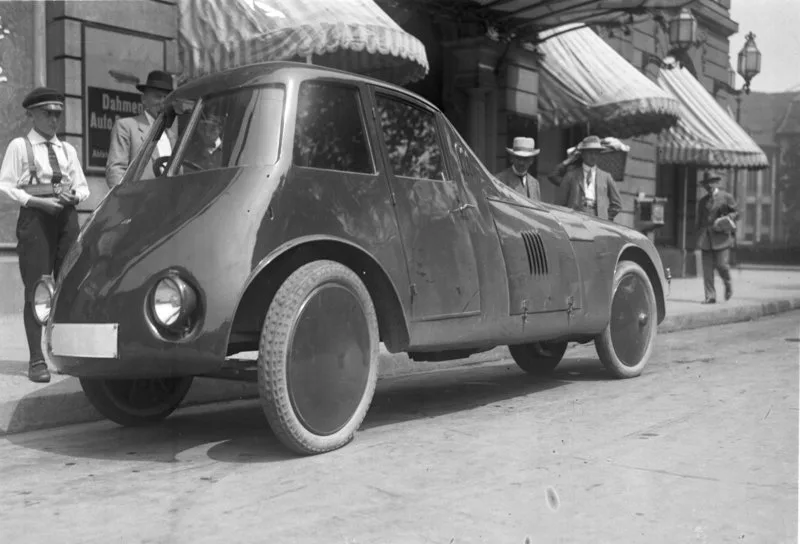
Edmund Rumpler, the Austrian designer of the Rumpler Tropfenwagen of 1921, was another admirer. Edvard Benes, foreign minister in the 1930s and later president of Czechoslovakia, owned a T77a.
Where was the steering wheel?
A few Tatra 77 models placed the steering wheel in the centre of the dashboard, with the front passengers seated on either side of the driver. The seats were set slightly rearwards, a layout later seen in the McLaren F1. Most cars had the wheel on the right, because Czechoslovakia drove on the left before the Second World War.
What came after the Tatra 77?
Ledwinka was not fully satisfied with the T77's handling, which suffered from a heavy rear end. He started work on a successor that would be lighter and balance its weight better. Tatra achieved that with the Tatra 87, introduced in 1936.
What are the Tatra 77 specifications?
| Specification | Detail |
|---|---|
| Production | 1934 to 1938 |
| Engine (T77) | 2.97-litre air-cooled V8, 45 kW (60 hp), rear-mounted |
| Engine (T77a) | 3.4-litre air-cooled V8, 56 kW (75 hp) |
| Top speed (T77a) | Over 150 km/h (93 mph) |
| Drag coefficient, 1:5 model | 0.2455 |
| Drag coefficient, T77a claim | 0.212, from a model test |
| Drag coefficient, full size | 0.36, reported in a later check |
| Price | 98,000 koruny (about US$4,000 in 1935) |
| Successor | Tatra 87, introduced 1936 |