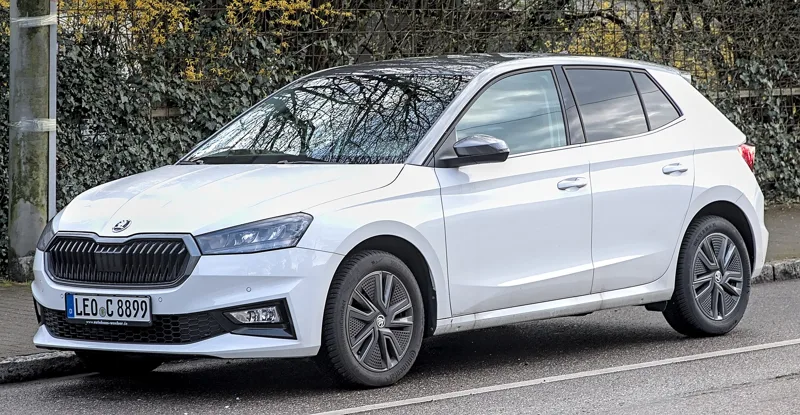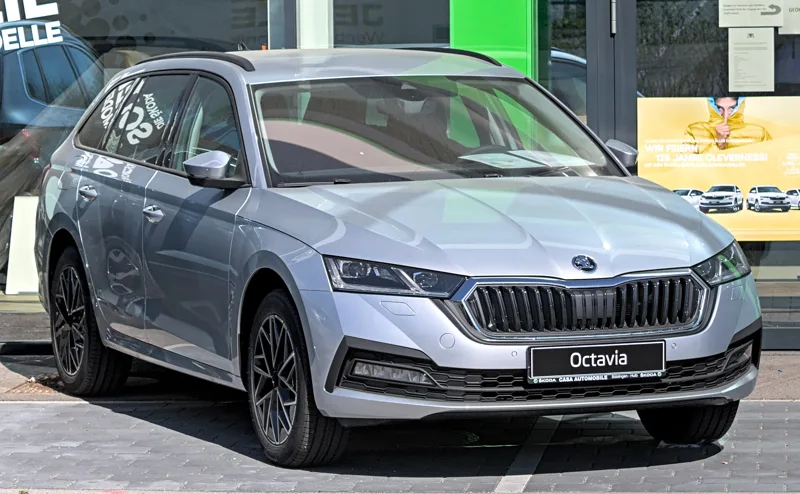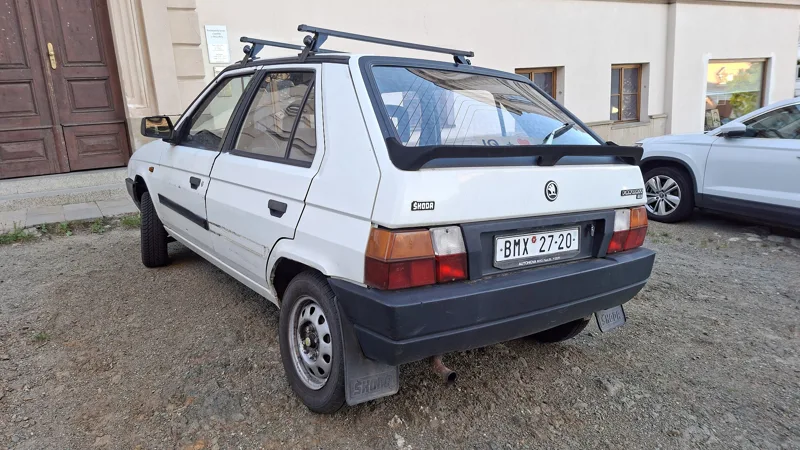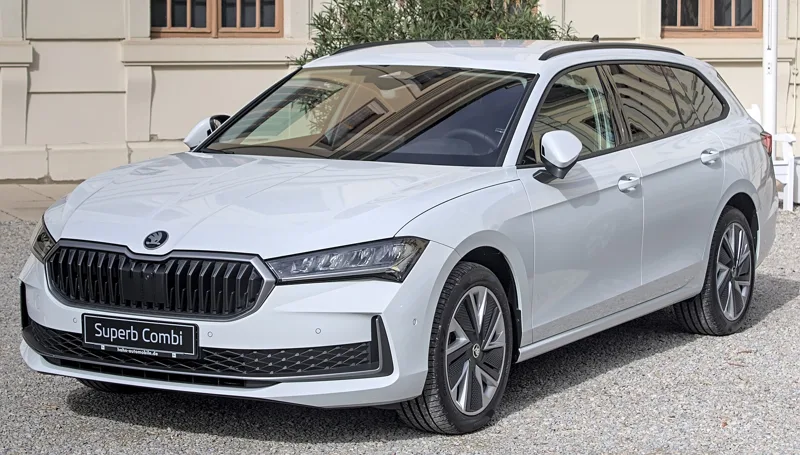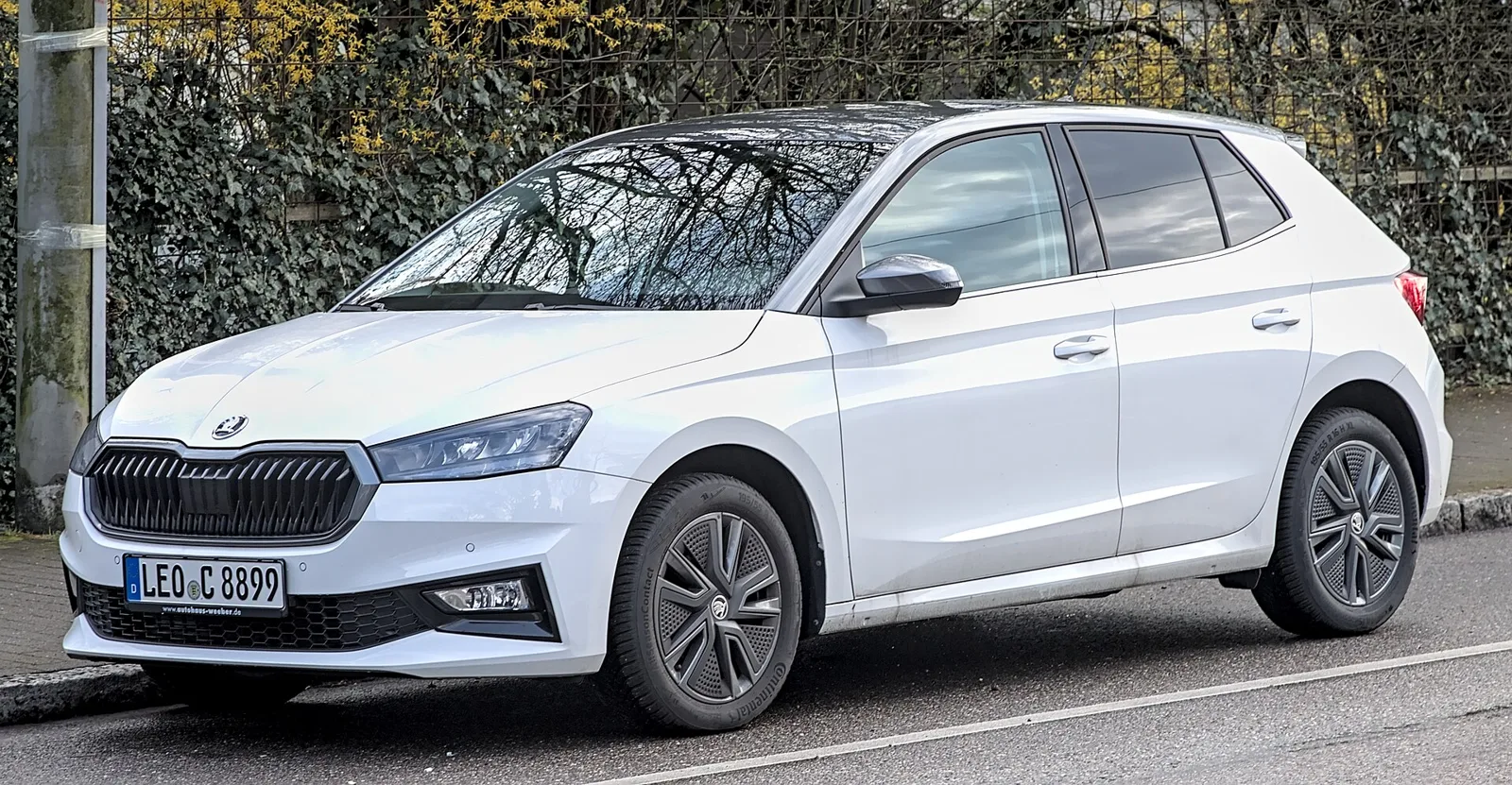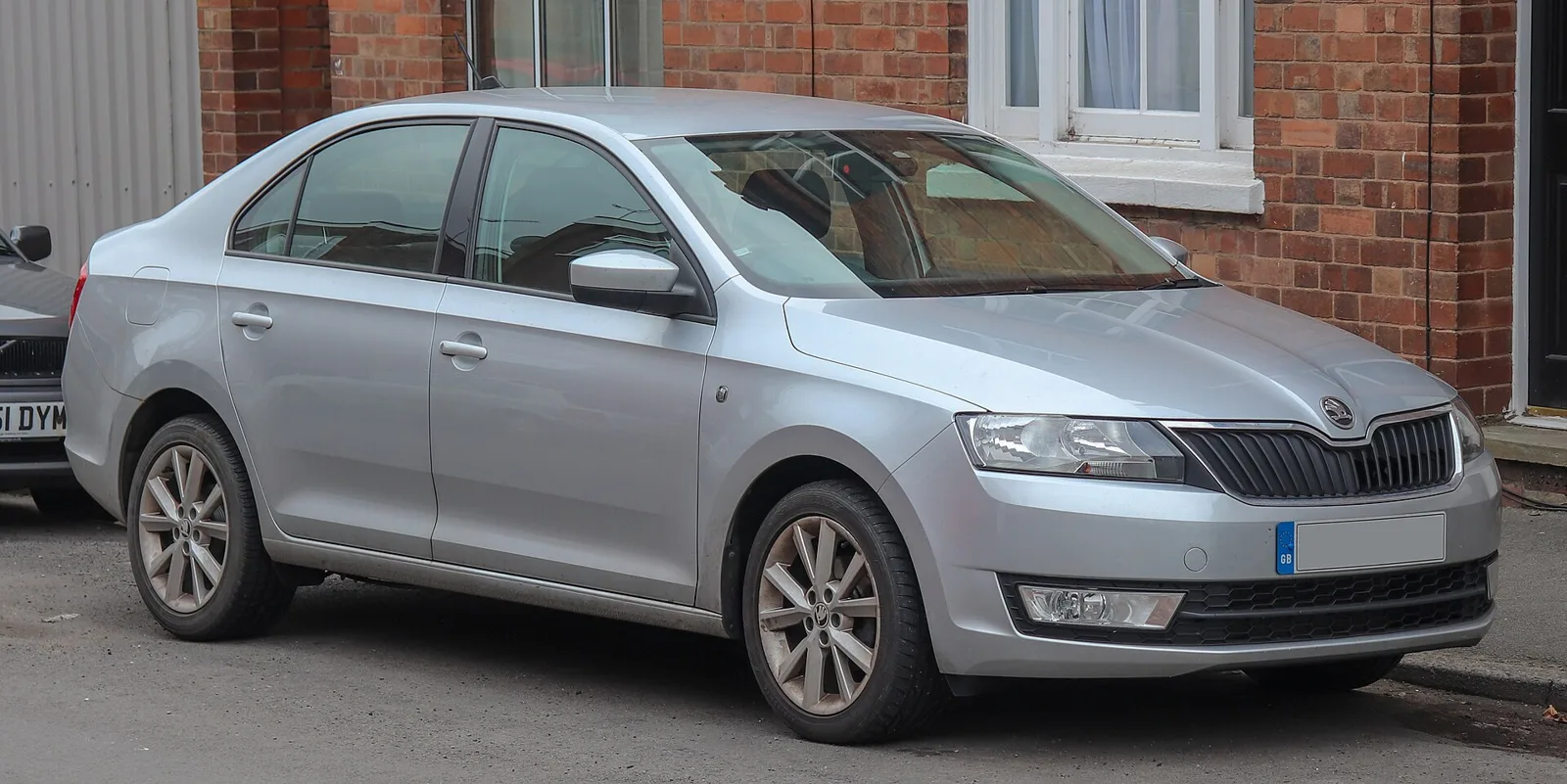
The small family car that first carried Skoda's new design language, sold as a liftback and a Spaceback, with a Chinese sedan and a Russian Volkswagen Polo twin.
The Skoda Rapid is a small family car range from Czech maker Skoda, sold as a liftback, a Spaceback hatchback and a sedan in China. It launched in 2012 on the PQ25 platform, carried the brand's new design language, and was followed in Europe by the Scala from 2019.
The Skoda Rapid was a range of small family cars from the Czech maker Skoda Auto, sold as a five-door liftback, a five-door hatchback called the Spaceback, and a four-door sedan in China. It was built on the B-segment PQ25 platform, and the liftback was the first Skoda to carry the brand's new design language in full.
Where did the Skoda Rapid come from?
The production liftback made its public debut at the Paris Motor Show in September 2012. Sales started in the Czech Republic on 20 October 2012, followed by central and western Europe at the end of that year. Sales and production in Russia began in early 2014.
The Rapid was intended to fill a gap in the range. It sat between the Fabia and the third-generation Octavia, a space that opened after the Octavia Tour was discontinued in 2011.
The name had earlier uses. Skoda used Rapid for an earlier model, and in the 1980s the name appeared on a rear-engined coupe, so the badge carried some history before the 2012 car.
Skoda's first car to wear its new design language in full, sold as a liftback, a Spaceback and a Chinese sedan.
Why did the Rapid matter for Skoda's design?
The liftback was the first Skoda model to fully feature the brand's new design language. Its minimalist look was developed by chief designer Jozef Kaban, and the styling was first shown on the MissionL concept at the 2011 Frankfurt Motor Show.
That language is clean and uncluttered, with few decorative lines and a focus on proportion. It gave Skoda a clear visual identity at a time when the brand was broadening its appeal in Europe.
The Rapid's look also set the pattern for later models. Each new Skoda that followed used the same family cues, so the car acted as a turning point for the brand's styling.
How big was the Rapid liftback?
Its overall dimensions were similar to the Octavia Tour, but the Rapid offered more rear legroom through a longer wheelbase of 2,602 mm, against 2,578 mm for the Octavia Tour. The boot shrank by 35 litres, to 550 L from 585 L.
Payload stayed the same as the Octavia Tour, at 535 kg including the driver. That figure is useful when comparing family cars, because it shows how much weight the car can carry with people and luggage on board.
Packaging was the car's strength. A longer wheelbase with slightly smaller outside dimensions created more usable space for the people inside, which suited buyers who wanted a practical car rather than a large one.
Practical packaging like this is one of the main reasons family buyers shortlist a car, because it determines how easily a family can use the car every day.
What was the Rapid Spaceback?
The Spaceback arrived in September 2013, after its premiere at the Frankfurt Motor Show that year. It shares the wheelbase and front panels of the liftback, but it uses a station wagon style body with a shorter rear overhang and a correspondingly shorter rear section.
That approach follows a formula first used in the 1970s by Opel and Vauxhall with the Kadett City and the Chevette. Despite a sporty fastback rear, luggage capacity is rated at between 415 and 1380 litres, depending on how the rear seat is folded.
The Spaceback also brought practical touches. An optional false boot floor reduced the step between the loading sill and the floor when the rear seat backs fold, and hidden storage of up to 135 mm sits beneath it.
The lockable fuel cap was another detail. It sits inside the central locking system, so the driver does not need a key to open it, and the ice scraper is protected from theft.
Small touches like these show how the Rapid was designed around everyday use, which is what its buyers were paying for.
Which engines did the Rapid use?
The Rapid line-up featured three petrol engines and one diesel with a range of outputs, all compliant with Euro 5 standards. Several petrol units also met Euro 6 from 2015. Every engine was a four-cylinder except the base 1.2 petrol, which was a three-cylinder unit.
The top petrol was a 1.4 TSI with a seven-speed DSG as standard. The 1.6-litre diesel, rated at 66 kW, offered the DSG as an option, which gave buyers a choice between simple and more automated shifting.
The Spaceback shared the same engine line-up as the liftback. Those four petrol and two diesel units gave outputs from 75 to 122 PS (55 to 90 kW; 74 to 120 hp), so the range covered both economy and performance.
Efficient models carried a GreenLine badge. The GreenLine version had CO2 emissions of 99 g/km and was available from 2013, which made it the most economical choice in the range.
Efficiency badges of this kind help buyers compare running costs quickly, though the real figure depends on how a car is driven.
What changed in the 2017 facelift?
The Rapid was facelifted in 2017, with a modified front fascia and new headlights, which could be fitted with bi-xenon units with LED lights. Driver aids were added, and the dashboard was reworked slightly. Those changes made the front look more modern without changing the basic packaging.
The engine line-up changed too. The basic motor was replaced: the 1.2 MPI at 55 kW gave way to the 1.0 TSI at 70 kW, and the 1.2 TSI was removed completely.
Xenon lighting brought rules of its own. The luminous flux of xenon headlights in the Rapid was 2,000 lumens, so there was no need for a headlight washer system or dynamic range adjustment, which keeps the light beam at a constant angle.
What engine problems did the Rapid have?
The 1.4 TSI was generally reliable, but direct-injection engines can build up carbon on the intake valves, because the valves never come into contact with fuel. Owners were advised to use good quality fuel of at least 95 RON, along with regular oil changes.
The most expensive failure was the wastegate bushing on the stock Mitsubishi turbocharger. Its symptoms could be detected with an OBD diagnostic, as overboosting or underboosting show up depending on where the wastegate flap is stuck.
A symptom called low-speed pre-ignition, audible at low rpm under load, could also occur even on 100 RON fuel, because the ECU could not adjust timing and the air-fuel ratio adequately in that case.
How was the Rapid equipped?
All models sold in Europe came with electronic stability control and six airbags, covering the driver and passenger at the front and sides, plus curtain airbags. The safety package was standard rather than an optional extra on those markets. It formed part of the car's basic specification.
Trim levels were Active, Ambition and Elegance in most markets, and S, SE and Elegance in the United Kingdom. The Rapid also introduced a set of 'Simply Clever' details, including a double-sided boot mat, a warning vest holder under the driver's seat, a removable bin in the door trim and an ice scraper on the fuel flap.
The Rapid Sport, shown at the 2013 GTI Treffen, went further with a bi-colour body and 19-inch alloy wheels. It was a showcase model rather than a mainstream version, and it showed what the platform could carry.
What did the late facelifts bring?
The liftback was facelifted for a second time in late 2019 for Russian and CIS markets. It brought triangular LED headlights similar to the Scala, a redesigned bumper with a sportier look and the brand's hexagonal grille. The update was aimed at keeping the car current in those markets.
The interior gained a digital instrument panel and a 6.5-inch floating touchscreen, with an 8-inch unit available as an option. Two USB-C outlets sat on the centre console, and the steering wheel could be heated.
The Chinese facelift took a different route. It received new headlights and taillights inspired by the Scala, an updated grille and an 8-inch infotainment system with over-the-air updates and support for Android Auto and Apple phones.
How did the Chinese Rapid differ?
In China the Rapid is a sedan that shares body panels with the 2012 Chinese Volkswagen Santana, while keeping the front fascia of the European liftback. It is an alternate variant of the Santana rather than a separate design. The car keeps the European liftback's identity at the front.
The Chinese car uses a 1.5-litre petrol four rated 111 PS (109 HP / 82 kW), with 145 Nm (107 lb-ft) on hand. It pairs with a five-speed manual or a six-speed automatic gearbox.
The powertrain already met the China VI b emissions standard, which came into effect in July 2023. That gave the car a longer usable life in a market where rules change quickly.
Which related cars shared the Rapid's platform?
The 2020 Rapid liftback provided the basis for the 2020 Volkswagen Polo sold in Russia and nearby CIS countries, where it took the place of the Polo Mk5 sedan. Volkswagen used the Rapid to cut costs rather than produce the Virtus in Russia.
The Russian Polo had a redesigned front end inspired by the Jetta A7, and it was built at the Volkswagen Group Rus plant in Kaluga. Its production was discontinued after only 2 years on sale, when Volkswagen withdrew from Russia.
The SEAT Toledo of 2012 to 2019 was a close relative. It was based on an adaptation of the same PQ25 platform, and it was assembled in the same Skoda factory in Mlada Boleslav. Sales began in Spain and Portugal at the end of 2012.
What were the Rapid's specifications?
The Rapid covered a broad span of engines and trims over its life, from a 1.2-litre three-cylinder to a 1.5-litre Chinese four. Its European range was built on the PQ25 platform, while the Chinese sedan used the Santana's body panels. The table below sets out the main figures.
| Specification | Detail |
|---|---|
| Liftback wheelbase | 2,602 mm |
| Liftback boot | 550 L (Octavia Tour 585 L) |
| Liftback payload | 535 kg, including driver |
| Spaceback luggage | 415 to 1380 litres |
| Spaceback engines | 75-122 PS (55-90 kW; 74-120 hp) |
| Diesel | 1.6-litre, 66 kW, DSG optional |
| GreenLine CO2 | 99 g/km |
| Chinese engine | 1.5-litre four, 111 PS (109 HP / 82 kW) |
| Chinese torque | 145 Nm (107 lb-ft) |
What replaced the Skoda Rapid?
Since 2019 the successor to the Rapid in Western and Central Europe has been the Skoda Scala. The Rapid kept selling in other regions, which is why it was facelifted for China and Russia in 2020. The Scala was a different car for a different market, so the Rapid's role outside that region stayed unchanged.
The Rapid remained popular in markets where its practicality mattered most. Its legacy is a family liftback and Spaceback that carried the new Skoda design into showrooms before the Scala took over, and the Scala drew on the same family of styling cues.