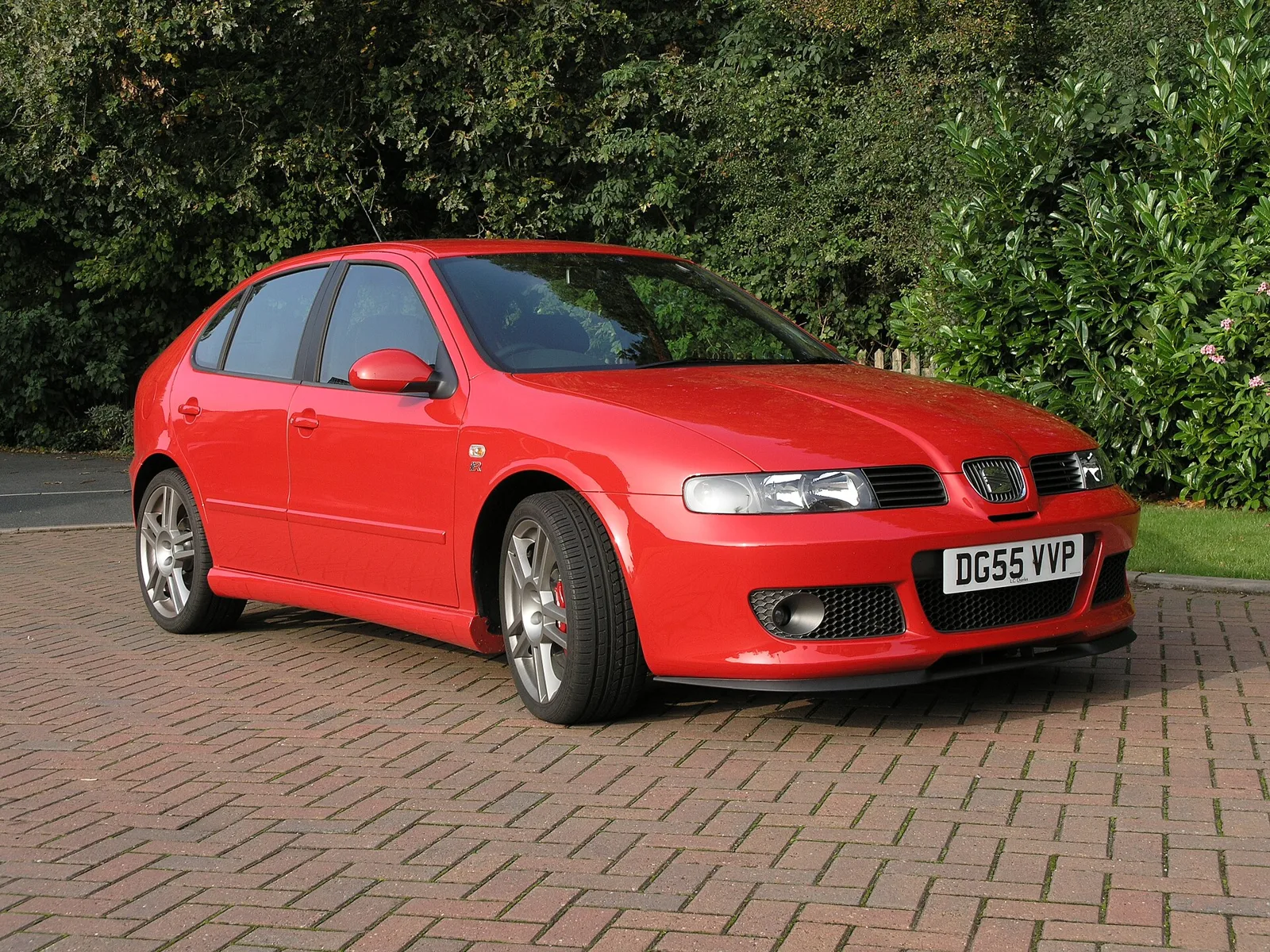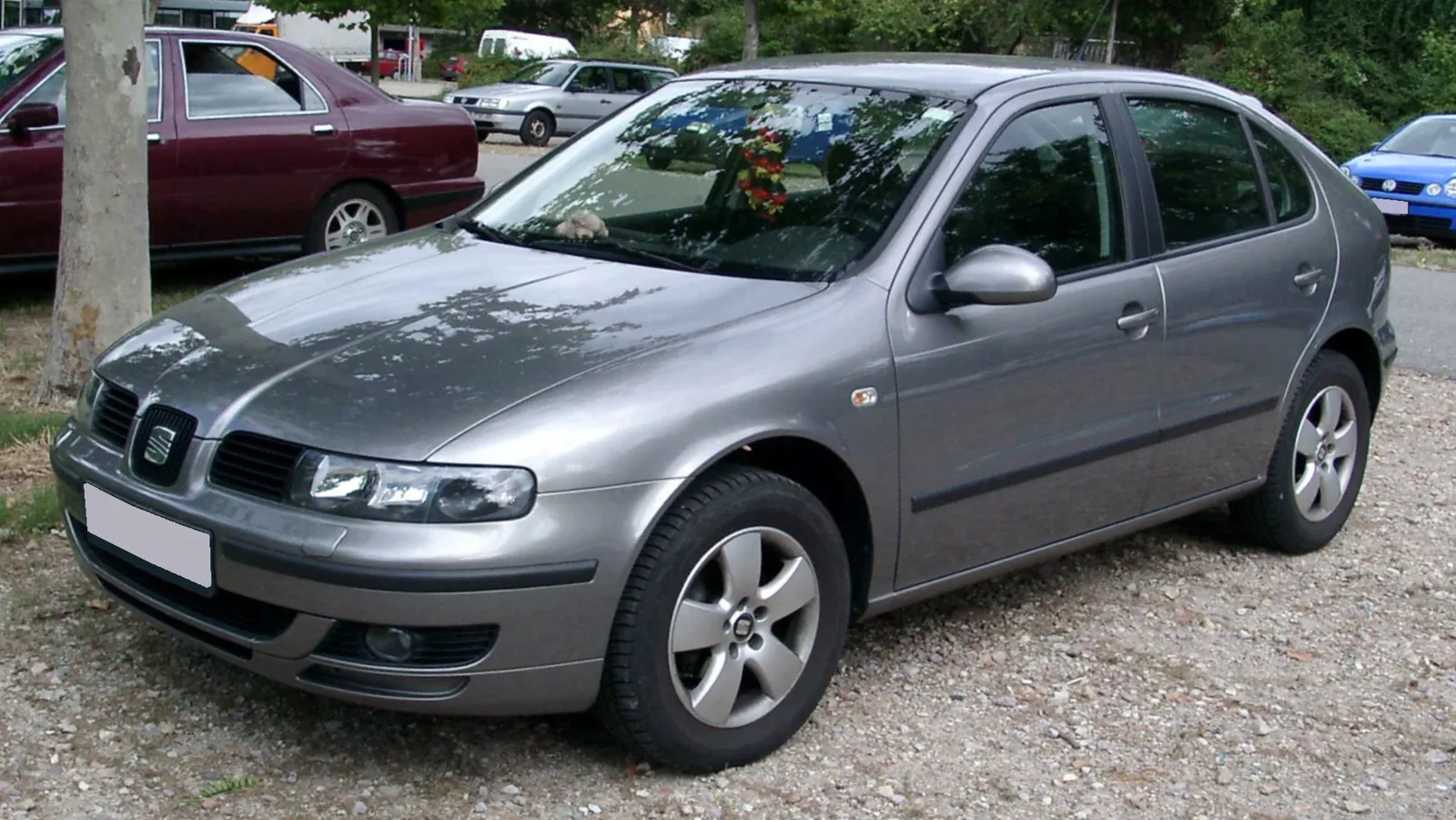
A five-door hatchback on the VW Group's PQ34/A4 platform, with a trim ladder, a Cupra performance line and a production run that ended in 2006.
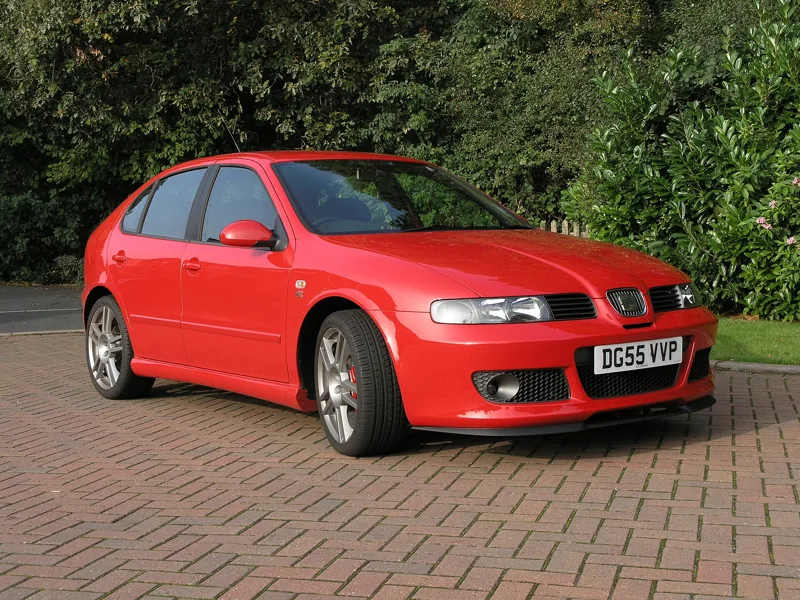
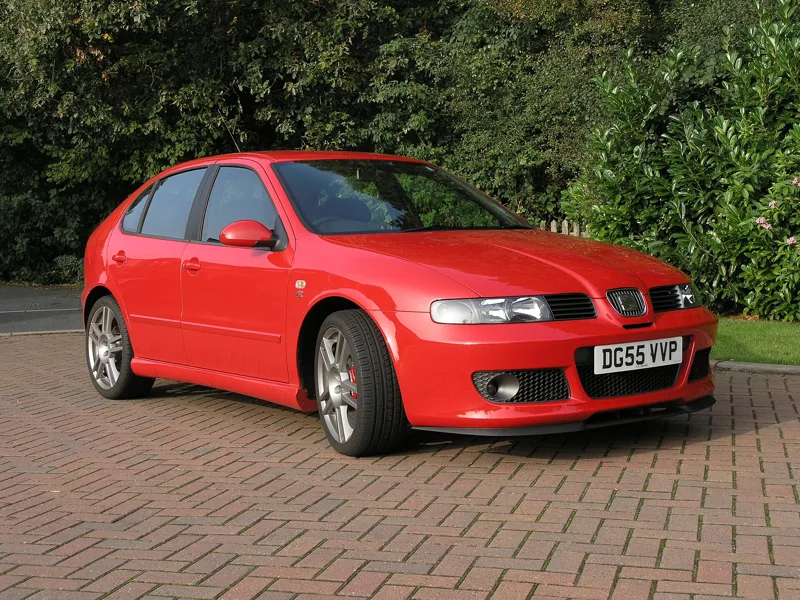
The Seat Leon I, type 1M1, was a five-door compact hatchback presented at the IAA in 1999. It shared the VW Group's PQ34/A4 platform with the Golf IV, and production ran until 2006. Its performance versions, the Cupra and Cupra R, reached 165 kW (224 PS; 221 hp).
Seat's compact hatchback was built on a platform it shared with the Golf IV, and over seven production years it grew a sporty family around it. Its story is as much about trim lines and engines as about the chassis underneath.
Why was the Leon built on a Golf platform?
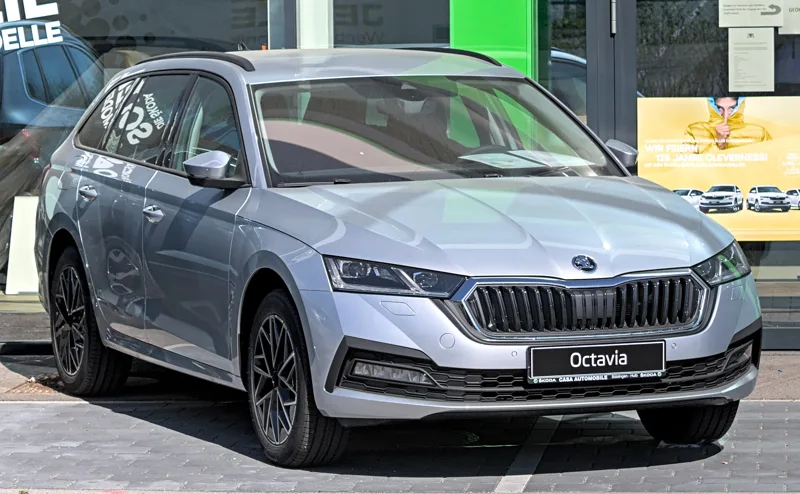
The Leon used the PQ34/A4 platform of the VW Group, which also underlay the Golf IV, the VW Bora, the VW New Beetle, the Audi A3 and TT, and the Skoda Octavia I. It was the hatchback version of the Toledo 1M2 notchback and was identical to the Toledo as far as the rear doors. Only a five-door body was offered.
The platform and technology of the Golf IV stayed in use until production ended in 2006, even though the Golf IV itself had been succeeded at the end of 2003. Seat presented the Leon at the IAA in 1999, and it reached dealers in November of that year.
Built on the Golf IV's floor and sold as a Cupra with a 165 kW top version, the first Leon ran for seven years.
What trim lines did the Leon start with?
The Leon launched in Stella, Signo and Sport trims, with Stella as the base model. Signo added automatic climate control, four electric windows and electrically folding, heated mirrors, while Sport brought a sports leather steering wheel, sports seats and sports suspension, along with 312 mm brake discs and a six-speed manual.
The Signo was still called Signum during the first production weeks of model year 2000. For model year 2001 it was clearly upgraded, gaining a rain sensor, a CD radio and much more. The Sport sat 15 mm lower than the standard model.
On every model the drag coefficient (cw) was 0.32. The tank held 55 litres, but only the four-wheel-drive versions, the Sport 1.8 20VT4 and the Cupra 2.8 V6, carried 62 litres, which cut the boot from 340 to 270 litres. Six-speed models also ran larger tyres: 205/55R16 91 W on the 1.8 20VT and 20VT4, and 225/45 R17 91 Y on the Cupra 2.8 V6, against 195/65 R15 91 V on the base version. Four-wheel-drive models came with an electronic stability programme and internally ventilated disc brakes at both axles.
Engines at a glance, first model year
| Engine | Output | Notes |
|---|---|---|
| Stella 1.4 16V | 55 kW (75 PS; 74 hp) | Stella trim |
| Stella/Signo 1.6 8V | 74 kW (100 PS; 99 hp) | Automatic optional |
| Signo/Sport 1.8 20V | 92 kW (125 PS; 123 hp) | Automatic later optional |
| Sport 1.8 20VT | 132 kW (180 PS; 178 hp) | Four-wheel drive optional |
| Stella 1.9 SDI | 50 kW (68 PS; 67 hp) | Diesel |
| Stella/Signo 1.9 TDI | 66 kW (90 PS; 89 hp) | Diesel |
| Signo/Sport 1.9 TDI | 81 kW (110 PS; 108 hp) | Diesel |
How quick were the Cupra and the Cupra R?
The Cupra arrived in April 2001 as the new top model, with a 2.8-litre V6 of 150 kW (204 PS; 201 hp) and four-wheel drive. The Cupra R followed in spring 2002 with a 1.8-litre turbo engine from the Audi TT and S3, which reached 100 km/h in 6.9 seconds and, in an Auto Bild test, 200 km/h in 27.8 seconds.
It started at 17-inch wheels, with 18-inch wheels standard from model year 2003 and Brembo sports brakes fitted until model year 2005. Its interior was entirely black, and the equipment was limited to the essentials, so the car was built for sport rather than luxury. Output started at 154 kW (209 PS; 206 hp) and was later raised to 165 kW (224 PS; 221 hp). Without four-wheel drive the Cupra R was lighter than an Audi TT or S3, and on dry roads that weight saving could turn into a small acceleration lead.
The name Cupra stands for Cup Racing. In Germany the Cupra came only with the V6 petrol engine, while abroad a 110 kW (150 PS; 148 hp) 1.9 TDI using pump-nozzle technology joined it. Both engines always had four-wheel drive. Outside Germany, in Great Britain for example, the 1.8-litre turbo with 132 kW (180 PS; 178 hp) and four-wheel drive was also sold as a Cupra for a time.
What set the Cupra apart inside and out?
The Cupra had Recaro seats in mixed cloth and leather, Cupra badges at both ends, dials lit in white and 17-inch aluminium wheels. Its sports exhaust had twin tailpipes, and it was offered only in red, yellow and black, the traditional Seat colours.
The Sport TDI, which was on sale for a short time in spring 2001, shows how the range branched. It had 110 kW (150 PS; 148 hp), the normal Sport trim and no four-wheel drive or Cupra details, and unlike the Cupra TDI it was offered in Germany too.
Other paint colours appeared only at the very end of the Cupra's run, and then for a few weeks. The centre console was painted matt grey, and the sports pedals and black trim parts, such as the automatically dimming interior mirror with rain sensor, completed the look.
The Top Sport, added in autumn 2002 when the Cupra was discontinued, did not differ from the Cupra on the outside. Inside, the Recaro seats were replaced by the sports seats of the Sport model. The Top Sport trim offered the 2.8 V6 with four-wheel drive, the 1.9 TDI with front or four-wheel drive, and the 1.8 20VT with front or four-wheel drive.
In autumn 2002 a minor facelift changed mostly equipment. The lower dashboard sections, which had been grey or black by model, were black on every car from then on. Where the Aura radio had used a cassette, it now carried a CD drive, and features such as the electrically folding Signo and Cupra mirrors were removed.
How did the engine range change during the run?
In autumn 2000 the 1.6-litre eight-valve engine gave way to a four-valve 1.6 rated 77 kW (105 PS; 104 hp). From then on the four-speed automatic was available only with the 1.8-litre petrol engine. Teardrop-shaped exterior mirrors arrived in February 2003, replacing the bulkier units that the Golf IV had carried.
In spring 2003 a 1.9 TDI with 96 kW (130 PS; 128 hp) was added, offered in Germany in the Signo and Sport models. At the end of August 2003 the all-wheel-drive option was dropped, and the V6 was removed from the range shortly afterwards.
In model year 2004 the Top Sport was renamed Formula Racing in mid-2004. Only equipment details changed, and the outward look kept the original Cupra styling.
How did the Leon 1M end its run?
The final model year, 2006, began in October 2005, and the 1M was built in parallel with its successor, the Seat Leon II. Its choice of engines and equipment was greatly reduced, and the last cars were called Last Edition or Torro.
Those last models offered the 1.6-litre petrol engine with 77 kW (105 PS; 104 hp), and for the first time a 1.9-litre TDI with 74 kW (100 PS; 99 hp) and pump-nozzle injection. That diesel was the only 1M Leon with a diesel engine to meet the Euro 4 emissions standard. Between 1999 and 2006 about 544,000 Seat Leon I were built.
Which special models were built?
Several special models appeared in the seven production years. Most were based on the Stella trim and extended with extra equipment, and their names, such as Torrid and Magma, varied by country of origin. What they shared was front and rear plastic skirts painted in body colour.
Pulso, based on the Sport, and the Top Sport Jerez were built in very small numbers. Supercopa, based on the Top Sport and Formula Racing, took its name from the racing car used in the Seat brand cup.
Final production figures
The Leon 1M ran from 1999 to 2006, with the Skoda Octavia (1U) built in a similar way alongside its own successor. Across all seven years, the Seat Leon I total stood at about 544,000 cars.