A compact Czech saloon and estate on the PQ34 platform, built from 1996 to 2010, with a Laurin and Klement edition and a 1990s World Rally Car.
The Skoda Octavia I was a Czech compact car built from 1996 to 2010 on the PQ34 platform. Its design was redrawn after a complaint about its Italian look, and it later raced as a World Rally Car.
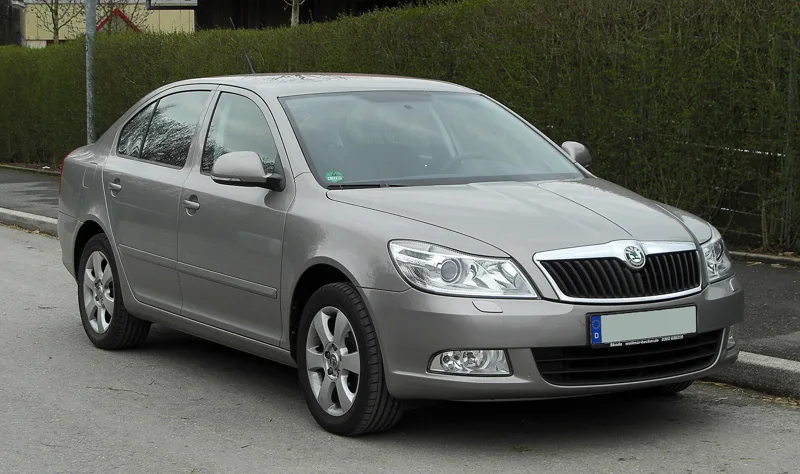
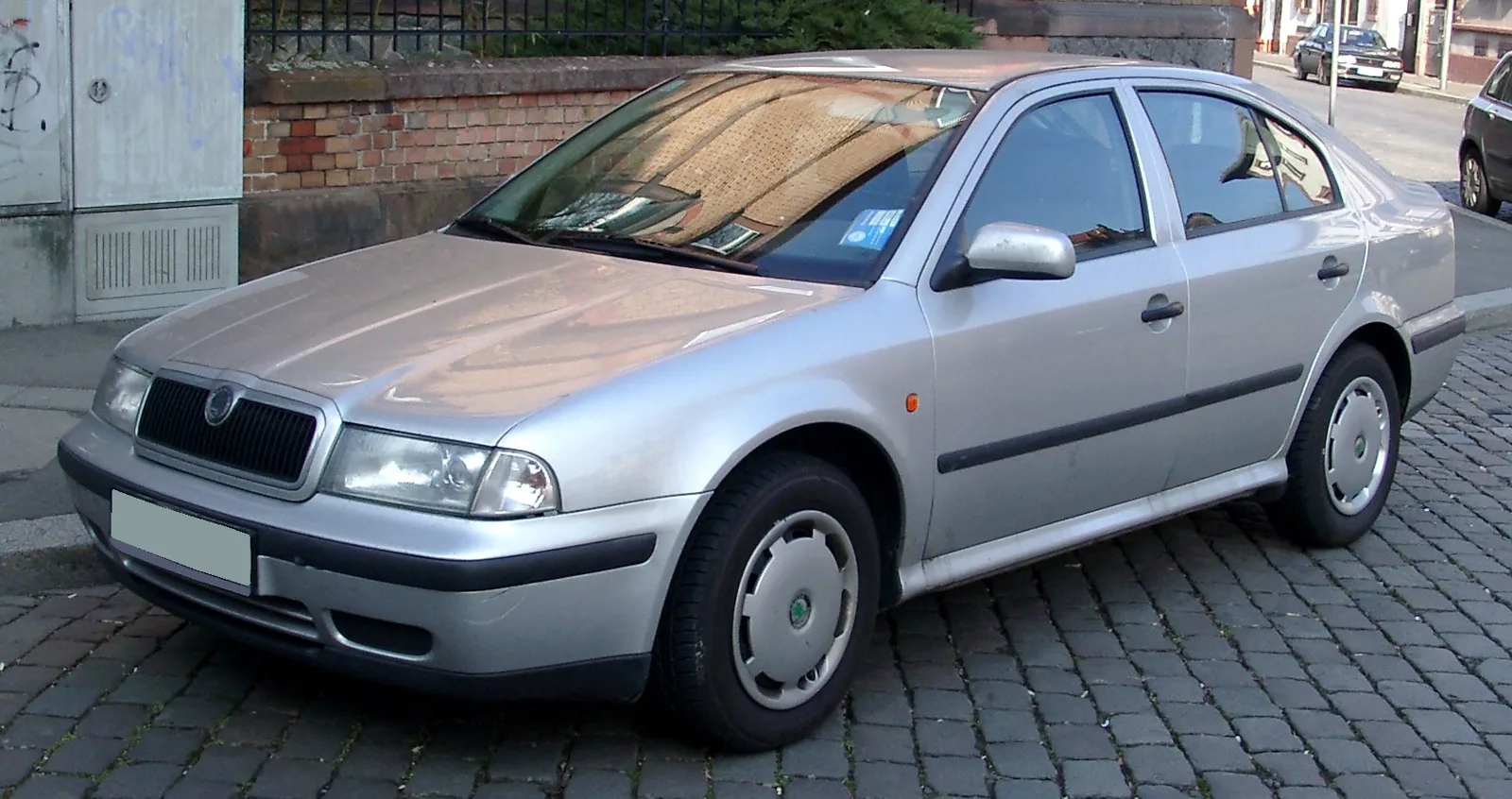
The Skoda Octavia I was a Czech passenger car built from late summer 1996 to the end of 2010. It was Skoda's first car in the compact class after Volkswagen took over the company in 1991, and it was built on the PQ34 platform that it shared with the VW Golf IV. Its exterior was redrawn after a Czech prime minister said the first design looked too Italian.
Why was the Octavia's design changed?
Giorgetto Giugiaro had drawn a design for the Octavia in the early 1990s. When the model was presented, the Czech prime minister Vaclav Klaus, whose state was still a co-shareholder in Skoda, called it too Italian. Ferdinand Piech, chairman of the VW Group, Skoda's majority shareholder, agreed, and a new exterior was drawn.
The redesign came from Skoda's new chief designer, Dirk van Braeckel. It had a tauter, more angular shape and a larger radiator grille, and the aim was a clear profile for Skoda's new start rather than a soft, modern form.
The Giugiaro tooling was already made, so his design became the basis of the Seat Toledo II, although Seat redrew the front. The Octavia, by contrast, received a practical large tailgate hinged at the roof, where the Toledo II had only a small hatch.
A Czech compact that was redrawn after a prime minister called it too Italian, then raced as a rally car.
How was the Octavia engineered?
The Octavia used the PQ34 platform that also underpinned the VW Golf IV and other group models.
One engineering goal was to avoid damage to main parts, such as the bonnet and tailgate, in an impact of up to 15 km/h.
Petrol engines ranged from 1.4 to 2.0 litres, with a 1.8 turbo as the top unit. The diesels included an SDI and a TDI of 1.9 litres, and four-wheel drive was added to the range over time.
What was the launch line-up?
The saloon went on sale in March 1997 in three trim levels, LX, GLX and SLX. Buyers could choose 1.6 and 1.8 20V petrol engines, with 1.9 litre SDI and TDI diesels as the alternatives. The estate, called the Combi, followed in June 1998 with a new 1.8 20V turbo petrol engine of 110 kW.
In May 1999 the 92 kW 1.8 20V petrol was replaced by a 2.0 engine producing 85 kW. In November 1999 the Combi with the 66 kW TDI also came with four-wheel drive, and ABS and side airbags were standard on it.
What was the Laurin and Klement edition?
The Laurin and Klement special edition arrived at the end of 1999 as a special edition with upmarket equipment. It was offered only with the two most powerful engines, the 1.9 TDI at 81 kW (110 PS) and the 1.8T 20V at 110 kW (150 PS).
Standard kit ran to headlamps of clear glass with washers and 16-inch alloy wheels, plus a sunroof that slid and tilted electrically. Inside were beige leather seats with heating for both front occupants, faux burr-walnut trim, a leather-rimmed wheel, cruise control, CLIMATRONIC climate control and a SYMPHONIE stereo.
Before the autumn 2000 revision, a modified dashboard was fitted to the upmarket SLX and to the Laurin and Klement. In 1999 Skoda also built saloons for the Czech government, eight centimetres longer than standard and based on the 1.8T 20V with Laurin and Klement equipment. A total of 200 were built.
How did the 2001 facelift change the car?
The facelift came in September 2000 for the 2001 model year. The dashboard was revised and made standard from the Ambiente and GLX trims and on special models. Clear-glass headlamps and fully painted bumpers also became standard, and the speedometer design and service intervals were updated.
Structural changes included a roof brace between the reworked B-pillars, corner bracing in the engine bay, an optimised immobiliser, the newly required OBD interface and a second CAN bus for the comfort functions. Buyers could add xenon lights, a rain sensor, TMC navigation, a saloon rear wiper, power front seats and ESP.
The trim names changed to Classic, Ambiente and Elegance, a scheme that was later used on the Octavia II and other models.
Which special models did Skoda offer?
Skoda's special-edition catalogue was long, with names such as Style, Family, Rider, Celebration, RS-WRC and Sport. The most significant sporting variant was the Octavia RS, which was sold as the vRS in Great Britain and Ireland and was rated at 132 kW (180 PS).
The RS was built from autumn 2001. A rear spoiler and a distinct bumper set set it apart, and German cars were fitted with xenon headlamps as standard. It was offered in yellow, red, black and silver, and the RS WRC special took its styling from rally cars with a white base coat.
The Limited Edition GT of 2004 was available only as an estate and only with the 96 kW diesel. It had black Alcantara seats, a black headliner, chrome rings around the dials and matching door panels. Only the four colours of the RS could be ordered with it.
What was the Octavia Taxi?
The Octavia Taxi was introduced in June 2001 alongside the Celebration special edition, which marked the three-millionth car built since the Volkswagen takeover. Skoda thereby became the first importer in Germany to offer a factory taxi conversion.
Buyers paid 2,347 Deutsche Mark (DM), or 1,200 euros, extra over the standard price. In Austria a van version called the Praktik was also sold.
How did the Octavia end its run?
In autumn 2008 the exterior mirrors and steering wheel were revised. The revised steering wheel passed on to the successor, and the tailgate lock disappeared.
The saloon and estate continued as the Tour, called Drive in Austria, alongside the Octavia II until the end of 2010. Production for Europe stopped at the end of the 2010 model year, because from 1 January 2011 the EU admitted only new vehicles meeting Euro 5.
The successor for Europe was the Octavia II, introduced in February 2004.
How many Octavia I cars were sold?
Total production of the Octavia I was counted from 1996 to 2003, and from 2004 to 2010 the Octavia I and Octavia II were built in parallel. In Germany alone 26,759 Octavia I saloons and estates were still sold after the successor arrived in 2004.
Engine availability depended on model, equipment and market.
How did the Octavia WRC perform?
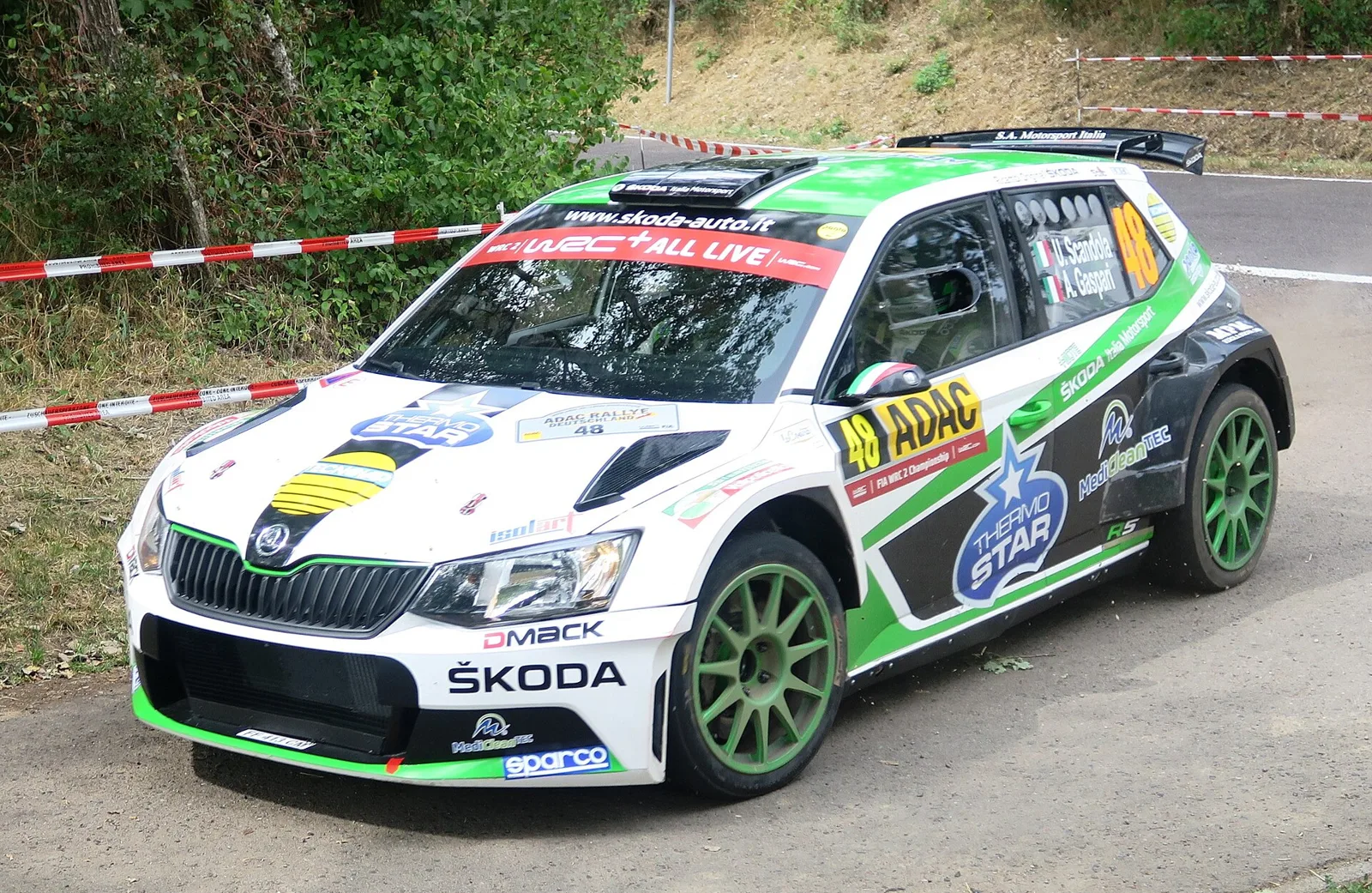
The Octavia WRC was a World Rally Car developed at the end of the 1990s, and its first runs took place in autumn 1998. It weighed 1,230 kg (2,712 lb) and had an all-wheel-drive system from Xtrac. Its turbocharged two-litre four-cylinder petrol engine produced around 300 PS (221 kW) and up to 600 Nm of torque.
With the manual six-speed gearbox, the car could reach 100 km/h from a standstill in 3.9 seconds. Its handling was described as slightly oversteering.
What were the Octavia WRC's results?
In 2001 the Octavia finished fourth on the Rally Great Britain and third at the Safari Rally. Skoda Motorsport won the Czech rally championship that year. The crew of Matthias Kahle and Peter Gobel won the German Rally Championship in 2002 and 2004, and finished second in 2003.
During the Monte Carlo Rally on 19 January 2002, the crew of Roman Kresta and Jan Tomanek misjudged a left-hand bend and went through a wall. A telegraph pole of Telecom Frace, which had not been removed, was the only thing that stopped the car from falling.
For the 2005 rally season Skoda Motorsport replaced the Octavia with the Fabia WRC, but the Octavia was still used in rallies. Its last outing was the Rally Krkonose in June 2012.