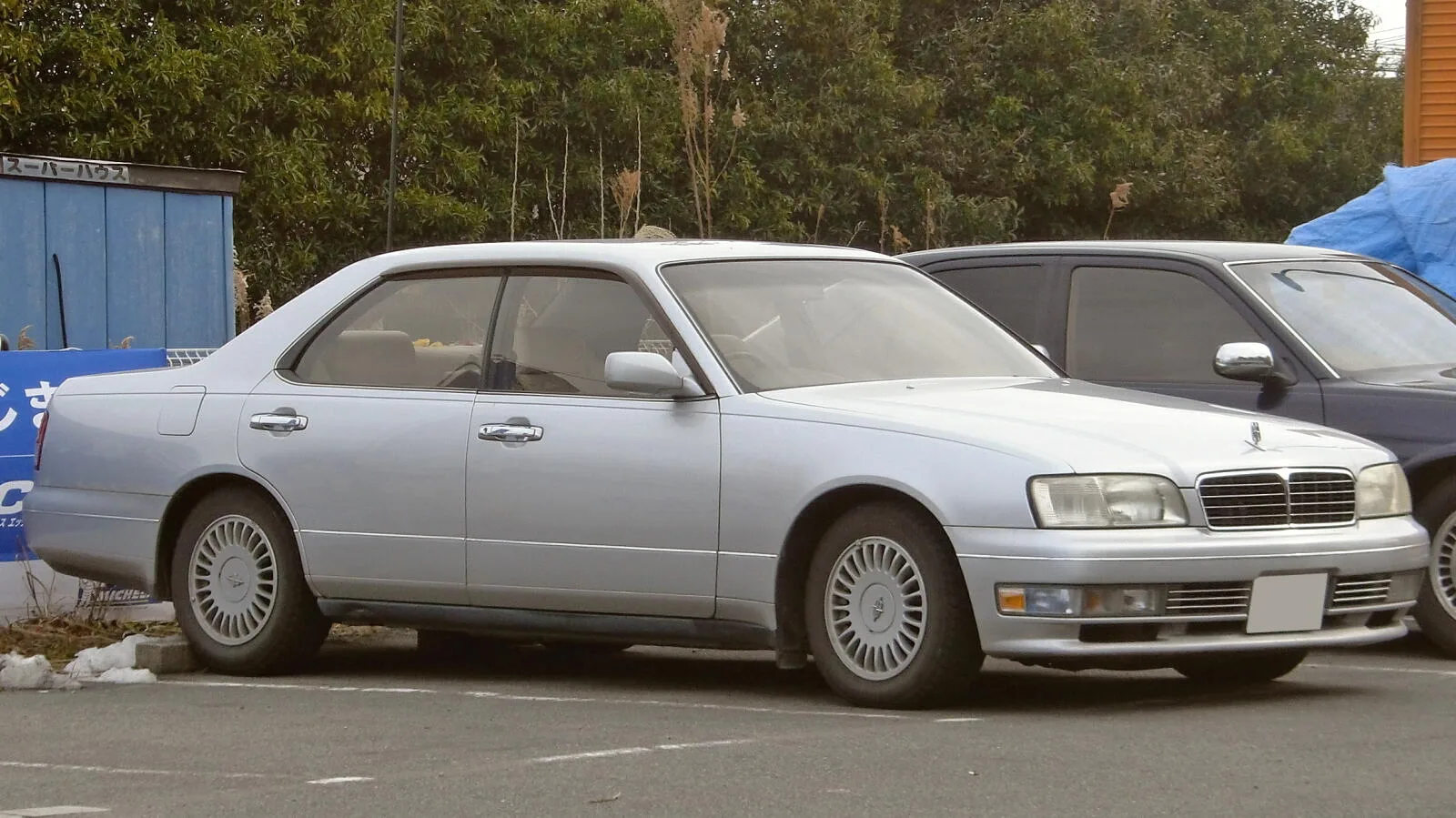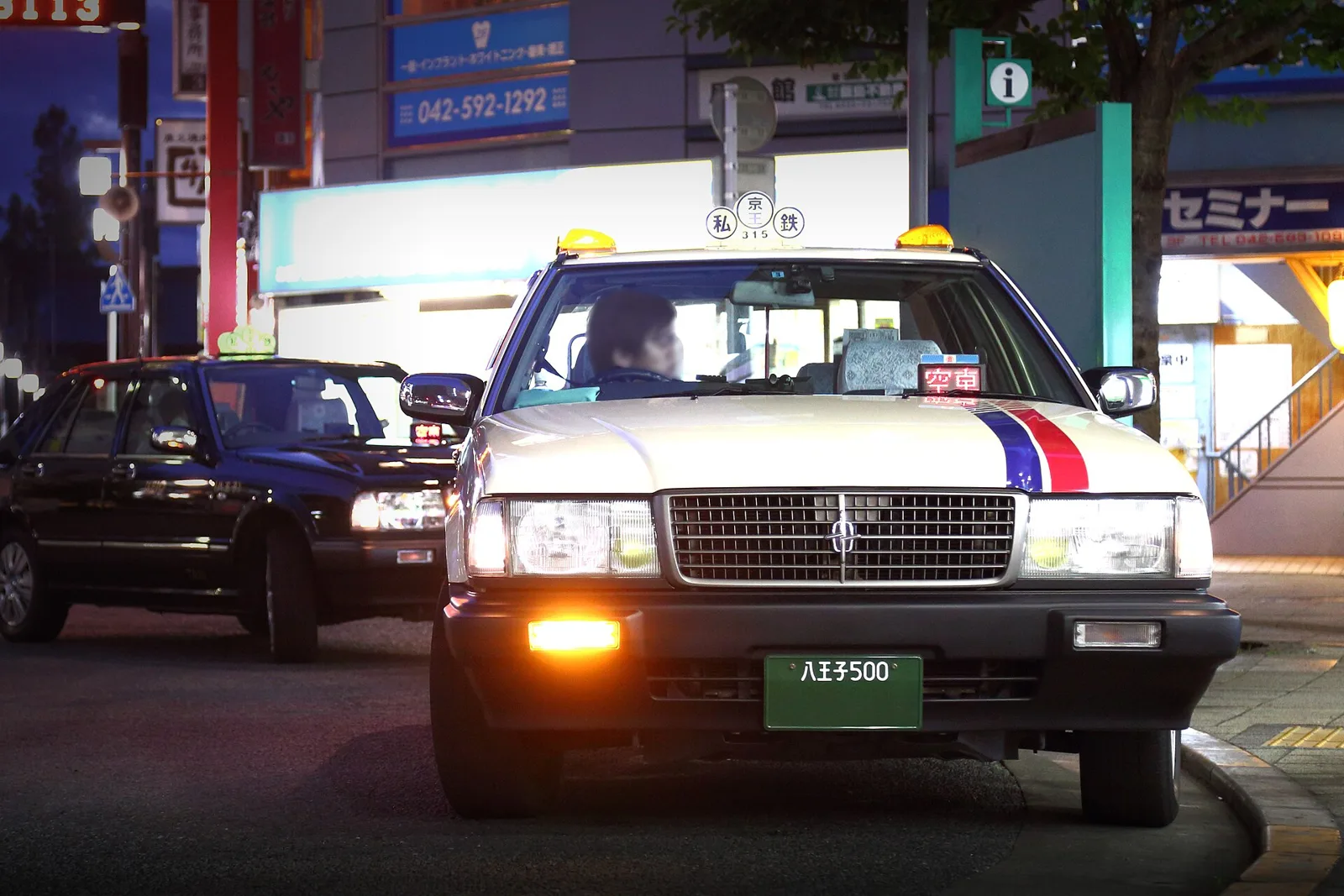
Taxi and driving-school versions of the Cedric, LPG engines from 1964, Gloria sister cars and a production run that ended in 2014.
The Nissan Cedric commercial vehicle was a taxi and driving-school model that ran from October 1962 to a final order completion in October 2014, with LPG and diesel options for taxi operators.
The Nissan Cedric commercial vehicle was the taxi and driving-school version of Nissan's Cedric luxury saloon. Built for professional use rather than private owners, it appeared in 1962, and the last production orders were completed in October 2014. Its Gloria sister models were folded into it in 1999.
How did the commercial Cedric begin in 1962?
The commercial Cedric arrived in October 1962, when the first Cedric series received a minor change. It was sold in a single standard grade, with two engines: a G-type of 1,500 cc (91.5 cu in) and an H-type of 1,900 cc (116.0 cu in).
The commercial model had heavier-duty parts than the private car. Its centre pillars, door hinges, clutch, shock absorbers and seat materials were strengthened, and a large-capacity battery joined a voltage regulator that improved charging at low speeds.
Fuel was the next step. On 5 March 1963 a conversion kit allowed LPG use, first as a switchable bi-fuel arrangement with petrol. On 18 February 1964 an LPG-only version followed, with a 40 kg LPG cylinder in the boot that ran the car on gas alone, as today's taxis do. LPG filling stations had appeared in Osaka in 1962 and in Tokyo in 1963.
In December 1964 a diesel version joined the range. It carried the SD20 engine and offered a choice of three- or four-speed manual transmissions.
A taxi-spec Cedric that carried Japanese cabs from a single 1962 grade to LPG-powered saloons and a 2014 end.
Why did Gloria and Cedric become sister cars?
Nissan Motor and Prince Motor Company merged in August 1966. From the 230 type, which appeared in February 1971, the Nissan-based Cedric and the Prince-based Gloria became sister cars built through badge engineering, so the Gloria commercial vehicle belongs in this account as well.
Because the Cedric and Gloria differ by one generation, the generations here follow the Cedric commercial vehicle. The Gloria models carried the same commercial job under a different badge.
The arrangement ended in August 1999, as Nissan came under the Renault Group. Gloria commercial models were absorbed into the Cedric commercial line that year, and the final Y31 type was built by Nissan Shatai.
What set the taxi version apart from the private car?
One difference from the private car lay in the interior. The driver's seat was built for long shifts, and its dashboard had extra room for taxi meters, radios and tachographs, which mattered in daily use. Apart from these items the interior was the minimum for a luxury Cedric grade, especially below the Super Custom taxi type.
Until the early 1990s, workshops also converted petrol versions of the Y30 and Y31 private saloons to LPG, a practice seen among hire cars and private taxis in Tokyo.
Toyota's Crown followed a similar split after the 230 type. Its saloon went to corporate users and its four-door hardtop to private buyers. Toyota's XS10 series competed with the Cedric commercial vehicle, while its S170 series served private customers.
What did the 130 type add in 1965?
The 130 type arrived on 21 October 1965 as a full model change. The commercial car came in two forms: a diesel with the SD20 engine and an LPG car with the H20. Both kept the single-grade catalogue, and buyers could choose a three-speed or four-speed manual, with the four-speed as an option.
From this generation the LPG cylinder was enclosed in a steel tube for added safety. Minor changes followed in October 1966 and October 1967, with new front grilles and tail lamps. A major facelift on 5 September 1968 produced the later version, which took the P130 code.
How did the 230 type develop from 1971?
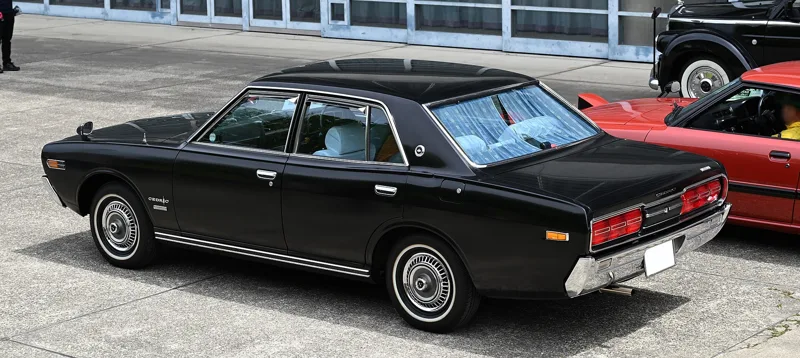
The 230 type launched on 23 February 1971 alongside a remodelled Gloria. In August 1971 the commercial range gained a Custom Deluxe grade for hire-car operators and private taxi drivers. Only its LPG version was offered, and it used the six-cylinder L20 engine for its quietness.
A middle Deluxe grade followed in July 1972. That minor change also restored the four-cylinder H20 to the LPG Standard car, and added an L20 petrol option. The 1973 emissions regulations were met in April of that year, when the rear turn signals were revised to flash independently.
The 330 type arrived on 27 June 1975 with the same three grades. The Standard car used petrol L20, LPG H20 and diesel SD20 engines, while the Deluxe was petrol-only until an SD20 diesel was added in October 1975. The Custom Deluxe offered petrol and LPG.
The 1976 emissions regulations turned the petrol cars into the 331 type, and the 1978 regulations made the car the 332 type. A 1977 update changed the diesel to the SD22, which the Gloria commercial car also received.
Why did the 430 type look so different?
The 430 type, introduced on 8 June 1979, moved away from the styling of the 330 to a boxy shape with straight lines and six-light windows. The Standard car had no opera window and carried a cover in its place. It also kept round quad headlamps, while the upper grades had square ones.
Under the bonnet, four-cylinder cars moved from the H20 to the Z20 LPG engine, while the six-cylinder LPG cars kept the L20. A three-speed automatic, marketed as Nissan-matic, could be had on the six-cylinder cars.
The interiors were split by job. Taxi-spec cars had a dashboard built for a large fare meter and a tachograph, while hire-car spec had the same digital clock as the private saloon. Front room lamps, known as daily report lamps, came as standard, and the front seats were a bench with a reclining driver's seat.
Exports went to left-hand-traffic, right-hand-drive markets such as Hong Kong, Macau, Malaysia and Singapore. These cars used diesel engines, because those places had no LPG stations, and they had rear opera windows with ordinary consumer dashboards.
A 1981 minor change gave every grade except Standard new grilles, tail lamps and bonnets, with resin bumpers. The Standard kept its earlier look and steel bumpers, though it gained intermittent wipers as standard.
How did the Y30 type handle the export names?
The Y30 type arrived on 22 June 1983 in four grades: Standard, Deluxe, Custom Deluxe and GL. It kept the six-light window design of the 430, and its first engines were the four-cylinder CA20 LPG and the six-cylinder LD28 diesel.
Export cars had been sold as Datsun 220, 240, 260 and 280C since the 230 type. When Nissan dropped the Datsun brand overseas, they became the Nissan Cedric, while Gloria stayed a domestic name.
Mirrors also differed. Japanese commercial cars kept fender mirrors even after door mirrors were permitted from 1982, as rivals such as Toyota did, whereas export cars had door mirrors. The export models kept the rear opera window that the Japanese Standard had lost.
On 9 January 1984 a six-cylinder LPG version joined the Custom DX and GL, using the L20 with the model code E-MY30. The June 1985 update facelifted every grade except Standard, changed the six-cylinder diesel from LD28 to RD28, and switched the export diesel from SD23 to TD25.
What did the Y31 type change through the 1990s?
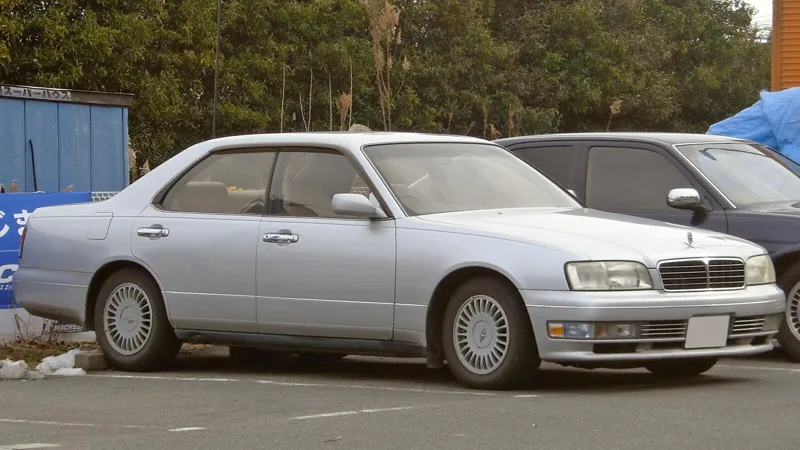
The Y31 type reached the market on 17 June 1987, with a five-link rear suspension chosen for load and durability. Its engines were the six-cylinder RB20P LPG, the four-cylinder CA20P LPG and the RD28 six-cylinder diesel, and the six-cylinder LPG had a fully electronically controlled four-speed automatic.
Early Y31 cars offered some unusual options. An asymmetric mirror, with a large left-hand mirror, reduced the fender mirror's blind spot, and a porter seat had a passenger cushion that folded and was held by a belt, freeing space for suitcases too large for the boot. These were available until June 1991.
The 1991 major facelift removed the quarter window that had been part of the six-light tradition since the 430, and gave every grade headlamps with built-in fog lamps. The four-cylinder LPG moved from the CA20P to the NA20P, and a four-speed column automatic with overdrive became an option.
The 1993 update switched the air conditioning to an alternative refrigerant and fitted an electronic tuner radio to the Custom and Original. The Super Custom with the RD28 diesel and the column manual of the upper grades were discontinued.
A major facelift in August 1995 offered a driver's airbag as an option, changed the tail lamps and reshaped the front of the three-number-plate cars. The 1998 update fitted glass aerials, and higher grades gained a new owner's dashboard.
The 1999 safety-body update, built on the zone body concept, extended ABS to the six-cylinder LPG cars and replaced the RD28 with the RD28E, with a five-speed manual. The same year the Gloria saloon was merged into the Cedric saloon. Asian-market cars moved from the TD27 to the CA20P, after LPG filling stations were completed locally under the Kyoto Protocol.
A welfare taxi with a swivel passenger seat was added in 1999, and rear-seat swivel welfare models followed in February 2001.
How did the 2002 and 2004 changes narrow the range?
In June 2002 the Y31 was cut back to taxi-only models with the low-emission four-cylinder NA20P LPG engine. A Classic SV was added for corporate taxi operators, while private petrol, diesel and six-cylinder versions were dropped. The Brougham and the three-number-plate cars were paused.
Body colours changed as well. The silver shades moved to Diamond Silver Metallic, and the navy shades to Excellent Blue Pearl.
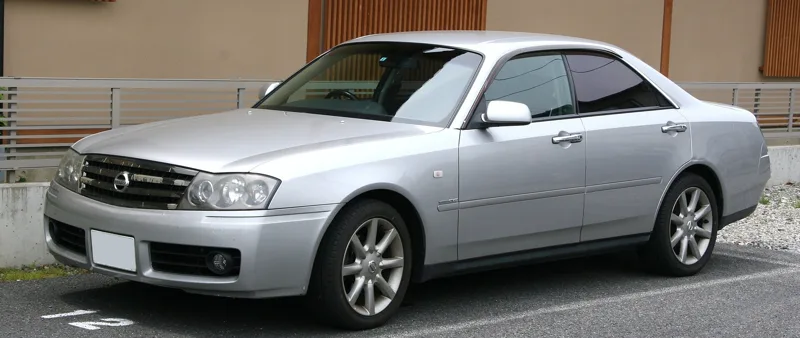
The Brougham returned in January 2004 with the VG20P V6 LPG engine, based on the VG20E. Its rear suspension was a five-link design, unlike the modified arrangement of earlier V6 cars, and a driver's airbag became standard. ABS was not offered even as an option.
What fuel and safety upgrades came after 2005?
The November 2005 update made Thanks power windows standard on the Super Custom and below, and it fitted headlight levellers and LED high-mount stop lamps. In July 2007 the NA20P engine met the 2005 emissions regulations and the 2010 fuel economy standard, and the V6 LPG engine that did not was discontinued, along with the Brougham grade.
The September 2009 update added a dedicated idling stop and start system and a driver's SRS airbag as standard. To meet a rule on pedestrian head impact, the bonnet and front fenders were reshaped, which left every car with door mirrors only.
That update also ended the manual cars and the taxi instrument panel, and moved the parking brake to a hand-pull lever. Every car now had a tachometer as standard, and all grades used separate seats.
On 13 September 2010 the engine switched to liquid injection, becoming the in-line four-cylinder NA20PE, and the automatic gained electronic control with a lock-up range. The electronic control and lock-up range improved fuel economy by about 12 percent. The tyres became low-rolling-resistance ones and the size rose to 15 inches, and UV-insulating green glass and ABS became standard.
The June 2012 update added a rear centre three-point seat belt, ISO-FIX anchors for the outer rear seats and a revised fog lamp pattern. Every grade took the bucket seat with a large head restraint that had been used on the Classic SV.
Generations at a glance
| Series | Years | Engines noted |
|---|---|---|
| H31, first Cedric | 1962 to 1965 | G type 1,500 cc and H type 1,900 cc; SD20 diesel from December 1964 |
| 130 | 1965 to 1971 | SD20 diesel and H20 LPG |
| 230, Cedric and Gloria | 1971 to 1975 | H20 and L20 engines in LPG, petrol and diesel |
| 330 | 1975 to 1979 | L20 petrol, H20 LPG, SD20 diesel |
| 430 | 1979 to 1983 | Z20 and L20 LPG |
| Y30 | 1983 to 1987 | CA20 LPG and LD28 diesel |
| Y31 | 1987 to 2014 | RB20P, CA20P and RD28; later NA20P and NA20PE |
How did production finally end in 2014?
Nissan completed its last production orders at the end of October 2014, and sales of those orders ended on 1 December 2014. The website listing closed at the same time, and the 54-year history of the Cedric brand came to an end.
The taxi saloon then disappeared from Nissan's domestic line-up. Its successor for taxi operators was the NV200 taxi minivan, which went on sale on 8 June 2015.