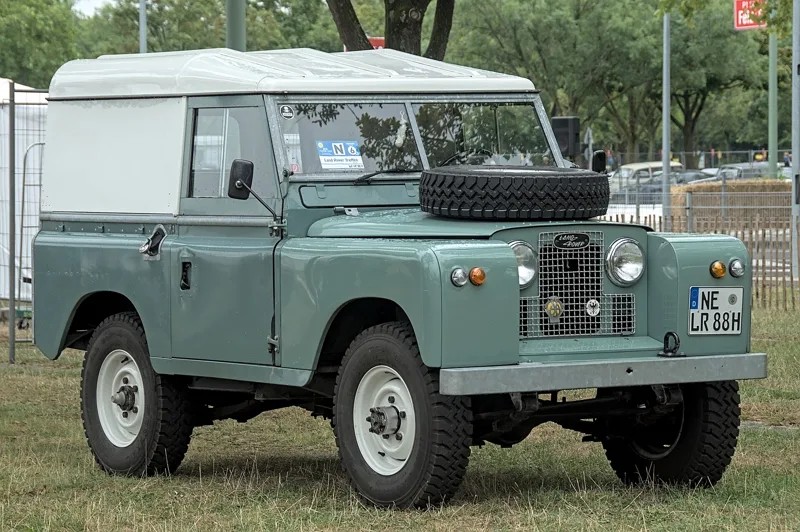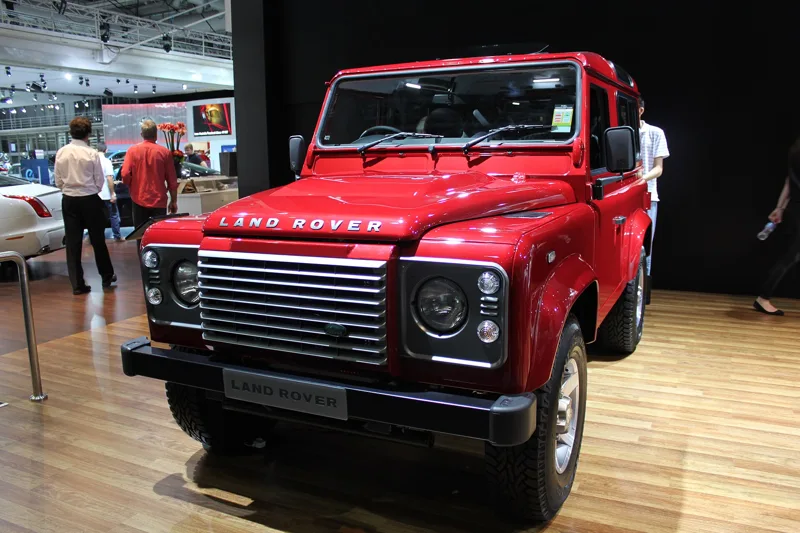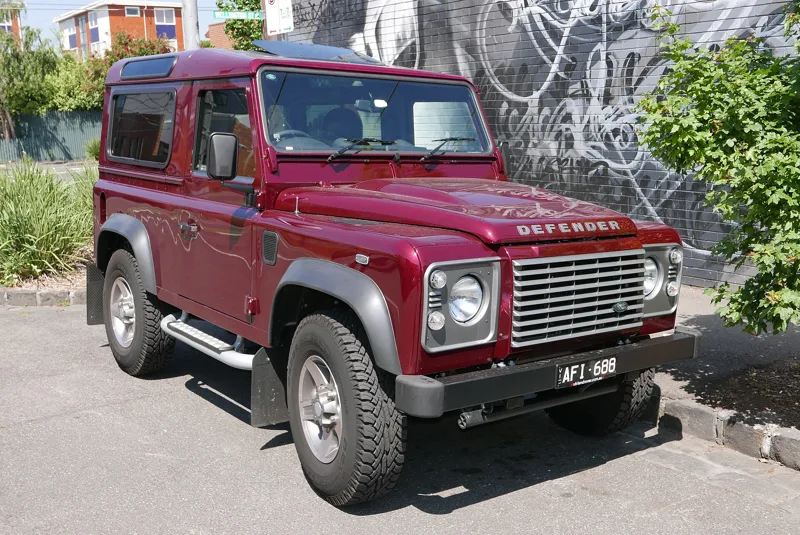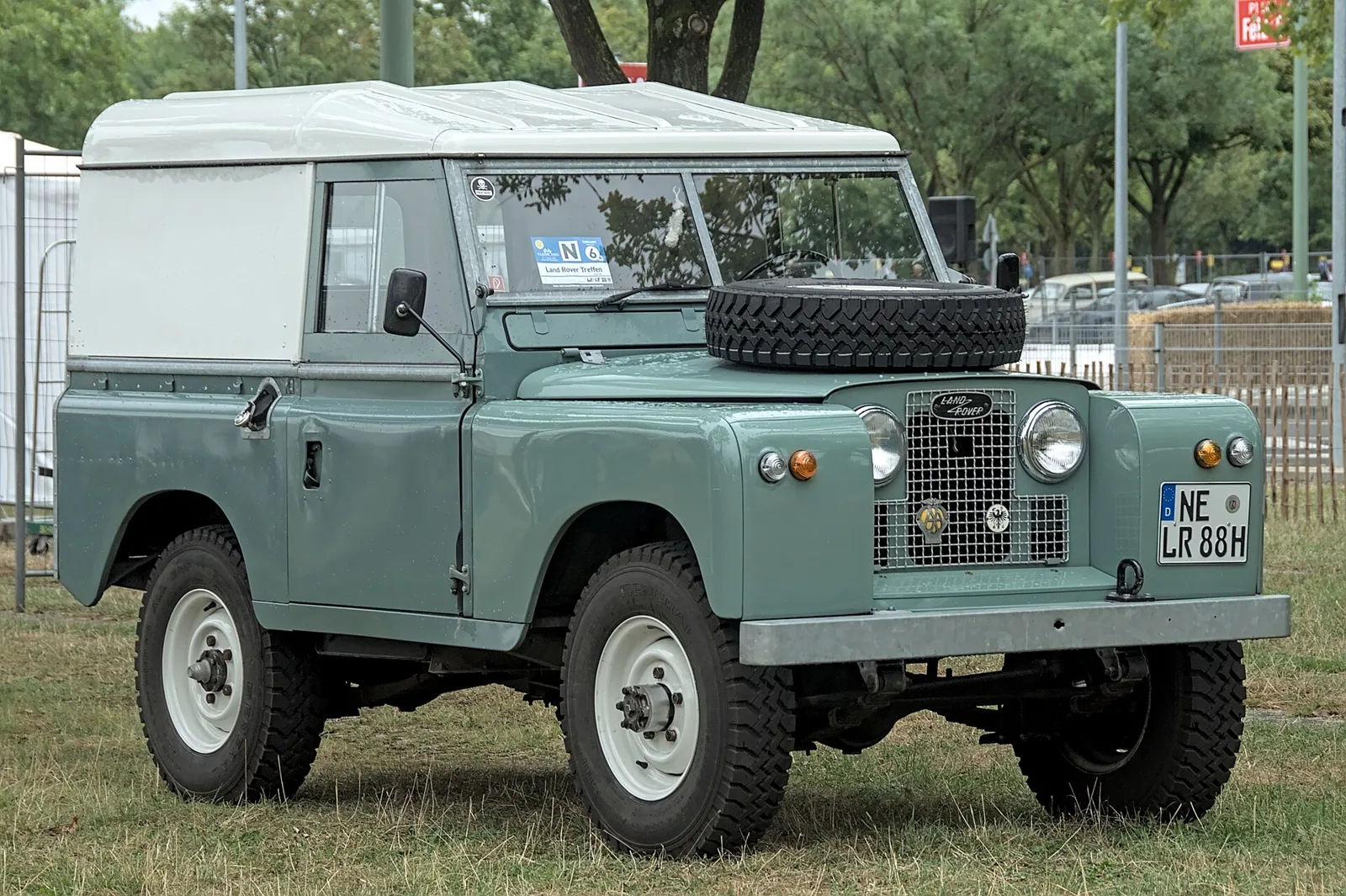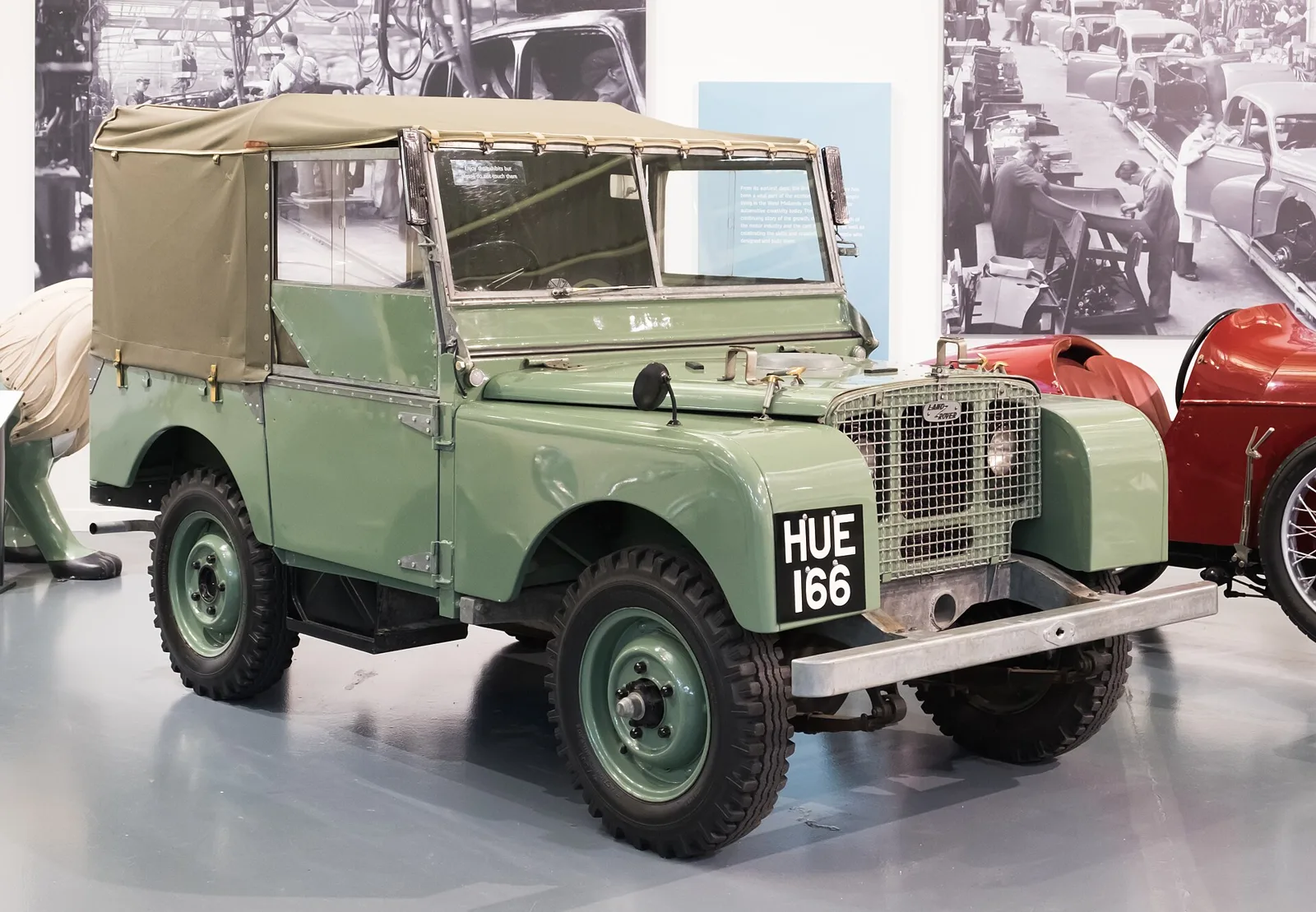
A Birmabright aluminium body, a Willys MB-inspired idea and the 1948 vehicle that first carried the Land Rover name.
The Land Rover Series I was a British off-road vehicle built by Rover from 1948 to 1958, the first Rover vehicle to carry the Land Rover name. Its aluminium body was a response to steel rationing after the Second World War, and it was built on a simple box frame.
The Land Rover Series I was built by Britain's Rover from 1948 to 1958. It was the first Rover to carry the Land Rover name, and it began life as a farm machine before the world knew it as an off-road car. Only later did the manufacturer start calling it the Series I, to tell it apart from what replaced it.
The story starts with a shortage. Rover's wartime factory had been building aircraft, its car range was out of date, and the steel needed for building cars was controlled by the government. The answer was a vehicle in aluminium that the company could build with simple tools, and the production car kept that logic from the first drawing to the last.
Why did Rover build an aluminium vehicle?
Rover had been a Coventry maker of upper-middle-class saloons. During the Second World War it put up a new factory at Solihull, outside Birmingham, and that plant turned out mostly aircraft for the Air Ministry. An air raid in 1940 finally moved all production to Solihull.
When the war ended, the model range was dated and sheet steel for car building was rationed. The government gave firms that were successfully exporting priority for steel. Spencer Wilks, the managing director, therefore commissioned a simple vehicle built from Birmabright, an aluminium alloy used in aircraft construction. The material also suited export markets, and the project was meant to secure Rover's long-term future.
A vehicle conceived as a farm machine became the first Rover to carry the Land Rover name.
Where did the design come from?
Design work began in 1947 with Maurice Wilks, the chief engineer, who worked on his farm at Newborough, Anglesey, in close contact with his brother Spencer. Wilks had been impressed by the way the Willys MB handled rough ground, and many of those American vehicles had reached Europe during the war. He took the Willys MB as his starting point.
His prototype, later nicknamed Centre Steer, sat on a Jeep chassis and axles. Its body was a simple structure of sheet panels that could be bent by hand and cut with a conventional saw. The steering wheel was mounted in the centre, which left a single seat in the front row. The result sat somewhere between a farm tractor and a light lorry, and it was aimed mostly at agricultural work.
The prototype also carried a power take-off for driving attachments, and its interior was spare. Centre steering proved impractical. With the roof up, the driver's hand signals were lost to view, so the wheel went over to the right-hand side.
What did the production Land Rover look like?
The Land Rover was launched on 30 April 1948 at the Amsterdam motor show. The production car had a chassis of its own design and shared no components with the Willys MB. Initially there was just one body style: an open utility vehicle with its headlamps set behind the radiator grille. Its wheelbase measured 80 in (2,032 mm). It was built for work first and comfort second.
Its first engine was a 1.6-litre (97.6 cu in) petrol unit giving 50 bhp (about 37 kW), and that output was not enough for the job. The engine is discussed in more detail below, because it changed twice during the car's life.
How much did it cost, and why was it cheap?
The car was offered at 450 pounds sterling in 1948, which was comparatively cheap for the time. The reason was registration. The Land Rover received a commercial vehicle registration, so no purchase tax was due, whereas a passenger car would have paid it. Doors and a fabric roof were extra. Every car left the factory in green paint, a choice that came from surplus aircraft cockpit paint, which set the early shades of light green.
How well did it sell?
Sales began quickly. Advertising used the slogan "go anywhere", and about 8,000 vehicles were built in 1948, which beat the maker's expectations. The Land Rover soon became the most-built vehicle Rover had.
A fixed-roof model joined the range in October 1948 and was very popular. Demand for something more comfortable produced a seven-seat estate from 1949. Tickford produced the body, a mixed construction on a wooden frame, and buyers could have three doors or five. Because the estate was classed as a passenger car rather than a commercial vehicle, purchase tax applied and the price rose. The estate was discontinued in 1951. Fewer than 500 Tickfords were built, and only a few survive.
The Land Rover name also had official recognition early on. King George VI granted the Land Rover a Royal Warrant in 1951, the same year the car's engine was upgraded.
Which engines did the Land Rover use?
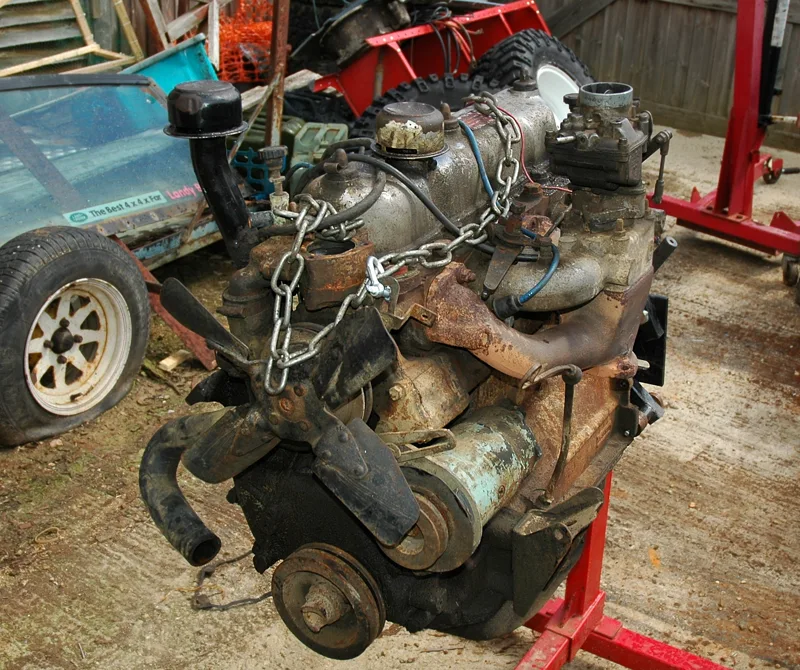
Launch power came from a petrol engine of 1.6 litres (97.6 cu in). From 1951 a two-litre (122.0 cu in) petrol engine producing 52 bhp (about 39 kW) took over, and a two-litre diesel was offered from 1957.
All three were four-cylinder units, cooled by water and driven by a side camshaft on a chain. The petrol engines had an upright exhaust valve, with the inlet valve hanging above it. The diesel had hanging valves and cylinder liners. Petrol engines used a Solex downdraught carburettor, while the diesels used swirl-chamber injection. Fuel consumption was very high across the range.
How did the four-wheel drive work?
The first system was semi-permanent. The rear axle was rigidly tied to the gearbox, while the front axle was driven only partway, through a lockable freewheel operated by a ring-shaped lever in the footwell. The layout needed no centre differential, which kept it simple.
In 1950 the system changed. A yellow lever engaged the front-axle drive on its own. Selecting low range with the red lever also engaged the front axle. Even so, there was still no centre differential, and the rear axle stayed rigidly connected to the gearbox. The differential gears were bevel gears that could not be locked.
What was the chassis like?
The Land Rover was a two-axle off-road vehicle on a box frame. It shared some components with the Rover P3. Each side member was made from four strips of sheet metal welded together. That gave more torsional rigidity than open sections of the same weight, and it cost less to make. Between the axles the frame dropped slightly.
Both axles were rigid banjo units on underslung leaf springs with hydraulic shock absorbers. That arrangement allowed only a small amount of axle articulation. Sixteen-inch (406 mm) tyres were fitted, and the factory offered them in 6.0, 6.5 and 7.0 in (152, 165 and 178 mm) widths. Hydraulically operated drum brakes sat at all four wheels, and steering was worm-and-nut.
Torque passed through a single-plate dry clutch to a four-speed gearbox, synchronised in third and fourth gears. Behind that sat a transfer case with two ratios.
How was the body built?
The skin was Birmabright, the aluminium alloy also known as duralumin. Its panels were spot-welded together, while the bulkhead and windscreen frame were steel. The design let the body be put together from hand-worked panels with few tools.
The doors and windscreen were only hung in place, so they could be lifted off in a few moves. The windscreen could fold down. The original car relied on an optional soft top for weather protection. Later came a closed body with a fixed roof, offered as an estate or with a load bed at the rear. Estate models could also be ordered with a Safari roof, a second roof above the first that was meant to keep the interior cooler in summer.
How many people could ride in one?
Interior fittings allowed seating for between three and twelve people. The front row had three seats, all of which could be folded. Depending on the wheelbase, four or eight seats could be fitted at the rear. Space was limited, and the seats were not suitable for drivers taller than 185 cm.
Right-hand and left-hand drive versions were both built. On right-hand drive cars the fuel tank sat under the driver's seat, so the seat had to be folded forward to refuel. The controls were grouped in the centre, with the dashboard built into the centre console. It carried two round instruments: a speedometer, and a combination dial with a fuel gauge, an ammeter and a coolant temperature gauge.
How did the Series I change during production?
The changes came in stages. In 1951 the headlamps moved further forward and the radiator grille became T-shaped. That was also the year the two-litre petrol engine arrived, because the original 50 bhp unit had been judged insufficient.
A bigger change came in 1954. The load bed was extremely small, so the wheelbase was lengthened to 86 in (2,184 mm). A long-wheelbase version with 107 in (2,718 mm) also arrived in 1954, and those cars were available as estates. Fitting room for the diesel from 1957 meant stretching both wheelbases by 2 in (51 mm). A rear power take-off could be ordered, and cars were available in right-hand or left-hand drive.
Why is it called the Series I?
The Series I name was applied afterwards. The vehicle was simply the Land Rover until the Series II arrived in 1958, and the designation now separates the first model from its successors. The Series I was the first Land Rover built on a box frame, and Land Rovers and Range Rovers used boxed-section frames from 1948 until the Freelander arrived in 1997.
Land Rover Series I key figures
| Specification | Detail |
|---|---|
| Built | 1948 to 1958 |
| Launch | 30 April 1948, Amsterdam motor show |
| Launch price | 450 pounds sterling in 1948 |
| First engine | 1.6-litre (97.6 cu in) petrol, 50 bhp (about 37 kW) |
| Later petrol engine | 2-litre (122.0 cu in), 52 bhp (about 39 kW), from 1951 |
| Diesel engine | 2-litre (122.0 cu in), from 1957 |
| Wheelbase | 80 in (2,032 mm) at launch; 86 in (2,184 mm) from 1954; 107 in (2,718 mm) long variant from 1954 |
| Wheelbase change | 2 in (51 mm) longer on both models from 1957 |
| Tyres | Sixteen-inch (406 mm), in 6.0, 6.5 or 7.0 in (152, 165 or 178 mm) widths |
| Gearbox | Four-speed, with a two-ratio transfer case |
| Seats | Three to twelve people |
| Output in 1948 | About 8,000 vehicles |