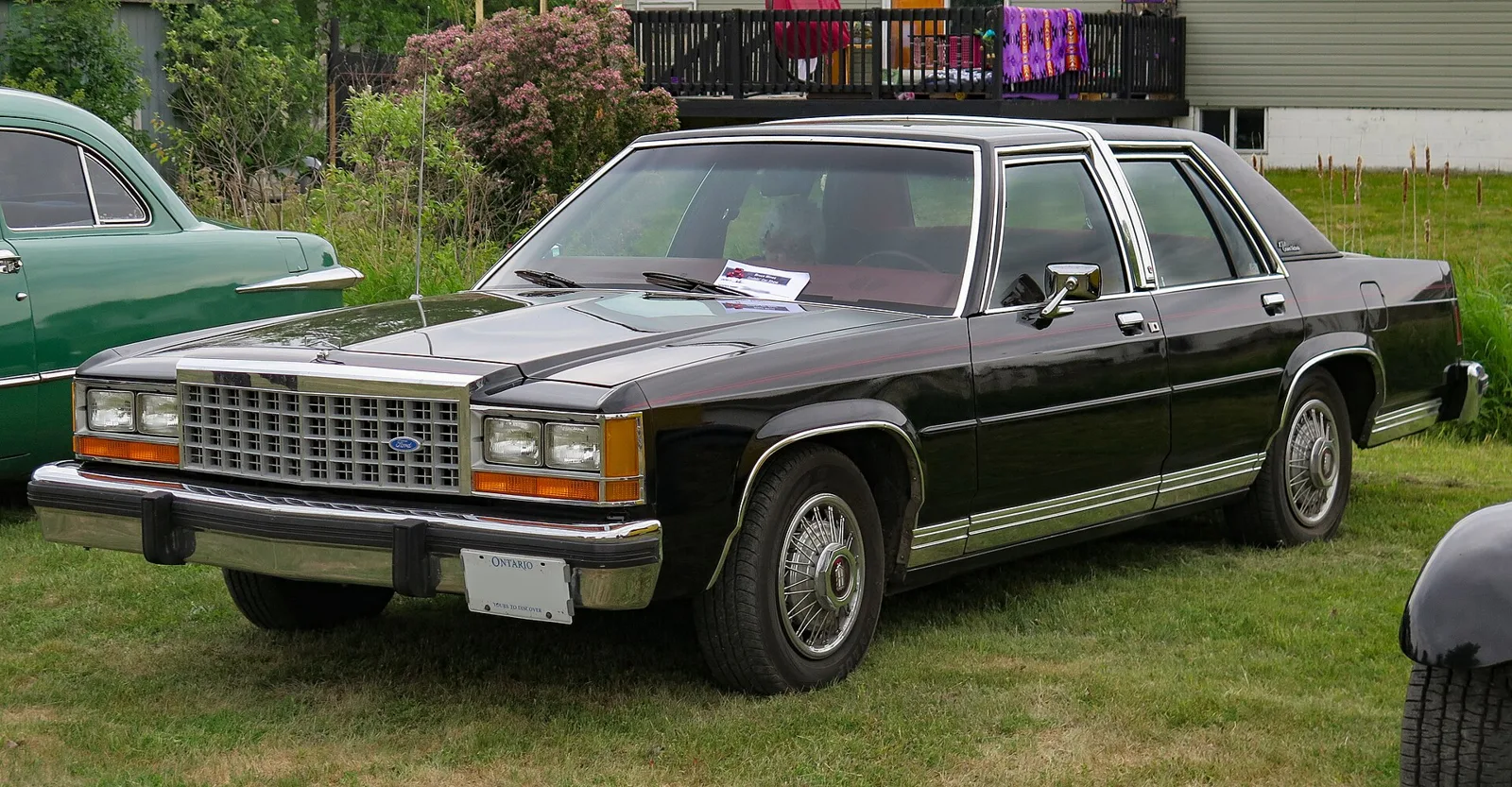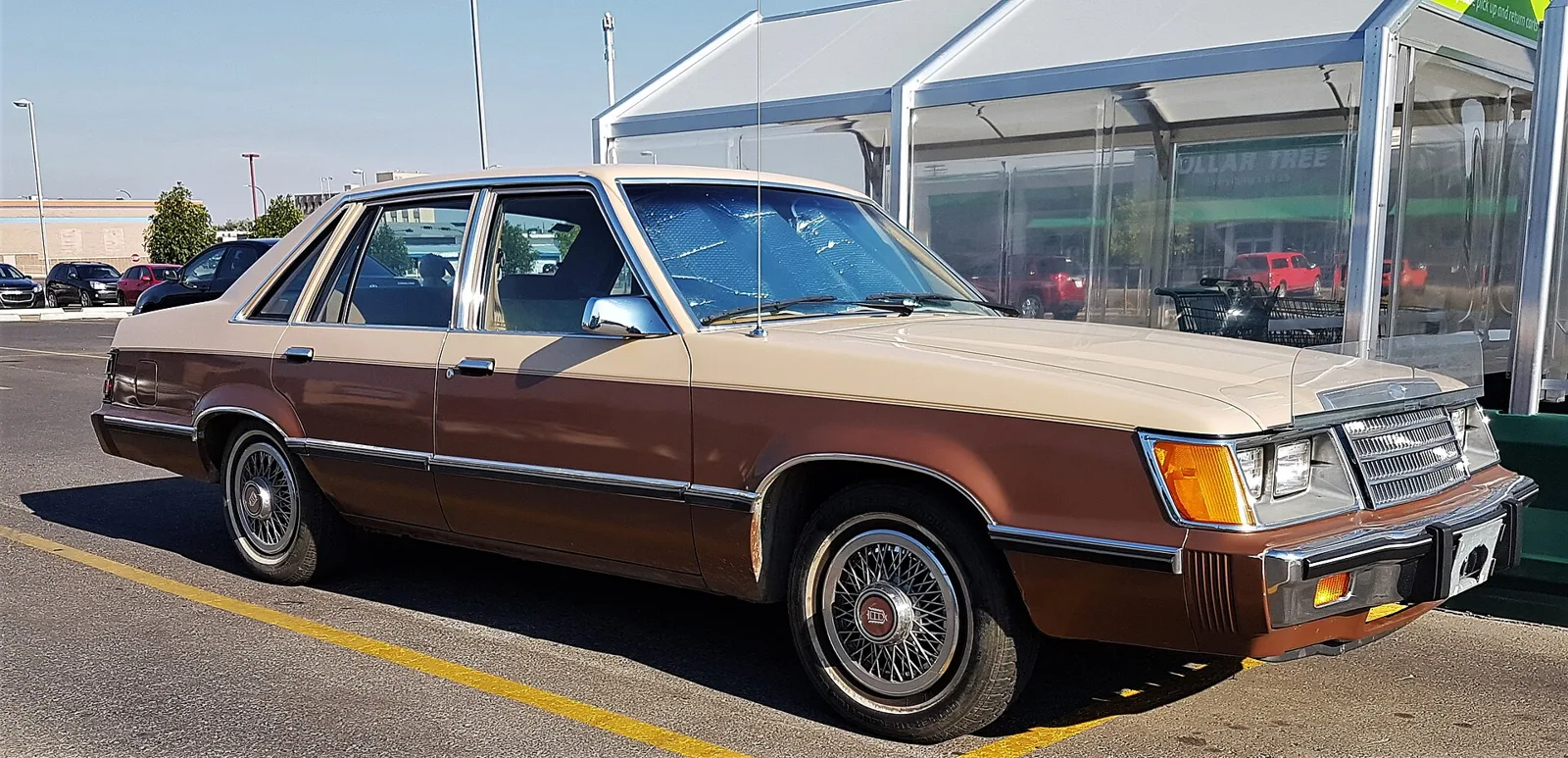
A Granada successor that carried the LTD name, with almost 650,000 built before the front-drive Ford Taurus arrived.
The Ford LTD of 1983 to 1986 was a Fox-platform intermediate car that replaced the North American Granada, the first LTD outside the full-size class. Almost 650,000 were built in a little under four years, with engines from 2.3 litres to a 5.0-litre V8 in the LX.
Ford gave the LTD name to a much smaller car for 1983, the first time the badge had left the full-size range. The Fox-platform model replaced the North American Granada and was sold mainly in North and Central America, and a Mercury twin called the Marquis sold alongside it.
Why did the LTD name move to a smaller car?
Ford needed a fresh image for the Granada's replacement, so for the 1983 model year it moved the full-size LTD name onto the much smaller Granada successor, a process called badge shifting. The old full-size car kept selling as the LTD Crown Victoria.
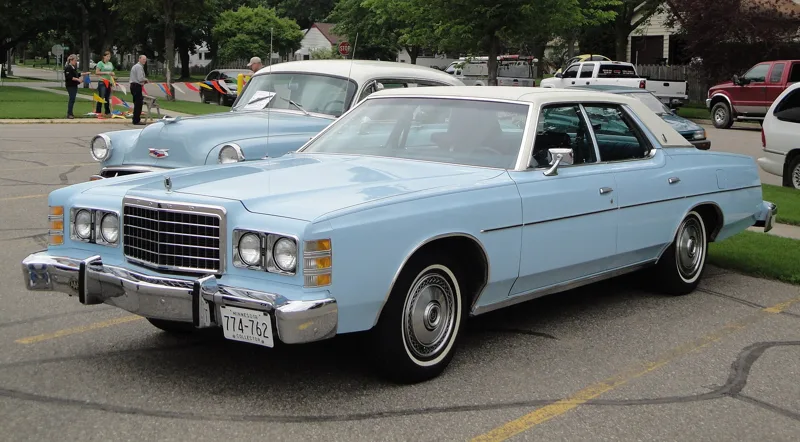
From 1967 to 1982 the LTD name had stood for the top versions of Ford's full-size range, and below it sat the mid-size LTD II until 1979. With this generation the LTD left the full-size class for the first time. The second-series Granada it replaced was built only 240,000 times in two years.
The generation is regarded as a purely transitional model, bridging the gap until the front-wheel-drive Ford Taurus arrived in summer 1986.
The LTD was a commercial success despite a short production run, with almost 650,000 cars built in a little under four years.
What platform and body did the LTD use?
The LTD used Ford's compact Fox platform, which had been introduced in 1978 with the Fairmont. It was closely related to the Fairmont and to the second-series Granada, and only four-door notchback saloons and five-door estates were offered, with no two-door version.
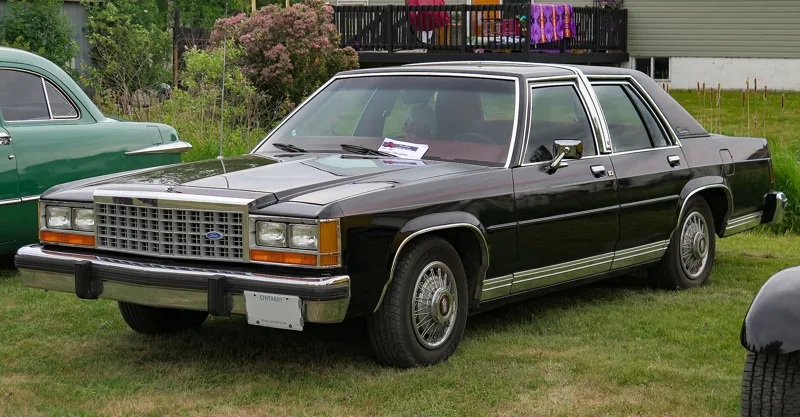
The front section and every door, including the glazing, matched the Fairmont, and many major parts were interchangeable. Ford reshaped the D-pillar and the front and rear sections. The A- and D-pillars sit at roughly the same angle, so in profile the saloon seems to narrow from bottom to top.
Rectangular twin headlamps sat in a chrome radiator surround as standard. The estate matched the Fairmont estate in its passenger and cargo areas. Ford ended the five-door Fairmont for the 1982 model year and placed the estate version in the Granada series without technical changes, and when that series ended the estate carried on as the LTD with only the front grille changed.
What changed for the 1985 model year?
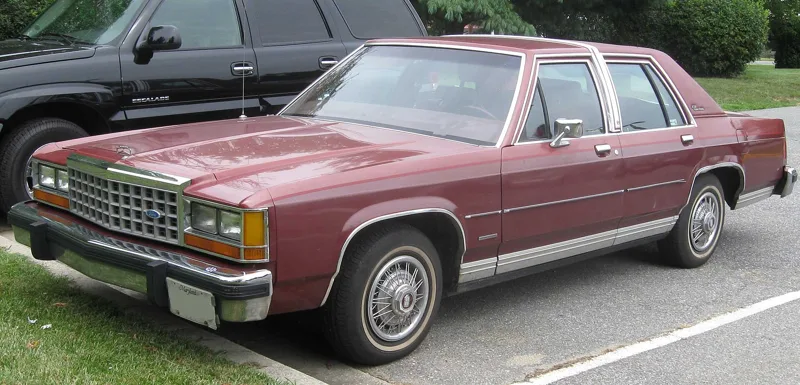
For 1985 the LTD received a small facelift. The radiator grille was redesigned and carried the oval blue Ford emblem, and the rear lamps now ran across the full width of the car, as the contemporary Mercury Marquis had done since its launch. In the last model year the LTD also gained a third brake light.
The chassis followed the familiar Fox pattern, with MacPherson struts at the front and a live axle on coil springs at the rear.
Which engines did the LTD offer?
The fifth-generation LTD was petrol-only. In the US buyers could choose a 2.3-litre (2,301 cc, 140 cu in) four-cylinder from the Pinto range or two six-cylinder engines, and the four-cylinder was the base engine in the four-door saloon until 1985. In some years it could run on liquefied petroleum gas.
The 3.3-litre (201 cu in) in-line six appeared only in the first model year and was dropped for 1984. The 3.8-litre (232 cu in) V6 from Canada's Essex range ran in every model year, and by 1986 it was the only engine left in the range.
From 1984 the Essex engine in the US version came as standard with electronically controlled petrol injection, though not the variant built for Canada. The special LTD LX carried a 5.0-litre (302 cu in) V8 of 4,942 cc, available from spring 1984 for one and a half years, and it too had gone by 1986.
The four-cylinder came with a manual gearbox as standard and an automatic at extra cost, while the larger engines came only with automatic three- or four-speed gearboxes. A BMW in-line six turbo-diesel (M21 series) was available at extra cost in the closely related Lincoln Continental, but Ford did not offer it in the LTD.
How did the LTD compare in size and weight?
On these dimensions the car sat in the intermediate segment, which was new territory for the LTD name. The fifth-generation LTD was roughly the same size and weight as the second-series Ford Granada it replaced within the Ford range. Against the full-size LTD built under that name until 1982, its wheelbase was 220 mm (8.7 in) shorter and its overall length 400 mm (15.7 in) shorter.
Depending on the engine, the new car weighed up to 400 kg (882 lb) less than the fourth-series LTD.
How many LTDs were built?
The LTD was a commercial success despite a short production run, with almost 650,000 cars built in a little under four years. Its predecessor, the second-series Granada, had needed two years to reach 240,000.
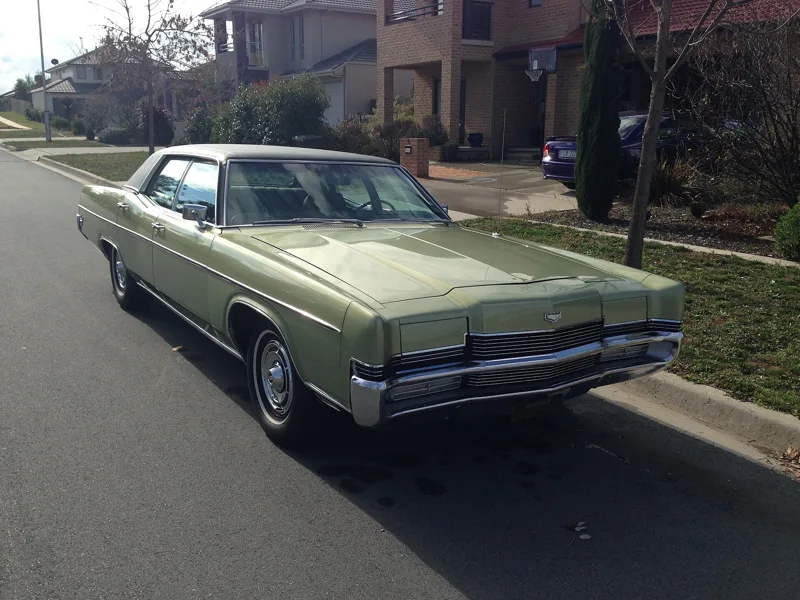
The Mercury Marquis shared the body and the engines, and Venezuela built a near-identical version for some South American markets, so the design reached buyers under several names.
Specifications at a glance
| Item | Detail |
|---|---|
| Base engine | 2.3-litre (2,301 cc, 140 cu in) four-cylinder |
| Six-cylinder | 3.3-litre (201 cu in), first model year only |
| V6 | 3.8-litre (232 cu in) Essex, all model years |
| V8 | 5.0-litre (302 cu in), 4,942 cc, LX only |
| LX output | 123 kW (167 PS; 165 hp) |
| Wheelbase against full-size LTD | 220 mm (8.7 in) shorter |
| Length against full-size LTD | 400 mm (15.7 in) shorter |
What were the trim levels?
Each model year offered a base version and a Brougham. The Brougham was the better-equipped of the two in every year, so buyers could pick a basic car or a fuller one. The Brougham added higher-quality seat covers, a digital clock and an electrically controlled parking brake, and either trim could be ordered with a vinyl roof that reaches the windscreen and covers the C-pillar.
The LTD LX was offered only in 1984 and 1985 as the sporty version, and it was available only as a four-door saloon. Its 5.0-litre V8 produced 123 kW (167 PS; 165 hp), almost a third more than the Essex six, which was the most widespread engine.
The LX had a chassis corresponding to that of the contemporary Ford Mustang with comparable power. It had a matt black radiator surround, an automatic operated by a centre-console selector, and the only rev counter in the LTD range. Production figures vary: some counts give 3,260 vehicles, others 5,287.
Where was the LTD built?
The LTD was built at Ford's plants in Chicago (Chicago Assembly Plant) and Hapeville, Georgia (Atlanta Assembly Plant). The Mercury sister models were built in the same plants, and in total the US works produced 647,500 Fords and 308,000 Mercury models.
How did the Mercury Marquis differ?
The Mercury Marquis was the LTD's sister model. Apart from the radiator surround and the rear lamps it looked almost the same, but it used the instrument carrier and digital displays of the technically related Cougar XR-7, unlike the Ford.
Like the LTD, the Marquis came as a four-door notchback saloon and a five-door estate. Its engines matched those of the Ford LTD, and the trims were base and Brougham. The sporty Marquis LTS, equivalent to the LX, was sold only in 1985 and only in Canada, where it was built 134 times. After the 1983 shift the full-size Mercury became the Grand Marquis.
Almost 308,000 examples of the Fox Marquis were built in total.
How was the LTD built in Venezuela?
Ford's Valencia plant in Venezuela produced a near-twin of the car for several South American markets. The base car was called the Ford Granada there, the better-equipped one the Ford Elite, and the top version, which matched the US Mercury Marquis, was sold as the Ford Cougar.
The Venezuelan car was almost the same as the US LTD, though it went under different names. Across all variants, the plant turned out roughly 85,000 vehicles during the four years. Besides Venezuela itself, customers in Bolivia, Ecuador, Colombia and Peru could buy them.