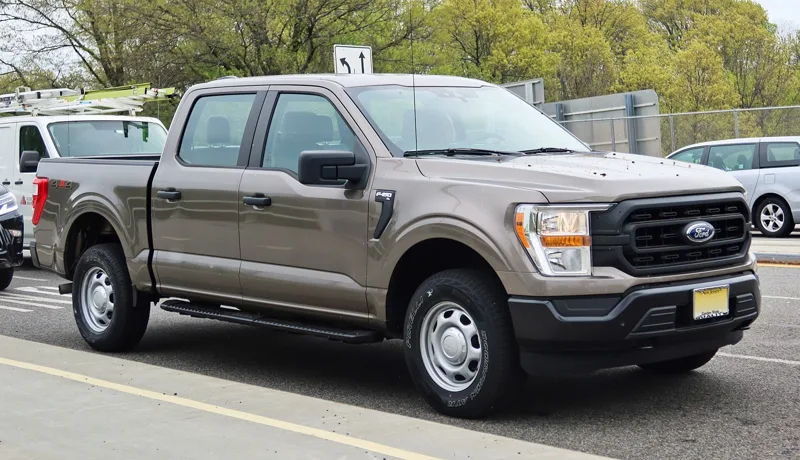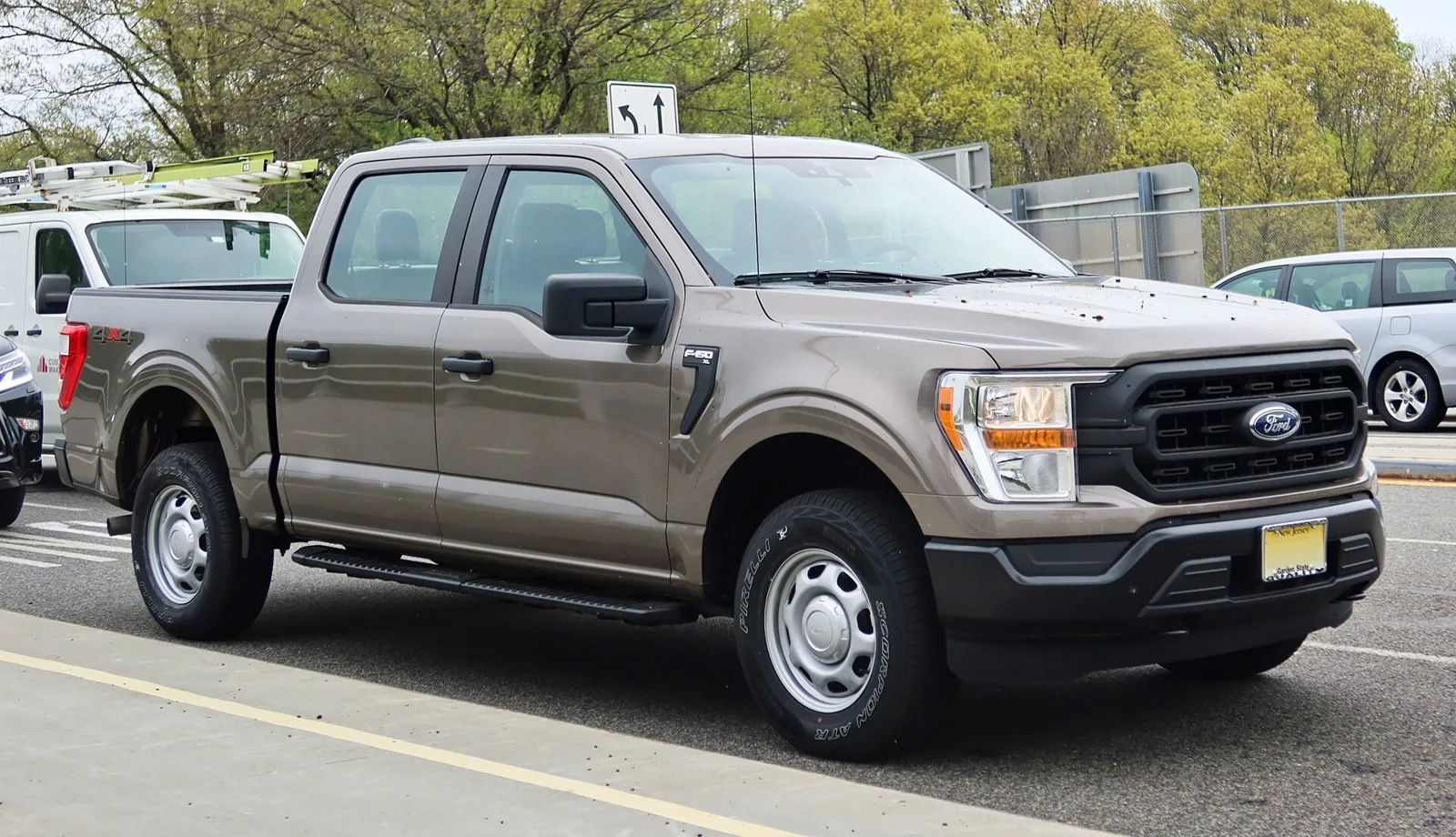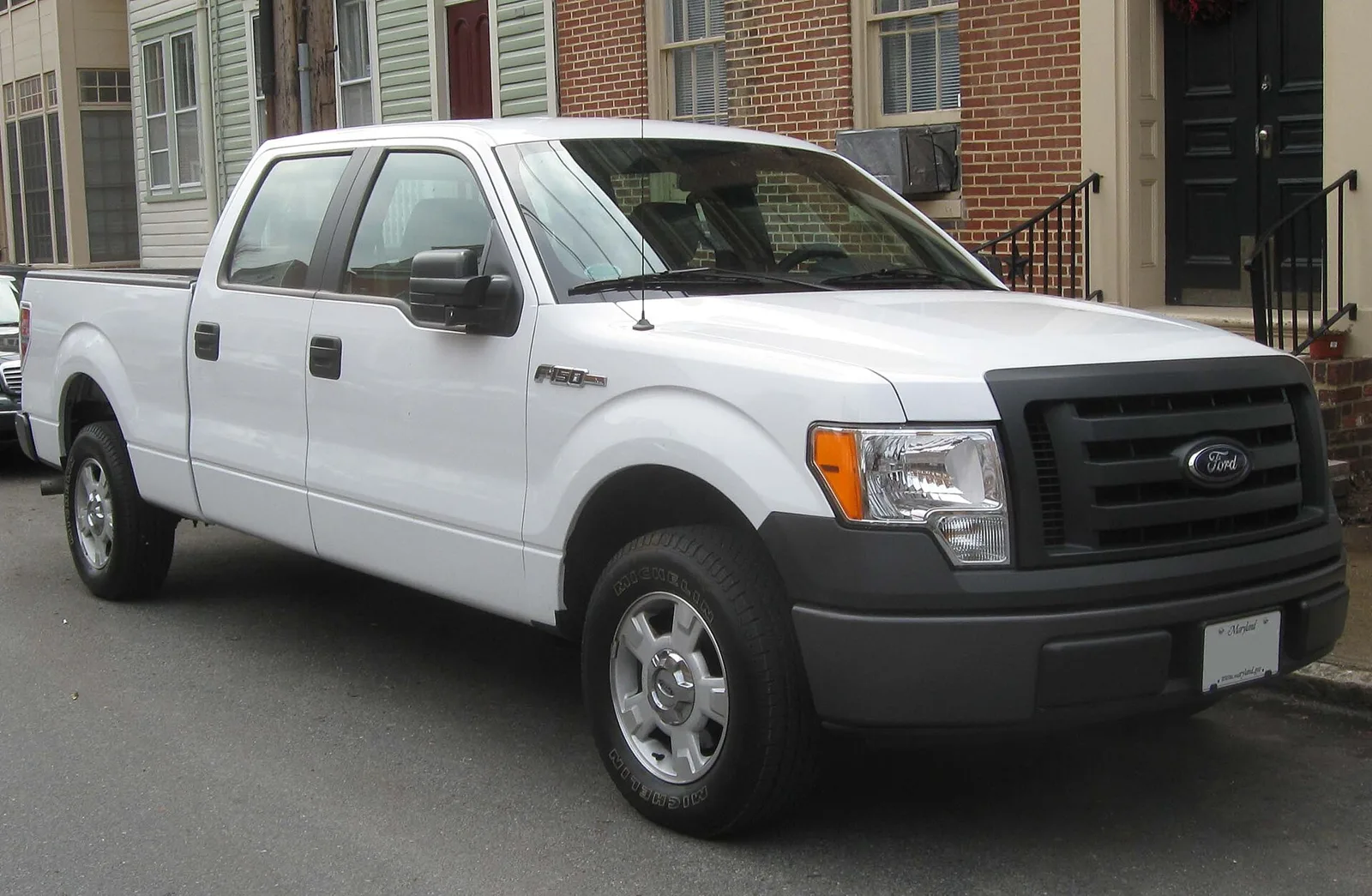
A new chassis and body, V8 engines at launch, EcoBoost turbo power from 2011 and the SVT Raptor off-road truck, all before production ended in December 2014.
Ford's twelfth-generation F-Series, built from 2009 to 2014, was a light-duty pickup with a new chassis and body. It was the last F-150 on a separate body from the Super Duty, and it launched with V8s before adding EcoBoost power.
The twelfth-generation F-Series was a light-duty pickup that Ford built from the 2009 to 2014 model years. It arrived with an all-new chassis and body, a richer interior and a major shift in the engines on offer, and it was the last F-150 built with a separate body design from the Super Duty trucks.
The generation spans two very different eras. The 2009 truck was built around a V8-only line-up, while the 2011 model brought a turbocharged V6 and a smaller V6, and the SVT Raptor gave the range a performance flagship. Production ended in December 2014, when the thirteenth generation took over.
Where did the twelfth-generation F-150 sit in the range?
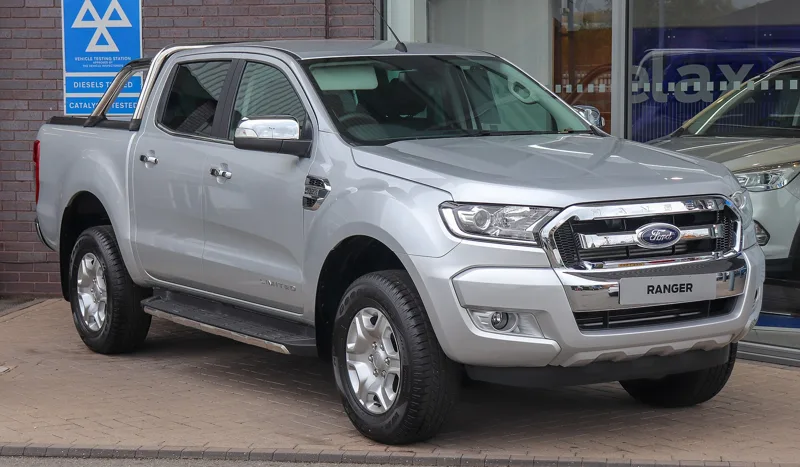
At launch the F-150 was slotted between the Ford Ranger and the Ford Super Duty in size. Once the Ranger was withdrawn in North America after the 2011 model year, the F-150 became the smallest Ford truck sold there.
The Lincoln Mark LT was repackaged as the top-spec F-150 Platinum in the United States. A Mark LT based on the twelfth generation was also designed, although it was exclusive to Mexico.
A new chassis, a V8-first launch and an off-road Raptor that turned a workhorse into a performance truck.
How was the twelfth-generation truck developed?
Development started in November 2003 with chief engineer Matt O'Leary, under the code name P-415. It started after production of the P-221 truck had begun in June 2003. General design work was led by Patrick Schiavone into late 2005, and the tailgate and wheel lip arches were revised during a development hiatus in late 2006.
The final design freeze came by early 2007. The 2009 design was shown at the 2008 North American International Auto Show in Detroit, and production started in October 2008 at the Kansas City Assembly Plant.
Ford had first planned to expand the F-Series range by reviving the F-100 as a mid-size truck, codenamed P525. That truck would have replaced the Ford Ranger in 2010 or 2011, but the project was shelved. Ford instead built the Ranger T6 as its global mid-size pickup, including for North America.
What did the 2009 model change inside and out?
The 2009 F-150 offered a larger and more flexible interior, an updated three-bar grille and more trim levels. The chassis used lighter high-strength steel, which improved fuel economy and safety while raising payload and towing capacity.
Inside, the centre stack integrated the audio and climate controls into a single unit, and the Ford Sync system arrived for the first time with Bluetooth, USB and auxiliary inputs. A premium Sony audio system was offered on higher trim levels, and the instrument cluster was the same in every trim, with a tachometer standard.
The regular cab returned to standard-length doors instead of the two short rear-opening doors used on the 2004 Heritage models. The Flareside body was discontinued at the end of the 2009 model year, once the remaining stock had sold.
Which engines powered the 2009 F-150?
The 2009 redesign offered three V8 engines and no six-cylinder. The main unit was a revised 5.4L three-valve Triton V8, E85 capable and rated at 320 hp (239 kW), with the 4.6L three-valve V8 at 292 hp (218 kW) and a 4.6L two-valve V8 at 248 hp (185 kW).
The 3-valve 5.4L and 4.6L engines used Ford's new 6R80E six-speed automatic, while the two-valve 4.6L kept the 4R75E four-speed automatic. The 4.2L OHV V6 was dropped after the Essex engine plant closed, and every F-150 came with an automatic transmission as standard.
What engines did the 2011 model use?
For 2011 Ford introduced an entirely new engine line-up. The 3.7L V6 and 5.0L V8 used in the Ford Mustang both offered E85 flex-fuel capability, while the 6.2L V8 from the Super Duty was added to the Platinum, Lariat, SVT Raptor, Harley-Davidson and Lariat Limited trims.
The 3.5L direct-injected twin-turbo EcoBoost V6 was offered from early 2011 and produced up to 365 hp. All of the 2011 engines were paired with the new six-speed 6R80 automatic, and electric power-assisted steering was available on every engine except the 6.2L V8.
The 4.6L and 5.4L V8s were discontinued in 2011 in the interest of fuel economy. The maximum towing and hauling capacity was rated at 11,300 lbs and 3,060 lbs.
What changed in the later model years?
For 2010 the F-150 saw minimal changes. The warning chimes matched the rest of Ford's new lineup, the keyless remote gained integrated remote start and an integrated key, and the MyKey system became standard on all trucks except the base XL.
MyKey let parents and fleet operators configure one ignition key so that it could limit top speed, mute the audio until the seatbelt was fastened and cap the volume. A message on the instrument display reminded the driver to drive responsibly whenever the system was active.
The 2011 model updated the instrument cluster, adding a 4.2-inch colour LCD Productivity Screen with Truck Apps that showed approach and departure angles, altitude and 4WD status. The base XL received eight-spoke steel wheels in place of the five-spoke wheels carried over from the eleventh generation.
For 2012 the lineup grew to ten trims, and the Heavy Duty Payload Package became available with the SuperCrew 6.5-foot bed. For 2013 the truck took a Super Duty-style grille, new optional wheels of 18, 20 or 22 inches, MyFord Touch navigation and high-intensity discharge headlamps, and the Limited model returned in place of the Harley-Davidson trim.
In 2014 a special edition called the Tremor was introduced. It was essentially an EcoBoost FX2 or FX4 in a regular cab with a 6.5-foot bed, a flow-through centre console with bucket seats and a 4.10:1 rear axle ratio.
What trim levels did the F-150 offer?
The XL offered vinyl upholstery, 17-inch steel wheels, manual mirrors and air conditioning as its core. The STX added STX decals, 17-inch alloy wheels and cloth upholstery, while the XLT brought chrome bumpers, keyless entry, power mirrors and automatic headlamps.
The FX2 and FX4 added off-road decals, fog lamps, 18-inch alloy wheels, a locking rear axle, skid plates and Ford's SecuriCode keypad entry. The Lariat introduced monotone paint, 18-inch bright alloys and heated front seats, while the King Ranch added two-tone paint, chaparral leather and cooled seats.
At the top of the range the Platinum brought 20-inch aluminum wheels, power deployable running boards and a sliding rear window. The Lariat Limited, offered only in 2011, combined the 6.2 L V8 with 22-inch forged aluminum wheels and was made in approximately 3,700 examples, always on the SuperCrew 5.5-foot bed.
What made the SVT Raptor different?
For 2010 Ford introduced the SVT Raptor, the third F-Series truck developed by Ford SVT. Unlike the street and track-oriented Lightning, the Raptor was a street-legal version of a desert racing vehicle, and it was the most powerful version of the F-150.
The Raptor had a redesigned wide-track suspension with much longer wheel travel, and electronics tuned for traction both on and off road. Its 6.2 L V8 produced 411 hp, borrowed from the Super Duty, although a 310 hp 5.4 L V8 was offered in 2010 before the larger engine arrived later that year.
The first Raptor was a SuperCab with a 5.5-foot box, and a SuperCrew followed in 2011. Both were offered only with the 5.5-foot bed, and the truck also featured Hill Descent Control, painted 17-inch alloy wheels with off-road tires and front and rear tow hooks.
What safety equipment did the F-150 have?
The 2009 model came with front-seat side impact airbags and Ford's Safety Canopy System, which provided head protection for the first and second rows in a side impact. It also had AdvanceTrac RSC, Ford's electronic stability and anti-rollover system.
Across the range, standard kit covered AdvanceTrac stability control, curtain airbags for both rows and torso airbags for the front row.
Which concepts were shown before launch?
At the 2008 SEMA show four 2009 F-150 concepts were unveiled. The Heavy Duty DEWALT Contractor was built in a DeWalt theme, the FX4 or Fahrenheit F-150 was built by X-Treme Toyz for outdoor enthusiasts, and the Street Scene Equipment truck was a lowered performance-style build.
The fourth concept, the Hi-Pa Drive F-150, used four electric motors mounted in the wheels, rated at more than 480 hp (360 kW) combined and more than 375 ft lbf (508 N m) of torque.
Was the F-150 copied in China?
Yes, at least in appearance. In 2014 the Chinese company Jiangsu Kawei Automotive released the Kawei K1, which looked nearly identical to the Ford F-150. A Ford spokesman told Fox News that the company's legal counsel was investigating how best to address the matter.
The copy was reported widely enough to draw a direct response from Ford.
How was the twelfth-generation truck assembled?
Ford assembled the F-150 at two plants in North America. The Dearborn Truck facility in Dearborn, Michigan, and the Kansas City Assembly plant in Claycomo, Missouri, both built the model. Production ended in December 2014, and Ford then introduced the thirteenth-generation F-Series.
Production of the model began at Kansas City in October 2008, and the two plants built the truck across the full run until the end of 2014.
What are the twelfth-generation specifications?
| Specification | Detail |
|---|---|
| Model years | 2009 to 2014 |
| Production | October 2008 to December 2014 |
| 2009 5.4L V8 | 320 hp (239 kW); 395 lb ft (536 N m) on E85 |
| 2009 4.6L three-valve V8 | 292 hp (218 kW) |
| 2009 4.6L two-valve V8 | 248 hp (185 kW) |
| 2011 3.5L EcoBoost V6 | Up to 365 hp, twin-turbo, from early 2011 |
| 2011 3.7L V6 and 5.0L V8 | Both E85 capable, shared with the Mustang |
| SVT Raptor V8 | 6.2 L, 411 hp, from the Super Duty |
| Transmission | 6R80E and 6R80 six-speed automatic; 4R75E four-speed on one 2009 engine |
| Maximum towing | 11,300 lbs |
| Maximum payload | 3,060 lbs |