A small van family from 1962 to 1985 that served Italian police, broadcasters and utilities, and also gained an electric test version.
Built between 1962 and 1985, the van family moved from the 600 T to the 900 E. The 850 T brought newer mechanics and a longer wheelbase, the 900 T added a restyle and a 903 cc engine, and an electric 850T later reached testing.
The Fiat 600 T, 850 T and 900 T were small commercial vans built by Fiat's LCV division between 1962 and 1985. Their long life came from craftsmen and small shopkeepers, who bought them in large numbers during the early years, and the name changed three times along the way.
Why did Fiat build the 600 T as a van?
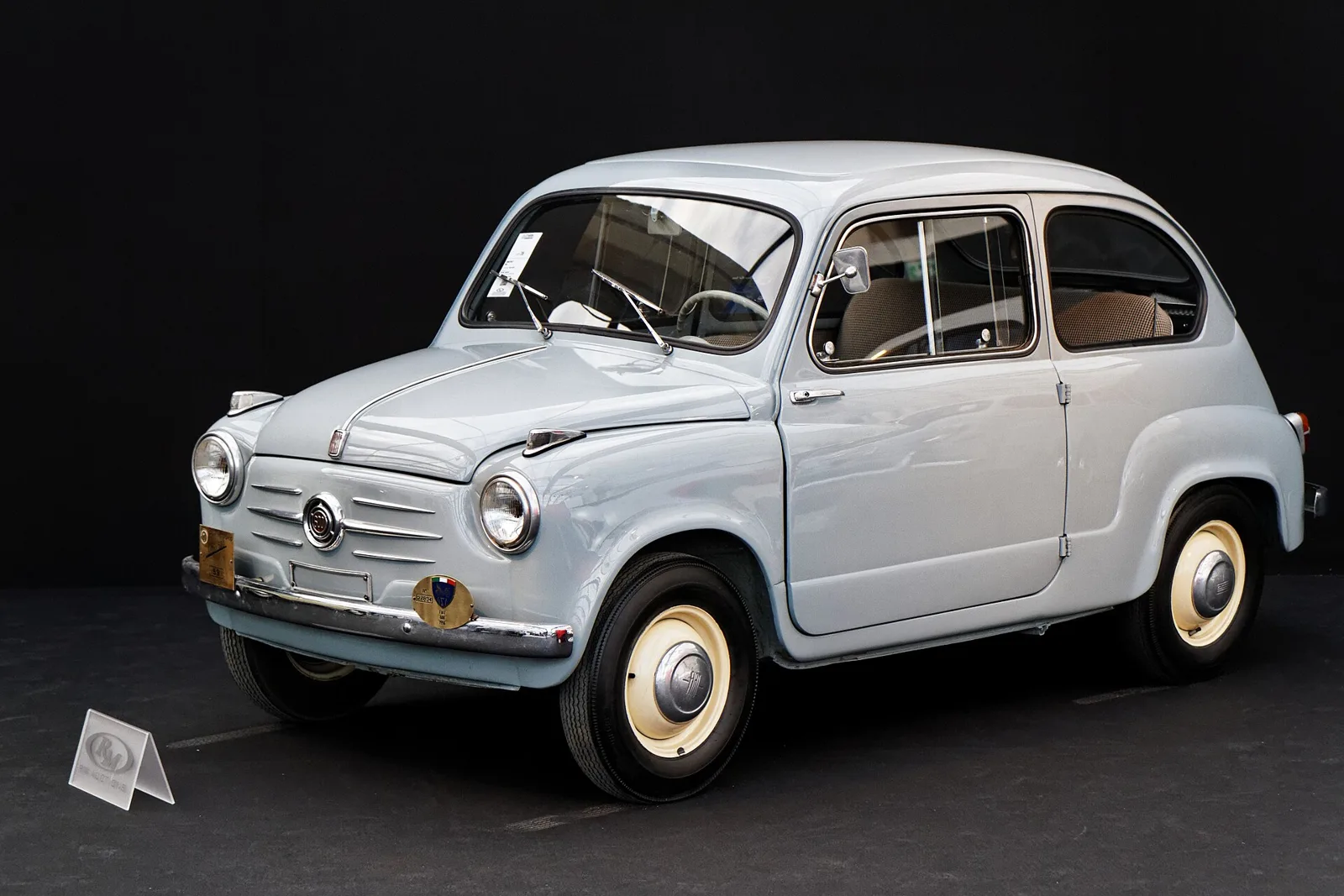
Fiat built the 600 T partly because coachbuilders had found success with vans based on its cars. OM, a Fiat subsidiary, along with Coriasco and its 600 M, and Fissore, had sold models that inspired the launch. The van used the Fiat 600 Multipla as its base.
The first van was a sheet-metal panel van that took the Multipla's base and the 767 cc (46.8 cu in) engine of the second series. Shortly afterwards it appeared as an eight-seat minibus for school transport.
A modest van that served Italian police, broadcasters and utility crews for years.
Where did the 850 T come from?
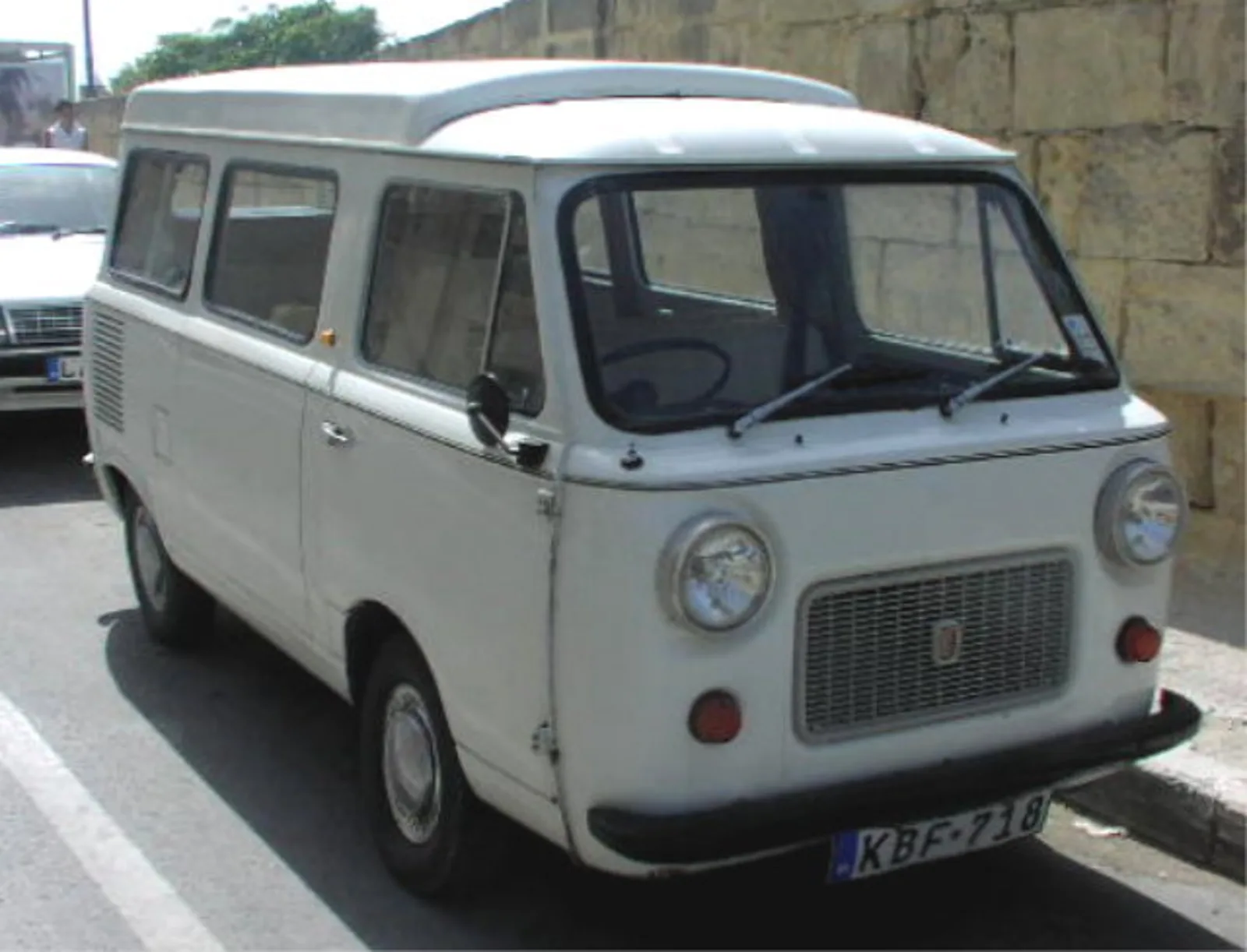
The 850 T was a close relative of the second-series 600 T, launched at the Turin Motor Show in November 1964. Its wheelbase was 5 cm longer than its predecessor's, and it took the newer Fiat 850 mechanics. The van was aimed at urban deliveries of parcels and other goods.
The 850 T was also sold as an estate version and as a school minibus.
Sales of the new 600 T fell as buyers moved to the 850 T. Production of the 600 T carried on for coachbuilders Coriasco, Fissore, Pasino and Moretti, who turned it into pick-ups.
What changed between the first and second 600 T?
The second series, introduced in 1964, was a new model on a larger platform rather than a facelift. It swapped the hexagonal grille for a rectangular one, fitted drop-down door windows and replaced the rear side-opening door with two opening doors.
The flat-mounted engine was reached through the lower of those rear doors, while the upper door handled loading and unloading. The vehicle also grew by several centimetres in length.
Which body styles and campers did the vans offer?
The 600 T and 850 T ranges came as one- and two-door panel vans, glazed vans, raised-roof and insulated vans, and eight-seat minibuses. Campers included the Farina and Fiesta, whose roofs lifted into a tent, and the Fargo, with an integrated tent canvas.
The Fargo added a double side door and a tent canvas that extended the vehicle. The 850 T offered 2.65 m3 of cargo space with its normal roof and 3.0 m3 with the raised one.
Who used these vans?
The vans were widely used by the police services and above all by the Carabinieri, present in villages and rural areas. Public utilities and broadcasting crews also relied on them, including RAI-TV staff, ENEL electricians and the SIP telephone service.
The vans were described as reliable and versatile, and they were compared with the Renault Estafette used by the French gendarmerie.
How did the 900 T change the van?
In 1976 the 850 T became the 900 T, with a full bodywork restyle and a 903 cc (55.1 cu in) petrol engine derived from the Fiat 127. Its power was quoted at 47 PS DIN but reduced to 35 PS (26 kW; 35 hp).
Brakes were strengthened and the dynamo gave way to an alternator. Pick-up versions stayed the preserve of Carrozzeria Coriasco, which had converted earlier models too. The model as a whole, from its 1962 launch to the end of 1979, was built in more than 500,000 units.
What replaced the 900 E?
The 900 E arrived in 1980 as an improved version of the van and was built until the end of 1985. It was replaced by the mini Ducato, the Fiat Talento. The Fiat Scudo, launched in 1995, was the real replacement.
Several derived versions followed, including a camper version built especially for the Nordic markets.
How did the electric 850T work?
The electric 850T was shown at the 1976 International Technical Exhibition. It used a 14 kW direct-current motor fed by 12 batteries of 12 volts, and it was rated at 80 km (50 mi) on routes where gradients stayed at or below 19%.
Built to ENEL's specification by the Centro Ricerche Fiat, it weighed 1,417 kg (3,124 lb) unladen and carried a 370 kg (816 lb) payload. Its top speed was 60 km/h (37 mph). Electric braking recovered energy, and the batteries sat in a hydraulically lifting tray for easier servicing.
NASA analysed the van in the United States, and the report appeared in a November 1978 publication covering three electric and hybrid vehicles. The report noted that its side and rear walls matched the standard van. The tests followed an ERDA procedure for electric and hybrid vehicles, with constant-speed runs at 40 km/h (25 mph) and 56 km/h (35 mph).
What changed to make the 850T electric?
Electrification meant removing the combustion engine and reinforcing the rear springs to carry the battery load. The flat cargo floor also grew once the engine at the back had gone.
The battery pack weighed 461 kg (1,016 lb) and was made of 12 units rated at 135 Ah. The external charger ran from a 240 V three-phase socket of the American standard, whereas FIAT's own Italian supply was 380 V three-phase, and the special charger was about 89% efficient.
Did Zastava build copies of the Fiat vans?
Zastava in Serbia built licensed copies of the Fiat vans at its Kragujevac plant. The 430 K matched the 600 Multipla van, while the 850 AK family followed the Fiat 850 T and the 900 AK family the Fiat 900 T.
Its versions carried Zastava numbers with K, F, AK, AF and AL endings. The 435 K and F, for the Fiat 600 T, used a Fiat engine of 848 cc (51.8 cu in). The 850 T was built by Zastava until 1990, and the 900 variants used a 903 cc engine rated at 35 PS (26 kW; 35 hp).
Zastava's 900 range also included the 900 AL minibus.
Key specifications
| Specification | Detail |
|---|---|
| 600 T engine | 767 cc (46.8 cu in) |
| 850 T engine | 843 cc (51.4 cu in), 34 PS (25 kW; 34 hp) |
| 900 T engine | 903 cc (55.1 cu in), 35 PS (26 kW; 35 hp) |
| 850 T cargo volume | 2.65 m3 normal roof; 3.0 m3 raised roof |
| Electric 850T motor | 14 kW (19 PS) rated; 29 kW (39 PS) peak for 3 minutes |
| Electric 850T weight | 1,417 kg (3,124 lb) unladen; 370 kg (816 lb) payload |
| Electric 850T range | 80 km (50 mi); top speed 60 km/h (37 mph) |
| Output of the model | More than 500,000 units from 1962 to the end of 1979 |
| Wheelbase change | 5 cm longer on the 850 T than on the second-series 600 T |
| Visitor-Bus base | 850 T van platform, styled by Bertone |
Did the Fiat 500 and 850 family reach the railways?
A small-series rail trolley called the Fiat 500/850 Motocarrello was built in the 1960s to move personnel along the track. Its two-axle body had a driving cab at each end, with grilles borrowed from the 600 T in the first series and the 850 T in the second. The trolley's look therefore followed the road vans of its time.
Power came from a flat-twin of 499.5 cc (30.5 cu in). That engine was also fitted to the Fiat 500 Giardiniera and to the Autobianchi Bianchina Panoramica of 1960, and later to the Autobianchi 500 Giardiniera.
How did the Visitor-Bus come about?
Gianni Agnelli opened the Lingotto and Mirafiori plants in Turin to visitors soon after taking over Fiat. Shuttles carried them, first in Fiat 600 Multiplas and then in ordinary 850 T minibuses, before Agnelli commissioned Bertone to design a dedicated model.
Built on the 850 T van platform, the Visitor-Bus kept the commercial range's foundation while giving the visits a purpose-built vehicle.
Before that, the Fiat 600 Multipla had carried visitors as a compact six-seater with two benches.