The Pinin Farina bodied grand tourer that moved Ferrari from hand-built cars to semi-series production, from the Europa GT to the Coupe Speciale.
The Ferrari 250 GT Coupe was a grand tourer built from 1955 to 1960, styled by Pinin Farina and powered by a 3.0-litre Colombo V12. It was produced by Boano, Ellena and finally Pinin Farina, and it led Ferrari toward semi-series production.
The Ferrari 250 GT Coupe was a grand touring car that Ferrari built from 1955 to 1960, with its bodywork styled by Pinin Farina. It marked the point where Ferrari moved from hand-built road cars toward semi-series production, and its 3.0-litre Colombo V12 gave the wider 250 family its name.
The story starts a little earlier, with the 250 Europa GT. Shown at the Paris Motor Show in 1954, it was the first real grand touring car from Ferrari and the first to carry the Gran Turismo name into a long line of road cars.
What was the Ferrari 250 GT Coupe?
The 250 GT Coupe was a two-seat Ferrari grand tourer built in three bodied series between 1955 and 1960, with the styling credited to Pinin Farina throughout. It sat between the hand-built Europa GT and the larger Pinin Farina Coupe of 1958, and it was aimed at owners who wanted a sporty car they could also use every day.
Ferrari's wealthy customers wanted something sporty and luxurious that was still practical for ordinary driving. The Coupe was built to meet that brief, with more room and more comfort than the semi-race Ferraris that came before it.
Across its series the Coupe kept a common mechanical base. The Boano and Ellena cars stayed close to the Europa GT in engineering, while the final Pinin Farina car brought a new body and a simpler production method.
A road car that began as a handful of hand-built grand tourers and ended as Ferrari's first semi-series model.
Where did the 250 Europa GT come from?
The 250 Europa GT was built by Ferrari in 1954 and 1955 as a grand touring machine, and only 35 were made. Most carried Pinin Farina bodywork, and the car replaced the Lampredi-engined 250 Europa, which had been made in very limited numbers.
Ferrari's earlier sports models were semi-race machines that could be driven on the road but were less practical for an elite buyer who wanted to use the car daily. The Europa GT was a step toward a true road car with more comfort and more luggage space, and it used the Colombo 3.0-litre V12 that would define the family.
The link with Pinin Farina dates from 1951, when Enzo Ferrari first met Battista Farina over a restaurant table. Ferrari then chose Pinin Farina as its coachbuilder for the Europa GT, a relationship that would last for decades.
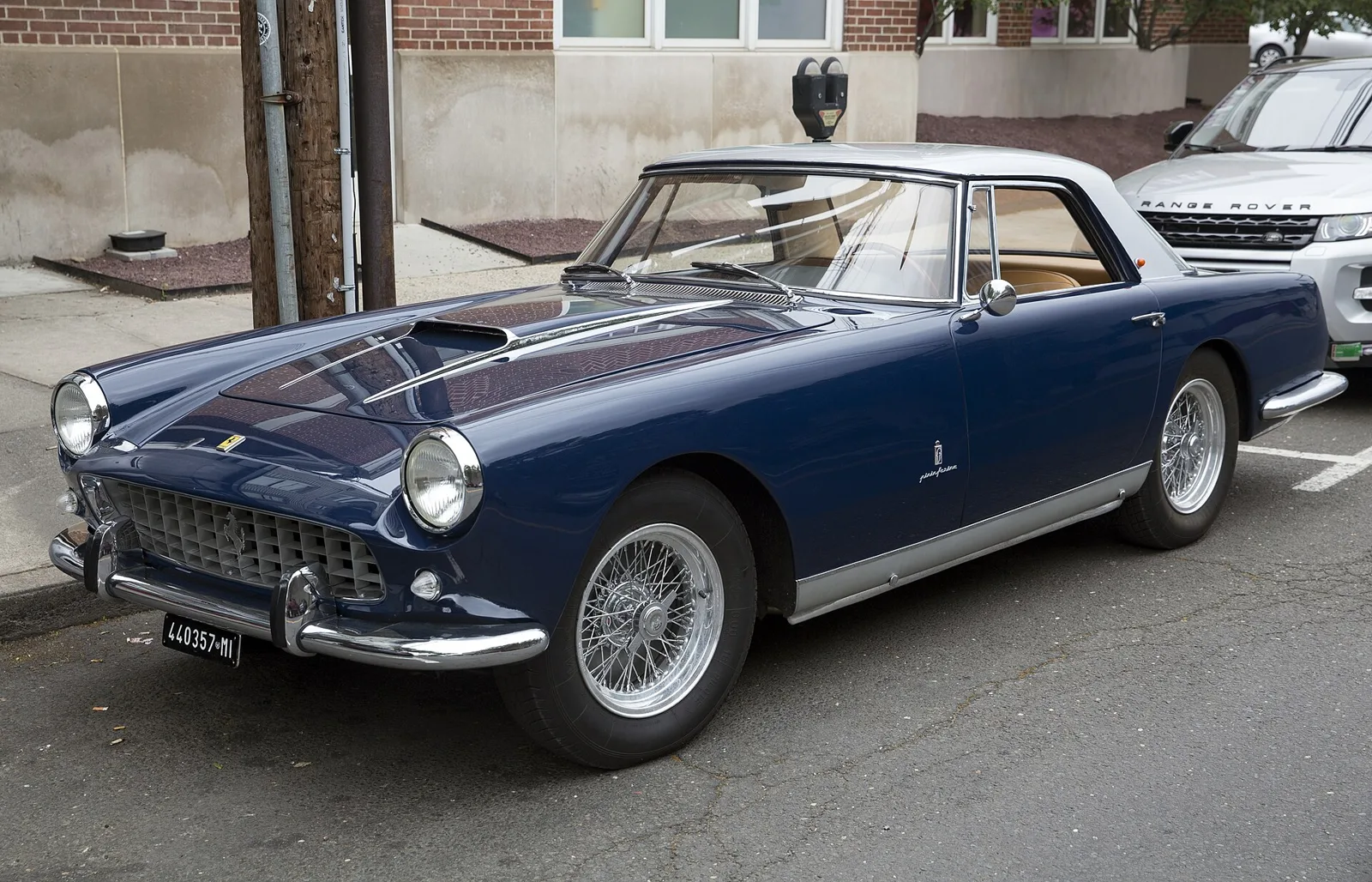
Pinin Farina offered two body variants. One was a three-window, two-door coupe with a panoramic rear window, and the other added rear side windows. The car looked better balanced than its predecessor after the wheelbase came down by 200 mm (7.9 in), leaving 2,600 mm (102.4 in), while the interior dimensions stayed the same.
How was the 250 GT engine built?
The Coupe used Colombo's 60-degree V12, with 73 mm bores and 58.8 mm strokes. Displacement worked out at 2,953.21 cc (3.0 litres, or 180.2 cubic inches), and the unit produced 220 PS (162 kW; 217 hp), peaking at 7000 rpm in the Europa GT form with 8.5:1 compression.
Each cylinder bank had a single overhead camshaft and two valves per cylinder. Fuel reached the cylinders through three Weber 36DCZ/3 carburettors, and the ignition used one plug per cylinder, fed by two coils and a horizontal distributor.
The Colombo block used tighter bore spacing than the Lampredi unit it replaced, which is why engineers called it a short-block. Each cylinder displaced 246.10 cc, and Ferrari rounded that figure up to 250 to name the series, following its usual convention.
Torque for the Europa GT was about 265 Nm at 5000 rpm, and the car could reach 230 km/h (142.9 mph). The engines fitted to later Coupes were the type 128 units, producing 240 PS (177 kW; 237 hp), and the final version from 1960 had outside spark plugs and six separate inlet ports.
How did the chassis and running gear work?
The Europa GT's frame was a type 508 tubular steel unit, with two main longitudinal members braced across. The rear of the frame passed above the rear axle, and the same chassis and engine setup carried through many later Ferrari road and race models.
At the front the car used independent suspension with twin wishbones and transverse leaf springs, with hydraulic shock absorbers. The rear used a live axle on semi-elliptic leaf springs, and drum brakes were fitted at all four corners. A four-speed synchromesh gearbox sent drive to the rear axle through a propeller shaft, and the fuel tank held 100 litres.
Later series moved the front suspension to double wishbones with coil springs. The biggest update came in late 1959, when disc brakes from Dunlop arrived.
Why did Ferrari turn to Boano and Ellena?
Demand for the 250 GT Coupe outgrew Pinin Farina's Turin workshop, so the bodies were first built by Carrozzeria Boano and later by Carrozzeria Ellena. Boano received the first contract, and Ellena went on to build a total of fifty cars before closing in 1966.
Pinin Farina's facility at Corso Trapani in Turin was too small for semi-series work. Engineers looked at sites in Grugliasco, just outside Turin, and the site was chosen by Sergio Farina, Battista Farina's son, with technical director Renzo Carli. Battista Farina set two rules for the site, one being a view of the Alps and the other trees behind it.
Felice Mario Boano opened his coachbuilding business in Grugliasco in 1954, after quitting Carrozzeria Ghia in 1953. His partners included his son, Gian Paolo, and Luciano Pollo. Boano made small aesthetic changes to the design, removing the kick-up behind the doors and lowering the roofline slightly.
Boano coupes are easy to recognise because a single straight line runs the length of the body, without the kick-ups behind the doors that Pinin Farina's original design had.
Boano also had a factory in Brescia that could take large orders, and some proprietary parts such as door latches, windscreen wipers and window winders came from Fiat and Alfa Romeo to ease servicing. Neither Boano nor Ellena put a badge on their cars, because they worked as subcontractors.
In 1957 Mario Boano took a job as chief stylist at the Fiat Centro Stile, leaving the bodywork in the hands of Ezio Ellena, his son-in-law, and of Luciano Pollo, and the firm was renamed Carrozzeria Ellena. Ellena cars were easy to identify by their raised roof lines and the absence of quarterlights, and only eight early cars kept the low Boano roof.
What changed with the Pinin Farina Coupe?
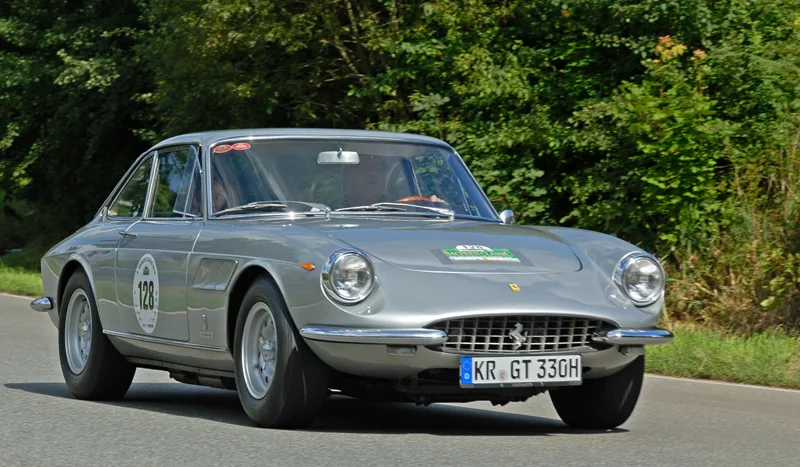
The Pinin Farina Coupe of 1958 to 1960 was the first semi-series Ferrari model. It had a new body over a virtually identical mechanical layout, and it was built to lift output, becoming the largest-volume Ferrari up to then, built in Grugliasco.
Pinin Farina had worked with Ferrari since 1952, but until then it had handled only small bodywork orders. Once demand grew, and after the Boano and Ellena subcontracts ended by 1958, it was ready with a new design and a new factory in Grugliasco.
The new nose was elongated and level, with a broad grille that moved away from the egg-crate look of the Europa GT. The side flanks were flat, divided only by a single dihedral line, and the fastback profile of the earlier cars gave way to a notch-back style. Critics commended the car for its good proportions, and it had little ornament.
The production car used a regular rear window, because the trapezoidal side windows allowed it. Early prototypes had a panoramic rear window and slight kick-up fenders, and the first of them was completed in 1957. Journalists saw the design in June 1958, and it was launched at the Paris Motor Show that October.
Refinements continued through the production run. Chassis 1499GT, finished late in 1959, became the first Coupe fitted with discs at the factory, and the engine reached its final type 128F form by 1960.
Which special versions were built?
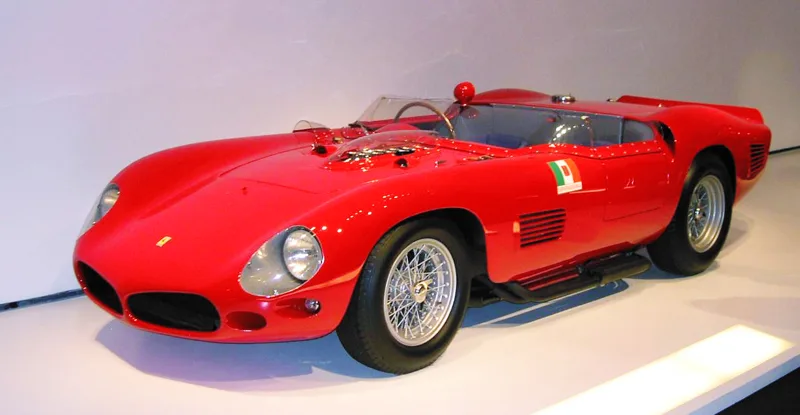
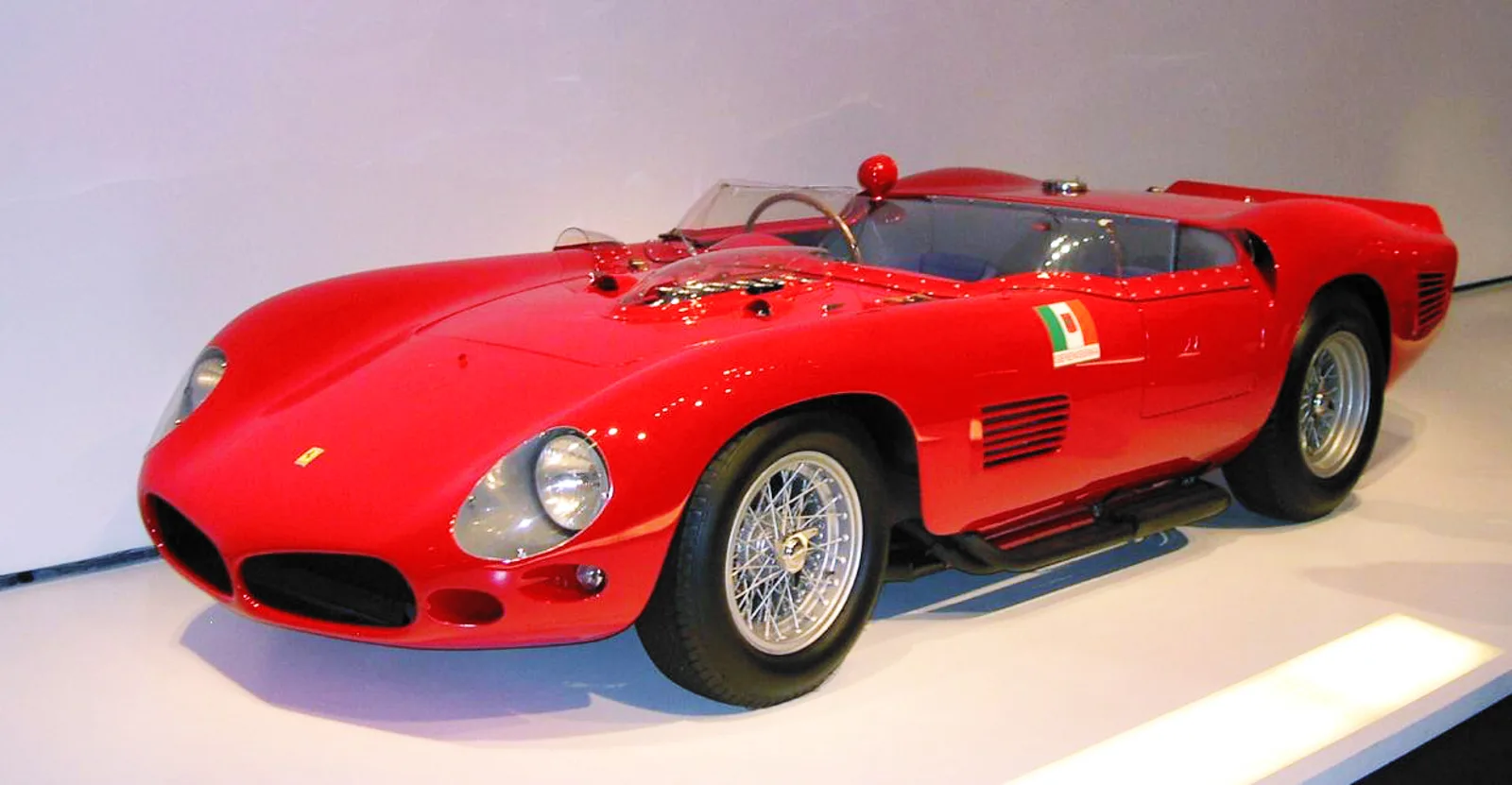
Several special versions were built alongside the production cars. Pinin Farina built a short run of four Coupe Speciales on a type 513 chassis, Europa GT Berlinettas were made as lightweight competition-ready cars, and a 250 GTO prototype grew out of a Boano-era chassis.
The Coupe Speciales were individually bodied for wealthy customers. The first, chassis 0463GT, was finished in April 1956 and went to John von Neumann, a dealer for the marque in California. The second went to a member of the Agnelli family, the third to a customer in Lisbon, and the last, finished in light blue, was delivered to King Mohammed V of Morocco.
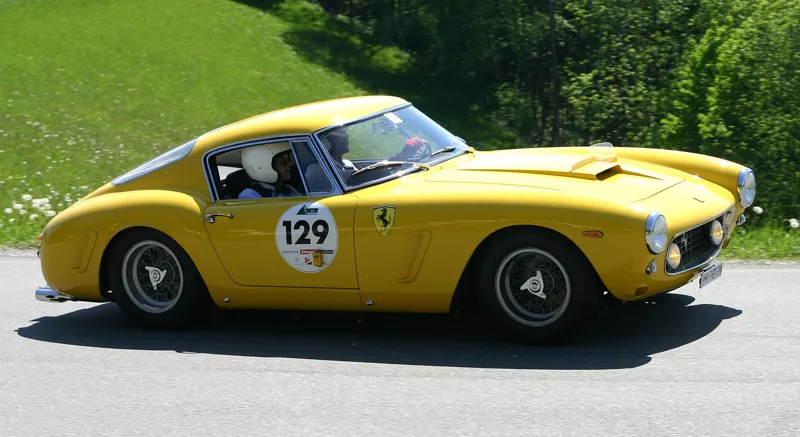
In the 1954-1955 period, Ferrari and Pinin Farina made a number of light aluminium Berlinettas with rounded shapes. Four of them had competition bodies similar to the 250 MM, and their engines gave as much as 230 PS (169 kW; 227 hp), with 275 Nm of torque. None scored major victories, and most were kept away from the track.
Chassis 0383GT is regarded as the earliest Tour de France style Berlinetta. In 1956 Lena and Palanga took it to the Tour de France automobile race, where it did not finish, and from 1958 Frank Adams campaigned it in the United States, winning a preliminary GT race at Bridgehampton.
Ferrari and Pinin Farina produced three more special bodied cars in 1955, the Europa GT Competizione. They had different body styles and wheelbases of 2,530 mm (99.6 in) and 2,480 mm (97.6 in). Chassis 0415GT was raced briefly by Alfonso de Portago and later by Gleb Derujinsky in the United States, and de Portago finished fourth overall in Nassau.
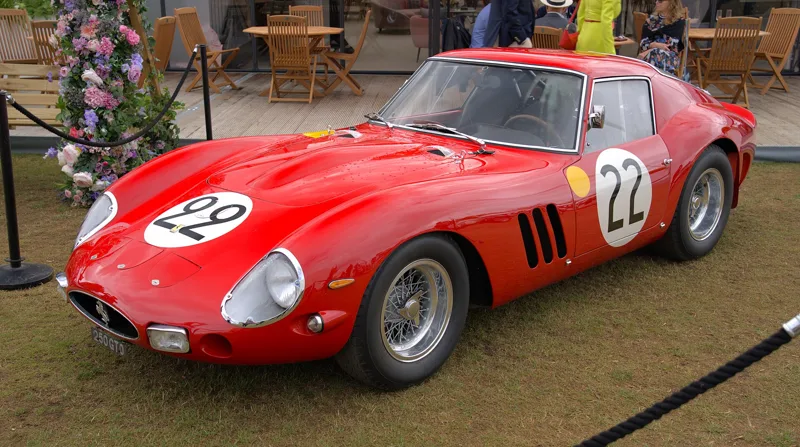
The 250 GTO prototype came from a different direction. Bizzarrini's project began with a worn-out company car: a 250 GT Coupe Boano that had served as Enzo Ferrari's personal car until 1957. The project had to be kept secret from Carlo Chiti and Scaglietti, and it used no new parts budget. The team called it Il Mostro, the press called it the Anteater, and Bizzarrini called it Papero.
The wheelbase came down to 2,400 mm (94.5 in), the Berlinetta SWB figure, and the body was hand-crafted in unpainted aluminium. Willy Mairesse tested it at Monza within two months, and Stirling Moss later improved on Berlinetta lap times by roughly four to five seconds. Enzo Ferrari ordered the car destroyed by the end of 1961, and the production GTO followed from the work.
What were the Pinin Farina specifications?
| Specification | Detail |
|---|---|
| Production | 1955 to 1960 (Coupe); Pinin Farina body 1958 to 1960 |
| Engine | Colombo 60-degree V12, 2,953.21 cc (3.0 litres) |
| Bore and stroke | 73 mm by 58.8 mm |
| Compression ratio | 8.5:1 |
| Power, Europa GT | 220 PS (162 kW; 217 hp), peaking at 7000 rpm |
| Power, later Coupe | 240 PS (177 kW; 237 hp), type 128 engine |
| Torque, Europa GT | 265 Nm at 5000 rpm |
| Wheelbase, Europa GT | 2,600 mm (102.4 in) |
| Top speed, Europa GT | 230 km/h (142.9 mph) |
| Gearbox | Four-speed synchromesh |
| Fuel tank | 100 litres |
| Brakes | Drums first; Dunlop discs fitted in late 1959 |
The Coupe Speciale used the 240 PS type 128 engine on its own type 513 chassis, which also had a wheelbase of 2,600 mm (102.4 in). Suspension on that chassis was almost identical to the Boano-era cars.
What did 250 GT Coupes sell for at auction?
Prices for cars from the 250 family have varied enormously. The 1955 Europa GT Competizione, chassis 0415GT, sold for US$7.15 million at Pebble Beach in 2013, while the one-off Speciale 1187GT sold for US$2.365 million in the same year and the final Pinin Farina coupe, 2081GT, made US$335,000 in 2019.
Europa GT 0407GT, a one-off custom design, sold for US$2.42 million in New York in 2013, and the unrestored Europa GT 0409GT went for US$2.53 million in 2014. The cheapest of those sales was 0405GT at US$797,500 in Scottsdale in 2012.
Later Coupe sales were lower but still significant. Coupe 1315GT, a 1959 car, sold for US$599,000 in 2019, and Boano 0581GT, which emerged after 35 years in storage, made US$522,000 that same year. The 1956 Pinin Farina prototype 0435GT sold for US$1.485 million in 2015.
The sale estimate for Speciale 0751GT, built for Princess Lilian of Belgium, was US$11-13 million in 2019. The Speciale 0465GT, one of only four, sold for US$1.43 million at Amelia Island in 2012.
What happened to the 250 GT Coupes over time?
Many 250 GT Coupes were converted, parted out or scrapped as their values fell. Estimates suggest that only about half of the cars survive, and some were rebodied as replicas or competition models that look nothing like the original. The best-documented survivors now trade for millions of dollars, as the auction results show.
Coupe 1717GT, a 1960 car that had been in a crash, was cut down in 1965 and then reclothed by Piero Drogo's firm to look like a 250 GTO. In 1967 Tom Meade rebodied Coupe 1065GT completely to his own design and called the result Thomassima III, with gullwing doors.
Neri and Bonacini of Modena also rebodied several Coupes. In 1964 they built a lightweight Nembo Coupe for Tom Meade, and in 1965 they created the Nembo Spyder from chassis 1777GT for Sergio Braidi, a styling mix of the 275 GTB and the 250 GTO.
In the 1990s Zagato turned 0757GT into a near-copy of the Double Bubble Berlinetta.