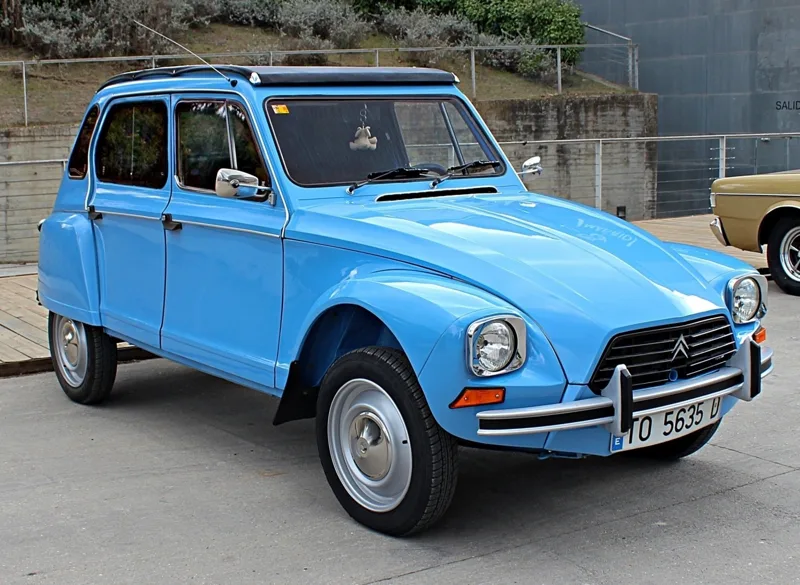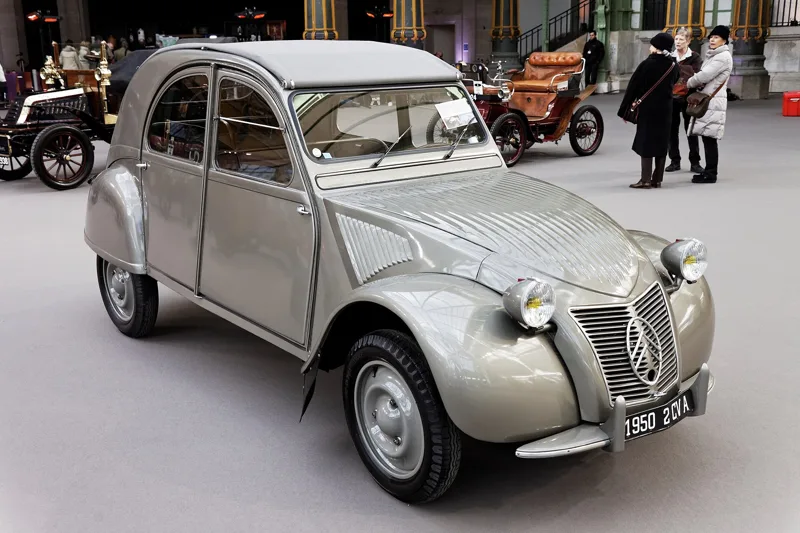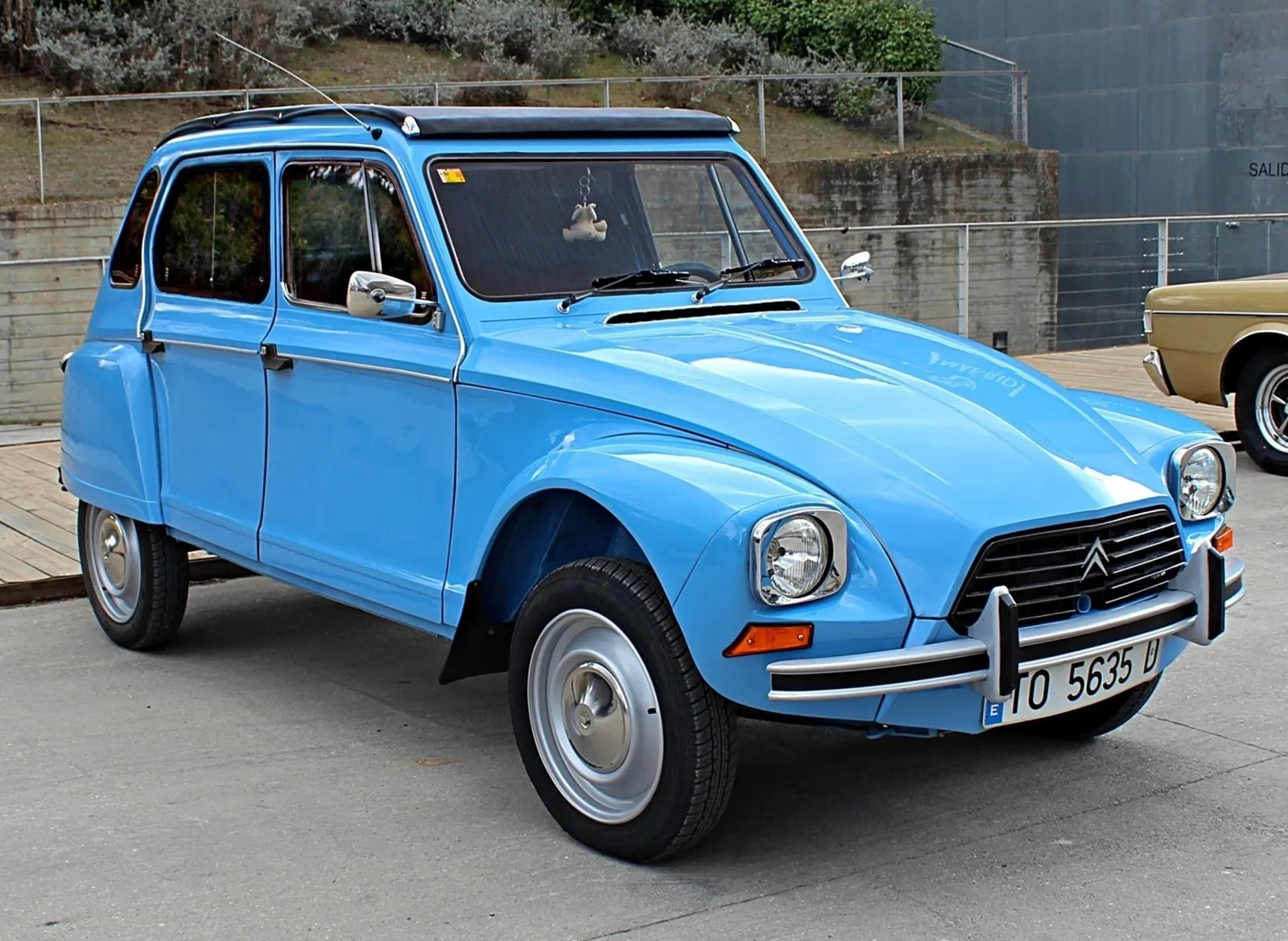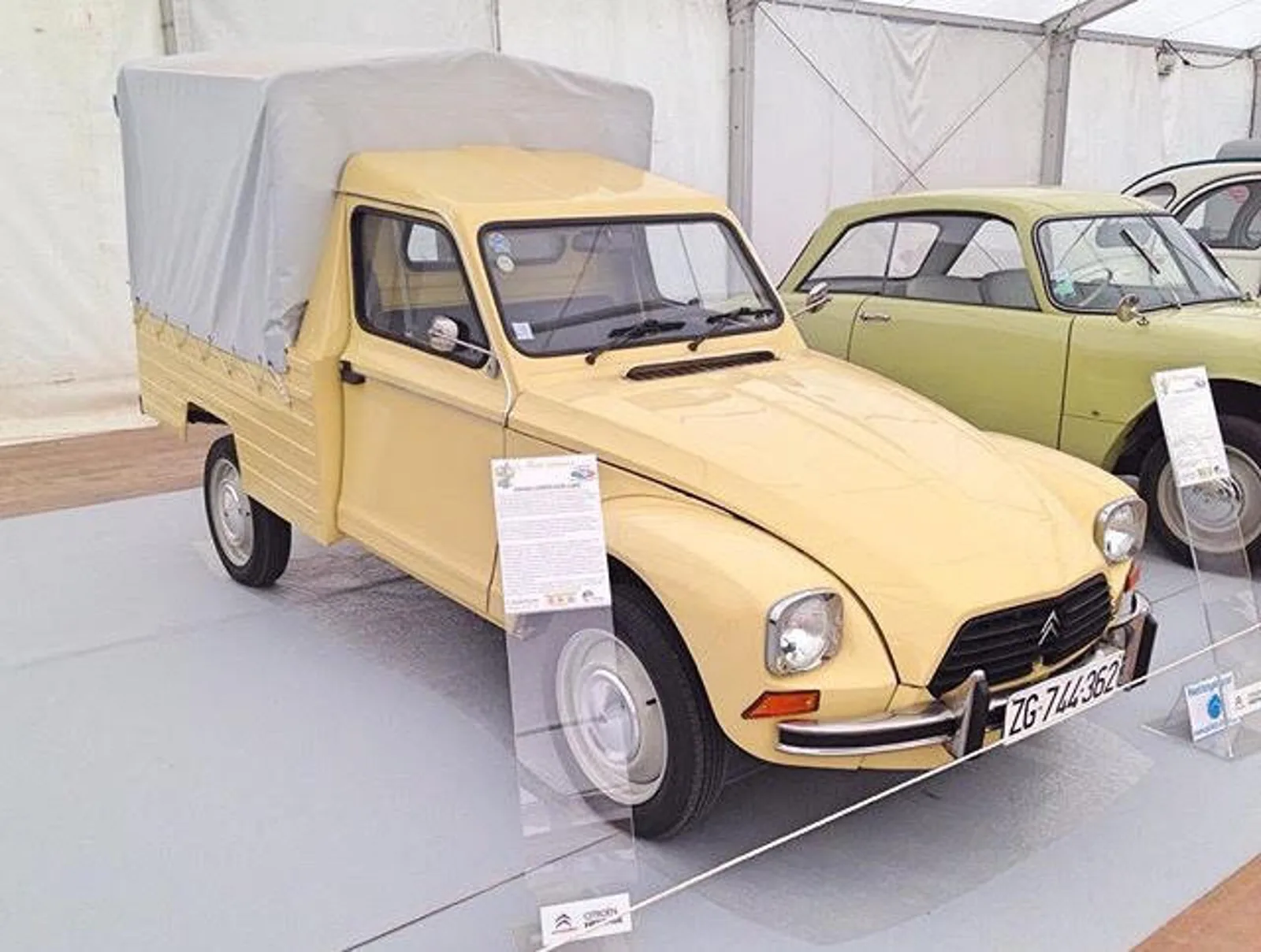
A 1981 Yugoslav light van and pick-up built on the Diana chassis, and the joint venture Citroen brought to an end in 1985.
Built from 1981 to 1985 at Koper, the CIMOS DAK was a small van that Yugoslav engineers designed after Citroen refused to let its Acadiane be assembled there. The Geri pick-up shared its base, and the pair grew out of a joint venture that Citroen ended in 1985.
Since 1960 TOMOS, and then CIMOS, had assembled Citroens in Yugoslavia, from the 2CV to the Dyane. The DAK grew out of that relationship, and it also marked the point where the partnership began to fall apart.
How did CIMOS come to build Citroens in Yugoslavia?
The CIMOS DAK was a Yugoslav small van built from 1981 to 1985 at Koper, with the Geri pick-up on the same base. Citroen had refused to let its Acadiane be assembled in Yugoslavia, so CIMOS engineers designed their own version on the Diana chassis.
Citroen wanted a bigger role in Yugoslavia, and its existing deal with TOMOS was seen as too restrictive. Belgrade required foreign carmakers to partner with a local company, so in 1972 Citroen teamed up with Iskra and TOMOS to create CIMOS DD.
A Citroen-style van that Citroen itself refused to let Yugoslavia sell abroad.
The joint venture and its shares
Citroen held 49% of CIMOS DD, and the Yugoslav state held 51%. Citroen brought the assembly tooling, some machining equipment needed to reach the local content target, and its expertise. TOMOS offered land and plant, while Iskra backed the expansion and modernisation of the Koper works, close to the Italian border, and supplied cash and electrical parts.
CIMOS DD became operational on 1 January 1973. Badges read CIMOS Citroen, and every model wore the Citroen emblem. The plant assembled CKD kits of genuine Citroens for the Yugoslav market alone, and it also made mechanical parts for Citroen France.
Over the years the CIMOS name appeared more often in press and advertising, which the government saw as a point of pride: a brand that could stand apart under a different name. An independent parts unit turned out more than 180 components for the Citroens built in France, while a second unit put together the kits shipped from there.
Why was the Acadiane not built in Yugoslavia?
Citroen's management refused to allow its Acadiane van to be assembled in Yugoslavia. Only about ten were ever sent as kits, and the 2CV van assembly that ended in 1978 left a gap in the range. Local engineers had grown tired of the lack of a small utility vehicle.
The engineers built the DAK on the Diana chassis, unlike the Acadiane, and presented it with the Geri pick-up at the Belgrade Motor Show in March 1980. Public reaction was favourable, and in line with the Citroen agreement, CIMOS started production the following year. Citroen had even agreed that CIMOS could study and then build the prototypes, and it promised to sell the van through its own dealer network.
Compared with the Acadiane, the DAK looked newer, and its unstretched Diana chassis made it stronger. The Acadiane, in production from 1978, was essentially a 1951 2CV AK.400 wearing the Dyane's nose.
The DAK van: design and cabin
Visually the DAK is close to the Acadiane, yet it is shorter: it sits on the Diana chassis, not a Dyane frame stretched by 135 mm.
The rear panels are corrugated in a more modern pattern, in keeping with the Citroen philosophy, which gives stiffness with thinner and cheaper metal. Horizontally sliding windows were kept, and the Acadiane's twin rear doors gave way to a single tailgate.
The front end was taken almost directly from the Diana, with small differences such as the glass marking and the belts. Inside, the dashboard, folding passenger seat, retractable belts and door panels all came from the Diana. The seat could be moved back 10 cm.
Both the Geri and the DAK used a 602 cc (36.7 cu in) unit. The only real difference lay at the rear, where the DAK had a closed body. Some would say the DAK is simply a Geri with a closed body.
What was the Geri, and how many were built?
The CIMOS Geri was the pick-up version of the DAK, built on the same base. About 900 were produced between 1982 and 1985. Citroen never built an Acadiane pick-up itself, yet two Dyane-based pick-ups existed: one in Iran, the other the Geri in Yugoslavia.
The Iranian Jyane came from SAIPAC, a company owned 75% by the Iranian state and 25% by Citroen.
Specifications at a glance
| Specification | Detail |
|---|---|
| Body | Van (DAK) and pick-up (Geri) |
| Engine | 602 cc (36.7 cu in) boxer twin, type M28/1, AM2A variant |
| Power | 31 PS (23 kW; 31 hp) DIN |
| Top speed | 100 km/h (62 mph) when unladen on level ground |
| Brakes | Discs at the front, drums at the rear |
| Wheelbase | 240.0 cm (94.5 in), the Diana basis; the Acadiane was 253.5 cm (99.8 in) |
| Load volume | 2,100 dm3, the same as the 2CV AK.400 |
| Payload | 480 kg |
| Production | About 2,200 DAK (1981 to 1985); 900 Geri (1982 to 1985) |
Why did the CIMOS joint venture end?
Citroen cut off CKD kit deliveries in 1985 with no notice, ending the joint venture. It had also banned exports of the DAK and Geri, and it broke the existing contract as a punishment for what it saw as an affront.
CIMOS DD had offered to build the DAK and Geri for Citroen, and Citroen rejected the offer.
Citroen was stung that a small craft firm had produced a more modern model than its own Acadiane. In 1984 the C15 van appeared with a diesel option. The Acadiane's feeble petrol unit soon left it behind.
Acadiane output then collapsed, despite prices 10,000 francs below the C15. The Acadiane was no longer made by summer 1987, though stock was sold until April 1988, and the Dyane had gone in June 1983.
Did politics play a part in the end?
According to some Yugoslav industry insiders, CIMOS was reportedly held back because its Slovene and French managers had little grasp of what Belgrade's leaders were concerned about. The Koper works was also undersized, and it could not meet demand without a big modernisation and expansion programme that Citroen did not want to undertake.
Under the post-Tito leadership, Belgrade had started to worry about revolts in several regions, Slovenia among them. Priority therefore went to factories in territory the central authorities controlled, and the government relied on other makers such as Zastava, a Fiat unit, and TAS, which had passed to Volkswagen at Sarajevo in 1972.
The Koper plant could assemble only a few dozen vehicles a day from kits, which made it more a large craft workshop than an assembly line. Renault had negotiated a recapitalisation of IMV at Novo Mesto, where a new factory would build the future Super 5 from 1989.
With the C15 coming, Citroen was closing the Acadiane chapter. Its Romanian Axel project was already leaving marks, and it is unlikely the DAK and Geri had much of a future in the range. Successive Citroen managements always cited the impossibility of exporting the Geri. If it had come out alongside the Dyane, its reputation would almost certainly have been much bigger.
Production and surviving examples
The Yugoslav Acadiane variant was built entirely at the CIMOS workshops in Koper, now in Slovenia. Roughly 2,200 DAK vans and 900 Geri pick-ups were made between 1981 and 1985.
After car assembly stopped, CIMOS focused on automotive parts and kept supplying Citroen plants in France and Portugal into the early nineties. The last Citroen 2CV left the Portuguese plant as the Yugoslav war began.
Of the 900 Geri built, roughly ten still run on the road as of 2020. Officially a single car sits in France, where it has just joined the Musee de l'Automobile de Lorraine collection. It spent years on show at the Citroen Conservatory and was restored about ten years ago using original parts only, which makes it nearly unique. A second survivor is reportedly kept by Citroen in its reserves.
Dates for Citroen's sale of its CIMOS shares vary, with both 1996 and 1986 given.