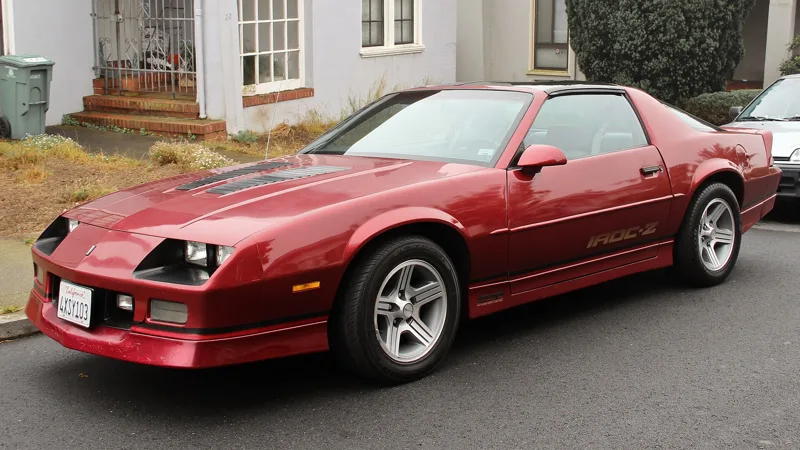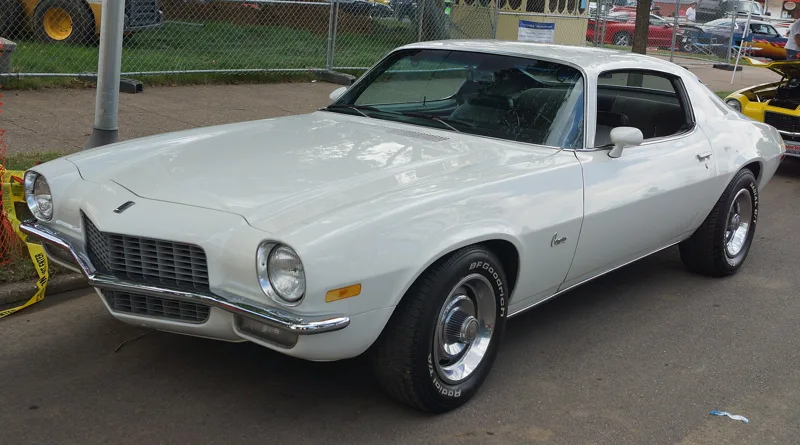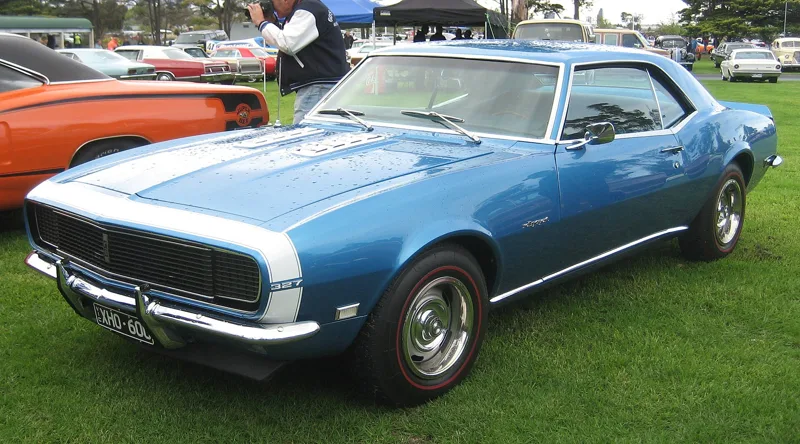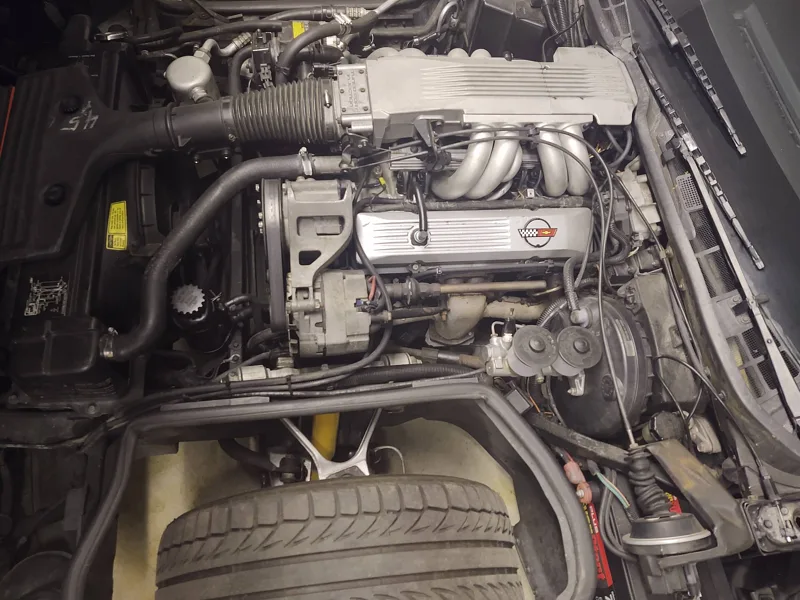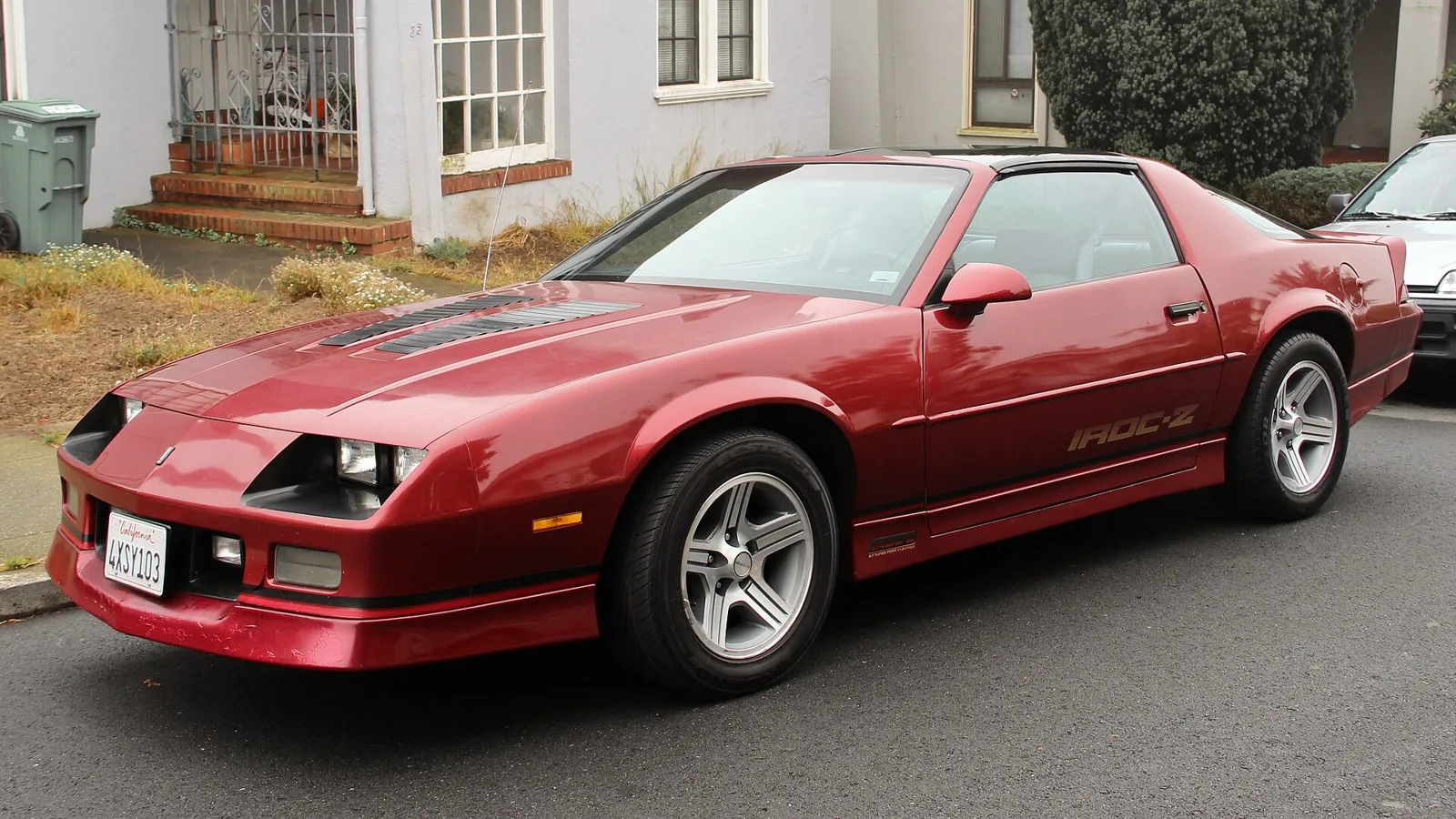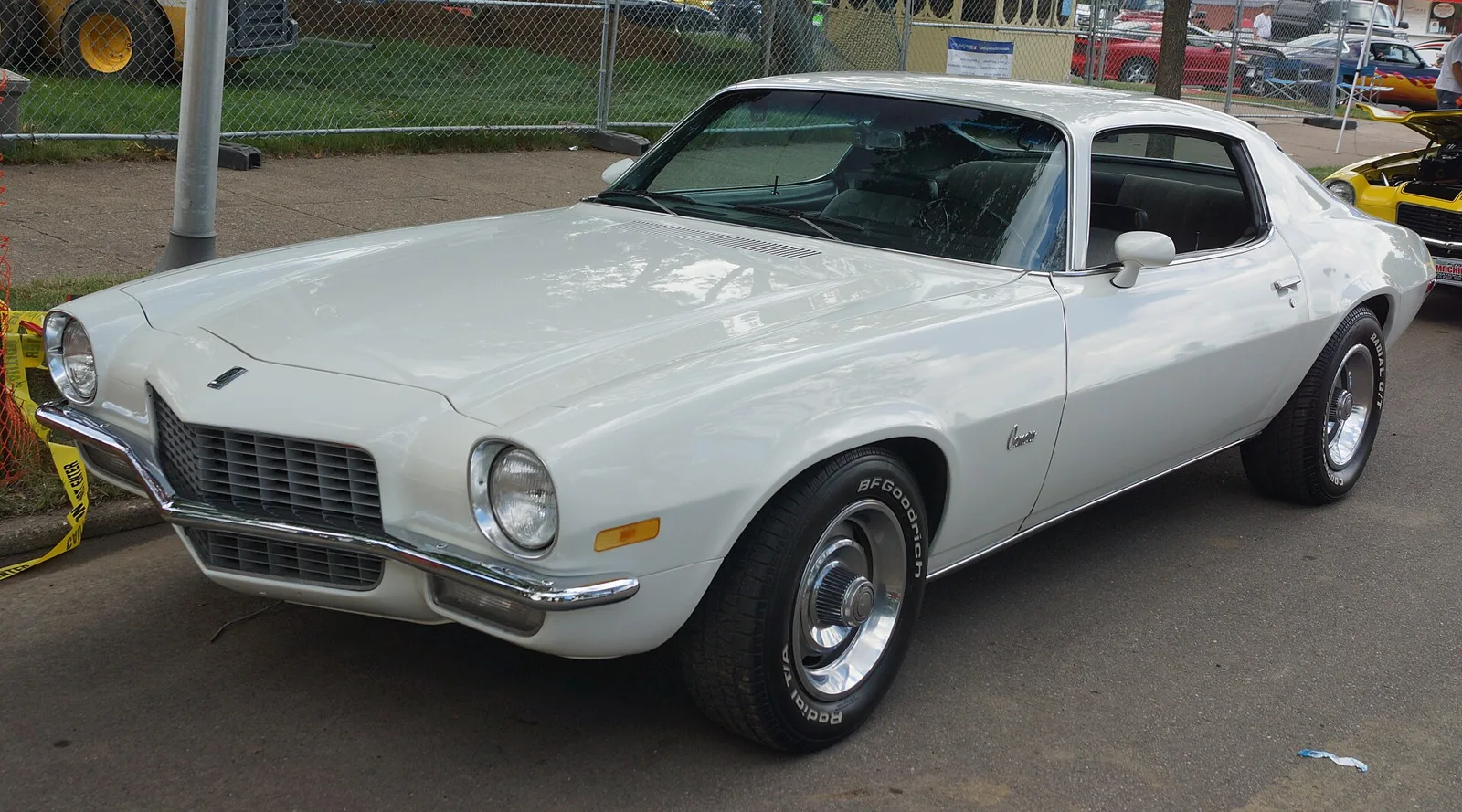
A longer, lower, wider car that lost power to emissions rules, survived two factory strikes and came back with the Z28 in 1977.
Sold as a pony car until 1981, this Camaro was wider and lower than the original and dropped its convertible body. Emissions rules and insurance costs trimmed its engine output through the decade, and a standalone Z28 reappeared in 1977.
The second-generation Chevrolet Camaro was built from 1970 to the 1981 model year. It started life longer, lower and wider than its predecessor, then lost its convertible, saw its engines shrink under emissions and safety rules, and survived two factory strikes. The Z28 returned as its own model in 1977 and carried the car into its final years.
How did the second generation differ from the first?
The second generation was an all-new car, but it kept the first generation's basic mechanical layout. Its unibody sat on a front subframe, with A-arm front suspension, coil springs and rear leaf springs. Chevrolet refined the chassis for comfort and handling, and base models gained noticeable improvements in sound-proofing and ride isolation.
Racing experience gained on the first car fed directly into steering, braking and balance. Engineers at GM saw the new model as far more engaging to drive than the car it followed. The Z/28 option stayed available through 1975 and was renamed Z28 in 1972.
The car arrived in 1970 as a driver's machine, and a decade of rules kept taking its power away.
What did the 1970 Camaro look like?
The 1970 body wore a fastback profile, with ventless glass in the full doors and no rear quarter windows. Wider doors eased access to the back seat, and pull-up units took the place of the earlier handles. A new double-shell roof improved rollover protection and cut noise, and the car kept four round taillights similar to those on the Corvette.
Base cars had a separate bumper and grille with parking lights under the bumper. The Rally Sport option brought a grille surrounded by flexible Endura material and round parking lights beside the headlights. Inside, a curved instrument panel with round gauges faced the driver, and the Strato bucket seats were unique to 1970 cars.
The 1970 model also brought the first rear stabilizer bar in the Camaro range, and the four-wheel disc brake option from 1969 was dropped. An optional console carried a standard Hurst shifter, and the standard interior used all-vinyl upholstery with a matte black dashboard.
Build data reached the plants in February 1970, so the car was already mid-way through its model year, which is why some call it the 1970 1/2. Collectors tend to rate the 1970 cars highest among the early second-generation models, because later years lost ground to emissions controls and heavier bumpers.
Which engines did the 1970 Camaro offer?
The 1970 range covered a 250 cu in (4.1 L) six rated 155 hp (116 kW), a 396 cu in (6.5 L) big block in the SS 396, and the LT-1 V8 in the Z/28. The SS 396 L78 was rated 350 hp (261 kW), though the nominal 396 actually displaced 402 cu in (6.6 L) that year.
The LT-1 was a Corvette engine built from premium parts, and it made 360 hp (268 kW) with 380 lb ft (520 N m) of torque. Its 350 cu in displacement was a different proposition from the smaller 302 cu in V8 that powered the first-generation Z/28. Greater torque and a milder camshaft let the new Z/28 offer the three-speed Turbo Hydramatic 400 for the first time alongside the four-speed manual.
The Z/28 Special Performance Package cost US$572.95. The LS6 and LS7 454s turned up on early spec sheets and in some brochures, yet neither reached production.
Why did performance fall after 1970?
Power fell because the 1971 cars had to run on lower-octane fuel, which forced lower compression ratios. The LT-1 went from 360 hp to 330 hp SAE gross as its compression dropped from 11.0:1 to 10.3:1. Later emissions controls and heavier bumpers finished the job.
The 396 suffered more, with its SAE gross rating cut to 300 hp (220 kW) as compression fell from 10.25:1 to 8.5:1. In 1972 ratings moved from gross to net, measured on an engine with all its accessories fitted, so the LT1 showed 255 net horsepower and the 396 fell to 240. The 1973 Z28 350 made 245 hp (183 kW; 248 PS).
How did strikes and a shrinking market hit the early years?
Output and sales slid in 1971 after a 67-day GM strike, which overlapped the launch of the range in late September 1970. Interest in the pony car market was also falling, as insurance rates for high-performance cars climbed. Talk of cancelling the Camaro after 1972 began to circulate.
A later strike at Norwood, Ohio, the only plant building Camaros and Firebirds, nearly confirmed those fears. In 1972 a UAW strike disrupted production there for 174 days, and roughly 1,100 unfinished cars were written off for failing the 1973 bumper rules. Some at GM wanted to drop the Camaro and Firebird, but others pointed to the cars' loyal followings.
Chevrolet still built 68,656 Camaros in 1972, though just 970 of them were SS 396s, and that was the last season for both the SS 396 and SS 350. The big block then left the factory options list for good.
What changed in 1973 and 1974?
The 1973 models added a standard impact-absorbing front bumper designed to meet the 5 mph no-damage rule. The Rally Sport option continued for one more year. The new Type LT trim offered a hushed cabin, complete gauges, rally-style wheels, variable-ratio steering and concealed wipers.
The Super Sport package was dropped in 1973, and the big block 396 was no longer available. Power was down under the new emissions standards, and the engine moved from solid to hydraulic lifters. Air conditioning became an option, and the console-mounted automatic shifter replaced the horseshoe shifter of earlier cars.
Bumpers and a forward-sloping grille added seven inches (180 mm) to the 1974 car's length. Round taillights gave way to a rectangular wraparound design, and it was the last year for the flat rear window with thick roof pillars. Sales passed 150,000 units that year, even as Ford's Mustang II sold 385,993 units in its model year.
What did emissions rules do to the Z28 in 1975?
For 1975 every US-market GM car gained a catalytic converter, which was added to the exhaust system alongside the Air Injection Reactor. The Z28 was discontinued that year, even though sales had passed 13,000 in 1974. The two remaining 350 V8s were rated 145 hp (108 kW; 147 PS) and 155 hp (116 kW) on net ratings.
Power figures were now quoted net, measured with every accessory running and the full production exhaust in place. Some makers also underrated engines on purpose, partly to avoid trouble with insurers and federal regulators, which makes early and late figures hard to compare directly. The 1975 car also added a new wraparound rear window, and the Camaro emblem moved above the grille.
Despite losing the Z28, Camaro sales held steady at 145,770 units in 1975. With the other pony cars gone, the Camaro and Pontiac's Firebird were the only traditional pony cars left, which gave GM 100 percent of that segment for the first time.
Did the Z28 return, and with which engine?
A standalone Z28 returned in spring 1977, a reply to Pontiac's Trans Am, which had sold more than 46,000 units in 1976. It used the 350 cu in LM1 V8 with a four-barrel carburettor, rated 185 hp (138 kW; 188 PS), or 175 hp (130 kW; 177 PS) with California emissions equipment.
The LM1 was a different engine from the 350 in the earlier Z/28 package. Gone were the four-bolt main bearing block, forged crank and pistons, large-valve heads and performance camshaft. Still, it was the most powerful Camaro engine, and it came only in the Z28. Air conditioning and an automatic were the usual pairing on Z28s, not the Borg-Warner Super T-10 four-speed.
The 1978 Z28 kept a stripe package that could not be deleted. Its LM1 used a Quadrajet four-barrel carburettor, giving 185 hp (138 kW; 188 PS) and 280 lb ft (380 N m) of torque, paired with either the four-speed manual or the TH-350 three-speed automatic. The hood scoop was a decal, not a working part.
How strong did sales get in the late 1970s?
Sales climbed steadily through the late 1970s. The 1976 model year was the best to that point for the second generation, and 1977 coupe output reached a record 218,853 units. That year the Camaro edged past the Mustang in sales for the first time, and about 13,000 Z28s were built.
Sales for 1978 reached 272,631 units, of which 54,907 were Z28s. The 1979 model year went higher still, to 282,571 units, the highest figure for any Camaro generation before or since. Changes that year were modest: a flatter instrument panel, a Berlinetta luxury model replacing the Type LT, and an electric rear window defroster in place of the blower type.
The 1979 Z28s also gained a front spoiler and fender flares similar to those on the Pontiac Trans Am, with Z28 decals running from the front flares to the bottom of the doors.
What changed in the final years, 1980 and 1981?
For 1980 the aged 250 six gave way to a 229 cu in (3.8 L) V6, a first for the Camaro. A 267 cu in V8 rated 120 hp (89 kW; 122 PS) became optional on the base, RS and Berlinetta models, and the 350 V8 stayed with the Z28. The Z28 hood also gained a rear-pointing scoop with a solenoid-operated flap that opened at full throttle.
Speedometers were now rated to 85 mph (137 km/h) under federal rules, down from 130 mph. The 1981 car changed little from 1980, and the RS option was dropped. Most US Z28s used the 350 V8 with a first-generation computer control module, and the lockup torque converter it managed brought output down to 175 hp (130 kW; 177 PS).
Production fell to 126,139 units in 1981, the final model year for the second generation, and rising fuel prices played a part. California buyers, and anyone elsewhere who wanted a four-speed manual, had to settle for the 165 hp (123 kW; 167 PS) 305 V8.
Did the second-generation Camaro race?
Despite GM's policy against factory-sponsored racing, the Camaro found its way onto the track through the International Race of Champions series. From 1975 many top drivers won trophies behind the wheel of a Camaro, and that run continued into the late 1980s.
Specifications
| Specification | Detail |
|---|---|
| Model years | 1970 to 1981; introduced spring 1970 |
| Body | Two-door coupe; no convertible |
| Layout | Unibody with front subframe, A-arm front suspension, rear leaf springs |
| Six-cylinder (1970) | 250 cu in (4.1 L), 155 hp (116 kW) |
| SS 396 (1970) | 396 cu in (6.5 L) L78, 350 hp (261 kW) |
| Z/28 LT-1 (1970) | 350 cu in V8, 360 hp (268 kW), 380 lb ft (520 N m) |
| Z28 (1973) | 350 cu in V8, 245 hp (183 kW; 248 PS) |
| Z28 LM1 (1977 to 1978) | 350 cu in V8, 185 hp (138 kW; 188 PS) |
| Six-cylinder (1980) | 229 cu in (3.8 L) V6, first Camaro V6 |
| US Z28 (1981) | 350 cu in V8, 175 hp (130 kW; 177 PS) |
| Peak sales | 282,571 units in 1979 |
| Final year | 126,139 units built in 1981 |