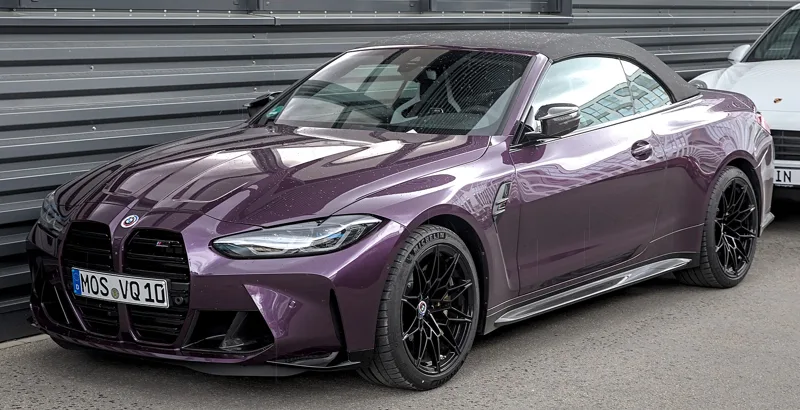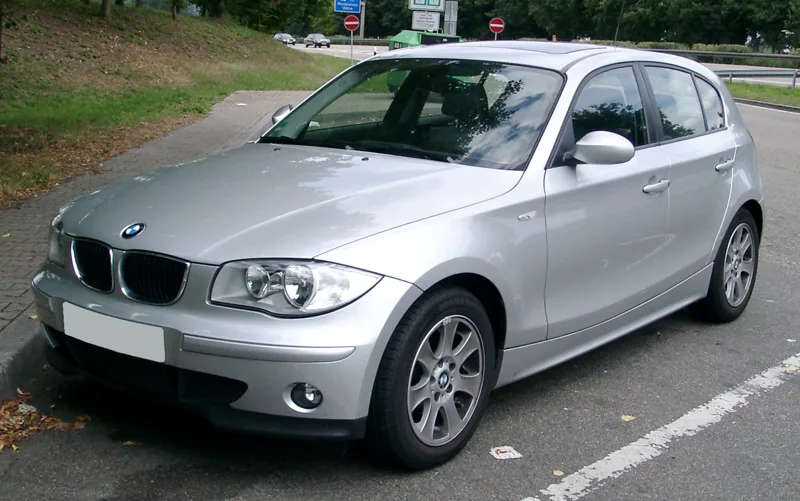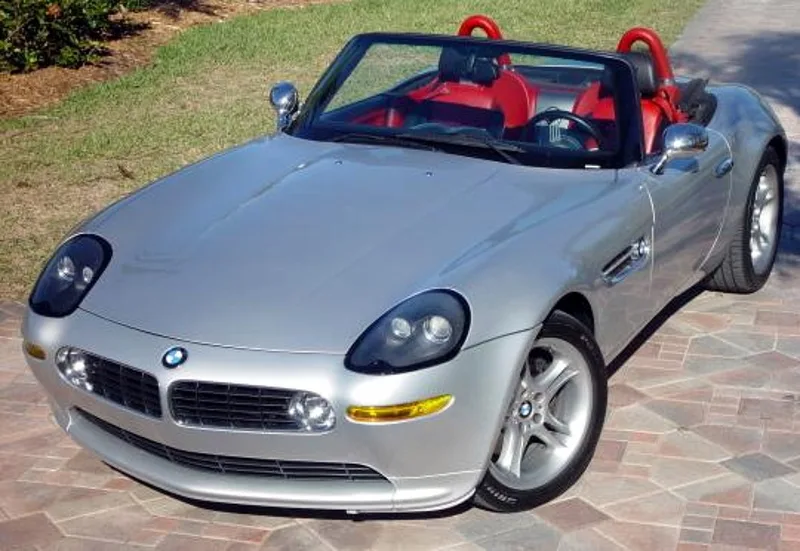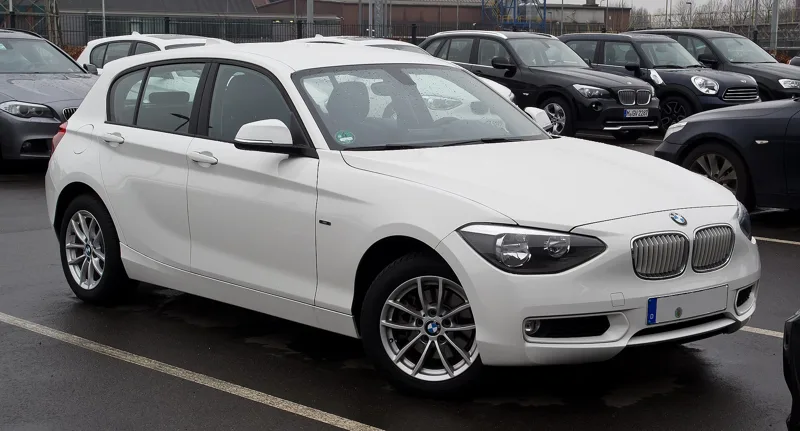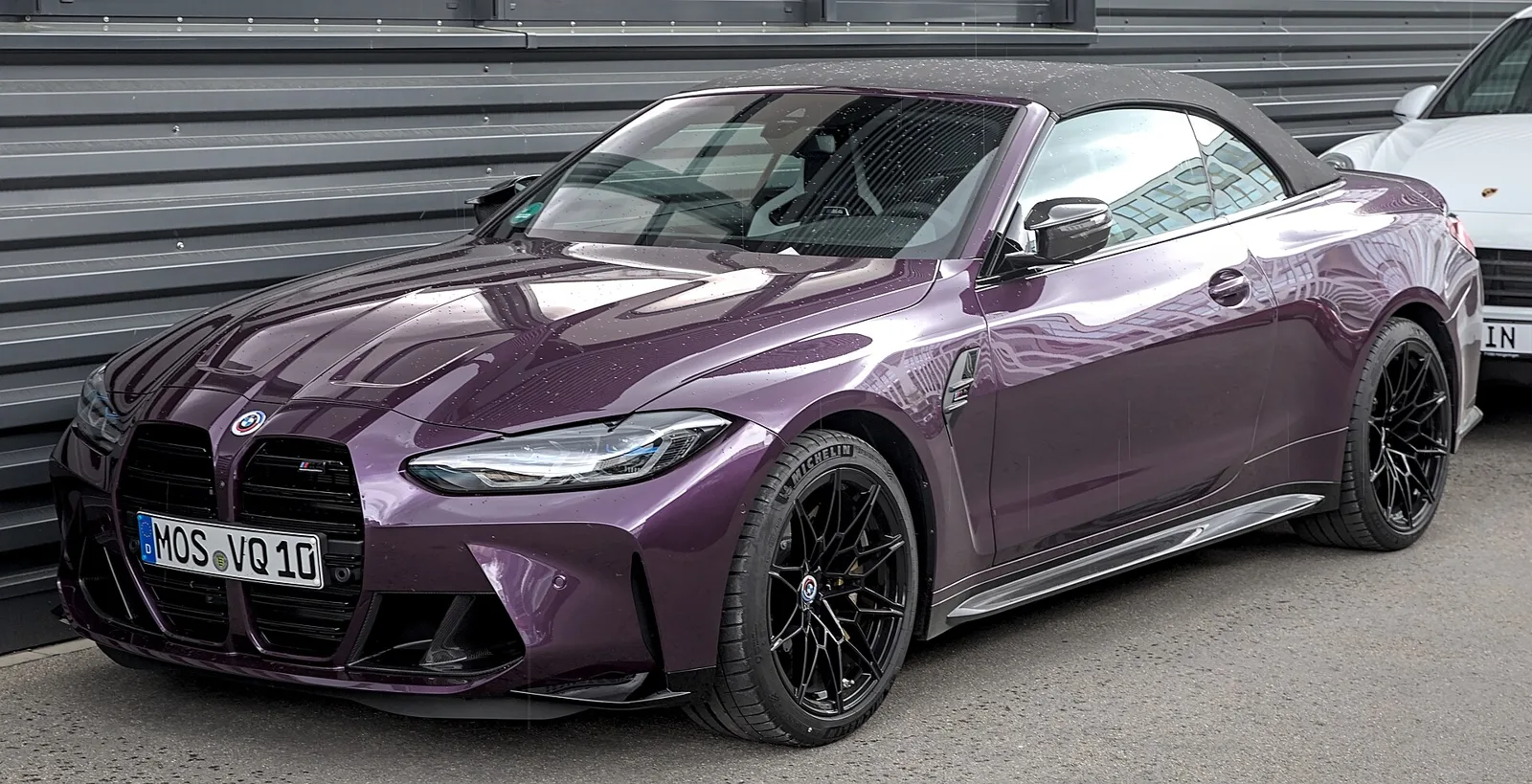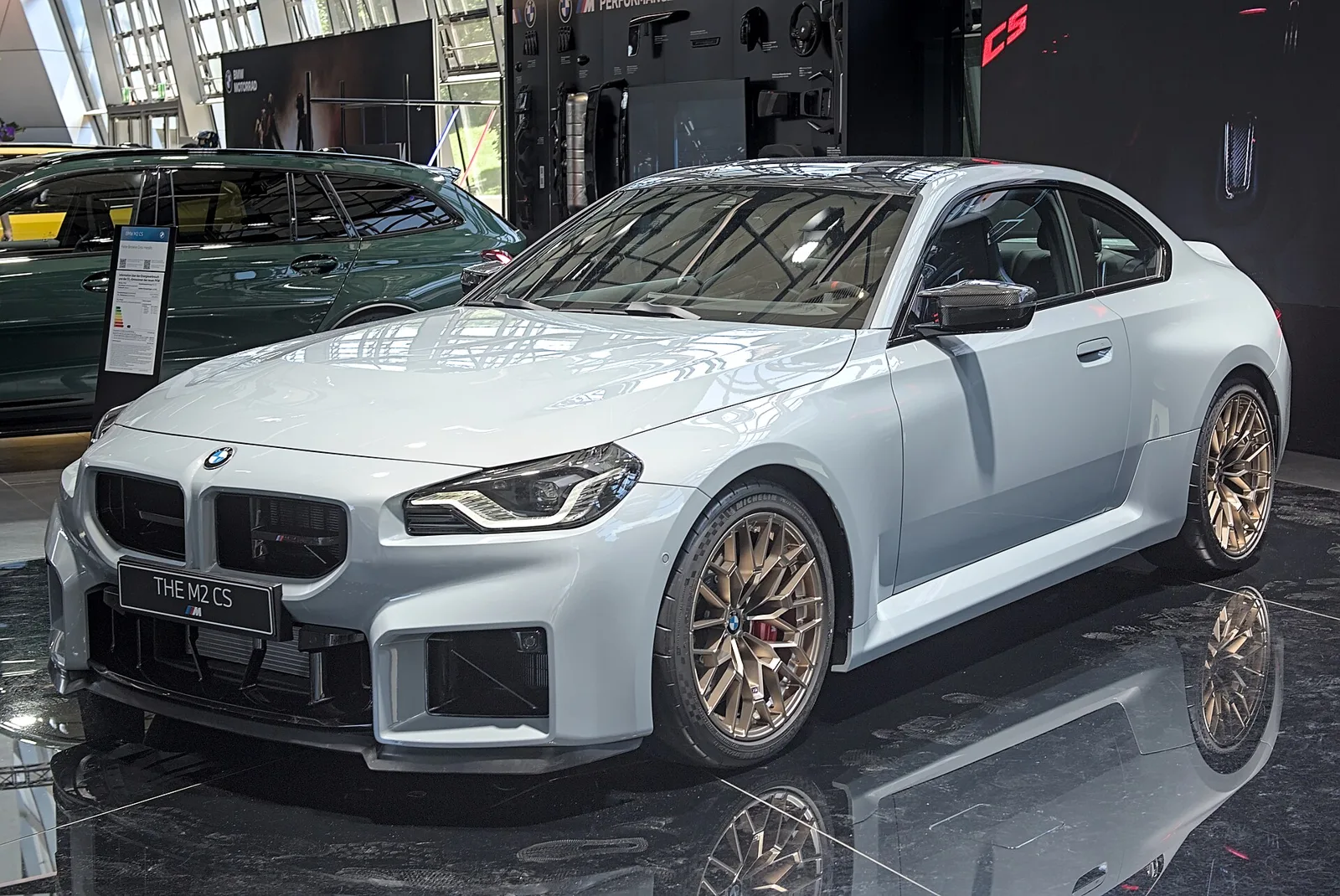
From a 365 hp straight six in 2016 to a 530 PS CS for 2026, the M2 has stayed the entry point to BMW M while picking up track-focused versions along the way.
The BMW M2 is a compact high-performance coupe from BMW M GmbH, based on the 2 Series. The first generation used a 365 hp N55 six, the second a twin-turbo S58 from 2023, and CS and Competition versions added track-focused performance.
BMW's M2 is a sharpened 2 Series coupe, engineered by BMW M GmbH, the company's motorsport arm. Two generations have been built so far, the F87 of 2016 and the G87 of 2023, and each has spawned Competition or CS versions that pushed the car further toward performance and track use.
Where does the M2 sit in the BMW M range?
The M2 is the entry point to the BMW M range, and the first-generation car was marketed as the most basic M model on sale. It arrived as the 2 Series replaced the 1 Series coupe and convertible, giving BMW a compact rear-wheel-drive coupe in the M line-up.
Each generation has a clear engineering identity. The first M2 rode on the F2x chassis that underpinned the 1 Series, codenamed F87. The second generation moved onto the CLAR architecture, codenamed G87, sharing it with the G80 M3 and G82 M4, and brought a larger body and a different engine family.
The compact M car that grew from a 365 hp straight six into a 530 PS CS while keeping its entry-level role.
What powered the first-generation M2?
The first M2 used the N55 engine, a turbocharged 3.0-litre straight six in the N55B30T0 form. Output reached 272 kW (365 hp) at 6,500 rpm, and its 465 N-m (343 lb-ft) of torque ran from 1,450 to 4,750 rpm. An overboost function briefly lifted torque to 500 N-m (369 lb-ft).
BMW's engineers gave the engine forged connecting rods and cast aluminium pistons, with reinforced wrist pins. Lighter aluminium front and rear suspension parts reduced the car's weight by 5 kg (11 lb).
The M2 was sold only as a rear-wheel-drive coupe. Production began in October 2015, and the first cars reached customers in early 2016, after the model had been shown at Need for Speed in November 2015 and then premiered at the NAIAS in January 2016.
How quick was the standard M2 in 2016?
The standard M2 was rated at 4.5 seconds from 0 to 100 km/h with the 6-speed manual, and 4.3 seconds with the 7-speed dual-clutch automatic. Top speed was limited to 250 km/h (155 mph), but the optional M Driver's package raised that to 270 km/h (168 mph).
Buyers could fit M Performance Parts, including a splitter, side skirts, fenders, bonnet, boot lid and spoiler. The M2 also served as the safety car during the 2016 MotoGP season.
What did the M2 Performance Edition add?
The Performance Edition was a US-market run of 150 cars finished in Alpine White. It carried black Dakota leather, an M Performance coilover suspension, an exhaust with titanium tips and an M Performance sport and track key.
The special car used 19-inch Style 437M wheels with staggered-width Michelin Pilot Super Sport tyres. Blue-finished calipers and cross-drilled rotors, shared with the M4 F82, handled the braking. Output stood at 365 hp (272 kW), with 343 lb-ft of torque, and the top speed rose from 155 mph to 168 mph (270 km/h).
To save weight, the Performance Edition dropped the smoker's package and the Comfort Access proximity key and used manually adjustable front sport seats. A coilover adjustment wrench and a rebound adjustment knob came with the car.
Why did the M2 Competition switch engines?
The M2 Competition, introduced at the 2018 Beijing Auto Show, replaced the standard coupe as the more powerful variant. Production began in July 2018, with deliveries following in early 2019, and it used the S55 twin-turbo engine built by BMW M GmbH.
The reason for the change was regulatory. Europe moved its emissions testing to the WLTP cycle, short for Worldwide Harmonised Light Vehicles Test Procedure, and the standard M2's N55 engine no longer met European emission standards. The S55 was a high-performance variant that had been detuned from its use in the F80 M3 and F82 M4.
Under the skin the S55 has a closed-deck block, a lighter crankshaft, revised bearings, reinforced pistons and rods, twin fuel pumps, an active exhaust and a revised cooling system with intercoolers. Compared with the standard M2 it added 30 kW (40 hp) and 85 N-m.
How did the M2 Competition perform?
The M2 Competition produced 302 kW (411 PS; 405 hp) in a band from 5,250 to 7,000 rpm, while 550 N-m (406 lb-ft) arrived between 2,350 and 5,200 rpm. Its 0-100 km/h time was 4.4 seconds for the 6-speed manual and 4.2 seconds for the dual-clutch car, the quickest the M2 had managed up to that point.
Electronic limiting caps the Competition at 250 km/h (155 mph), though the M Driver's package lifts that to 280 km/h (174 mph). That figure sat 10 km/h (6 mph) above the Performance Edition's top speed.
The engine and cooling system came from the F82 M4, which made the Competition 75 kg (165 lb) heavier than the standard car. The standard M2 weighed 1,550 kg (3,417 lb) with the manual gearbox and 1,575 kg (3,472 lb) with the dual-clutch unit.
Did the M2 Competition get bigger brakes?
Yes. Optional larger brake discs measured 400 mm at the front, with 6-piston calipers, and 380 mm at the rear, with 4-piston calipers. Buyers could tick them as an option, and the car also carried the carbon-fibre reinforced strut bar that every S55 model uses, along with enlarged kidney grilles.
The brake upgrade sat alongside the strut bar and grille changes, a set of parts that separated the Competition from the standard coupe. Those details made the car look and stop differently from the coupe it replaced.
What made the M2 CS track-focused?
The M2 CS, revealed online in November 2019 before its appearance at the Los Angeles Auto Show, was a more track-oriented version of the Competition. The CS entered production in March 2020, and 2,200 units were scheduled for North America and Eurasia.
The CS used the same engine as the Competition but with the ECU map from the F82 M4 Competition package, producing 331 kW (444 hp), with torque at 550 N-m (406 lb-ft). Acceleration was 4.2 seconds to 100 km/h with the manual and 4.0 seconds with the dual-clutch unit.
Chassis changes were extensive. Carbon-ceramic brakes were optional, while adaptive M suspension and an electronic locking differential were standard. Forged aluminium hubs and control arms, a carbon-fibre transmission tunnel, a carbon hood and roof, and a new active exhaust all reduced weight or tuned the car's character.
The CS was visually distinct as well. Its wheels came in high-gloss jet black or matte gold, optional Michelin Cup 2 tyres were offered, and the interior had a carbon-fibre centre console, Alcantara trim and a red CS badge stitched into the seats.
What changed in the second-generation G87?
The second-generation M2 (G87) was first shown in public ahead of its debut at Motorclassica in Melbourne in October 2022. It launched in April 2023 with a 3.0-litre twin-turbo S58 straight six, peaking at 460 PS (454 hp; 338 kW) when the engine reached 6,250 rpm.
The car was physically larger. Its wheelbase is 2.1 in (53 mm) longer than the first-generation car, its overall length is 4.1 in (100 mm) greater and it is 1.3 in (33 mm) wider. Peak torque of 550 N-m (406 lb-ft) arrived in a band from 2,600 to 5,950 rpm.
Transmissions were a 6-speed manual or an 8-speed automatic. Acceleration was rated at 4.3 seconds to 100 km/h for the manual and 4.1 seconds for the automatic, and top speed was 250 km/h (155 mph), extendable to 285 km/h (177 mph) with the M Driver's package.
How did the 2025 refresh change the M2?
The 2025 model year brought a light update to the M2, with output rising by 20 PS (20 hp; 15 kW) to 480 PS (473 hp; 353 kW). Torque increased by 49 N-m to 599 N-m (442 lb-ft), the same figure as the G82 M4, but only on cars fitted with the 8-speed automatic.
The manual kept 550 N-m (406 lb-ft). BMW said that gearbox was quicker to 97 km/h (60 mph), reaching that mark in a claimed 4.1 seconds, while the automatic could manage it in 3.9 seconds with its extra torque and quick shifts.
Styling and interior changes were modest. The refreshed car offered fourteen paint hues, including four BMW Individual colours, along with updated wheels and exhaust tips. The steering wheel gained a flat-bottomed leather design with a red centre stripe, and carbon-fibre bucket seats became available on their own.
What is the 2026 M2 CS?
The 2026 model year brings an M2 CS with 530 PS (523 hp; 390 kW), with torque of 649 N-m (479 lb-ft) from its twin-turbo 3.0-litre inline six. Only an 8-speed automatic is offered, and BMW did not present the car as a limited production model.
Thanks to carbon fibre in the roof, trunk lid, mirror caps and rear diffuser, the CS weighs nearly 100 lb (45 kg) less than the standard M2. A ducktail rear spoiler unique to the CS, lower springs that sit the car 0.2 in (5.1 mm) lower, and dampers with their own programming complete the package.
Planning from 2025 pointed to fewer than 2,000 cars in one model year. Stability control and M Dynamic mode were also revised for this version, and carbon-ceramic brakes were available as an option.
What special editions did BMW plan for the M2?
BMW planned two further special editions. The M2 Turbo Design Edition for 2026 is a limited run finished in Alpine White, with a black hood graphic and Motorsport stripes applied by hand. It pays tribute to the 2002 turbo, the first turbocharged production car in Europe, and comes only with a 6-speed manual.
The M2 CS Edition Edge, planned for 2027, is limited to 40 vehicles for the Japanese domestic market. Those cars receive extra carbon-fibre accessories, an M Performance quad-tipped centre-exit exhaust and carbon-ceramic brakes. Twenty will be finished in Brooklyn Grey and the rest in Sapphire Black, and all are right-hand drive.
What awards has the M2 won?
The M2 has collected awards in both generations, from magazine 10Best lists to performance-car titles. The CS and the second-generation car took the most prominent honours, and the Competition earned a place in a 10Best list as well. The entries below run in date order.
- 2017: included in Car and Driver's 10Best for the first-generation M2.
- 2019: the M2 Competition included in Car and Driver's 10Best.
- 2020: the M2 CS named Evo Magazine Car of the Year.
- 2023: the second-generation M2 named Auto Express Performance Car of the Year.
- 2024: Motor Trend picked the M2 as its Performance Vehicle of the Year.
- 2026: included in Car and Driver's 10Best again.
Jonny Lieberman of Motor Trend judged the 2020 CS the finest BMW M car of the previous twelve years, a verdict that stands out in a model line-up with a long history.
How did the M2 perform in motorsport?
The M2 CS Racing was developed by BMW M Motorsport as a race version of the road-going F87 M2 CS, to help prospective racing drivers get used to faster cars. It drew on earlier race cars, the BMW M235i Racing and M240i Racing, along with the larger M4 GT4.
The race car used a race-prepared 3-liter twin-turbo inline six that could generate between 280 hp (205 kW) and 365 hp (268 kW), depending on the power setting needed to meet a performance balance or a Permit B class rule. A stronger package allowed up to 450 hp (336 kW). Deliveries were expected to begin in mid-2020.
The M2 Racing is the successor for entry-level racing and is based on the G87 road car. It uses the turbocharged B48 inline four, which makes 313 hp (233 kW) with 310 lb-ft (420 N-m) of torque and a top speed beyond 167 mph (269 km/h). It cost EUR 98,000 (USD 111,178) and was aimed at the Nurburgring 24, NLS, TC America, IMSA and Michelin 24H series.
The M2 Racing first raced in 2025 at the 24 Hours of Nurburgring, where BMW factory drivers Jens Klingmann, Charles Weerts and Ugo de Wilde, with journalist Michael Brautigam, shared the car. The crew took the SP 3T class win, finishing nine laps clear of the runner-up.
Did BMW build M2-based concept cars?
BMW did show concepts that used the M2 as their base. The 2002 Hommage Concept, debuted in May 2016 at Villa d'Este's Concorso d'Eleganza, paid tribute to the 2002 Turbo, and its underpinnings came from an M2.
The 2002 Hommage Turbomeister Concept followed in August 2016 at the Pebble Beach Concours d'Elegance. Both were concept cars rather than production models, and both paid tribute to the 2002 Turbo.
What are the key BMW M2 specifications?
| Specification | Detail |
|---|---|
| First-generation chassis | F2x platform, codename F87, rear-wheel drive coupe |
| First-generation engine | 3.0-litre N55B30T0 straight six, 272 kW (365 hp) at 6,500 rpm |
| First-generation torque | 465 N-m (343 lb-ft) from 1,450 to 4,750 rpm; overboost to 500 N-m (369 lb-ft) |
| Competition output | 302 kW (411 PS; 405 hp), peak band 5,250 to 7,000 rpm |
| M2 CS output | 331 kW (444 hp), torque 550 N-m (406 lb-ft) |
| Second-generation engine | Twin-turbo 3.0-litre S58, 460 PS (454 hp; 338 kW), peaking at 6,250 rpm |
| Second-generation dimensions | Wheelbase 53 mm longer, length 100 mm longer, width 33 mm greater |
| 2025 refresh | 480 PS (473 hp; 353 kW), 599 N-m (442 lb-ft) with 8-speed automatic |
| 2026 M2 CS | 530 PS (523 hp; 390 kW), 649 N-m (479 lb-ft), 8-speed automatic only |
| Standard M2 weight | 1,550 kg (3,417 lb) manual; 1,575 kg (3,472 lb) dual-clutch |
| M2 Racing engine | B48 inline four, 313 hp (233 kW), 310 lb-ft (420 N-m) |