A streamlined four-door experimental car on the BMW 335 platform, shaped in Stuttgart by Wunibald Kamm, with a 3.5-litre six and a body that drew harsh public criticism.
The BMW K4 was a 1939/40 experimental four-door saloon on the BMW 335 platform, with a Kamm-style tail and a 3.5-litre engine. Shaped under Professor Wunibald Kamm, it remained a one-off and is considered lost today.
The BMW K4 was a streamlined four-door experimental saloon that BMW built in 1939 and 1940 on the platform of the 335. Professor Wunibald Kamm's aerodynamic team in Stuttgart shaped it rather than BMW's own design office, and the advanced look drew some harsh public criticism. Only one was built, and it was never intended for series production.
Where did the BMW K4 come from?
The K4 was the institute's fourth roadworthy result in its work with Kamm, and the second experiment built on the large 335 after the K1. The K2 and K3 had come before it on the more compact Mercedes-Benz 170 V. The K2 echoed the very slippery K1, and the K3, like the K4, was somewhat more conservative in form.
Kamm's team worked on the body at the institute in Stuttgart, away from BMW's Munich headquarters and the Eisenach plant that then built cars. The K4 was conceived as an experiment from the outset, so it was never a candidate for the production line.
Trials ran through 1939 and 1940. At times two large vertical fins stood at the rear of the roof, just as they had on the K1, but in practice they weakened stability in crosswinds. The car stayed a one-off.
A streamlined BMW saloon from 1939 that never reached production, yet fed into the plans for later models.
Why is it labelled the Kamm-Wagen K4?
The letter K points to the Kamm-Wagen or Kamm tail, while the 4 is the number of the vehicle in the institute's series. Unlike BMW's production cars from 1933 onward, which began with the model 303, the K4 carries no three-digit code starting with a 3. It follows the letter-and-digit pattern that many later concept cars also used.
Some books and websites wrongly call it the K2, perhaps because it was the second Kamm car built on a BMW basis. Others confuse it with the smaller K3, a Mercedes-based car that still survives.
What was the K4 designed to do?
It was a comfortable touring saloon built for high cruising speeds and low fuel use, with five full seats and a cabin that stayed roomy despite its slippery shape. Its windscreen and side glass stood fairly steeply, and a large boot could be reached from outside.
The interior was lavishly fitted. The body was wider than the base BMW 335's, and the trim was rich, so the car came in at roughly 1,500 kg (3,307 lb), well above the production model.
Why did the K4's shape draw criticism?
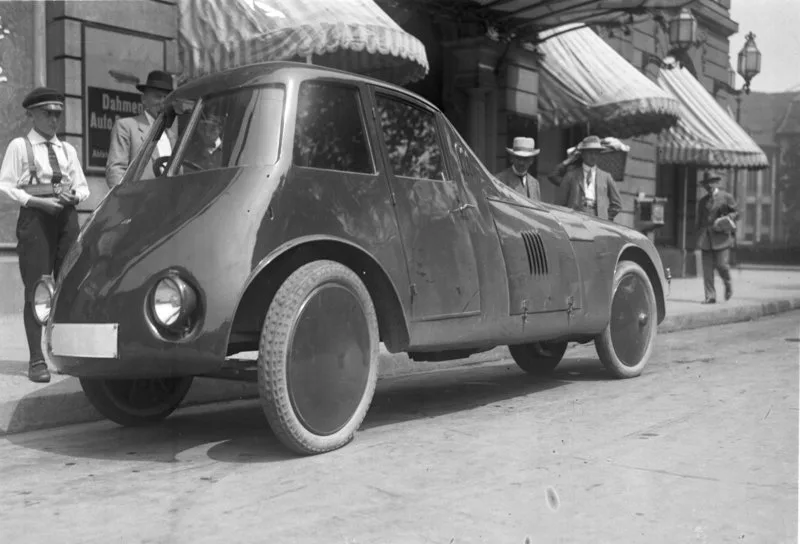
Its aerodynamic form was out of step with what buyers of the time expected, so the public response was sometimes harsh. Compared with the K1, Kamm made concessions to taste by leaving the front wheels visible and by modelling wings into the front and rear.
Chrome, ornament and bumpers were all left off, and that still left the appearance short of the mass taste of the day. Public reaction to the look was, at times, sharply critical.
How did the body reach such a low drag figure?
The exact drag coefficient is not recorded, but it lies between the excellent 0.23 of the K1 and the 0.37 of the K3. Typical saloons of the period scored 0.5 to 0.6, which put the K4 well apart from them on paper.
The low figure came from a streamlined pontoon body with built-in wings, a nose rounded and pulled low with fitted headlamps, and fully covered rear wheel openings. The underside was smooth and panelled.
The windscreen was built from four panes, with only the outer pieces rounded, since curved glass was costly and uncommon then. Flush-fitted glass and smooth flanks completed the picture.
The long, gently sloping fastback had flanks that tucked in softly and a fairly straight-cut rear end. These gave the rear glass a crisp break above it and left clean edges along the flanks and underside.
How did the doors and headlamps work?
The four doors opened in opposite directions. The front doors were hinged at their rear edge, the layout known as suicide doors, whereas the rear doors' hinges sat at the front, each pair fixed to the B-pillar. The K1 lacked the BMW kidney grille, which the K4 did carry, a feature other models had worn since 1933.
The trials fell during the Second World War, so the large round headlamps wore wartime shrouds that passed light only through a narrow slit. The model 326 had tested this door layout first, so the K4 reused it.
What were the K4's chassis and engine?
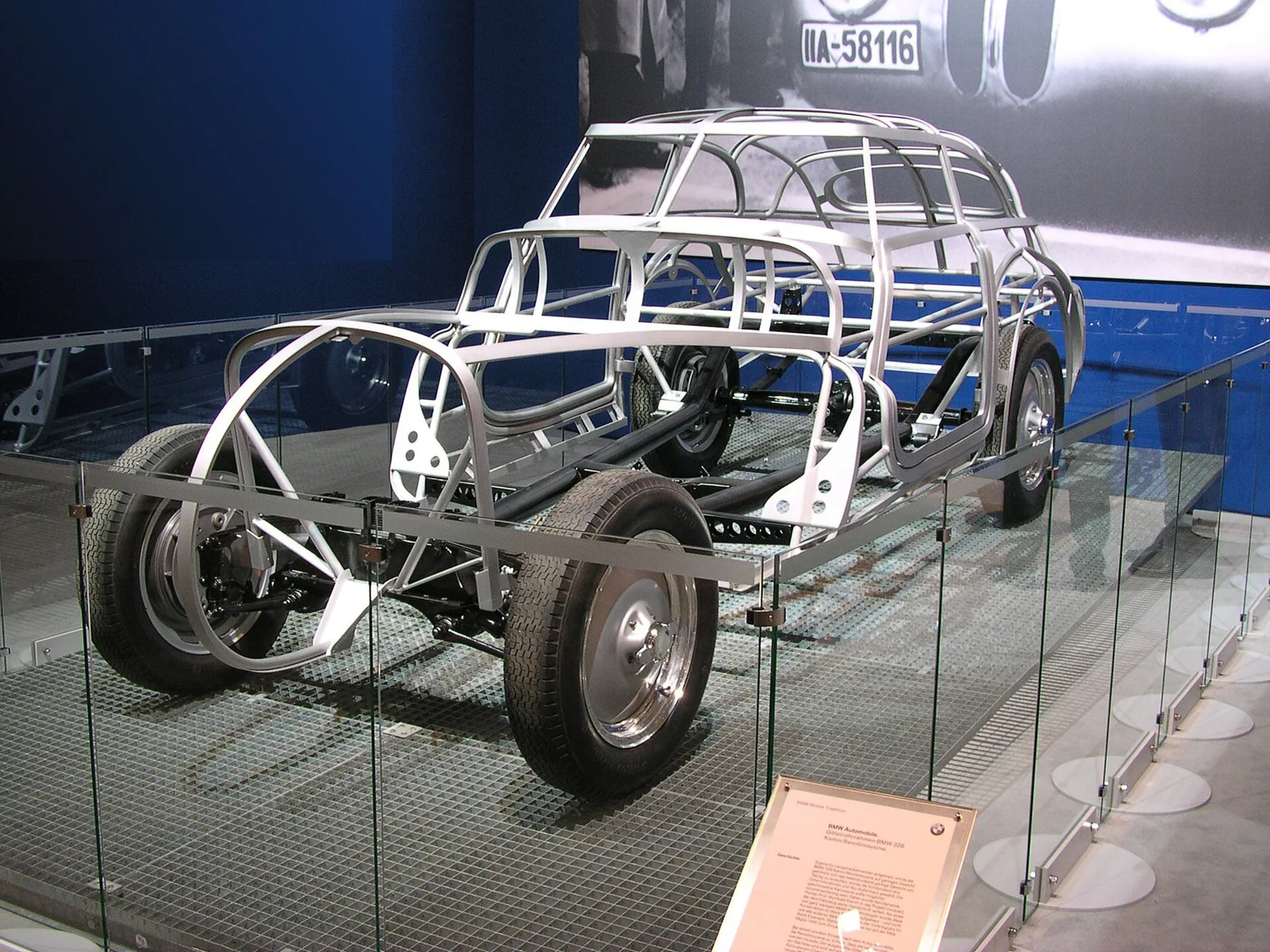
The K4 used a pre-production chassis of the 335 that BMW lent to the institute in 1939. It had a deep-bed box frame, upper wishbones at the front with a transverse leaf spring below, rack-and-pinion steering and drum brakes on all four wheels. A cable-operated handbrake acted on the rear wheels.
The rear had a live axle located by two longitudinal torsion-bar springs. Tracks were 1,306 mm (51.4 in) at the front and 1,404 mm (55.3 in) at the rear, and the wheelbase measured 2,984 mm (117.5 in).
The engine was the freshly designed unit of the 335, an inline six with four strokes and water cooling, its displacement of 3,485 cc (212.7 cu in) achieved through a long-stroke layout. Two double-register carburettors fed it, and it produced 66 kW (90 PS; 89 hp), reached at 3,500 rpm.
Drive reached the rear wheels through one dry-plate clutch and a manual four-speed box. A lean-mixture setting at constant engine speeds and a special overdrive were meant to cut fuel use further.
Tyre pressure regulation was an innovative feature of the Kamm cars K1 and K4. The driver could raise pressure from the dashboard while driving, which lowered rolling resistance on the new motorways, mainly at higher speeds.
K4 specifications
| Item | BMW K4 |
|---|---|
| Built | 1939/40, one-off |
| Engine | Water-cooled six-cylinder inline, 3,485 cc (212.7 cu in) |
| Bore and stroke | 82 mm (3.2 in) by 110 mm (4.3 in) |
| Compression ratio | 1:5.8 |
| Output | 66 kW (90 PS; 89 hp), 3,500 rpm |
| Gearbox | Hand-operated four-speed, rear-wheel drive |
| Wheelbase | 2,984 mm (117.5 in) |
| Track, front and rear | 1,306 mm (51.4 in) and 1,404 mm (55.3 in) |
| Weight | About 1,500 kg (3,307 lb) |
| Body | Reutter & Co. GmbH, Stuttgart, 1940 |
How did the K4 differ from the K1?
The K4 had a three-part front, with a BMW kidney grille and wings carrying large built-in headlamps. Its rear wheel openings were covered but its front wheels were left open, whereas the K1 covered both axles. The passenger cell was narrower and set slightly inward, which partly offset a drag figure a little worse than the K1's.
The K4 also had a larger, elongated third side window that tapered toward the rear, and an upright two-part rear window with a clear separation edge above it. The K1 had a fastback with a flatter, reclining rear screen instead.
What became of the K4?
Its trail ends with the close of the Second World War, and today the car is regarded as missing or destroyed. According to one account, French troops seized it at the war's end and took it apart for research.
Lessons from the K1 and K4 reached planned production cars: the BMW 332, meant to follow the popular BMW 326 in 1940, and the BMW 337, a luxury model planned for 1941 above the BMW 335.
Did later BMWs inherit the K4's shape?
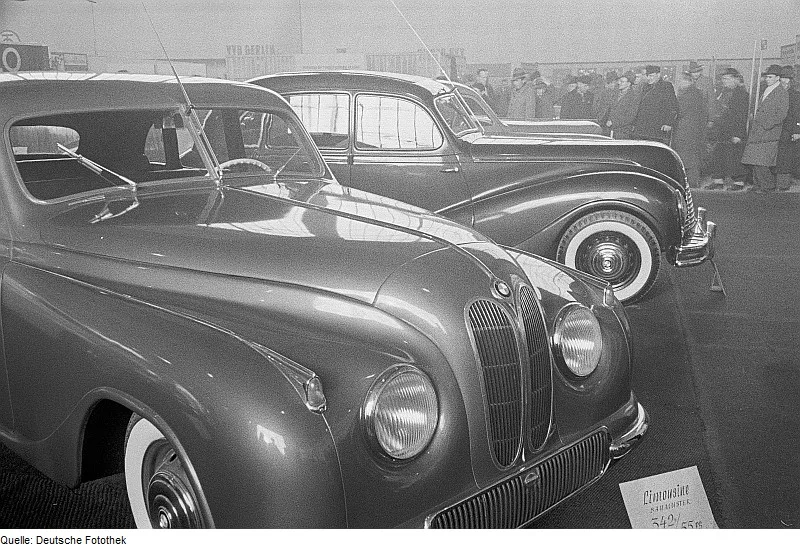
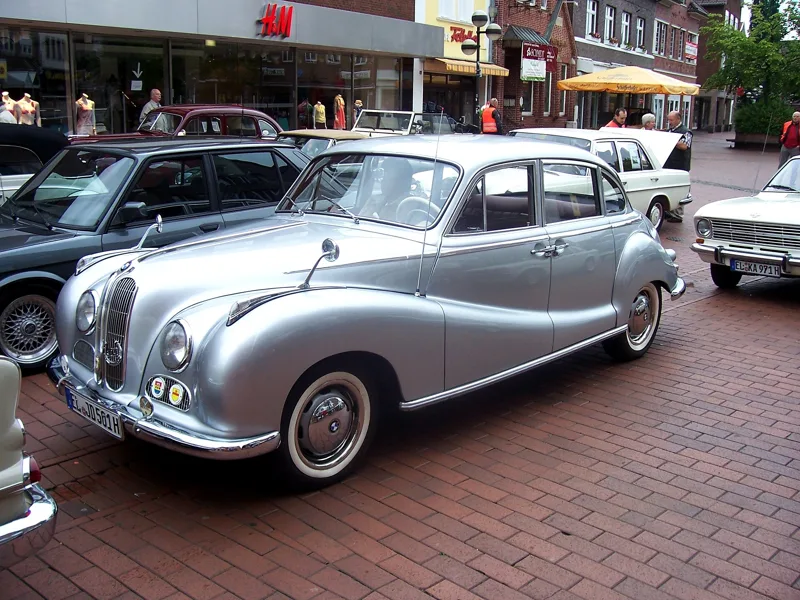
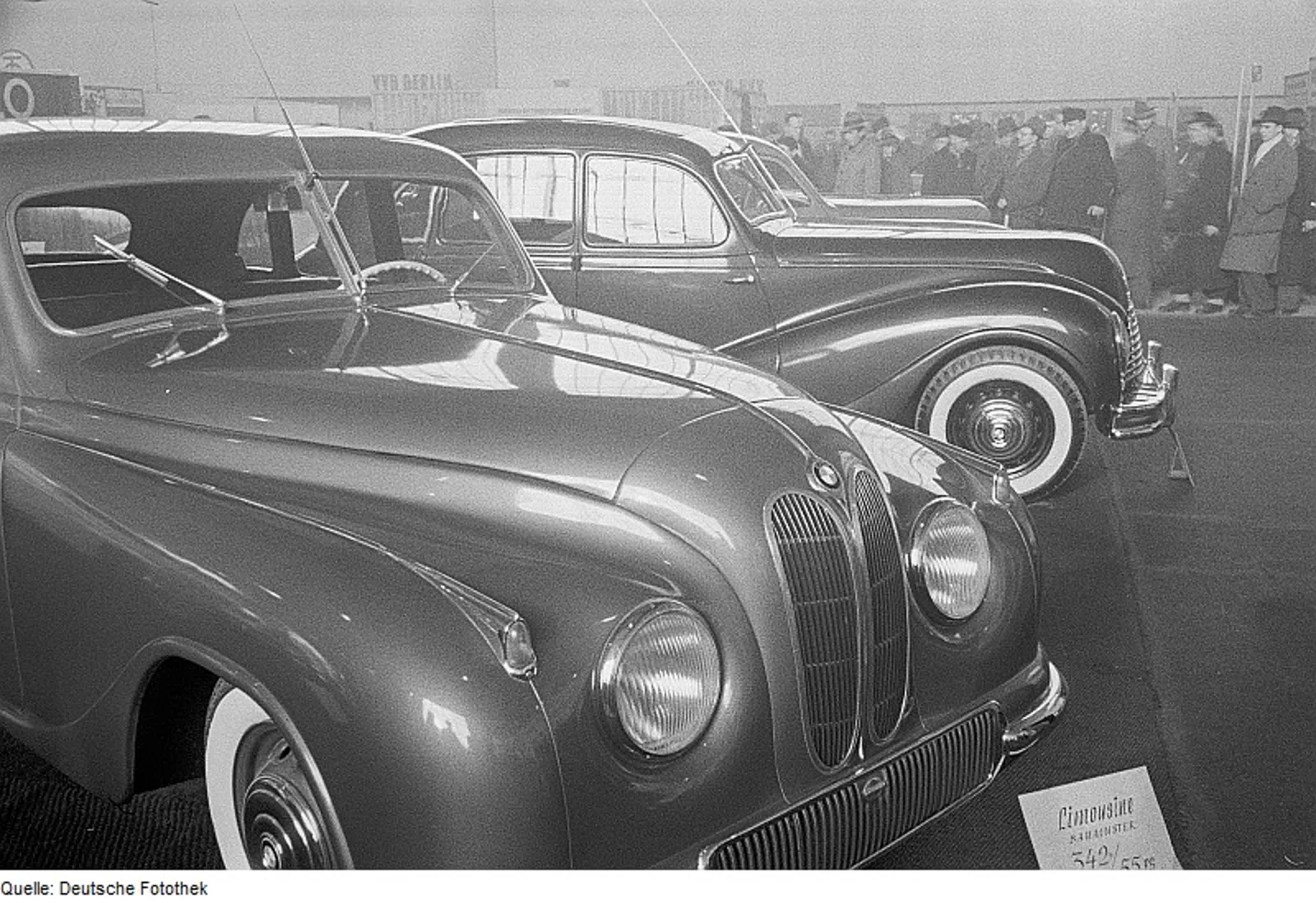
The pontoon idea and some of the aerodynamic lines returned in the 1950s BMW 501 and 502 range. Those cars looked classic almost as soon as they appeared, and they picked up the nickname Baroque Angel for their moulded wings, which recalled the contemporary Austin.
Possibly the harsh criticism of the K4's shape persuaded BMW to keep a conservative design until the mid-1990s, before the designer Chris Bangle introduced controversial styling elements. As of March 2010 BMW had shown nothing as revolutionary or aerodynamically favourable as the K1 or K4.
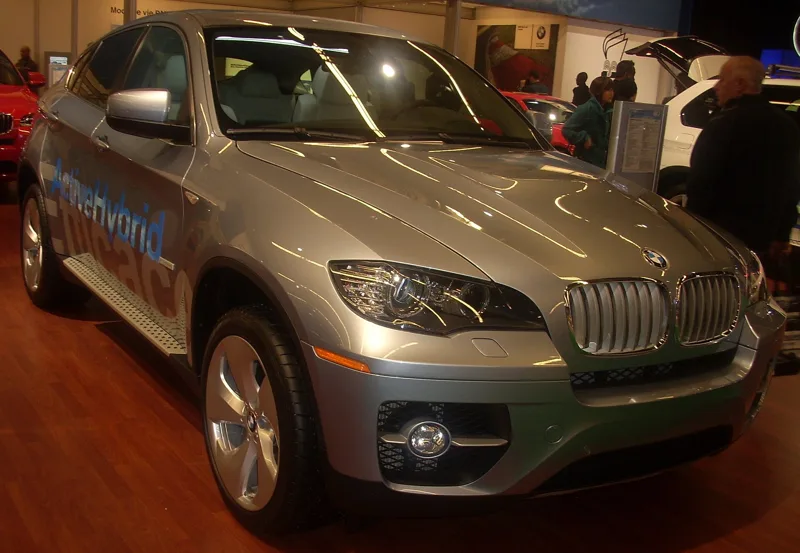
The big fastback idea came back in 2007 with the BMW Concept CS. Production versions, the X6 and the 5 Series Gran Turismo, followed in 2008 and 2009 respectively, and a 2009 concept, the BMW Vision Efficient Dynamics, revisited the idea of a large, efficient, multi-seat car.