The third-generation Audi TT from 2014, its 2018 facelift, the engine line-up, the Performance Parts programme and a desert concept.
Built from 2014 to 2023, the Audi TT FV/8S came as a coupe and roadster and was facelifted in 2018. Its launch engines were two-litre diesel and petrol units, and the five-cylinder TT RS, rated at 294 kW, joined the range in 2016.
The Audi TT FV/8S is the third generation of the TT coupe and roadster, built from 2014 to 2023. It was shown at the Geneva motor show in March 2014, and a facelift followed in 2018. Its engine range ran from a 135 kW two-litre diesel up to a 294 kW five-cylinder in the TT RS.
When did the third-generation TT arrive?
The coupe version was presented at the Geneva International Motor Show on 3 March 2014. Its virtual cockpit dashboard had been shown the previous January at the Consumer Electronics Show in Las Vegas, and the dashboard of the third TT is known as the virtual cockpit. The TT RS followed, officially presented at the 2016 Beijing motor show.
Audi called its mid-life update a product upgrade, the term the Volkswagen group uses. It was presented in summer 2018 for the TT and TTS. Since the facelift, the turbocharged two-litre petrol engine has been offered in three levels, described below.
A third-generation TT that moved its dashboard to a screen and gave the RS a five-cylinder with 400 PS.
How did the design change from the old TT?
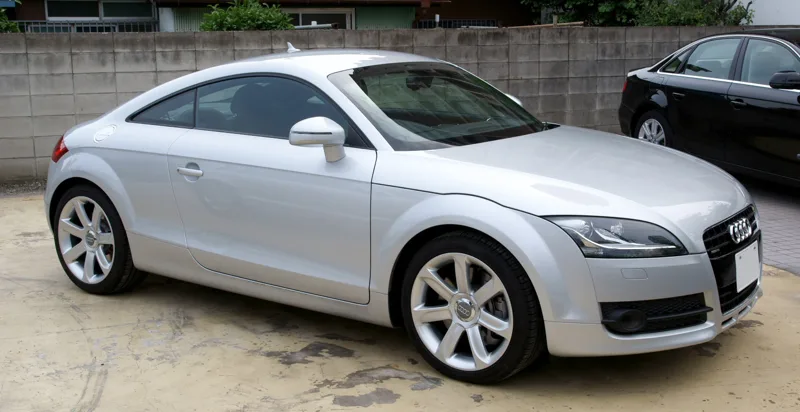
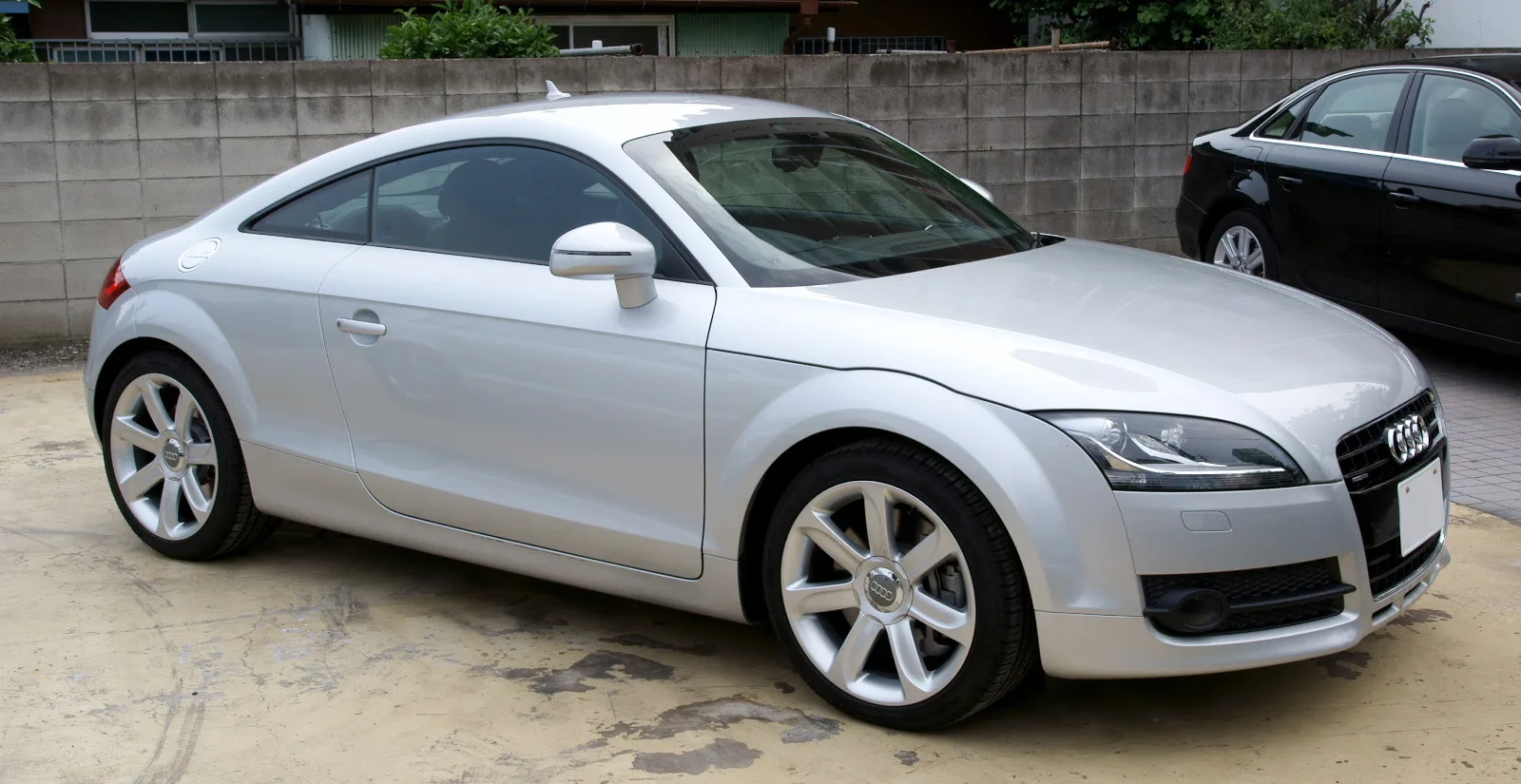
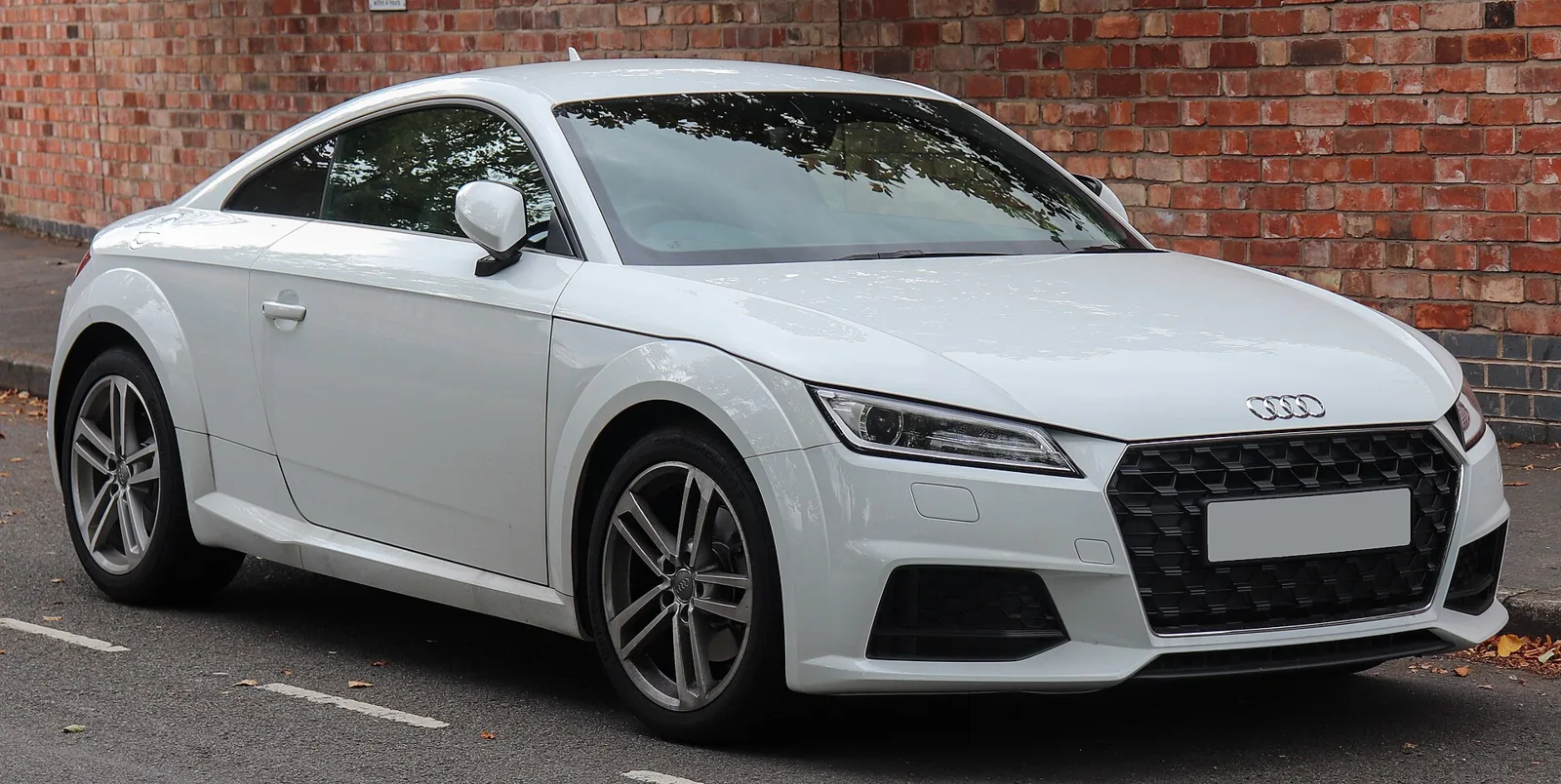
The round curve of the roof was kept, but the headlamps and the wider radiator grille became more angular. The third brake light runs across the full width of the tailgate. Weight fell by about 50 kg (110 lb) compared with the predecessor, and some dimensions were partly reduced.
Some details, such as the fuel filler cap and the central exhaust with two round outlets, come from the first generation. The car is built on the modular transverse platform that the Audi A3 8V also uses. The rear lights use LED technology and have a daytime running light for the first time.
Xenon headlamps are standard, and LED or LED matrix units are available at extra cost. The matrix units have twelve individual diodes, which keep the high beam on continuously and dim it when oncoming traffic is detected. With one of the two LED systems, a dynamic indicator adds a bar of LEDs running in the direction of the turn.
What was new inside the TT?
The main change inside was the infotainment system. A 12.3-inch screen replaced the instrument cluster and offers two views: a normal display with rev counter and speedometer, or a layout with small round dials and a large area for media settings or the map. The TTS adds a third view with a large rev counter in the middle.
Control came through the multifunction steering wheel, a new rotary MMI knob in the centre console, or voice control. The voice control now recognises freely spoken sentences, and the MMI knob could be ordered with a touchpad that reads handwriting. The Audi MMI system ran on a Tegra 3 processor. The Audi Phone Box gave mobile phones a connection to an external antenna, a feature that was available for the first time compared with the predecessor.
The climate controls moved into the three round central air vents, with small screens in the vents showing the mode and temperature. The TT also has sport seats with integrated headrests, and S sport seats with pneumatically adjustable side bolsters were optional. The coupe boot grew by 13 litres to 305 litres, and the rear seat backs fold down separately.
Options new to the TT were 20-inch aluminium wheels, keyless start, LTE internet access, a Wi-Fi hotspot, an Audi Phone Box with a connection to an external antenna, and a Bang & Olufsen audio system.
What does drive select change?
Drive select is a new feature of the TT. Its modes include sport, comfort and efficiency. It adjusts the throttle response, steering, climate control, magnetic suspension, S tronic transmission and engine sound. For the first time it can also alter the quattro system, sending more power to the rear or switching the car to front-wheel drive only, depending on the driving situation.
Other new technology included an electromechanical parking brake and a two-level electronic stability control. The power steering became electromechanical, which made room for a parking assistant and an active lane departure warning. Traffic sign recognition and a blind-spot assistant were also added.
What did the 2018 facelift change?
Audi presented the facelift in summer 2018 for the TT and TTS. The revision of the Performance Parts was tested on the Nurburgring, and the revised parts then went on sale only as part of a special edition, so only buyers of that edition could get them.
Powertrain and engine line-up
The launch engines in autumn 2014 were a two-litre diesel at 135 kW (184 PS; 181 hp) and two two-litre petrol engines: a 169 kW (230 PS; 227 hp) unit, and the TTS unit at 228 kW (310 PS; 306 hp). Among the petrol engines at launch, the TTS unit produced the most power. The quattro all-wheel drive was optional on the 169 kW petrol and the diesel models, and standard on the TTS.
In 2016 the TT RS arrived with a turbocharged five-cylinder inline petrol engine at 294 kW (400 PS; 394 hp), with all-wheel drive as standard.
How did the facelifted engine range work?
After the facelift the turbocharged two-litre came in three levels: the 40 TFSI at 145 kW (197 PS; 194 hp), the 45 TFSI at 180 kW (245 PS; 241 hp), and the top TTS engine at 225 kW (306 PS; 302 hp). The TT RS kept its 2.5-litre five-cylinder at 294 kW (400 PS; 394 hp).
Drive layout depended on the engine. The 40 TFSI could only be ordered with front-wheel drive. The 45 TFSI had front-wheel drive as standard, with quattro available at extra cost, while the two highest levels had all-wheel drive as standard.
What were the Audi Sport Performance Parts?
The TT RS with Audi Performance Parts was first shown at the 2017 Frankfurt motor show, fitted with the Aero Kit 1 and the wider Audi Sport accessory programme. Carbon inserts for the front air intakes, wider side skirts, a diffuser and a rear spoiler formed part of the package.
Various Aero Kits were offered, and they differed only in their extent. Extras included a carbon air intake on the bonnet and a titanium exhaust from Akrapovic. Inside, a carbon crash bar replaced the rear seat, and a steering wheel with carbon shift paddles was optional. The suspension used coil springs, and the front axle had a full set of 19-inch brake discs, alongside milled aluminium wheels and a rear axle cross brace.
The complete finish could be ordered for 53,535 euros from late summer 2017. The parts were partly revised for the late 2018 update and tested at the Nurburgring. They were no longer sold individually after that, and were available only with the TT RS 40 Jahre quattro Edition.
What was the 40 Jahre quattro Edition?
It was a very limited version of the TT RS, built 40 times with the revised Performance Parts of the facelifted model. It was the only way to buy those parts after the update. Sales in Germany began in October 2020, and the price was 114,040 euros.
Production and concept cars
The current generation was built entirely at Audi's Gyor factory in Hungary. In May 2019, at the Austrian Woerthersee show, Audi presented the TT Safari, a concept based on the TT and equipped to tackle desert and dunes.
Audi TT (8S) specifications
| Specification | Detail |
|---|---|
| Generation | FV/8S, third generation |
| Bodies | Coupe and roadster |
| Built | 2014 to 2023 |
| Launch engines | 2.0 TDI diesel; 2.0 TFSI petrol |
| Top output | 294 kW (400 PS; 394 hp) from the TT RS five-cylinder |
| Weight saving | About 50 kg (110 lb) |
| Boot | 305 litres |
| Screen | 12.3-inch |
| Production | Gyor, Hungary |