A Pininfarina show car built on the Quattro with plastic and aluminium body panels, which never went on sale and still shaped Alfa Romeo styling.
Pininfarina's Quattro Quartz, a one-off show car, was unveiled in 1981 on the drive system of the Quattro. Its outer panels were made of plastics and aluminium, and no later Audi adopted its styling, and its styling later reached several Alfa Romeo models.
The Audi Quattro Quartz was a one-off show car by Pininfarina, presented in 1981 on the mechanical base of the Audi Quattro. Its outer panels used plastics and aluminium and its styling had little to do with Audi itself, yet it went on to shape several Alfa Romeo models.
Why was the Quattro Quartz built?
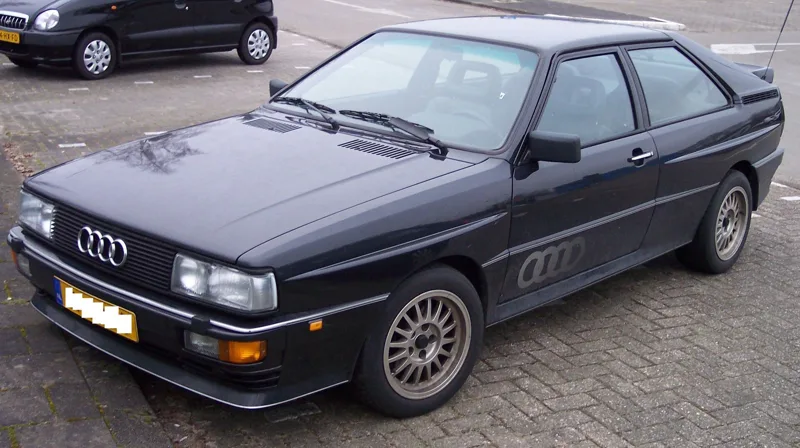
The idea came from Sergio Pininfarina after the Urquattro, one of the first series cars with permanent all-wheel drive, made its impression at the Geneva Motor Show in March 1980. Pininfarina and Audi agreed a design study for the next year's show, and a pre-series Quattro became its mechanical base.
The Quattro itself was received as a sensation at the time, and its drive concept was seen as forward-looking. A show car built on its technical base therefore carried that reputation into the show hall.
Early in summer 1980, months ahead of the first customer deliveries, Pininfarina was handed a pre-series Quattro. The studio then built its show car on that car, keeping the Quattro's wheelbase while reshaping the rest of the car.
The Quattro Quartz debuted at the Geneva show in March 1981. Pininfarina dedicated it to the Swiss magazine Automobil Revue, which was marking its 75th anniversary that year, and the magazine put the roadworthy car through a road test in the early 1980s.
A one-off show car whose ideas outlived it at Alfa Romeo.
How did the design differ from the Quattro?
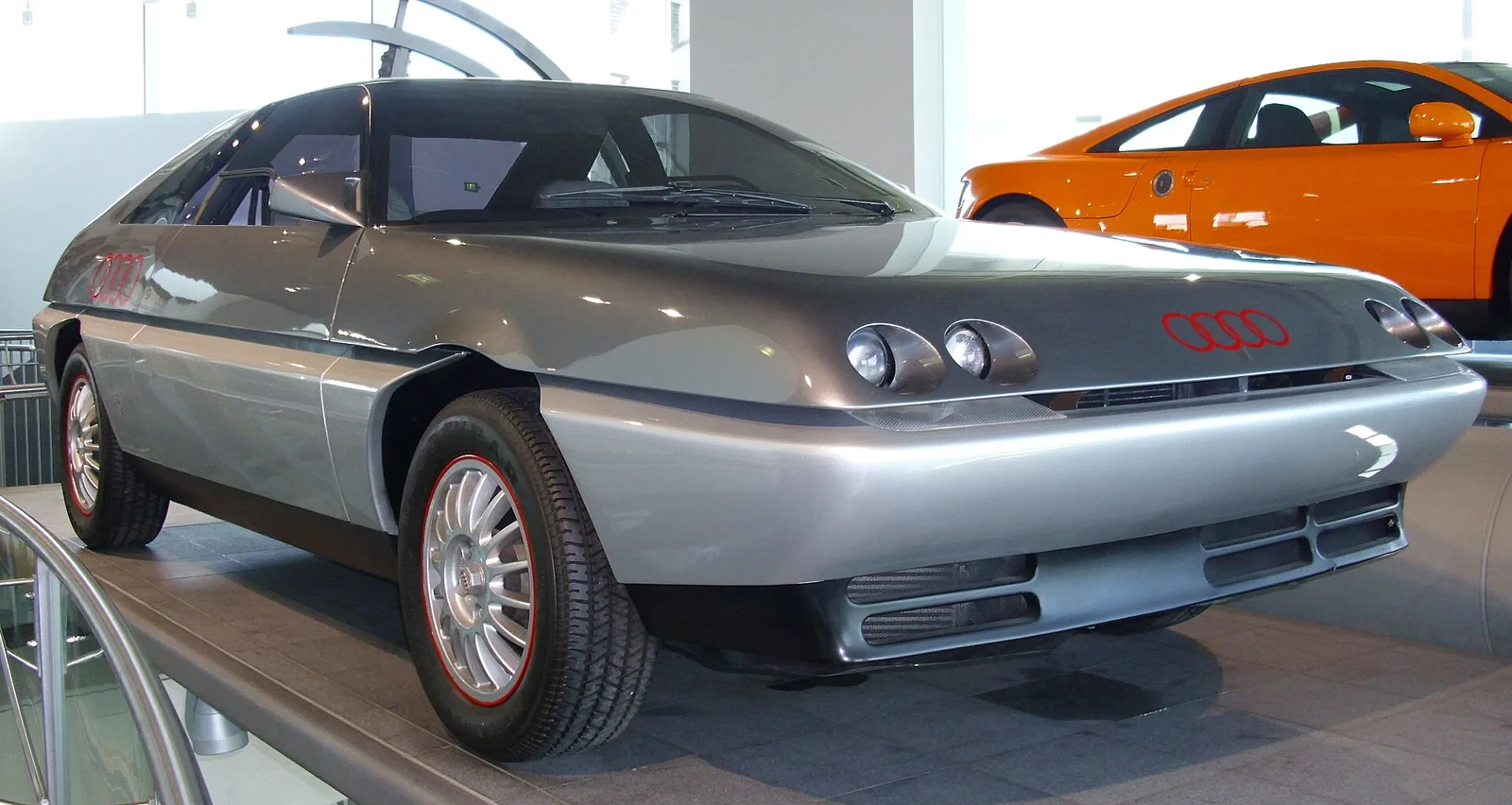
The Quattro Quartz kept the Quattro's wheelbase but was about 30 cm (11.8 in) shorter, because the rear overhang was cut. Its proportions changed, with a steeper C-pillar and a roof that looks very short. Its designer, Enrico Fumia, drew the car as his first independent design for Pininfarina.
No styling cue came from contemporary Audi models. Small touches were all that linked it to the brand, such as four interlocking rings placed at several points. The exhaust tip was shaped to suggest four pipes, and those attempts at family resemblance have been described as half-hearted.
In profile the car follows the Quattro's line, which itself traced back to an Italdesign Giugiaro concept. The C-pillar, however, is raked more steeply than on the production car, and at the top it runs into the B-pillar.
What made the body unusual?
The outer body parts were reshaped from aluminium sheet and plastic components, while the underlying steel body shell was taken over from the series Quattro.
Most of the outer body was rebuilt in plastics and aluminium. Kevlar, polyurethane and polycarbonate were used, and the plastic panels were fastened to a skeleton of slim steel tubing. The idea was that plastics could form in one piece what previously needed five separate components.
The bonnet is the most striking part. It is a single piece of plastic that runs forward and out to the sides, down to the bumpers, and wraps around the flanks. Four round projector headlamps by Carello sit in two tube-like recesses at the front. Fumia settled on that layout late, since the first sketches from 1980 still showed narrow wide-band lamps.
The rear is just as deliberate. A tail-light band runs the full width of the car above the bumper, and the rear window hinges at the roof end to act as a tailgate. Air enters through a narrow slot between bonnet and bumper, while the lower inlets are unevenly spread, four on the driver's side and two on the passenger side.
A horizontal crease runs along the flanks. It borrows from the Ferrari 512 S Modulo, a Paolo Martin design for Pininfarina that was already on public display in 1970. The crease also covers the openings that ventilate the engine bay at the front.
The surfaces are smooth and the corners rounded, with hardly any protrusions. The door handles are hidden behind the door windows, the window panes are bonded flush, and the door windows cannot be lowered completely, leaving only small openings that retract. The bumper has a recess for the number plate.
What was under the bonnet?
Pininfarina kept the Quattro's drivetrain unchanged. Under the bonnet is a turbocharged five-cylinder in-line unit, displacing 2,144 cc (130.8 cu in). It produces 147 kW (200 PS; 197 hp), the same as the series models, through a manual five-speed Audi gearbox.
The two-tone finish was the usual look. The upper part was usually a darker silver than the lower, although repaints changed how strong the contrast looked. At one stage the car wore one uniform silver finish.
What did the interior look like?
Inside, the Quattro Quartz had four individual seats. White quilted leather covered the seats and parts of the side trim, while other parts were trimmed in red smooth leather.
Key specifications
| Item | Detail |
|---|---|
| Engine | Five-cylinder in-line, 2,144 cc (130.8 cu in), exhaust turbocharger |
| Power | 147 kW (200 PS; 197 hp) |
| Gearbox | Manual five-speed, Audi |
| Drive | All-wheel drive, as on the Quattro |
| Length | 30 cm (11.8 in) less than the Quattro's |
| Weight | About 90 kg (198 lb) lighter than the series Quattro |
| Drag coefficient (cw) | 0.45 (series Quattro 0.43) |
| Top speed (test) | 217 km/h (135 mph); series coupe 222 km/h (138 mph) |
| 0 to 100 km/h | 7.1 seconds |
| Seats | Four individual seats |
How did it perform in tests?
The magazine's test found 217 km/h (135 mph) at the top, and 7.1 seconds from rest to 100 km/h. That top speed was slightly below the series coupe's 222 km/h (138 mph), but the Quartz accelerated 0.3 seconds faster. Its drag coefficient of 0.45 was a little worse than the 0.43 of the Quattro.
The acceleration result was the one figure that favoured the show car, while the top speed and drag figures did not.
The car was about 90 kg (198 lb) lighter than the series Quattro.
Did it ever go into production?
The studio's aim was to explore new shapes and production methods using plastics.
The Quattro Quartz was a one-off, and series production was never planned. The car ultimately passed to Audi, which still keeps it, and it appears in public now and then. Today it is an exhibit rather than a car on sale.
The aim went beyond lighter weight: Pininfarina wanted to explore new shapes and new production methods with plastics.
Why does the design still matter?
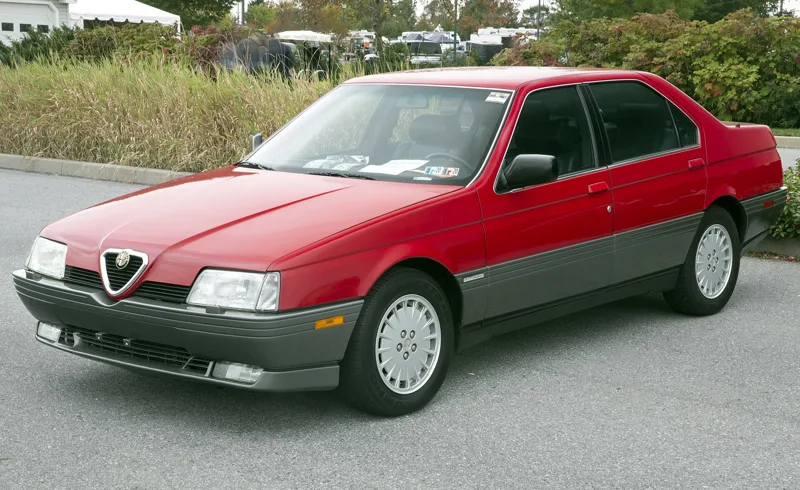
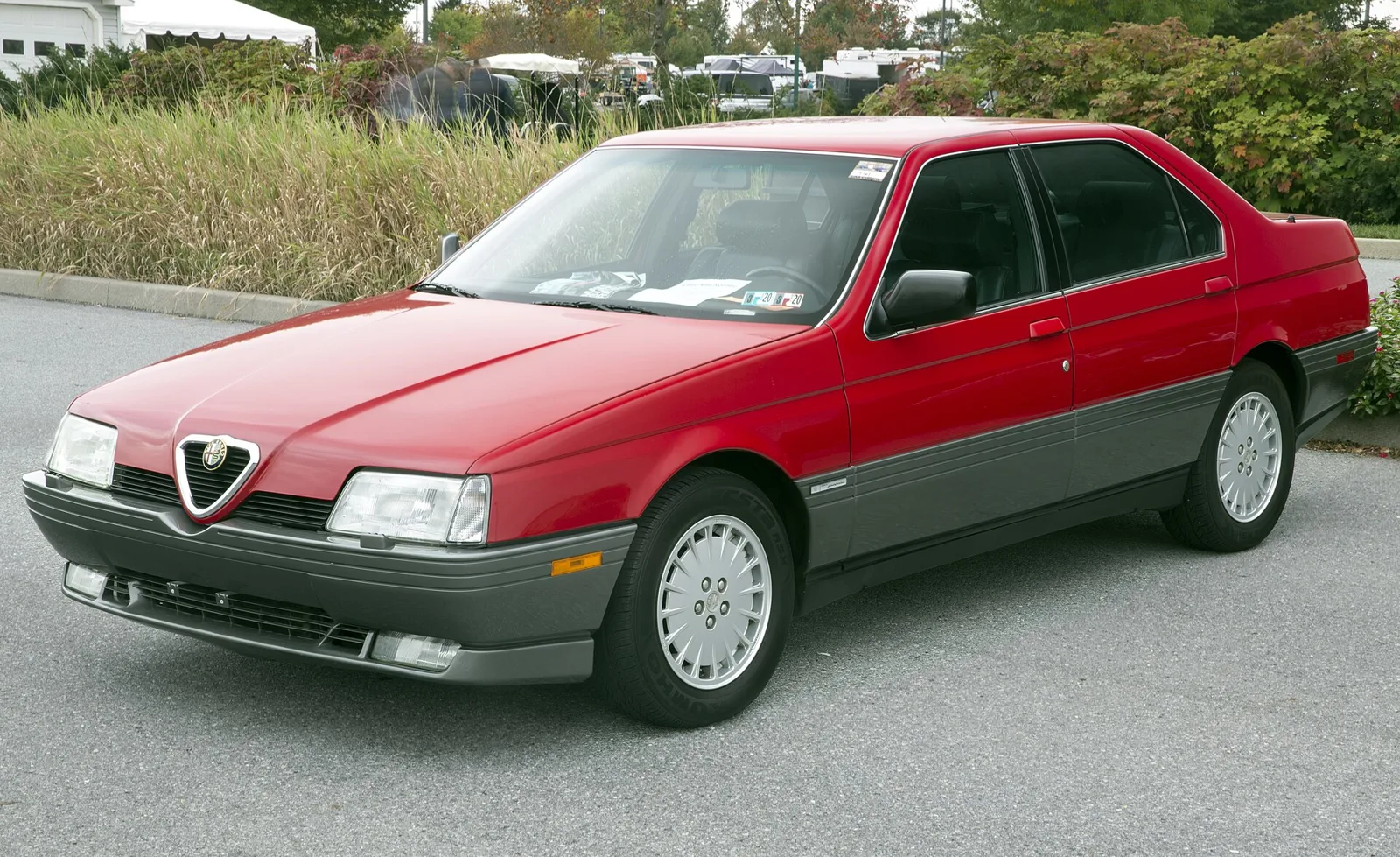
Its design is regarded as influential, even though no later Audi series model adopted its features. Pininfarina's Alfa Romeo bodies carried its ideas instead. The full-width tail-light band, which Fumia developed from the Quattro Quartz's narrow lamps, appeared on the Alfa Romeo 164 in 1987.
Because the Quattro Quartz never went into production, its influence reached buyers only through other cars. Alfa Romeo's series models of the following decade all carried the light band, which turned a show-car detail into a family signature.
The 164 also took over the strong flank crease, although it runs higher and rises slightly towards the rear. The mid-size Alfa Romeo 155, introduced in 1992, also took over the flank crease. Some documentation calls the Quattro Quartz the stylistic forerunner of the Tipo 916 range, which Fumia had designed for Pininfarina in 1987.
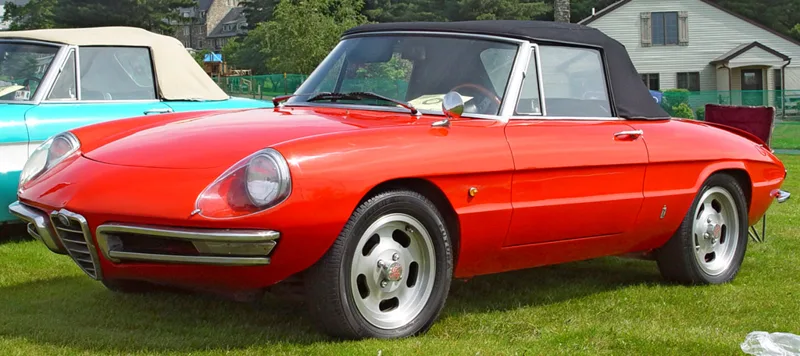
The Tipo 916 was built from 1994 to 2004, as an open Spider and a closed GTV. In a 2012 interview Fumia limited the resemblance to the headlights and described the two models as entirely independent cars.
Even so, the 916 took several details from the Quattro Quartz. These include the one-piece plastic bonnet reaching into the flanks, the recessed round headlights and the wide crease between bonnet and bumpers, which on the 916 rises steeply rather than running level. Its rear light band combines indicators, brake and tail lights, fog lamps and reversing lights.