A twin-cam family from 1954 to 1965 that ran from the Sprint coupe to the Zagato race car, with 177,690 built and a Spider that owed its life to one importer.
The Alfa Romeo Giulietta was a 1954 to 1965 family with Tipo 750 and 101 codes, built in 177,690 examples. Its 1290 cc Twin Cam engine powered saloons, Spiders and sporting Sprint variants, which included the Speciale, the Zagato and a Promiscua estate.
The Alfa Romeo Giulietta was a family of Italian cars built from 1954 to 1965 under the Tipo 750 and Tipo 101 codes. It spanned a 2+2 coupe, a four-door saloon, an estate and a Spider, along with sporting variants such as the Sprint Speciale and the Sprint Zagato. In all, 177,690 were made before the Giulia took over in 1962.
How did the Giulietta Sprint begin?
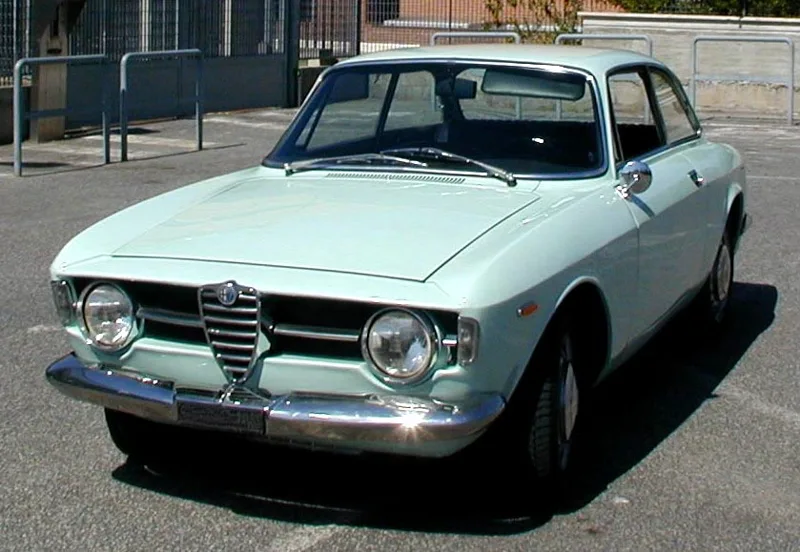
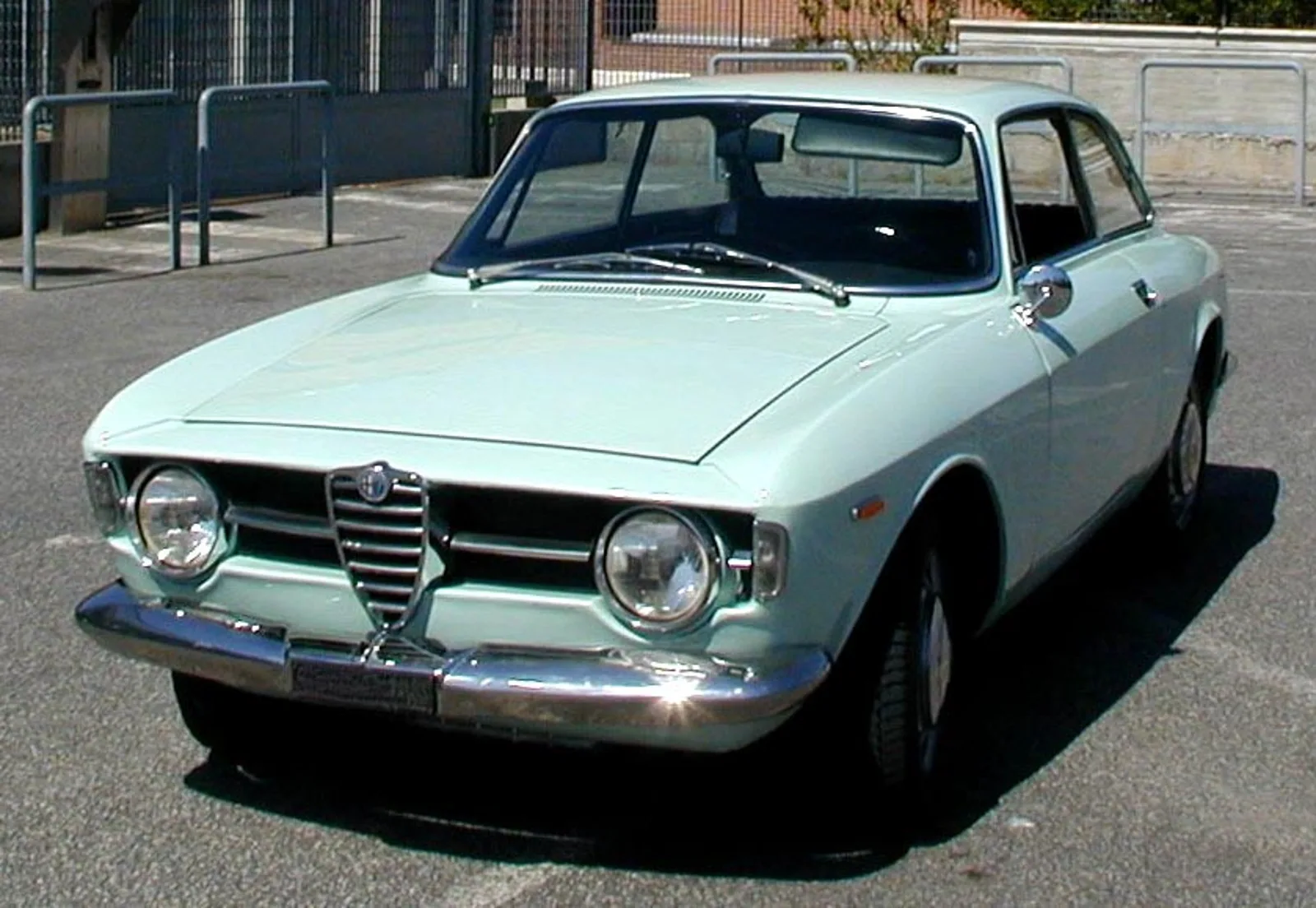
The first Giulietta shown was the Sprint 2+2 coupe, unveiled at the 1954 Turin Motor Show. Franco Scaglione styled it at Bertone, and it was built at Bertone's Grugliasco plant near Turin. Demand was so strong that the earliest cars were hand-built by Alfa Romeo itself.
Somewhere between 200 and 1000 of these pre-production cars were made that way. They differed in many cosmetic and mechanical details from the cars later produced at Grugliasco.
A 1954 family that ran from a humble saloon to a race-bred Zagato, with a Spider that began as an importer's order.
What made the Sprint Veloce special?
The Sprint Veloce arrived in 1956 as a competition-minded version of the Sprint. It was lightened to 780 kg (1,720 lb), and its twin Weber carburettors lifted output to 90 PS (66 kW; 89 bhp) at 6,500 rpm, as the compression ratio rose to 9.5:1.
Weight was cut by replacing the roll-down windows with sliding plexiglass units. The Veloce also went without the chromed hubcaps of the standard Sprint. Alfa quoted an SAE gross figure of 104 PS (76 kW; 103 bhp) in period brochures, a rating that differs from the native CUNA number.
The Veloce did race. It claimed the first three places in its class at the 1956 Mille Miglia, yet many buyers used it as a small grand tourer. Alfa answered with the Confortevole, a version with wind-down plexiglass windows, chrome hubcaps and larger headlamps, of which around 200 were built.
How did the Berlina range differ?
The four-door Berlina was always meant to be the main offering, and it debuted at the Turin Motor Show in April 1955. It had a gentler tune and a single-barrel carburettor for better economy and drivability, with 50 PS (37 kW; 49 bhp) at 5,200 rpm from a 7.5:1 compression ratio.
From late 1957 the Berlina T.I., for Turismo Internazionale, used a twin-barrel Solex carburettor and an 8.0:1 compression ratio. Its power rose to 65 PS (48 kW; 64 bhp) at 5,500 rpm, and it gained a hood with new dial lights and rear lamps.
Production changes ran from 1957 to 1959. The engine block moved from sand casting to die casting, and a stronger gearbox with Porsche-type synchromesh arrived in 1958. It remained a four-speed, though it was prepared for a fifth gear.
Two estate conversions followed the saloon. Carrozzeria Colli built the Giulietta Promiscua, of which 91 were made, while Carrozzeria Boneschi produced a few station wagons known as Weekendina.
What were the Sprint Speciale and Sprint Zagato?
The Sprint Speciale was an aerodynamic two-door, two-seat coupe styled by Franco Scaglione at Bertone, and 1,366 were built from 1957 to 1962. The Sprint Zagato was an aluminium-bodied competition berlinetta, of which two hundred and seventeen were made between December 1959 and 1962.
The Speciale used a steel body on a short-wheelbase Giulietta chassis. Its 1.3-litre engine was pushed to 100 PS (74 kW; 99 bhp) through double twin-choke carburettors and a higher compression ratio. The same body later carried a 1570 cc engine as the Giulia Sprint Speciale.
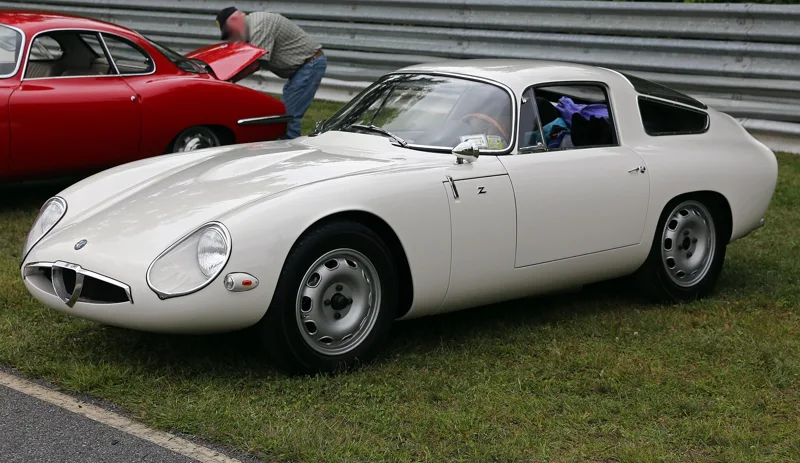
The Zagato story began when a crashed Sprint Veloce was rebodied by Zagato in late 1956 and immediately went well in competition. Zagato then built 18 rebodied Veloces, called SVZ, which led to the production SZ. The SVZ was about 120 kg (260 lb) lighter than the coupe it came from and used the most highly tuned engine, rated 118 PS (87 kW; 116 bhp).
The production SZ was premiered at the 1960 Geneva Salon. Handbuilt by Zagato in aluminium with plexiglass windows, it was light, quick and expensive. Production of the SZ started in December 1959 and ran into 1962. The original rounded tail is known as the Coda Tonda, and the later Kamm-style tail as the Coda Tronca.
The SZ was successful on both national and international circuits. It helped Alfa Romeo win the 1.3-litre class of the International Championship for GT Manufacturers in 1962 and 1963, while Michel Nicol won the Tour de Corse in 1957.
How did the Spider come about?
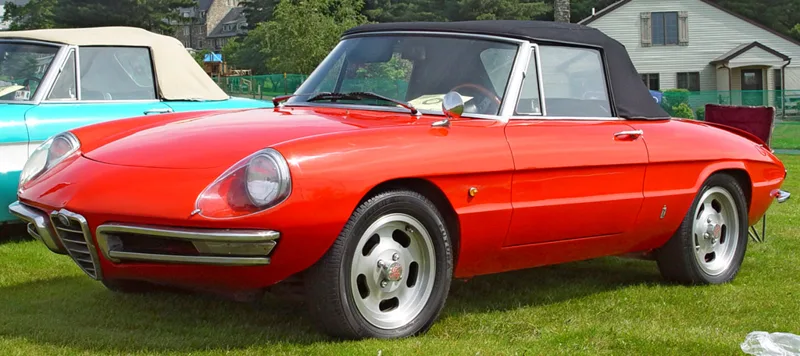
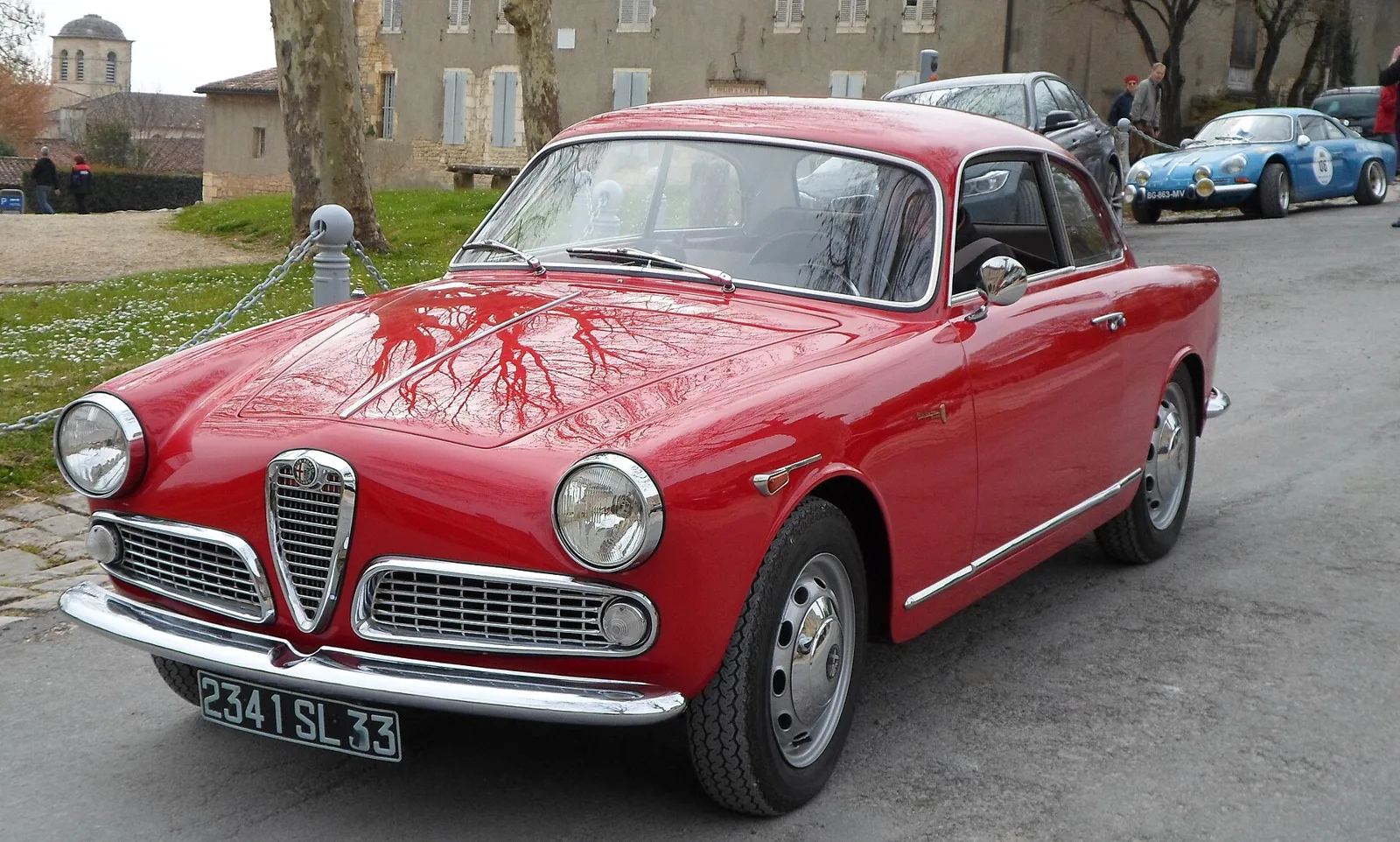
The Spider was prompted by Max Hoffman, Alfa Romeo's American East Coast importer, who asked for a convertible and committed to buying 2,600 Giuliettas. Alfa gave the job to Bertone and Pinin Farina, and the more sober Pinin Farina design won out.
The open two-seater debuted at the October 1955 Paris Salon, using the 65 PS engine from the Sprint, rated 48 kW (64 hp), on a shortened 2,200 mm (86.6 in) wheelbase. Hoffman took the first 600 examples, so American buyers had the car well before most Italians did.
Early production cars differed from later ones. The prototype's panoramic windscreen gave way to a simpler curved windscreen, roll-down windows and no quarter lights. Doors with fixed quarter lights arrived in 1957, although older-style doors were fitted on occasion until 1959.
The Series II Spider appeared at the September 1959 Frankfurt Auto Show with a 50 mm (2.0 in) longer wheelbase and a glove compartment lid. The Series III of 1961 added larger tail lights, a shifter-side ashtray and a dashboard lighter. The Spider ended in 1962, when the larger-engined Giulia Spider took over.
What changed in the 1959 and 1961 restyles?
The 1959 restyle debuted at the Frankfurt Motor Show and gave the Berlina revised front wings, recessed headlights and new grilles with chrome frames. The rear gained larger tail lights on small fins, which replaced the earlier rounded wings, and the interior became more orderly.
During 1959 the type designation of every model changed from 750 and 753 to 101. The fuel filler moved from the tail to a flap on the right rear wing, and the fuel pump was relocated lower down. In 1961 a right-hand drive T.I. finally appeared, having sold strongly in continental Europe and the United States without one.
The 1961 update raised output to 62 PS (46 kW; 61 bhp) for the Normale and 74 PS (54 kW; 73 bhp) for the T.I. The car could reach almost 160 km/h (99 mph), and the square mesh side grilles were pieced together with the centre shield. The T.I. also gained individual front seats with storage nets.
In February 1961 the 100,001st Berlina left the Portello factory, an occasion marked by a celebration sponsored by the actress Giulietta Masina.
What engine did the Giulietta use?
The Twin Cam was a 1290 cc straight-four with an aluminium block and cast iron liners. Its bore and stroke were 74.0 mm (2.91 in) and 75.0 mm (2.95 in), and its double overhead camshafts were driven by two timing chains.
The aluminium crossflow head had hemispherical combustion chambers, and the two valves per cylinder were angled at 80 degrees. Quoted power figures differ because Alfa used the Italian CUNA rating at times and the SAE gross rating on other occasions.
The rest of the chassis followed conventional lines for the period. The unibody carried a front-engined, rear-wheel-drive layout, with control arms and coaxial coil springs at the front and a solid rear axle on coil springs. Hydraulic drum brakes were fitted at all four corners, apart from the last SZs.
How many Giuliettas were built?
The production table lists 39,057 Berlinas, 92,728 Berlina TIs, 24,084 Sprints, 3,058 Sprint Veloces, 14,300 Spiders, 2,796 Spider Veloces and 91 Promiscua wagons. The overall family figure given is 177,690, and the two Berlina forms account for the largest share of the total.
The listed totals do not add up exactly to that overall figure, and the Sprint Speciale and Sprint Zagato do not appear in the table at all. Figures for the rebodied SZ cars are also complicated, because Zagato converted some existing cars as well.
How did the Giulietta give way to the Giulia?
The Giulia was introduced in June 1962 with a larger 1.6-litre engine, and it gradually replaced the Giulietta. The standard Berlina continued until 1964, when the Giulia had only the bigger engine, and the T.I. carried on for a full year more. The last T.I. was completed in 1965.
The Giulietta Sprint was dropped at the end of 1962 in favour of the 104 PS (76 kW; 103 bhp) Giulia Sprint. Its replacement looked almost identical, although it received a new steering wheel and dashboard.
The 1300 Sprint returned in early 1964 as a lower-cost option that also suited the Italian taxation system. It stayed in production until late 1965 and remained in price lists until November 1966.
Alfa Romeo Giulietta specifications
| Specification | Detail |
|---|---|
| Engine | 1290 cc Twin Cam straight-four |
| Bore and stroke | 74.0 mm (2.91 in) by 75.0 mm (2.95 in) |
| Sprint Veloce power | 90 PS CUNA, 89 bhp (66 kW), reached at 6,500 rpm |
| Sprint Veloce torque | 118 N m (87 lb ft), or 12.0 kg m, at 4,500 rpm |
| Sprint Veloce weight | 780 kg (1,720 lb) |
| Sprint Speciale | 100 PS (74 kW; 99 bhp), 1,366 built |
| Sprint Zagato | 118 PS (87 kW; 116 bhp) top engine, two hundred and seventeen built |
| Spider wheelbase | 2,200 mm (86.6 in) |
| Berlina T.I. | 65 PS (48 kW; 64 bhp), 5,500 rpm |
| Family total | 177,690 built, 1954 to 1965 |
| Successor | Giulia, from June 1962 |