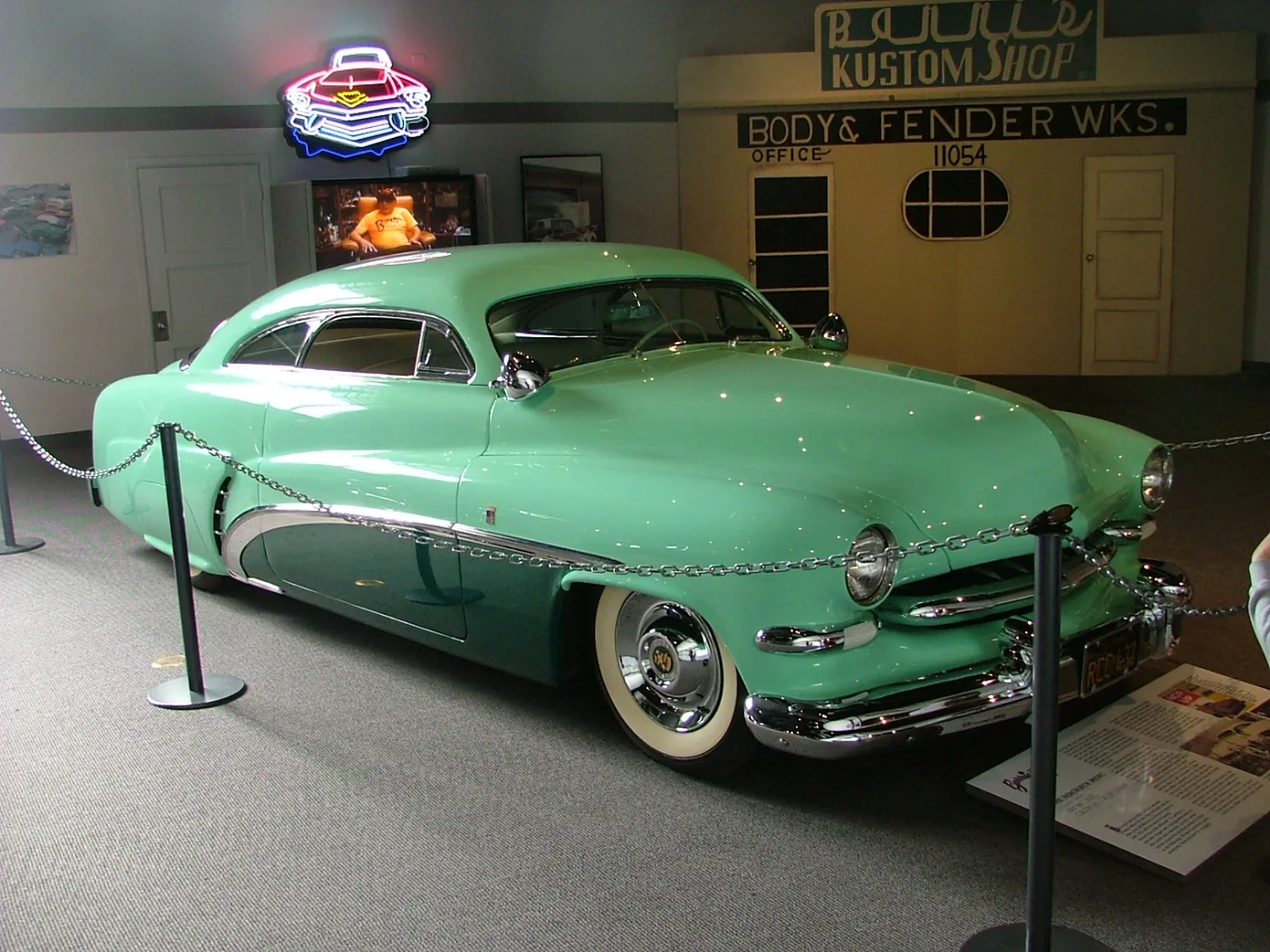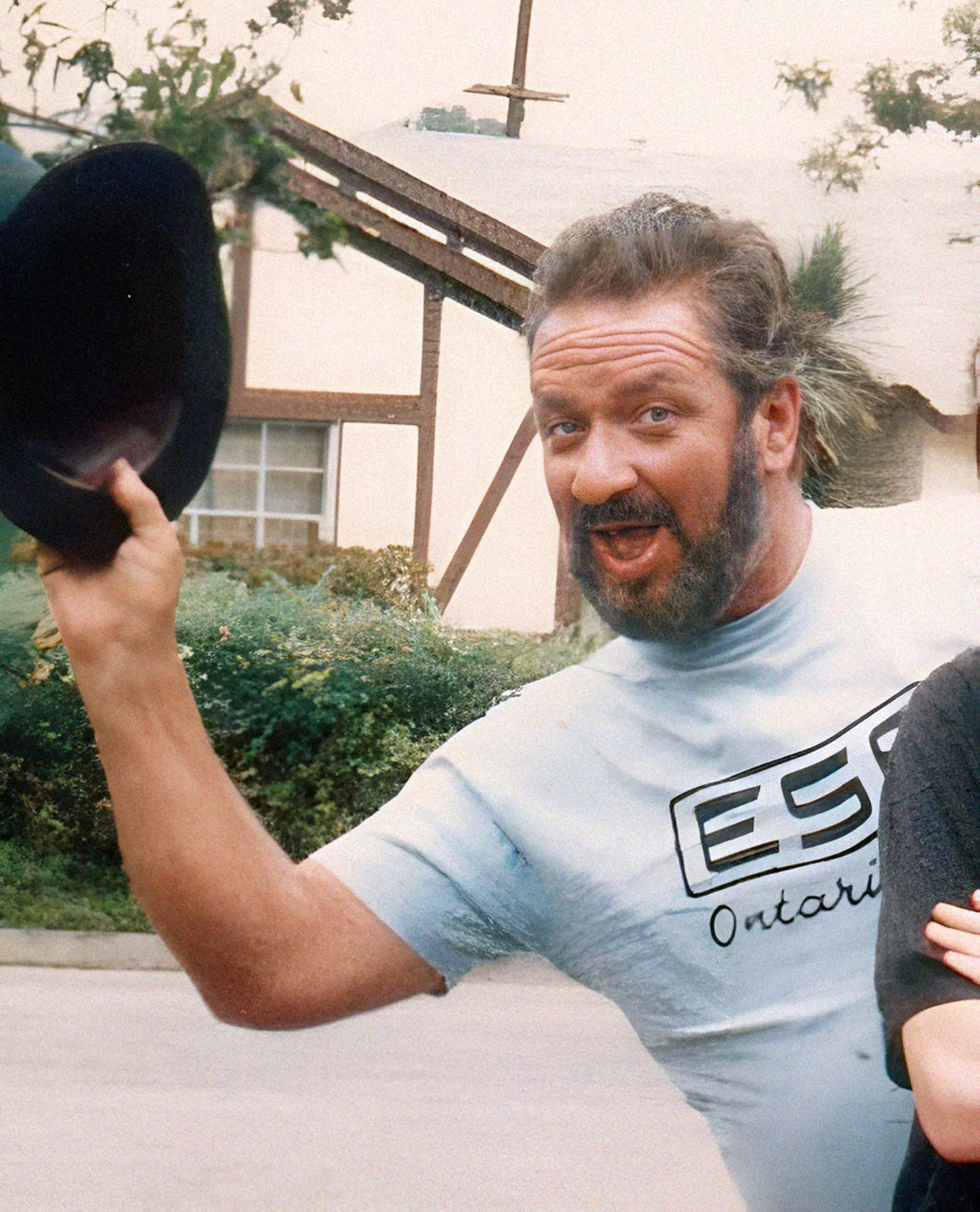
From Beverly Hills and Bell to the Maywood shop, the Outlaw, the Orbitron and the Rat Fink that defined a generation of custom culture.
Ed Roth, known as Big Daddy, was an American artist and custom car builder born in 1932 in Beverly Hills, California. He created the Rat Fink and a series of fiberglass hot rods in the late 1950s and 1960s, and he founded Choppers magazine before his death in 2001.
Ed Roth, known as Big Daddy, was a Californian artist and custom car builder whose monster caricatures and the Rat Fink character came to define a strand of hot rod culture in the late 1950s and 1960s. His work reached cars, cartoon art, toys, motorcycles and even music.
Who was Ed Roth?
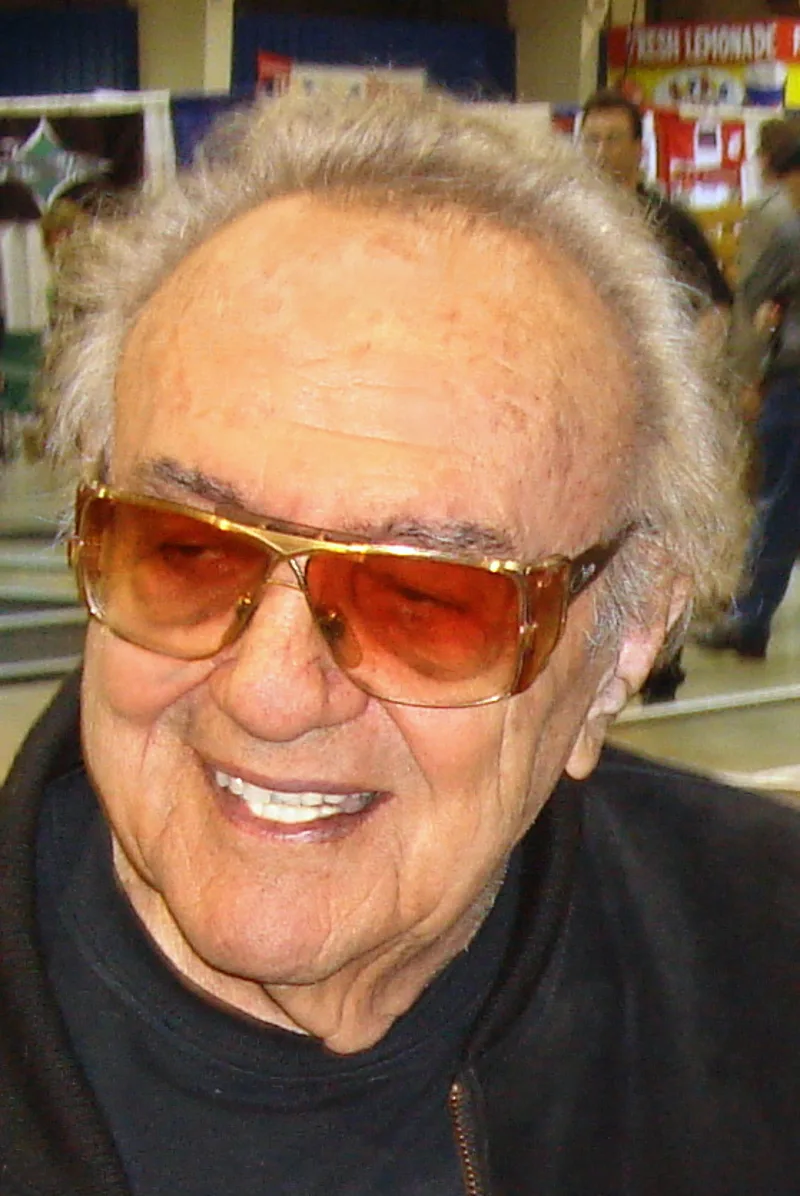
Edward Roth was born on March 4, 1932, in Beverly Hills, California, and grew up in Bell. He became an artist, cartoonist, pinstriper and custom car builder, and his best-known creation, the Rat Fink, appeared in his grotesque caricatures of outsized monsters driving hot rods.
Auto shop and art were among his subjects at Bell High School. At 14 he acquired a 1933 Ford coupe, and he later studied engineering at a Los Angeles college before serving in the United States Air Force. By the early 1950s he was experimenting with fibreglass modelling.
A corporate publicist gave him the nickname Big Daddy. He stood 6 ft 4 in (1.93 m) tall.
The monster caricatures and Rat Fink character that made Big Daddy one of hot rod culture's defining artists.
How did the Weirdo shirts take off?
From as early as July 1958, Roth sold airbrushed Weirdo T-shirts at car shows and in Car Craft magazine. By August 1959 the shirts had become a full craze, and Roth was at its forefront alongside Dean Jeffries and Pete Millar.
Others soon joined in. In January 1961 Stanley Mouse, a Detroit native, started promoting his own shirts in Car Craft, and Rendina Studios and Mad Mac also took part. Roth is still credited with widely popularising the monsters in hot rods art form.
Why was Rat Fink so influential?
Rat Fink was the character that typified Roth's caricatures of outsized monsters driving hot rods. The style became a recognisable art form, and the character later appeared in plastic kits and in gallery shows.
The monsters were drawn as caricatures of the hot rods that Roth and his contemporaries built, so the art and the cars fed each other.
Several artists worked with him or were linked to his studio. Ed Newton, who produced some of his car and T-shirt designs from 1964, Robert Williams joined Roth in late 1965, and David Mann and R.K. Sloane were also associated with him.
What hot rods did Roth build?
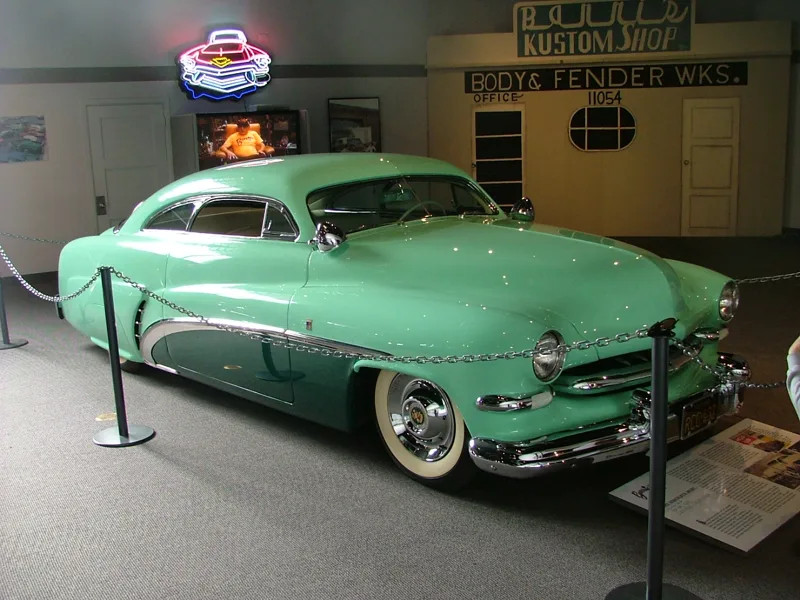
In 1959 Roth built the Outlaw, a fiberglass Kustom hot rod that Car Craft covered in January 1960. Later cars included the Beatnik Bandit in 1961, the twin Ford engined Mysterion in 1963, the Orbitron in 1964 and the Road Agent in 1965.
Each of these cars was built to be seen at shows, and many were covered in the same magazines that had carried his shirts.
The Surfite surf buggy appeared in the 1965 film Beach Blanket Bingo. For years Roth drove a tangerine orange 1955 Chevy post to his shop every day, and it ran a 406 cu. in. Ford engine.
The Orbitron has a second life of its own. It was feared lost for decades before it was found in Mexico in the summer of 2008, and Michael Lightbourn, an American restorer, brought it back to the United States. Beau Boeckmann then restored it to its original condition.
Which Roth projects stand out?
| Year | Project | What stands out |
|---|---|---|
| 1959 | Outlaw | Fiberglass Kustom hot rod, shown in the January 1960 Car Craft |
| 1961 | Beatnik Bandit | Hot rod whose die-cast toy version was among Mattel's first 16 cars |
| 1963 | Mysterion | Twin Ford engined hot rod |
| 1964 | Orbitron | Feared lost for decades, found in Mexico in 2008 |
| 1965 | Surfite | Surf buggy featured in Beach Blanket Bingo |
| 1967 | Mega Cycle | Motorcycle powered by a Buick V6, now on display in Newburgh, NY |
| 1967 to 1970 | Choppers | Magazine that was the first to focus on custom motorcycles |
How did his work reach toys and models?
From 1962 Revell began selling plastic models of Roth's cars. From 1963 to 1965 it also made models of his monsters, including Rat Fink, and the Hawk Model Company's Weird-Ohs and Marx Toys' Nutty Mads, both issued in 1963, were clearly inspired by his work.
Both lines were quite popular in the mid-1960s, and collectors still seek them. In 1968 Mattel introduced Hot Wheels, and Roth's Beatnik Bandit was among the first 16 die-cast cars the company produced.
What did his motorcycle work involve?
In the mid-1960s Roth turned to customising motorcycles, but mainstream motorcycle magazines would not run his articles or advertisements. He responded by starting his own magazine, Choppers, which ran from 1967 to 1970.
The motorcycle work was part of the same drive to customise that had run through his cars, and the magazine gave that work a home in print.
Choppers was a small publication printed in black and white, yet it was the first magazine to focus exclusively on custom motorcycles. Roth was also responsible for the first known VW powered trike, and he went on to build several more for himself and others, including the Candy Wagon, the California Cruiser and the Secret Weapon.
In 1967 he built the Mega Cycle, powered by a Buick V6 engine. Its name began as Captain Pepi's Motorcycle and Zeppelin Repair, which was later changed after car show promoters suggested a new one. The Mega Cycle is now on display at the Motorcyclepedia Museum in Newburgh, New York.
What was life like at his Maywood shop?
Roth opened the shop in 1959 on Slauson Avenue, at number 4616, in Maywood, about 8 miles southeast of the downtown core. In the mid-1960s outlaw motorcycle clubs gathered there, and musicians, police officers and people from Hollywood visited as well.
Roth's time at the shop was one of his most creative periods, and an important stretch for the whole Kustom Kulture scene. Musicians, police officers and people from Hollywood came and went.
The Iron Cross found its way into Roth's artwork, a symbol that surfers had used for carefree rebellion. He bought a brand-new Harley-Davidson Sportster and painted its tank flat black, lettering one side 'Love is Hate' and the other 'Hate is Love'.
Roth sold photo posters of bikers with titles such as Beautiful Buzzard and Gray Cat. After a confrontation at the shop, he burned the posters and left that lifestyle behind. The shop closed in 1970.
Between 1970 and 1975 Roth worked at Brucker's Movie World, where the Cars of the Stars display ran. For about 10 years he also worked as a sign painter and artist at Knott's Berry Farm.
How did his legacy return to public view?
In December 1977 Robert and Suzanne Williams, with Skip Barrett, organised the first Rat Fink Reunion to celebrate Roth's legacy. In 1993 a major exhibition opened in Santa Monica at the Julie Rico Gallery, shortly before the lowbrow art movement gained momentum.
The Los Angeles Times put Rat Fink on the cover of its Culture section on December 20, 1993. A book titled Rat Fink was published by Last Gasp that same year.
How did Roth die and how was he honoured?
Roth's death came from a heart attack on April 4, 2001, when he was 69, and he spent his final years in Manti, Utah. The year after his death, the organisers of Meguiar's Autorama in Detroit listed him among the 50 Who Made a Difference.
The show's Circle of Champions gave him a place in 2000, and in 2006 he was named the show's Builder of the Year. That same year Ron Mann's documentary Tales of the Rat Fink also examined his life.
What is Roth's lasting legacy?
Roth's lasting mark lies in the monster art, the Rat Fink and the hot rods that carried his name across cars, toys and music. Mr. Gasser and the Weirdos, a novelty group he led in the 1960s, released 1963's Hot Rod Hootenanny among its records.
The Rat Fink remains the image most closely tied to his name. The Choppers magazine he founded is a lasting record of his motorcycle work.
What made the car shows matter?
Car shows were the setting for much of Roth's early selling. He sold airbrushed T-shirts there, and his Outlaw was exhibited at custom car and hot rod events as well as in the magazines that covered the scene.
Car Craft and Rod and Custom covered the Outlaw, so the car also travelled in print beyond the show floor.
What did Brucker say about Roth's work?
Brucker described Roth as loyal and a very hard worker, and he said that Roth could build in days what would take others weeks. He also remarked on Roth's gift for understanding how parts fitted together.
Roth's later years at Knott's Berry Farm followed the same pattern of careful, detailed work, with his lettering applied to many descriptive labels.
What was his final project?
At his death in 2001 Roth was working on a hot rod project built around a compact car. It was meant to break from the dominant tuner performance style of the period.
He had been active in counterculture art and hot-rodding all his adult life, so the project fitted a pattern that ran through his whole career.
The project shows a builder still testing new ideas late in his working life.
How do his family and the reunions keep his work alive?
The official Rat Fink Reunion has taken place in Manti, Utah, every early June since his death. His widow Ilene created a museum to honour her late husband, and his son Darryl has been collecting and displaying his father's work.
The museum includes displays of Roth's art and other memorabilia, and the family has kept his work in view.
What lessons did he share in 1999?
In 1999 Roth gave a lecture at Brigham Young University's Museum of Art, where he shared lessons from his life. They included accepting criticism, getting help when a task was beyond you, and not needing fancy tools or a fancy garage.
The advice reads as the practical side of a career built on hand work, from fibreglass modelling in the early 1950s to airbrushed shirts and custom motorcycles.