The Spanish high-performance arm of SEAT, founded in 1985, won world rally and touring car titles before moving into electric racing under the Cupra name.
Cupra Racing is the motorsport arm of the Spanish carmaker SEAT, founded in 1985 as SEAT Sport. It won FIA 2-litre rally titles with the Ibiza kit car, two WTCC championships, and ETCR titles, and it now races in Formula E.
Cupra Racing, once called SEAT Sport, serves as the performance motorsport arm of the Spanish carmaker SEAT, and it has been working that way for decades. It has raced in rallying and touring cars, developed performance road cars, and in recent years moved into electric racing, including Extreme E and Formula E.
What is Cupra Racing?
Cupra Racing is the motorsport arm of SEAT, founded in 1985 as SEAT Sport. It succeeded the SEAT Special Vehicles department, which had been formed in 1971 to put the brand into rally championships. That earlier department won 11 titles between 1979 and 1983.
The Cupra brand arrived in 2018 as the independent high-performance branch of SEAT, and the Sport name gave way to Cupra Racing. The name change reflected a wider effort to separate the sporting image from the mainstream models. The company's motorsport history gives the Cupra name a credible sporting record, which matters for road cars as well as race cars.
SEAT's motorsport arm, built on a 1980s kit car and two WTCC titles, now races electric cars under the Cupra name.
How did SEAT first enter rallying?
SEAT's first serious World Rally Championship attempt came in 1977, when the company took part with its SEAT 1430/124D Especial 1800 race car. On its debut at the Monte Carlo Rally the SEAT team finished third and fourth, with the official 1430-1800 cars driven by Antonio Zanini and Salvador Canellas.
For years the company's rally effort was built on the small SEAT Ibiza, a 1.6L front-wheel-drive car with roots in the Volkswagen Polo. The Ibiza gave the company experience in rallying, and it competed in several European national championships. Little success followed for a long time. The Ibiza showed how a small road car could be turned into a competitive rally machine through regulation-friendly changes, a lesson the company later applied to its WRC programme.
How did the Ibiza kit car win its titles?
A two-litre version of the Ibiza was homologated as a kit car, with extra-wide tracks, larger wheels and bigger brakes allowed under the FIA kit car rules. With these attributes the car won the 2-litre World Championship three times, in 1996, 1997 and 1998.
Those three titles convinced Volkswagen Group management to back a bigger effort, and the SEAT Sport department received budgets to pursue its goal. A WRC-spec car project was officially announced at the 1997 San Remo rally, and the sport's popularity in Spain added weight to the decision.
What happened with the Cordoba WRC?
The SEAT Cordoba WRC was first entered at the top level of the World Rally Championship in 1998. It was based on the family saloon of the same name, and it used a four-cylinder turbocharged petrol engine with permanent four-wheel drive and active differentials.
The Cordoba's results were held back by its design. Its short wheelbase and high-mounted engine were a handicap, and results were not impressive. The main drivers were former WRC champion Didier Auriol, Harri Rovanpera and the rising Finnish driver Toni Gardemeister. The car did reach the podium three times, with Gardemeister at the 1999 Rally New Zealand, Rovanpera at the 1999 Rally of Great Britain and Auriol at the 2000 Safari Rally.
SEAT pulled out of international rallying at the end of 2000. The rally era was over, but the sporting identity it built carried into touring cars. The programme also left the company with engineering experience that would later help its touring cars.
How did SEAT move into touring cars?
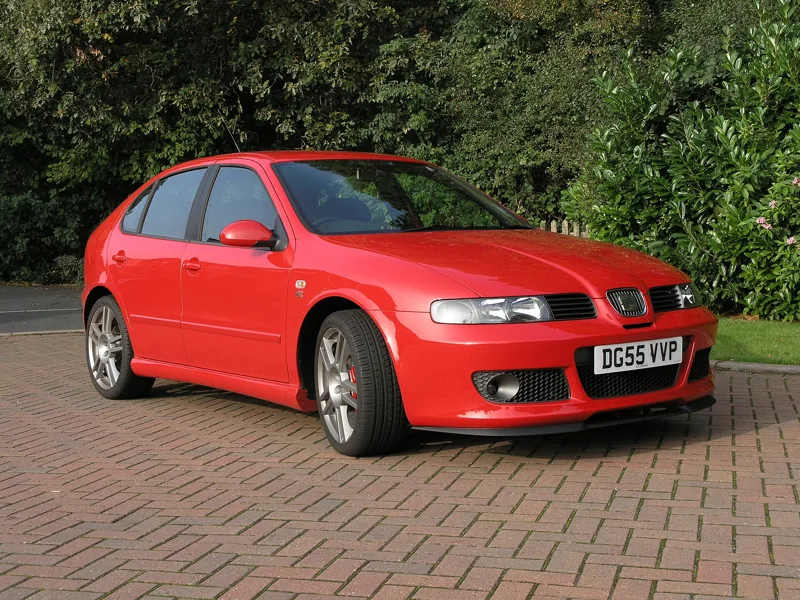
In 2002 SEAT Sport set up the SEAT Leon Supercopa in Spain, a one-make series for the Leon. The format later spread across Europe, with the Leon Eurocup formed in 2008. In 2003 SEAT began entering the Toledo Cupra in the European Touring Car Championship with Jordi Gene and Frank Diefenbacher.
Former British Touring Car Championship winner Rickard Rydell joined the team in 2004 and took its first victory. The team's touring car programme then grew into the World Touring Car Championship, which the ETCC became in 2005. The car was then the team's main machine for the seasons that followed, and the team kept it through several rounds of development.
How did the WTCC titles come about?
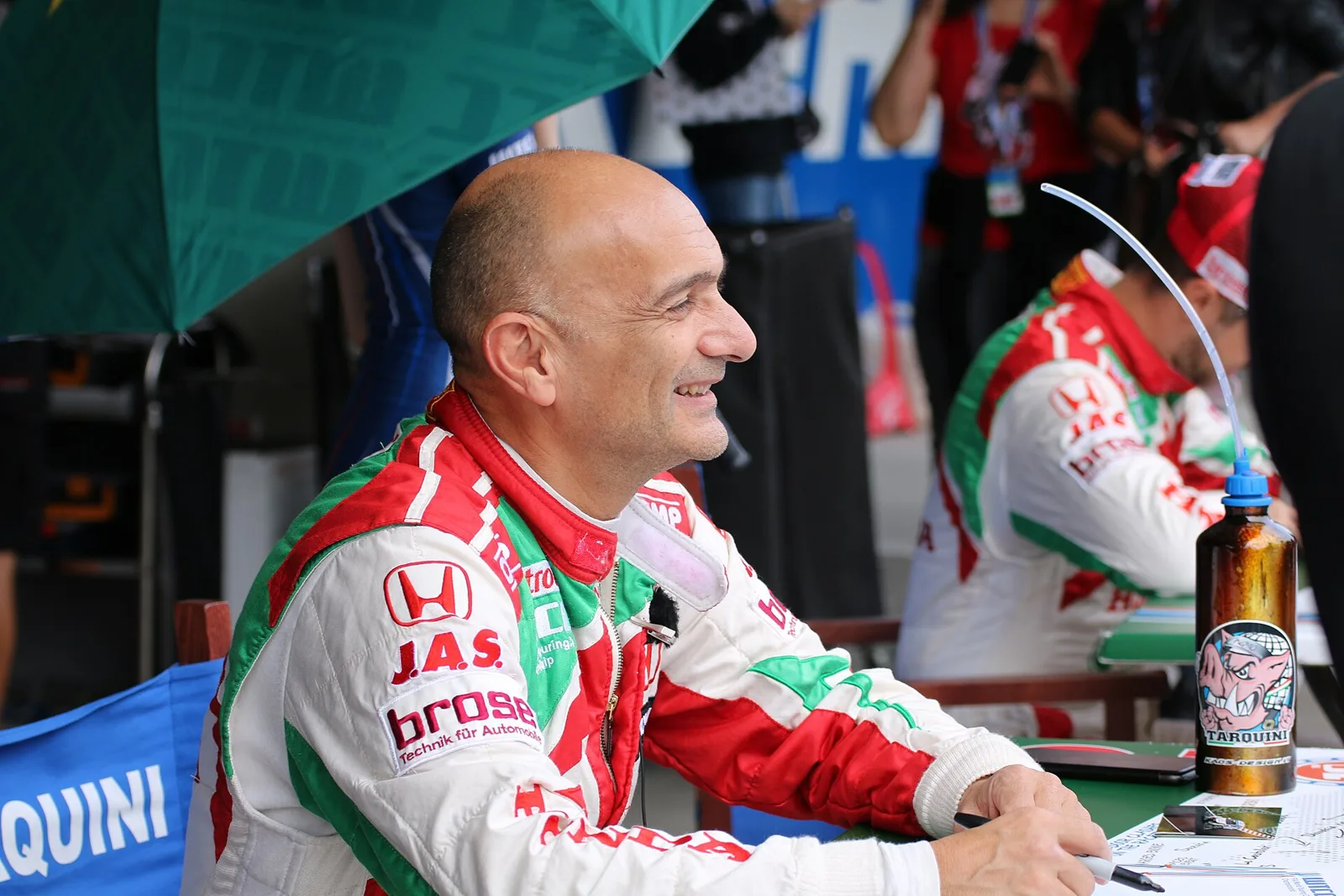
The ETCC became the World Touring Car Championship in 2005, and the Leon made its debut later that year. In 2006 Gabriele Tarquini, Yvan Muller and James Thompson joined the team, and in 2007 Michel Jourdain Jr. and Tiago Monteiro arrived as Rydell and Thompson left.
The turning point came in 2008, when Yvan Muller won SEAT's first WTCC drivers' championship and SEAT also won the manufacturers' title. The team had scaled down from six cars to five that year, and Jourdain left the team.
In 2009 SEAT kept the same five drivers, with the French team Oreca helping run the operation. Gabriele Tarquini won the second drivers' title in a row, and SEAT won the manufacturers' title for a second consecutive year. Its success in 2008 and 2009 remains the strongest sporting record in the programme's touring car history.
SEAT then withdrew from the WTCC as a manufacturer-backed team at the end of 2009. In January 2010 it backed the new SR-Sport team, run by SUNRED Engineering, and in 2012 it returned as a customer supplier of engines to several teams. Engines went to Lukoil Racing, Tuenti Racing and other entries, with SEAT Sport supplying 1.6T and TDI units.
What did the British and Spanish touring programmes add?
From 2004 to 2008 the team raced in the British Touring Car Championship as SEAT Sport UK. Jason Plato was its driver for five years, and he finished as championship runner-up in 2006 and 2007.
In 2008 the TDI version was used in Britain, but reliability was a problem. Two teams continued to campaign petrol SEATs in 2009, and in 2010 Tom Boardman drove a petrol Leon under the Special Tuning UK name, with sponsorship from Club SEAT. In 2011 Boardman and Dave Newsham ran petrol SEATs under the Special Tuning Racing name, which was not associated with SEAT Sport or SEAT Sport UK, and Boardman came first in one race at Knockhill.
How did Cupra move into electric racing?
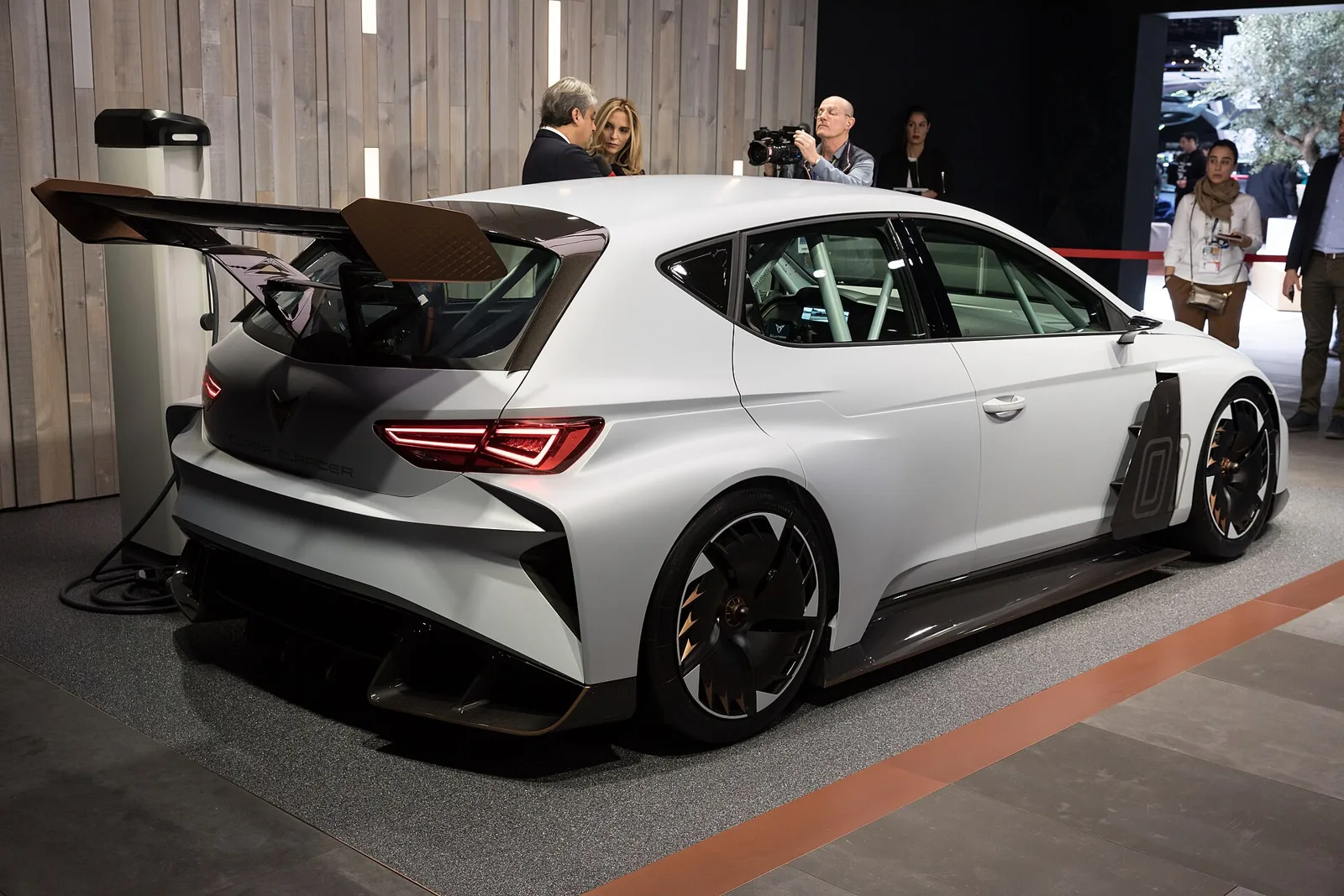
Cupra entered Pure ETCR, the electric touring car series, in its debut year of 2021, racing against Hyundai and Romeo Ferraris. The series gave Cupra a new kind of competition, one that tested its road-car technology in a world without combustion engines. It partnered with Zengo Motorsport and fielded Mattias Ekstrom, Jordi Gene, Mikel Azcona and Daniel Nagy. Cupra and Ekstrom finished the season as the manufacturers' and drivers' champions.
In 2022 the series achieved FIA World Cup status. Cupra partnered with EKS RX, a team founded by Ekstrom, as Cupra EKS. Cupra and Adrien Tambay took both titles that year, and the series was discontinued in 2023.
What did Extreme E bring?
Abt Sportsline announced in September 2020 that it would run Abt Cupra XE in the first season of Extreme E, the all-electric SUV off-road series. Mattias Ekstrom and Claudia Hurtgen were the original drivers, and Jutta Kleinschmidt replaced Hurtgen after Round 2, which kept the driver line-up stable for the rest of the 2021 season.
The team earned its maiden podium by finishing second at the Island X-Prix and finished the 2021 season fifth. Nasser Al-Attiyah joined for 2022. Permission was granted to restyle the Spark Odyssey 21 body in the Cupra Tavascan Extreme E Concept look, and the team earned its first race victory at the Energy X-Prix, finishing sixth overall.
In 2023 Sebastien Loeb replaced Al-Attiyah for some rounds, and the team took second and third places at the Island X-Prix II. The team finished sixth again and then left Extreme E in December 2023 to focus on Formula E.
How did Formula E go for Cupra?
In May 2022 Abt Sportsline announced it would return to Formula E for the 2022-23 season with Cupra as Abt Cupra Formula E Team, using Mahindra powertrains. Abt had left the series after the 2020-21 season, so the return rebuilt the partnership for a new era. Nico Muller and Robin Frijns were the drivers, and the team finished last in the teams' championship.
Frijns left for 2023-24 and was replaced by Lucas di Grassi. Abt's powertrain deal with Mahindra was due to end after that season, and the entrant licence later passed to Lola, ending Cupra's run with the team.
In December 2024 Cupra partnered with Kiro Race Co to enter the 2024-25 season as Cupra Kiro. Dan Ticktum scored the team's first podium and its first race victory, at the Tokyo and Jakarta ePrix respectively.
What are the key results?
| Series | Result | Year |
|---|---|---|
| FIA 2-Litre World Cup | Title, SEAT Ibiza Kit-Car | 1996 |
| FIA 2-Litre World Cup | Title, SEAT Ibiza Kit-Car | 1997 |
| FIA 2-Litre World Cup | Title, SEAT Ibiza Kit-Car | 1998 |
| WTCC | Drivers' and manufacturers' titles, Yvan Muller | 2008 |
| WTCC | Second drivers' title, Gabriele Tarquini, and manufacturers' title | 2009 |
| Pure ETCR | Manufacturers' and drivers' titles, Cupra and Mattias Ekstrom | 2021 |
| FIA ETCR | Manufacturers' and drivers' titles, Cupra and Adrien Tambay | 2022 |
| Extreme E | Maiden podium, second at the Island X-Prix | 2021 |
| Formula E | First podium and race win, Dan Ticktum for Cupra Kiro | 2024 |
Bianca Bustamante, an F1 Academy graduate, was signed as a development driver and took part in the 2024-25 rookie test for the team.
What is the legacy of Cupra Racing?
Cupra Racing's legacy is a record that runs from kit-car rallying to electric touring cars and open-wheel EVs. Its three 2-litre rally titles and two WTCC championships show that a road-car brand can win major titles with a clear sporting identity.
The brand's sporting record spans several decades and several disciplines. The Cupra name now sits on performance road cars, race cars and the Cupra Kiro Formula E entry. The next chapter will depend on how the brand balances electric racing with its touring car heritage.