A 2.030 km city-centre course that staged the second Berlin ePrix in 2016, won by Sebastien Buemi from second on the grid.
Built in 2016 for Formula E, the Berlin street course covered 2.030 km (1.261 mi) with eleven turns. Sebastien Buemi won its race from second on the grid, leaving Lucas di Grassi one point clear in the drivers' standings.
The Berlin Street Circuit was a city-centre course of 2.030 km (1.261 mi) built for Formula E's second Berlin ePrix, which drew 15,000 spectators on 21 May 2016. Sebastien Buemi won the 48-lap race from second on the grid for e.dams-Renault.
The circuit sat in the heart of the German capital, with the mayors of two central districts among its critics. This article looks at how the course was approved and built, how the weekend's qualifying and race unfolded, and what the result did to the title fight.
Where was the Berlin Street Circuit and how long was it?
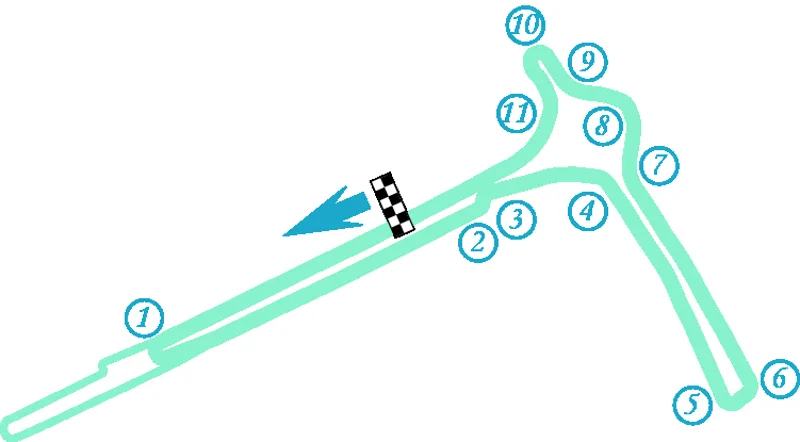
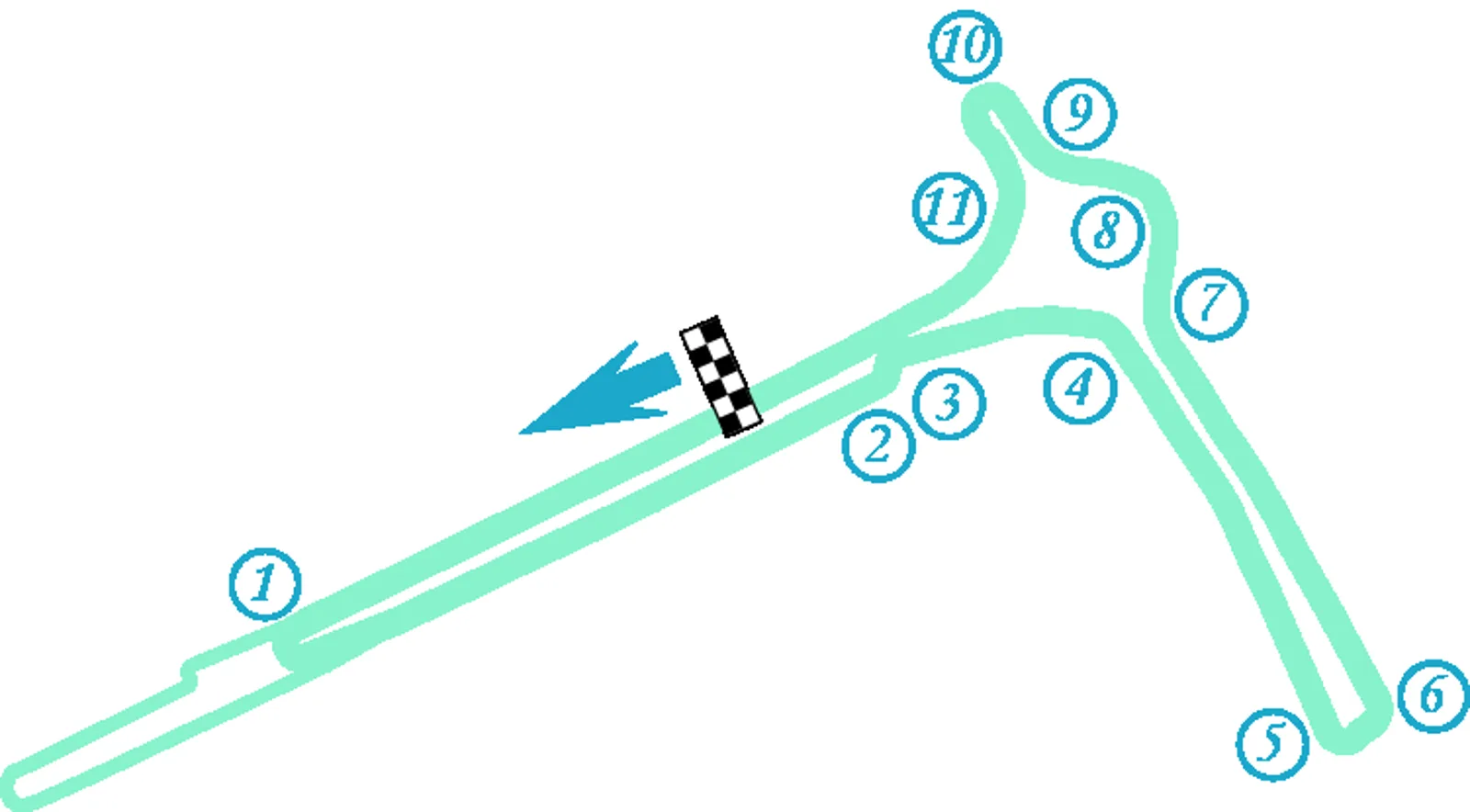
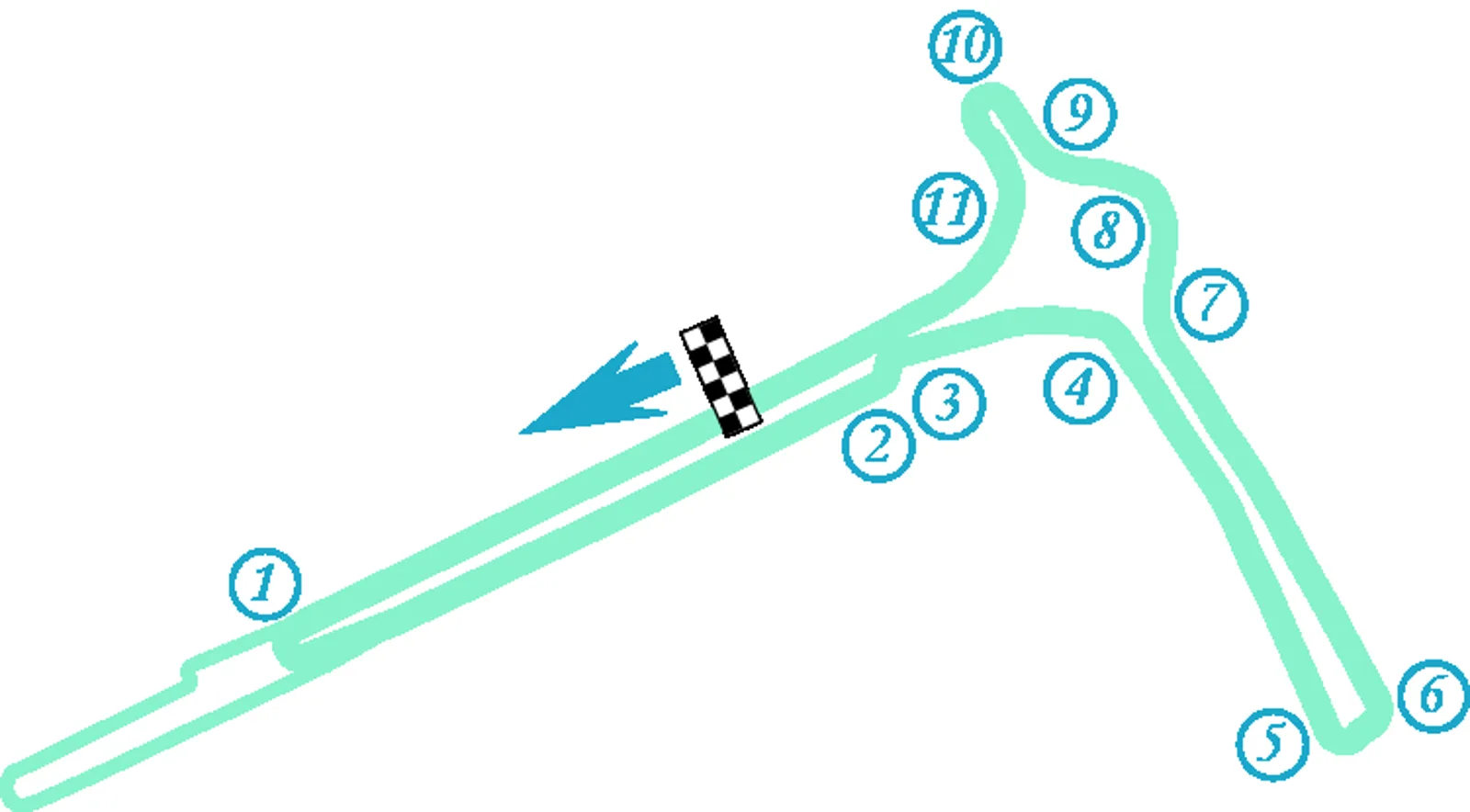
Eleven turns make up the Berlin Street Circuit, which measures 2.030 km (1.261 mi) around the centre of Berlin. Its pit lane ran along Karl-Marx-Allee, and the course looped around Strausberger Platz and Alexanderplatz. The meeting was round eight of the ten single-seater electric races in that season.
Construction of the track began on 9 May, twelve days before the race. Crews therefore had a short window to lay out barriers, curbs and grandstands on the city's streets before the cars arrived.
A 2.030 km city-centre course, a 48-lap race and a result that left the championship open going into London.
Why was a city-centre race in Berlin controversial?
The plans drew criticism because motor racing is banned on Germany's public roads, and two central district mayors opposed a race in the city centre. The Senate of Berlin granted a dispensation in March 2016 that allowed the event to proceed on the city's streets.
The original idea had been to use Tempelhof Airport. In November 2015 reports said that was highly unlikely, because the site was sheltering refugees. Formula E's chief operating officer, Alejandro Agag, then pursued the Norisring in Nuremberg, with Munich and Berlin as alternatives, but talks with the Norisring had not produced a decision by the 15 January deadline.
A month later the organisers said the race would take place in downtown Berlin, subject to approval from city authorities and from the sport's governing body, the Federation Internationale de l'Automobile. Mayors Monika Herrmann and Christian Hanke both said they did not want a race in the centre of the city.
The FIA World Motor Sport Council had confirmed the race in October 2015 as part of a ten-round electric calendar. That made the Berlin event the eighth of those meetings, and it marked the second time the championship had come to the German capital.
Which drivers and teams took part?
Nine teams entered two drivers each, giving 18 starters. Only one driver changed before the race. Antonio Felix da Costa, who had raced for Aguri since the opening round in Beijing, missed the weekend because of a commitment in the Deutsche Tourenwagen Masters at the Red Bull Ring, and endurance driver Rene Rast took his place.
Rast's appearance was his first in a single-seater since the 2004 Formula BMW ADAC season. He practised on the team's simulator to get used to the car. Oliver Turvey's planned replacement, Ben Hanley, did not take the seat, because the Super GT race at Autopolis was postponed after the Kumamoto earthquakes and Turvey's place was reinstated. Stephane Sarrazin's car had suffered chassis damage, and his team first said he would not race, but repairs were finished in time.
The championship also had a power twist: Fan Boost adds 100 kW (130 hp) to a driver's second car, and the three drivers who received it, Buemi, Stephane Sarrazin and Nick Heidfeld, were picked by a fan vote.
How did practice and qualifying set the grid?
Jean-Eric Vergne took pole with a lap of 57.811 seconds in the Super Pole shootout, his fourth career pole and his team's third in a row that season. Sebastien Buemi, who had posted the fastest group-stage time, qualified second, and the race began with Vergne ahead of him on the grid.
Two practice sessions were held on Saturday morning in dry weather, the first of 45 minutes and the second of 30 minutes. Buemi set the fastest lap of the first session, 57.648 seconds, using 200 kW of power. Nelson Piquet Jr. set the fastest lap of the second session at 57.909 seconds, but he had only one timed lap after a battery failure on his second car. Sarrazin hit the turn eleven barrier in practice, which briefly stopped the session.
Saturday afternoon's qualifying lasted 60 minutes. The cars were arranged in four groups of five, each with six minutes on track and two timed laps. The five fastest overall went through to Super Pole, where one car ran at a time in reverse order from fifth to first.
In Super Pole, Abt made an error in the final corner, and Heidfeld damaged his front-left suspension on the turn eight barrier. Vergne was quickest through the second sector and took provisional pole, despite a narrow near-collision with Senna, who was exiting the pits.
After qualifying, Senna and Heidfeld dropped to 15th and 16th after penalties for tyre pressures. Sarrazin and Jerome d'Ambrosio were penalised in the same way and lined up at the rear of the grid.
How did the 48-lap race unfold?
Buemi took the lead from Vergne into the first corner, and he held it through the mandatory mid-race car switch. Vergne lost front wing material at the chicane, Abt passed him for second on the tenth lap, and a safety car period on the forty-second lap closed the gaps before the finish.
The first lap was messy. Vergne made a move on the inside and retook the lead, as Buemi had done on the opening lap, and the top six bunched up. Rast, Piquet and Turvey were shown black flags with an orange circle after damage to their cars, sending them into the pit lane for repairs. Buemi retook the lead from Vergne on the inside into turn five later on, and the two narrowly avoided contact.
Abt passed Vergne for second on the tenth lap at the turn one hairpin. Sam Bird had been pressing Abt for third, but he was ordered into the pit lane after taking a kerb too fast, which loosened his front wing end-plate. He emerged 14th and protested the penalty by radio.
Prost closed on Vergne, and the pressure caused Vergne to hit the bollards at the chicane, which smashed the front right of his wing. On lap 24 he took too much kerb at the same chicane and lost the wing altogether. Prost passed him for third, and debris littered the track.
The mandatory pit stops, when drivers switched into a second car, began on lap 24. Di Grassi stayed out an extra lap and made his stop on the twenty-fifth lap. After the stops Buemi led, Abt was second, Prost third and di Grassi had moved past Vergne into fourth.
Officials called a full course yellow on lap 28 so marshals could clear the debris. Racing resumed a lap later with Buemi 11 seconds clear of Abt. Di Grassi then made his way past Prost, passing on the inside at turn one on the thirty-ninth lap, after a long battle. Senna set the race's fastest lap, 59.067 seconds, on the same lap and earned two points for it.
Duval lost control on the forty-second lap and ran backwards into the turn seven barrier. The safety car came out, the field was neutralised, and the race restarted with two laps left. Abt tried to let di Grassi through, but could not, because Prost was closing and a swap risked losing him a podium place. Buemi held on to win, his third victory of the season.
What did the result mean for the championship?
Buemi's win cut Lucas di Grassi's lead in the drivers' standings to one point. Sam Bird stayed third despite scoring no points, and Jerome d'Ambrosio kept fourth. In the teams' table, e.dams-Renault extended its lead over Audi Sport ABT to 11 points with two races left.
Before the race, di Grassi led the drivers' table with 126 points, 11 ahead of Buemi, who was himself 33 points ahead of Bird. d'Ambrosio was fourth on 64 points and Sarrazin fifth on 58. The team table had e.dams-Renault on 165 points and Audi Sport ABT seven points behind.
After Berlin, Prost's fourth place moved him past Sarrazin into fifth. Virgin gained a place to take third in the teams' table and Dragon dropped to fourth, while Mahindra stayed fifth with two races left. Going into the race, Dragon had 112 points and Virgin 106.
What were the reactions after the race?
Di Grassi was not in favour of team orders that handed one driver an advantage over another. He said he would rather lose the title on track than have a rival hand it to him, and he said the title was open going into London.
Abt said it did not matter to him whether he finished second or third, and he insisted that the team was aiming to win both championships. His father and team owner, Hans-Jurgen Abt, accepted that his son had not followed the team order and said driver integrity needed protecting.
Turvey and Bird were puzzled by the number of penalties. Turvey asked why a car received a technical flag for visual damage, and Buemi criticised the decision to send out the safety car when, in his view, there was no danger on the track.
What are the key details of the 2016 Berlin ePrix?
| Detail | Figure |
|---|---|
| Date | 21 May 2016 |
| Circuit | Berlin Street Circuit, 2.030 km (1.261 mi), eleven turns |
| Race length | 48 laps |
| Start time | 16:00 Central European Summer Time |
| Weather | Air 23.5 to 24.05 C, track 24 C |
| Spectators | 15,000 |
| Pole position | Jean-Eric Vergne, 57.811 seconds in Super Pole |
| Winner | Sebastien Buemi, e.dams-Renault, from second on the grid |
| Second and third | Daniel Abt and Lucas di Grassi, both Audi Sport ABT |
| Fastest race lap | 59.067 seconds, Bruno Senna, thirty-ninth lap, for two points |