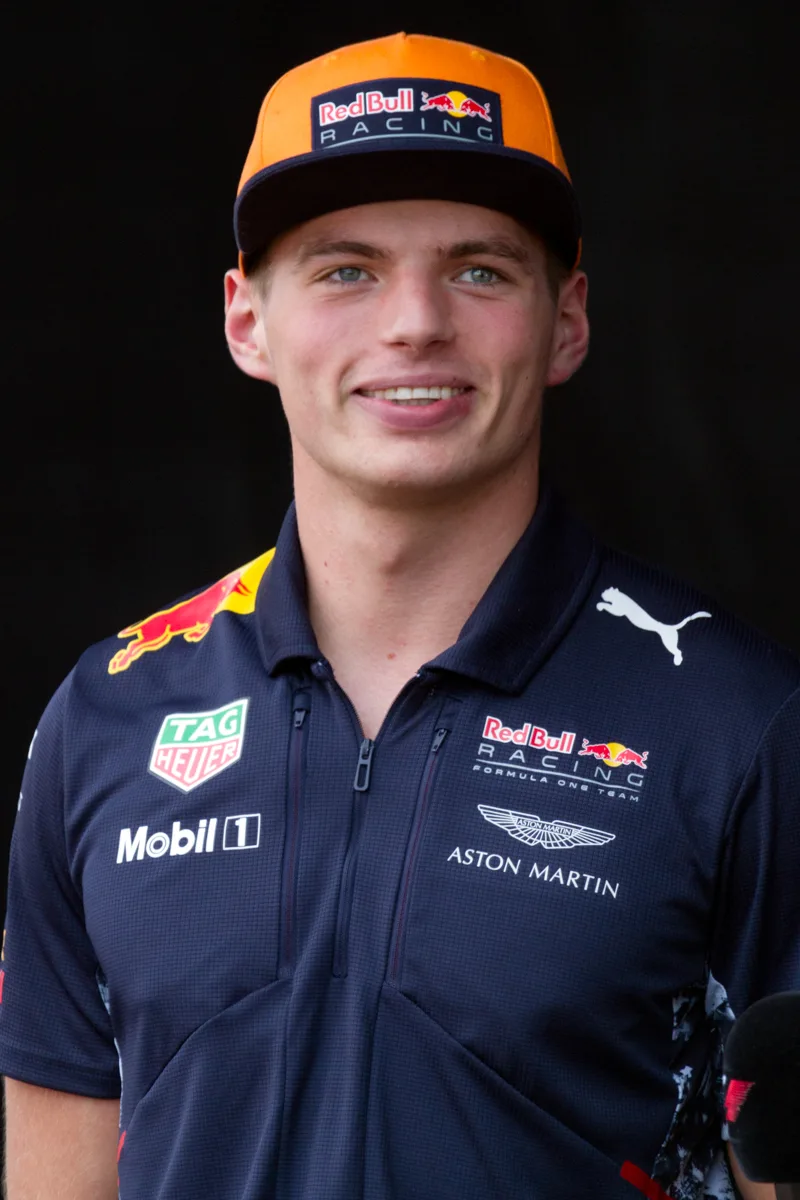
Max Verstappen led every lap from pole in the most physically demanding race many drivers had known, under a tyre limit the FIA had never enforced for safety before.
Max Verstappen won the 2023 Qatar Grand Prix at Lusail from pole position, leading every lap for Red Bull. Oscar Piastri was second and Lando Norris third for McLaren. Verstappen had already clinched his third drivers' title in the sprint the day before, when Sergio Perez crashed out.
The 2023 Qatar Grand Prix was the seventeenth round of the season and the fourth sprint weekend, held at the Lusail International Circuit on 8 October 2023. Extreme heat dominated the weekend, and several drivers called it the most difficult race they had ever experienced. The race also brought the first enforced limit on tyre stint length in Formula One for safety reasons.
It was the second running of the Qatar Grand Prix. The 2021 inaugural race had been a substitute for the cancelled Australian Grand Prix, and the 2022 edition was not held because Qatar was hosting the FIFA World Cup. The 2023 race was the first to be part of a season's original schedule, and it opened a ten-year contract with the FIA running until 2032.
Who won the 2023 Qatar Grand Prix?
Max Verstappen won from pole position for Red Bull, leading every lap, setting the fastest lap and taking his fourth grand chelem. Oscar Piastri and Lando Norris recovered from lower grid positions to finish second and third for McLaren, which gave the team its 500th and 501st podiums.
Verstappen had already clinched the drivers' title the day before in the sprint, so the grand prix was contested with the championship settled. The result was a comfortable win in conditions that tested every driver.
Verstappen led every lap in the heat at Lusail, under the first tyre limit the FIA had enforced for safety.
The title race before Qatar
Verstappen led the drivers' championship by 177 points from his team-mate Sergio Perez, with Lewis Hamilton third, a further 33 points behind. Red Bull had already secured the constructors' title at the Japanese Grand Prix, and it led Mercedes by 318 points, with Ferrari a further 20 points back.
Verstappen could have wrapped up the title in the sprint by finishing sixth with Perez winning. If he had not scored in the sprint and Perez had won, eighth in the grand prix would still have been enough for him regardless of Perez's result. The advantage would have equalled the 146 points still available, and Perez could not have won on a tie-break because Verstappen had more wins.
Liam Lawson was in the Red Bull seat originally held by Nyck de Vries, so the line-up was otherwise unchanged from the season entry list.
Why was there a tyre limit?
Pirelli brought its C1, C2 and C3 compounds. After practice and qualifying, Pirelli's analysis raised concern about damage from the kerbs. The 2021 event had seen four front-left tyre failures. The FIA said that, if the concerns persisted after the sprint, it would limit tyres to 20 laps for the first set and 22 for later sets.
Turns 12 and 13 had their track limits altered before the sprint shootout, and Saturday gained a ten-minute acclimatisation session. Because the sprint had produced frequent safety cars, Pirelli had too little data to refine its analysis. The FIA therefore cut the limit to 18 laps per set before Sunday's race.
The mandate to make three pit stops was removed, although the 18-lap rule still made three stops likely. Laps run behind the safety car did not count towards a tyre's life, so a safety car could make a two-stop race possible. It was the first time the FIA had enforced stint lengths in a Formula One race for safety reasons. Observers had noticed the carcass cord separating from the topping compound, which could lead to a blowout.
Practice and qualifying
The only scheduled practice session was held on 6 October at 16:30 local time (UTC+3). Verstappen topped it, ahead of the Ferraris of Carlos Sainz Jr. and Charles Leclerc. An extra ten-minute acclimatisation session was held on 7 October so that drivers could adapt to the changes made to the circuit.
Qualifying was held on 6 October at 20:00 local time. Verstappen topped the first and third segments to take pole, ahead of George Russell and Hamilton. Track limit violations affected Norris, Piastri and Perez, and Perez's quick time in the third segment was deleted, leaving him unable to challenge for a better grid position.
Lance Stroll failed to escape the first segment again, and after leaving his car he appeared to shove his personal trainer in frustration. He later told Autosport that the two remained on good terms and that he had simply acted out of frustration.
Perez qualified 13th but had to start from the pit lane. Parc ferme rules had been breached because new power unit elements had been fitted without the technical delegate's approval, and the new chassis was treated as a new car.
The sprint shootout was moved from 16:00 to 16:20 on 7 October, because of the extra acclimatisation session. Verstappen made a mistake that deleted his times, which let the McLarens of Piastri and Norris take a one-two ahead of him. Stroll again failed to get out of the first segment, and Logan Sargeant was allowed to race despite missing the 107% rule, at the stewards' discretion.
How did the sprint change the title picture?
Piastri won the sprint for McLaren, his first competitive victory of any kind since his last Formula 2 race. Verstappen finished second, and that was enough to clinch his third consecutive world title because Perez had crashed out and was mathematically eliminated. Norris was third.
The sprint saw three safety cars and five retirements. Lawson and Sargeant both spun into the gravel, and Esteban Ocon, Perez and Nico Hulkenberg crashed together after the Alpine locked up, with Ocon running into the side pod of Perez's car. The stewards treated the incident as a racing incident and took no further action.
Alexander Albon started 17th and climbed ten places to finish seventh, while Fernando Alonso was eighth. Stroll and Charles Leclerc both exceeded track limits and had five seconds added to their times after the race.
How did the race unfold in the heat?
Carlos Sainz Jr. did not start, because a fuel leak had been found before the race. Hamilton's race ended on lap 1, when he turned into George Russell's Mercedes at the first corner. The contact broke the hub off his wheel and sent him spinning into the gravel.
The safety car period ended on lap 4. From then on Verstappen led every lap, setting the fastest lap and winning ahead of Piastri and Norris, who had both recovered from lower grid positions. Perez started from the pit lane, received a track limits penalty and recovered to tenth after Stroll was penalised.
Hulkenberg was due to start from 14th, but he mistakenly took the 12th grid slot left empty by Sainz. He was given a ten-second penalty for the error. Ocon was sick in his car twice during the race but managed to finish seventh.
The classification carried several time penalties. Stroll and Gasly each received two five-second penalties, while Albon received two without any change to his final position. Perez finished 11th with a five-second penalty, but he gained a place when Stroll's penalty was applied.
McLaren's pit crew set a new record for the fastest stop when they serviced Norris in 1.80 seconds. The previous record, 1.82 seconds, had been set by Red Bull at the 2019 Brazilian Grand Prix, when it serviced Verstappen.
Results at a glance
| Position | Driver | Team | Note |
|---|---|---|---|
| 1 | Max Verstappen | Red Bull Racing | Pole, led every lap and set the fastest lap |
| 2 | Oscar Piastri | McLaren | Recovered from lower grid positions; won the sprint |
| 3 | Lando Norris | McLaren | Part of McLaren's 500th and 501st podiums |
| 7 | Esteban Ocon | Alpine | Sick in his car twice, but finished seventh |
| DNF | Lewis Hamilton | Mercedes | Hub broke after turning into Russell at the first corner |
| DNS | Carlos Sainz Jr. | Ferrari | Fuel leak discovered before the race |
Several drivers said the race was the most physically demanding of their careers, and Hulkenberg's grid error added to a difficult afternoon. The heat and the tyre limit combined to make strategy and survival the main themes of the race.
Why was the race so physically demanding?
The heat left several drivers close to collapse. Stroll said he had been passing out in the car and suffered blurred vision, while Russell said he had been close to losing consciousness at the end of the race. Piastri, Leclerc, Russell, Ocon, Verstappen and Norris all described it as the most physically demanding race of their careers.
Stroll went to the medical centre straight after the race, and Albon was also sent there because of heat exposure. Sargeant chose to retire with heat stroke and dehydration, made worse by the flu-like symptoms he had brought into the weekend.
What is the lasting significance of the race?
The race confirmed Verstappen's status as the dominant driver of the season, while McLaren's sprint win and two podium finishes showed the strength of its weekend. The constructors' crown had been settled in Japan earlier in the season, so Qatar added to a year that was already decided.
The tyre limit will be remembered as the first enforced stint-length rule in Formula One for safety reasons, recommended by Pirelli and applied by the FIA. The race also showed how much the heat could change the way drivers and teams approached a grand prix.