Lucas di Grassi started fifteenth and won the Mexico City ePrix by conserving energy, while Turvey, Lopez and Prost each led during a race shaped by three safety car periods.
The 2017 Mexico City ePrix was a Formula E race held on 1 April 2017 at the Autodromo Hermanos Rodriguez in front of 36,000 people. Lucas di Grassi of Audi Sport ABT won from fifteenth on the grid, with Techeetah's Vergne second and Virgin's Bird third.
Lucas di Grassi won in Mexico City on 1 April 2017, the fourth round of the 2016-17 season, starting from fifteenth. Jean-Eric Vergne finished second for Techeetah and Sam Bird was third for Virgin, in a race shaped by three safety car periods and careful energy management.
Why did the 2017 Mexico City ePrix matter?
This was di Grassi's opening victory of the campaign, and his fifth overall. It also reduced Sebastien Buemi's lead in the Drivers' Championship from 29 points to five, which made the title race noticeably tighter going into the middle of the year.
The event was one of twelve scheduled single-seater electric car rounds that season, and it came fourth in the order. The FIA World Motor Sport Council fixed its place on the calendar in September 2016, and it was the only race of the year on a permanent track.
The result also moved the teams. Audi Sport ABT cut the gap to e.Dams-Renault to 31 points, while Virgin climbed from sixth to third with the season still having plenty of rounds to run.
A race of three safety cars, a fifteenth-place start and a winner who kept his energy when the rest were spending theirs.
What was the Mexico City circuit like?
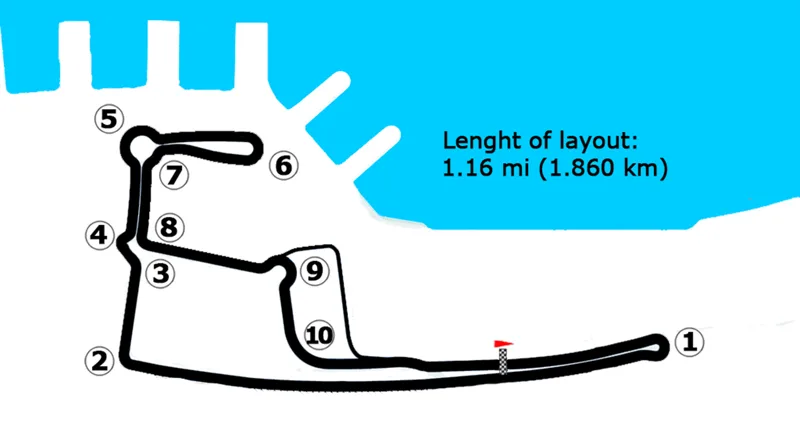
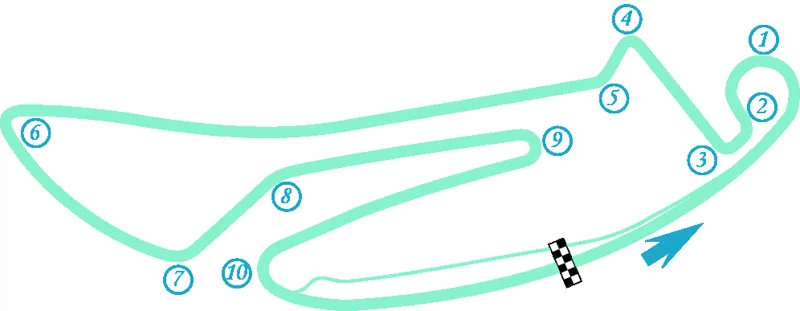
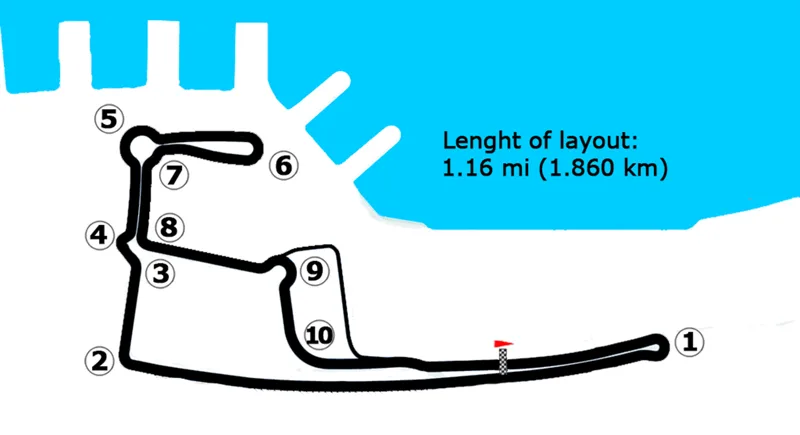
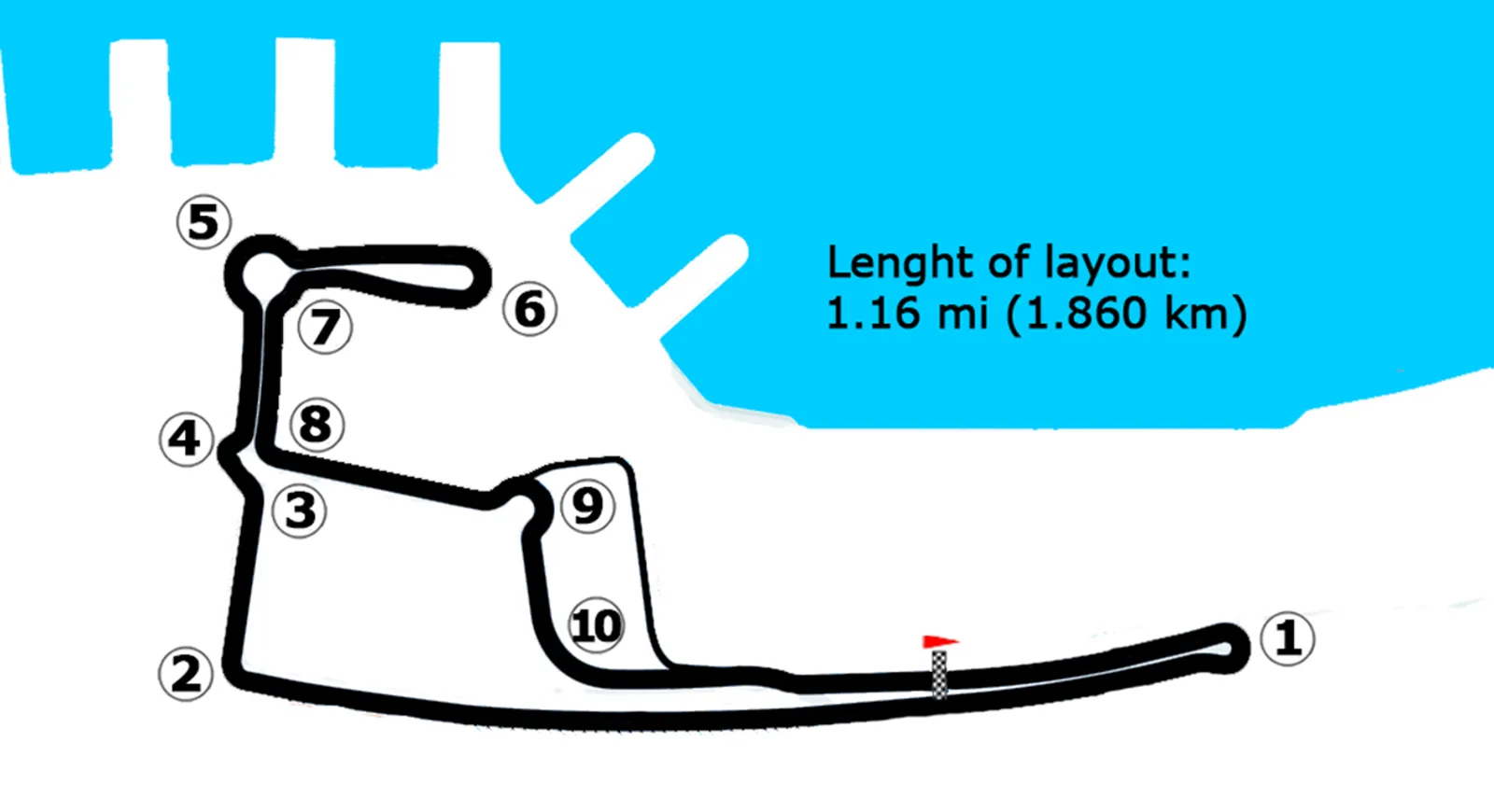
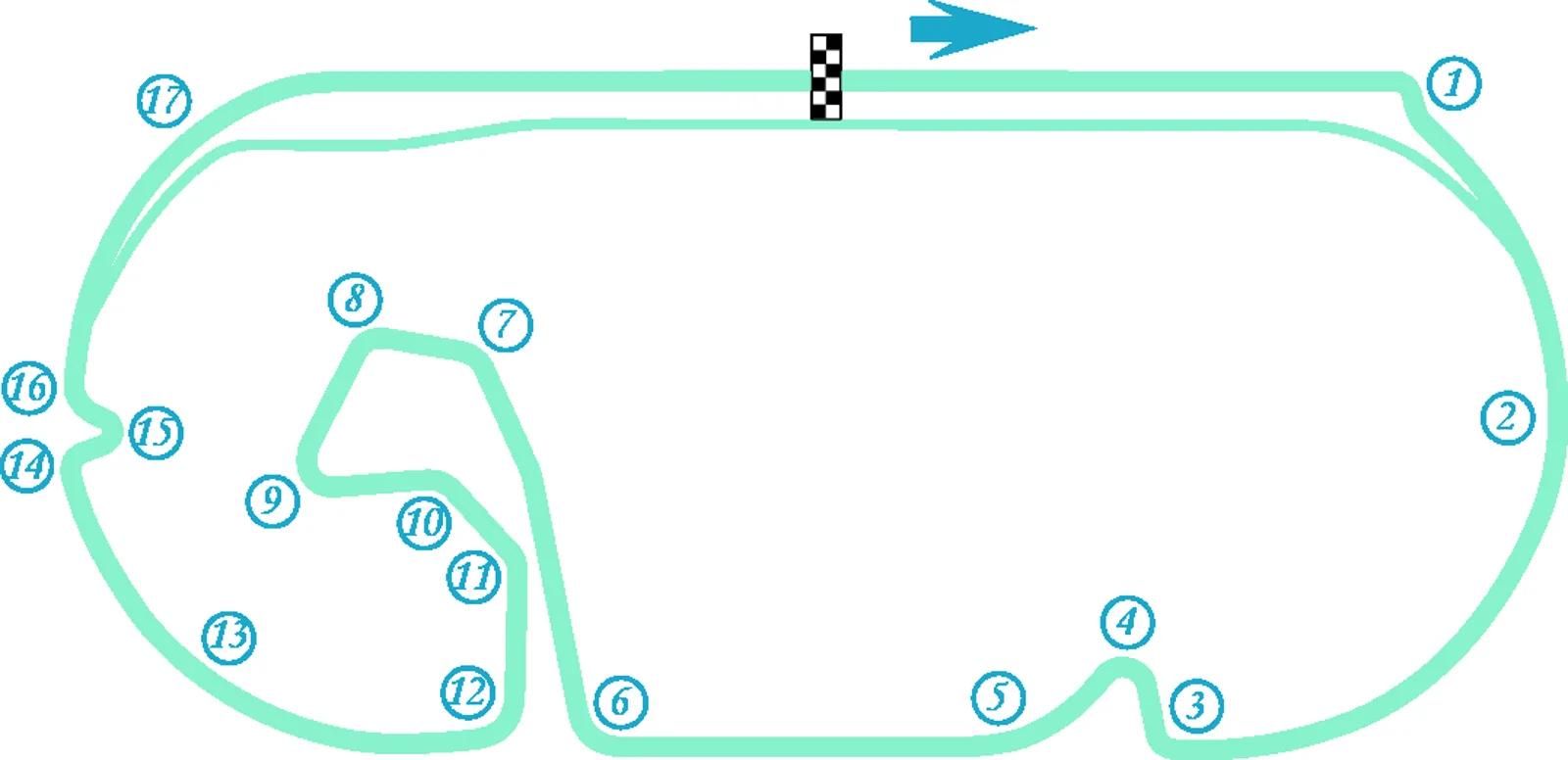
The Autodromo Hermanos Rodriguez layout measured 2.093 km (1.301 mi) around, with 17 corners and a clockwise direction. It mixed Grand Prix and oval sections, which made it unlike the street circuits used by most of the series. The layout gave drivers a very different feel from the tight street tracks used elsewhere in the series.
The circuit had changed since 2016. The first corner had been turned into a right-hander, and the final chicane was reworked so that drivers could not short-cut it to gain an advantage.
Where did the championship stand before the race?
Sebastien Buemi of e.Dams-Renault led the drivers' standings with 75 points, ahead of di Grassi in second and Nico Prost in third. Vergne sat fourth on 22 points, with Felix Rosenqvist fifth on 20. The standings showed a close contest at the front, and every point mattered.
In the teams' table e.Dams-Renault led on 111 points, with Audi Sport ABT second on 60 and Mahindra third on 37. The top of both tables was close enough that a single good weekend could change the picture.
Who was in the field and who replaced whom?
Ten teams entered two drivers each, so 20 competitors took part. Before the race, Ma Qinghua was replaced in a Techeetah car by former Haas driver Esteban Gutierrez, who had explored seats with three teams before signing with Techeetah. Team-mates shared the same schedule and the same tight preparation for the weekend.
Buemi, Stephane Sarrazin and Jose Maria Lopez missed the shakedown, because they had been at the Monza event where Toyota revealed its 2017 TS050 Hybrid. Sarrazin's Venturi and Lopez's Virgin were driven that day by Tom Dillmann and Alex Lynn.
How did the practice sessions go?
The Friday shakedown lasted 30 minutes, and Bird set the fastest time there at 1 minute, 8.737 seconds. On Saturday morning there were two sessions, of 45 minutes and 30 minutes, held in warm and dry weather. Several drivers found the dusty surface difficult, which kept the times close.
Buemi arrived in Mexico City early on Saturday, and he still set the best time in the first session, 1 minute, 2.222 seconds, using 200 kW (270 hp) on his fastest lap. The dusty track caused several drivers to spin, and Maro Engel stopped on track with a battery management fault, which brought out a brief full course yellow.
In the second session Buemi was fastest again at 1 minute, 2.164 seconds, with di Grassi and Vergne a tenth of a second behind. Lopez wrecked his front corner by turning in too soon for turn 14 and striking a barrier, and the fastest thirteen drivers finished within a second of one another.
How did qualifying work?
Saturday qualifying lasted 60 minutes and was divided into four five-car groups. Each group had six minutes of track time, with two timed laps per driver and one of them at maximum power. Drivers had to balance the need for a fast lap with the limits on energy use.
The fastest five drivers went into Super Pole, which ran in reverse order from fifth to first. The driver and team with the fastest time earned three points, and the rest of the grid was ordered by lap times, with Super Pole runners ahead of everyone else.
Turvey set the quickest lap of group qualifying at 1 minute, 2.712 seconds, but the real drama came in Super Pole, where Abt took provisional pole at 1 minute, 2.711 seconds.
Why did Abt lose pole position?
Checks showed Abt's tyres were under the 1.60-bar (160 kPa) minimum, which deleted his lap time and dropped him to eighteenth on the grid. Turvey therefore earned his first career pole. The penalty was a costly reminder for the team.
Maro Engel and Stephane Sarrazin were also dropped ten places for gearbox changes. Had his time stood, Abt would have claimed his first pole of the year, his second overall, and his first since Long Beach in 2015.
How did the race start?
The race began at 16:00 Central Daylight Time, in front of 36,000 spectators. The air was dry and sunny at 26.9 to 27.5 degrees Celsius (80.4 to 81.5 degrees Fahrenheit), and Turvey got away cleanly to hold the lead into the first corner.
Fan Boost was handed to Abt, di Grassi and Buemi after a fan vote. Vergne tried to pass Lopez on the inside, but Heidfeld moved right and took third from him on the outside.
Between turns three and five a concertina effect developed, and Sarrazin tapped di Grassi's rear, which broke a wing. The stewards deployed the safety car on lap two to clear debris from the chicane, and Turvey led again at the restart on lap five.
How did the lead change hands?
Turvey's car lost power at the entry to turn 13, and after three laps he was unable to restart and retired. That handed the lead to Lopez and brought out the safety car for a second time. The changes at the front made the race hard to read for much of the first half.
Di Grassi and d'Ambrosio made their mandatory switch into second cars on the eighteenth lap. The switch allowed them to gain positions during the stops, but it meant they had to save energy later on.
Vergne pitted at the end of lap 24 to avoid turbulence from the cars ahead and to try to undercut the field, and the rest of the field followed a lap later. Prost then led for a while before he stopped on lap 26.
What did the third safety car change?
The third and final safety car came out when Duval retired with a battery problem at the chicane. It let the field close up behind di Grassi and d'Ambrosio, who had been half a lap ahead, and the safety car returned to the pit lane on lap 30.
At the restart Vergne went for Lopez in the chicane, and the two made contact at turn three. He tried again the next lap, but Lopez cut the chicane to avoid him, and Vergne radioed that the position should be given back.
The stewards looked at both Andretti cars after their stops came in under the one-minute minimum. Di Grassi, meanwhile, pulled away from the rest of the field.
How did the closing laps unfold?
Felix da Costa retired on the thirty-third lap with a broken driveshaft. His teammate Frijns was given a drive-through penalty for a pit stop below the minimum time, which dropped him down the order. The battles behind the leaders were as close as those at the front.
Buemi attacked Rosenqvist with his Fan Boost, but he spun while braking for turn one, narrowly missing the stranded car of Lopez. Buemi still set the race's quickest lap on lap 40, which earned him one point, a lap of 1 minute, 3.102 seconds.
D'Ambrosio locked his tyres for the first corner and Vergne took second. Then Prost hit the rear of Heidfeld at turn eight, sending Heidfeld spinning across the path of Rosenqvist, who could not avoid him. Evans continued after contact and moved ahead of Prost for fifth.
How did di Grassi win the race?
Di Grassi saved energy through the closing stages and won ahead of Vergne, his first victory of the year. Vergne finished 1.966 seconds behind, while Bird passed d'Ambrosio on the outside at turn three on lap 44 to take third.
D'Ambrosio ran out of electrical energy late on, which promoted Gutierrez to tenth. The win ended e.Dams-Renault's run of six consecutive victories, a streak that had started at the 2016 Berlin ePrix.
Di Grassi also led more laps than anyone else, with 19 in total, and the lead changed hands three times between four drivers.
Who finished where?
The top ten finishers are listed below. Abt recovered well from his grid demotion, and the Jaguar pair of Evans and Carroll both scored, while Lopez returned from a spin on lap 35 to take sixth. The table below lists them in order, with the team and a short note on each result.
| Finish | Driver | Team | Note |
|---|---|---|---|
| 1st | Lucas di Grassi | Audi Sport ABT | Started fifteenth; conserved energy to win |
| 2nd | Jean-Eric Vergne | Techeetah | 1.966 seconds behind the winner |
| 3rd | Sam Bird | Virgin | Passed d'Ambrosio on the outside on lap 44 |
| 4th | Mitch Evans | Jaguar | Continued after contact with Prost's collision |
| 5th | Nico Prost | e.Dams-Renault | Delayed by contact with Heidfeld |
| 6th | Jose Maria Lopez | Virgin | Recovered from a spin on lap 35 |
| 7th | Daniel Abt | Audi Sport ABT | Recovered from eighteenth on the grid |
| 8th | Adam Carroll | Jaguar | Scored alongside his team-mate Evans |
| 9th | Nelson Piquet Jr. | NextEV | Late top-ten finish |
| 10th | Esteban Gutierrez | Techeetah | Promoted when d'Ambrosio ran out of energy |
Frijns, Heidfeld, Buemi, d'Ambrosio, Sarrazin and Rosenqvist closed the classification. Buemi finished fourteenth, but his point for fastest lap softened the blow.
What did the drivers say afterwards?
Di Grassi praised his mechanics after the race and said that Formula E could move from one extreme to the other in a single race. He admitted that he had believed the win was out of reach on three occasions, and he thought he could have held on to his advantage over Vergne without the third safety car.
Vergne said he had started a long way back but felt he had the right team and car to fight for the championship. Bird said the race was good for everyone watching on television, and he was pleased with his move on d'Ambrosio.
Vergne was angry at d'Ambrosio's defensive driving, which he said was not acceptable, and he questioned the Dragon driver's judgement. D'Ambrosio insisted he was simply doing his own race and had steered in early without changing his line.
D'Ambrosio also said his steering wheel showed energy targets that did not match what Dragon had given him, which led him to push harder than he needed to. The stewards took no action over the Prost and Heidfeld incident, and Heidfeld blamed both Andretti cars for leaving the pits under the minimum time.
Jaguar's team boss, James Barclay, said the crash had left the squad gutted, and he praised the strength of Evans' car. Evans himself thought he would not finish after the collision, but he was pleased to score his first Formula E points.
What did the result mean for the championship?
Buemi held top spot on 76 points, yet his margin over di Grassi was cut from 29 points to five. Prost remained third on 46 points, and Vergne's second place put him within six points of Prost. With eight rounds still to run, the title race was wide open.
Bird passed Rosenqvist for fifth. In the teams' table Audi Sport ABT reduced its gap to e.Dams-Renault to 31 points, and Virgin and Techeetah, with 43 and 41 points respectively, moved past Mahindra, with eight rounds still to run.