Peterhansel won the cars for Peugeot after a rain- and heat-hit route, cancelled stages and a court dispute over a refuel in stage 8.
The 2016 Dakar Rally was won in the cars by Stephane Peterhansel in a Peugeot 2008 DKR, with Toby Price taking the bikes for KTM. The 38th edition ran through Argentina and Bolivia, and its stages were cut short by rain and heat.
The 38th running of the Dakar Rally in 2016 was staged in South America for the eighth year in a row. The field set off from Buenos Aires and crossed Argentina and Bolivia, with Peugeot's cars dominating the top class while weather, cancelled stages and a court dispute shaped the rest of the race.
Where did the 2016 Dakar Rally run?
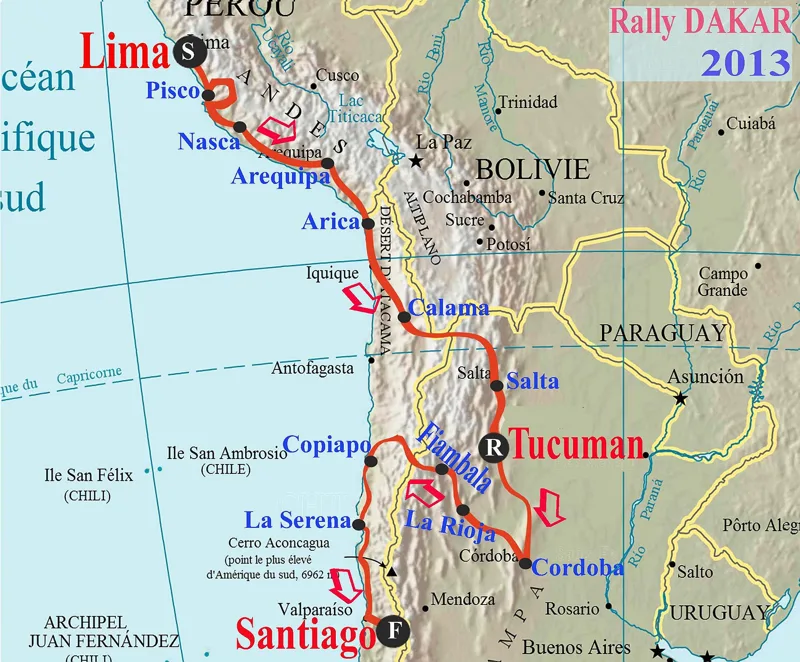
The 2016 Dakar Rally started in Buenos Aires, Argentina, on 2 January and ran through Argentina and Bolivia. It was the eighth successive year the event had been held in South America, and it opened with an 11 km prologue in the city.
The prologue was marred by an accident in which a car went through the spectators and injured 10 people, two of them seriously. The organisers neutralised the race for the remaining competitors, and the trucks did not start racing until stage 2.
Peugeot's 2008 DKR took nine stage wins from the 12 run, and Peterhansel took the cars title despite a court dispute over a stage 8 refuel.
Why did the route lose its desert stages?
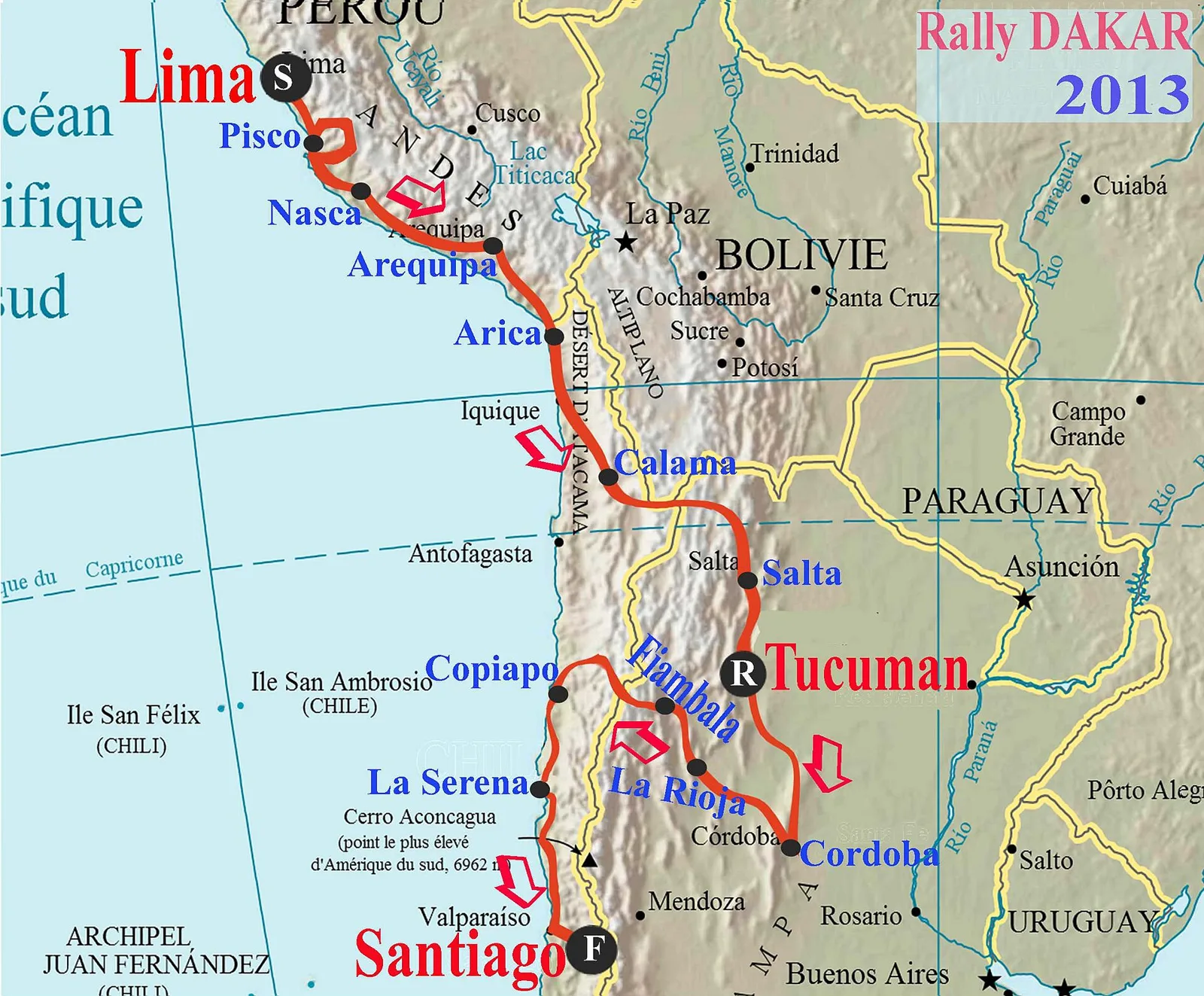
Chile refused to take the rally, and Peru also refused with about four months to go before the start. Without the Atacama Desert and the Andes, the route was mainly based in Argentina, with many fast, narrow tracks in the style of the World Rally Championship and few stages in fully open terrain.
That shift left navigation problems and a lack of the open desert running that usually defines the event. Dakar director Etienne Lavigne floated a move to Southern Africa to put pressure on South American countries, but he later confirmed that the rally would stay in South America while new countries were sought.
How did El Nino change the stages?
The El Nino weather pattern brought heavy rain in the first week and massive heat in the second, and it shortened most of the stages. Stage 1 was cancelled because of bad weather, and stages 2 and 3 were cut by about 100 km, which turned a planned route into a series of shorter days.
Stage 3 was shortened a second time for the trucks after part of the track collapsed in the rain. Stages 9 and 11 were shortened by the heat, and the last 33 km of stage 10 were cancelled because rain had flooded the rivers. Stage 7 was also cut for bikes and quads, when the second timed sector was called off.
The first Marathon stage was run as two legs, stages 4 and 5. Crews had to enter a closed park at the end of the first leg, where they could not carry out repairs or maintenance, even without help from their support teams.
Why did cancelled sections cause controversy?
The cancellations caused controversy because the organisers did not appear to treat riders the same way. In stage 7 the second timed sector was cancelled even though 22 riders had already reached the finish, and in stage 9 the same thing happened after 12 bike riders had finished.
In stage 9 the classification was changed so that the riders who had finished were timed at the end of the second sector, while the rest were given a theoretical time 34 minutes slower than the first finisher. Paulo Goncalves was penalised for repairing his bike in one stage, that penalty was withdrawn, and a further penalty for repairs after the second sector was applied more than 24 hours later.
The final figure was close to 40 minutes, and it was added at the end of stage 10, which ended his hopes of winning. The safety record was a second source of concern. Several accidents involving assistance trucks killed local people, and crews said that driving about 20 hours between bivouacs had cost them sleep. In stage 7, Lionel Baud's Mitsubishi crashed and killed a spectator in Bolivia.
How did the bikes class unfold?
Toby Price of KTM won the bikes class, continuing KTM's run of success. It was the first Dakar without Cyril Despres and Marc Coma, who had dominated the previous ten editions, and Husqvarna, with Ruben Faria, joined the fight for the lead. Honda was expected to challenge, while Yamaha, with Helder Rodrigues, played a smaller role.
Joan Barreda won the prologue and set the fastest times in stages 3 and 4, but he received two penalties for speeding in the connections. In stage 6 mechanical problems left him five hours behind Price, and he refused to continue after losing so much time the following day. Kevin Benavides, an Argentinian rookie, won stage 3, and the privateer Stefan Svitko took the lead after that stage.
Paulo Goncalves won stage 4 for Honda ahead of Faria and took the lead. Faria then crashed in stage 6, breaking a wrist, and he retired while seventh overall. Price won stages 5, 6 and 8, and Goncalves suffered a spectacular accident in stage 8 but still took his Honda to second on the stage.
In stage 7, Matthias Walkner suffered a serious accident that broke his femur and ended his race, and Antoine Meo won the stage. Svitko won stage 10, and Goncalves, after his penalty, crashed again in stage 11 and retired with a head injury. Helder Rodrigues gave Yamaha the first stage win for a bike that was neither a KTM nor a Honda in stage 12, and Pablo Quintanilla won stage 13 on a Husqvarna.
How did the quads class unfold?
The Patronelli brothers returned to dominate the quads class, and Marcus Patronelli won overall after they had ruled the South American Dakar between 2010 and 2013. The 2014 champion, Ignacio Casale, swept the first stages before a broken clavicle in stage 6 forced him out.
Brian Baragwanath won stage 3 after finishing second on stage 2. Juan Carlos Carignani won stage 4 after the organisers cancelled the last timed section, which denied Marcus Patronelli what would have been his first stage win. Alexis Hernandez won stage 5, and the Russian rider Sergey Karyakin took the lead.
Marcus Patronelli then won stage 6, and his brother Alejandro climbed to the top of the overall standings. Marcelo Medeiros, third overall at one point, and defending champion Rafal Sonik were among the withdrawals after crashes and mechanical problems. Lucas Bonetto won stage 7, and in the second week the Patronelli brothers finished almost every stage in the top three and increased their lead.
How did Peugeot dominate the cars?
Peugeot's 2008 DKR took nine stage wins from the 12 stages run, and it led from the first real stage to the finish. Stephane Peterhansel won the cars class, with Carlos Sainz second and Nasser Al-Attiyah third in a Mini, the only top-three finisher not in a Peugeot.
Sebastien Loeb made his rally-raid debut for Peugeot and showed his class in stages 2 and 3, where the team finished 1-2. In the high-mountain stage 4, Peugeot took 1-2-3, with Peterhansel winning his first stage in a Peugeot. In stage 6 Peterhansel finished ahead of Sainz, while Loeb lost time to two flat tyres and gave up the lead to Peterhansel.
Loeb's campaign then unravelled. He got stuck in sand after the rest day, capsized in a dry river, and lost 1h30min. Sainz won stage 7, and in stage 9 he won again ahead of Erick van Loon and Mikko Hirvonen, both in Minis, and took the lead. In stage 10 Van Loon and Al-Attiyah capsized their Minis, while Sainz retired with gearbox trouble.
Peterhansel moved back into the lead, and Al-Attiyah came through with a stage 11 win despite transmission problems that left him with only two driving wheels. The electric car Aciona retired after 11 stages, stopping every 200 km to recharge. Hirvonen won stage 12 for his first stage win, and Loeb finished the rally by winning stage 13.
Why did X-Raid take the result to court?
X-Raid, the runner-up in the cars class, appealed to the French Sports Court after claiming that Peterhansel had refuelled illegally in stage 8. The dispute meant the victory was contested in court, although the ASO stewards had already acquitted Peterhansel of any wrongdoing.
The complaint centred on stage 8. Peterhansel set off on a neutralised section with less fuel and refuelled within it. X-Raid argued that the decision was unfair, because drivers including Al-Attiyah, Sainz and Loeb had been forced to slow down to save fuel when the stage was extended.
The court dispute was among the most controversial moments of the rally, coming on top of the stage cancellations and the safety incidents. The stewards' decision went in Peterhansel's favour, and he is recorded as the cars winner.
How did the trucks class end?
Gerard de Rooy won the trucks class in an Iveco, ending the run of Kamaz victories that had dominated earlier editions. Kamaz had been mid-table in the early stages, but Eduard Nikolaev won stages 5, 7 and 11 and became the main threat.
MAN dominated the early stages, with Hans Stacey fastest in stage 3 before a 2-minute penalty. Stacey later won stage 6 and took the lead, while his team-mate Peter Versluis traded the lead with him. Martin Kolomy's Tatra won stage 3, and de Rooy's Iveco won stage 4. Federico Villagra was the best Iveco and best non-MAN truck in third place early on.
Ales Loprais retired in stage 5, and Villagra lost time in stage 6. Versluis moved to first after stage 7, and de Rooy won stages 8 and 9, which put him an hour ahead of the field. Versluis had problems in stage 9 and won stage 12, but he was too far back to challenge the top three.
What were the class winners?
Toby Price won the bikes, Marcus Patronelli the quads, Stephane Peterhansel the cars and Gerard de Rooy the trucks. The table lists each winner, the machine they used and the moments that decided each class.
| Class | Winner | Machine | Decisive moments |
|---|---|---|---|
| Bikes | Toby Price | KTM | Stage wins 5, 6 and 8; rivals lost time to crashes and penalties |
| Quads | Marcus Patronelli | Quad | Stage 6 win; Casale out with a broken clavicle |
| Cars | Stephane Peterhansel | Peugeot 2008 DKR | Stage 4 win with Peugeot; fuel dispute in stage 8 |
| Trucks | Gerard de Rooy | Iveco | Stage 8 and 9 wins; Kamaz won stages 5, 7 and 11 |
Peugeot's cars took nine stage wins, while Price won three stages on his way to the bikes title. De Rooy's win ended the run of Kamaz victories in trucks.