Carlos Sainz won the car category at the 42nd Dakar, which started in Jeddah and finished in Al-Qiddiya, as the event opened in Asia for the first time.
Held in Saudi Arabia for the first time, the 42nd Dakar Rally was won in the car category by Carlos Sainz. Two riders lost their lives during the event, and the route covered close to 7,900 km (4,900 mi) across desert, dunes and Red Sea coast.
The 2020 Dakar Rally was the 42nd edition of the event and the first held in Saudi Arabia. The 12-stage race ran from Jeddah on 5 January to Al-Qiddiya on 17 January, and Carlos Sainz won the car category in a new Mini JCW X-Raid buggy.
Why was Saudi Arabia chosen as host?
The event moved to Asia for the first time after eleven years in South America. The organisers admitted there had been hesitation before the decision, because Saudi Arabia had come under scrutiny over human rights and its involvement in the war in Yemen. The contract to host the rally was signed for five years, although it was rumoured to run for ten.
The search for an alternative followed a sense that relations between the organiser, A.S.O., and South American governments had worn thin. One example cited was the disqualification of the Bolivian favourite Juan Carlos Salvatierra from the quad class in 2019.
The change of leadership also mattered. David Castera succeeded Etienne Lavigne as director in March 2019, after Lavigne had run the event for 15 years, and the 2020 edition was the first under his direction.
The first Dakar in Saudi Arabia brought new firsts for Honda, North America and the UTV class.
What was the route like?
The rally covered close to 7,900 km (4,900 mi) in total, with about 5,000 km (3,100 mi) of special stages. It started in Jeddah, ran north along the Red Sea past the Red Sea Project and towards the NEOM development, then turned east towards Riyadh. After a rest day the route headed south into the Arabian Desert and across the dunes of the Empty Quarter.
The final part of the course went south-east into the Eastern Province as far as Shubaytah, before turning north-west and finishing at Qiddiya City. Castera described the terrain as made for rally raids, with sport, navigation and personal challenge all on show.
Who was competing in 2020?
The official entry list had 351 vehicles, up from 334 in 2019, and 557 competitors from 53 nationalities. Thirteen-time winner Stephane Peterhansel and the previous year's winner, Nasser Al-Attiyah, were among the leading contenders, and Fernando Alonso, a former Formula One champion, made his debut in the car category.
French entries were the largest group with 258, followed by Spain with 77 and the Netherlands with 53. South American entries fell as the event moved away from the continent, but 42 vehicles still came from there. Saudi Arabia showed the biggest increase, with 18 entries, including 13 drivers or riders and five navigators.
The oldest competitor was 73, and the youngest turned 18 during the event. Thirteen women took part, and 65 competitors had already raced Dakar events on four continents.
What rule changes were introduced?
Several new formats were introduced for 2020. The aim was to reduce the advantage of the largest teams and rebalance the event towards less professional entries.
- Road books were printed in colour on six stages and handed out 15 minutes before the timed section started.
- All unapproved electronic devices had to be locked in a sealed compartment during the race.
- Cameras were placed inside the top 19 vehicles so that footage could be reviewed if suspicion arose.
- A motorcycle Super Marathon stage was introduced, allowing only 10 minutes of work on the machines.
- Compulsory 15 minute refuelling breaks were extended to all vehicle categories.
- Competitors forced to retire could rejoin in a Dakar Experience classification.
- All UTVs were homogenised into a single FIA T3 category for lightweight buggies under 900 kg with engines under 1,000 cc, with Production-based machines in T3.S were held to 120 km/h, and prototypes in T3.P to 130 km/h.
Which entries changed at the last minute?
The start list was reshaped by several withdrawals in the days before the start. Michael Metge withdrew with a knee injury, and his brother Adrien Metge took his place. Jacek Bartoszek was unable to start after a knee injury in training, and Sebastian Rozwadowski withdrew with a tropical virus.
Filipe Palmeiro replaced Rozwadowski alongside Benediktas Vanagas, while Peterhansel's wife Andrea withdrew after pre-race medical tests, and Paulo Fiuza became his co-driver. Martin Kolomy's rollcage was damaged in a crash during the shakedown, ruling him out. Cyril Despres took a late call-up in a UTV with Mike Horn, and Denis Berezovskiy replaced Artur Ardavichus after licence problems.
How were the vehicle categories organised?
The event used the main categories of motorbikes, quads, cars, UTVs and trucks, with each divided into classes under FIA homologation.
- G1 covered elite motorbikes with engines limited to 450cc.
- G2 covered non-elite motorbikes, including a marathon subclass.
- G3 covered quads, with two-wheel drive models up to 750cc and four-wheel drive models up to 900cc.
- T1 covered prototype cars built on tubular frames.
- T2 covered production vehicles modified for competition.
- T3 covered lightweight prototypes, now in a separate UTV category.
- T4 covered trucks, including production-based T4.1, prototype T4.2 and assistance T4.3 vehicles.
- OPEN covered vehicles outside FIA standards, including SCORE and electric machines.
Who won the 2020 Dakar?
Spaniard Carlos Sainz won his fourth Dakar, counting his win at the 2008 Central Europe Rally, and his third different make, in his first season with the new Mini JCW X-Raid buggy. Ricky Brabec became the first person from North America to win any class at the Dakar, and his win gave Honda its first Dakar victory since 1989, ending a run of 18 consecutive wins for KTM.
| Category | Winner | Notable point |
|---|---|---|
| Cars | Carlos Sainz | Fourth Dakar win, first with the Mini JCW X-Raid buggy |
| Bikes | Ricky Brabec | First North American winner in any class, Honda's first win since 1989 |
| Trucks | Andrey Karginov | Second Dakar win, Kamaz's 17th manufacturer win |
| Quads | Ignacio Casale | Third Dakar win after a UTV foray in 2019 |
| UTV | Casey Currie | First American victory in the class |
Trucks were won by Russian Andrey Karginov, taking his second Dakar win, and Kamaz won its 17th manufacturer title. Chilean rider Ignacio Casale won his third Dakar in the quad category, and American Casey Currie took the UTV class, the first American win in that category.
What were the fatalities during the rally?
The race was marred by two deaths. Portuguese motorcycle rider Paulo Goncalves crashed 276 km into stage seven on 12 January and suffered cardiac arrest after severe head, neck and back trauma. Several riders stopped to help before paramedics arrived, but he was declared dead on reaching hospital. It was his 13th Dakar. Stage eight was cancelled for bikes and quads, and his team, Hero Motorsports Team Rally, withdrew its remaining entries.
Dutch KTM rider Edwin Straver crashed on stage 11 on 16 January and fractured a cervical vertebra. He was initially reported to have had no heartbeat for ten minutes before being resuscitated, and he remained in a coma for several days before returning to the Netherlands. His family later chose to stop assisted breathing, and Straver died on 24 January 2020.
What was the Original by Motul category?
The Original by Motul category covered bikes and quads that ran without outside help. Organisers provided one trunk per competitor for personal belongings, spare parts and tools, and competitors could bring one headlight, one set of wheels, one set of tyres, one tent with a sleeping bag and mattress, one travel bag and one 25L backpack.
Organisers allowed free use of generators, compressors and tool boxes in the bivouac. Thirty-eight competitors started in this category, and 27 reached the finish.
How did the vehicle types differ?
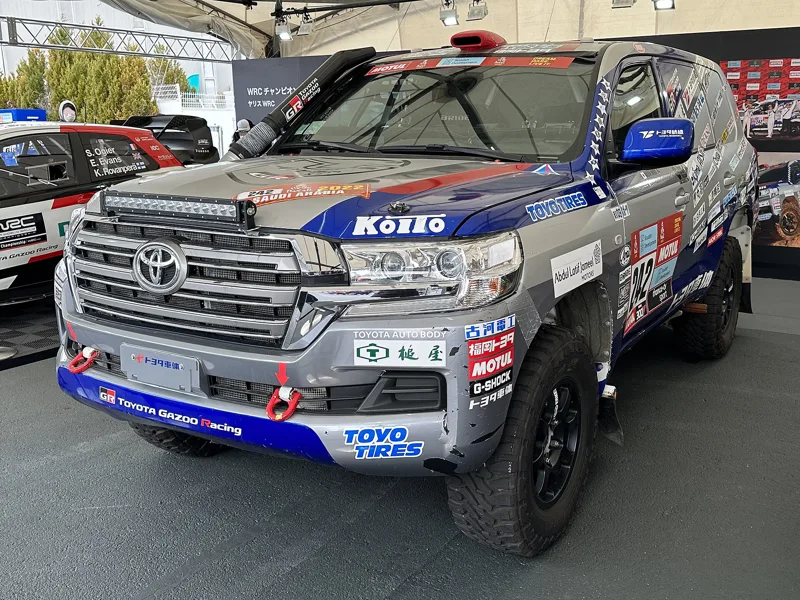
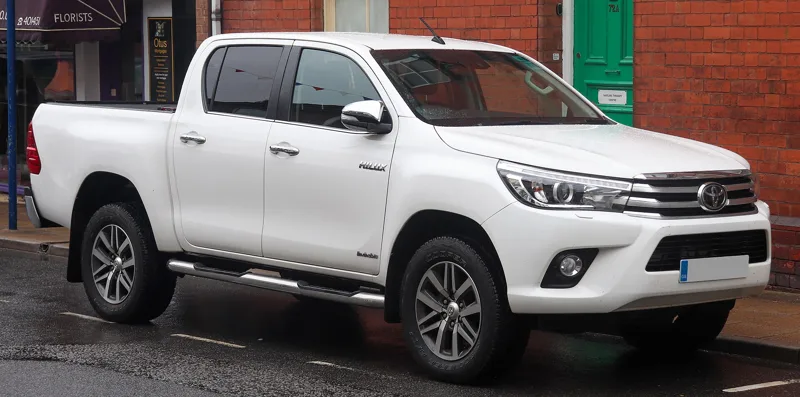
T1 cars carry the silhouette of a production vehicle, but apart from lights and grille they share few parts with it, and the class splits into petrol or diesel and two-wheel or four-wheel drive subcategories. T2 vehicles are production cars modified for competition, with roll cages, racing seats and competition fuel tanks, and the strict FIA rules limit what can be changed or uprated.
The T2.C subcategory contains T2 production vehicles whose FIA approval has become obsolete. Few trucks compete in the rally because production-based machines handle dunes poorly, so most entries in the truck class are prototypes built around a standard cab.
Why does the 2020 edition matter?
The 2020 Dakar set several firsts: the first edition in Saudi Arabia, the first Honda win since 1989, the first North American class winner, and the first American UTV victory. It was also the first edition run under David Castera's direction.