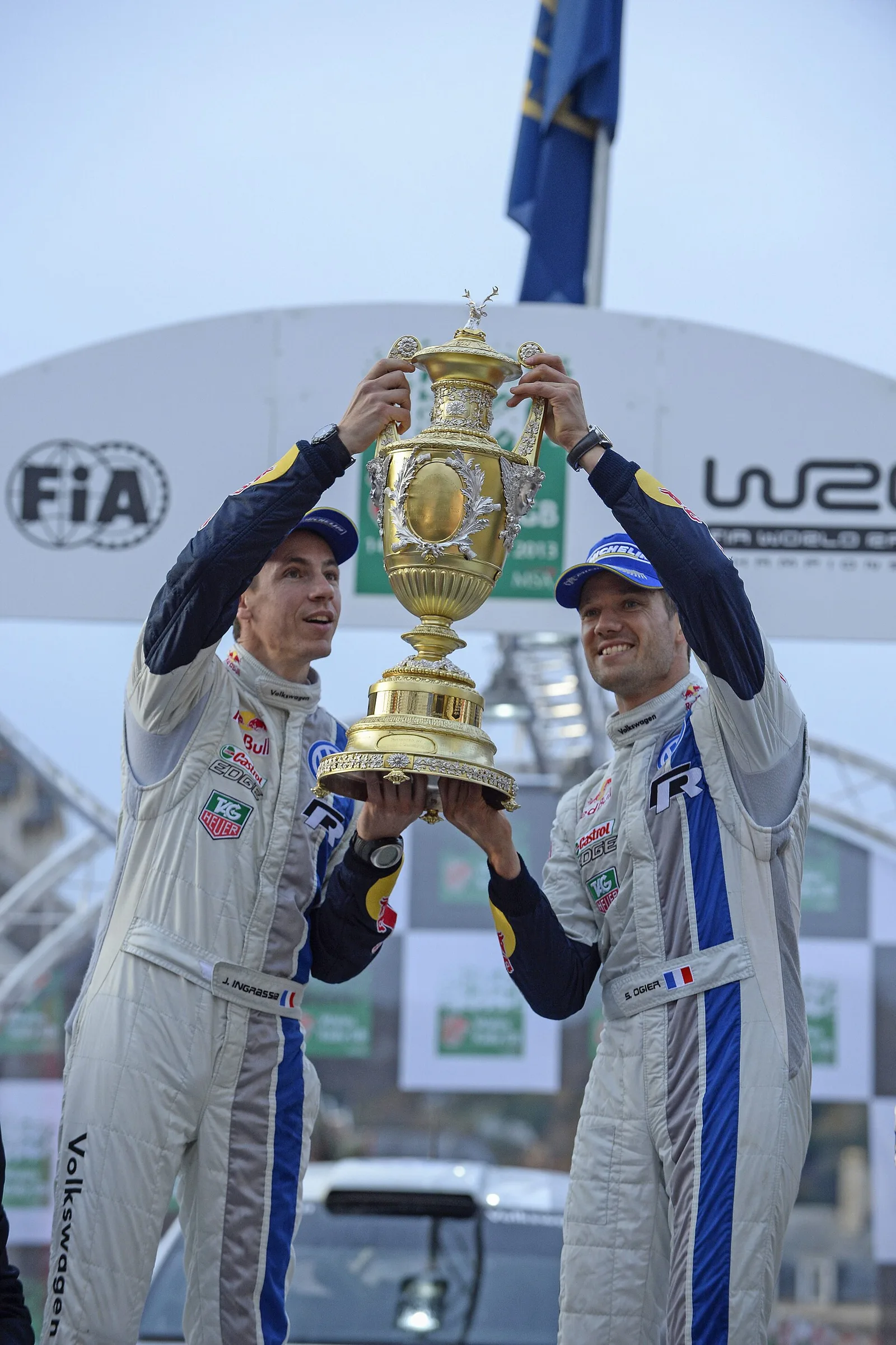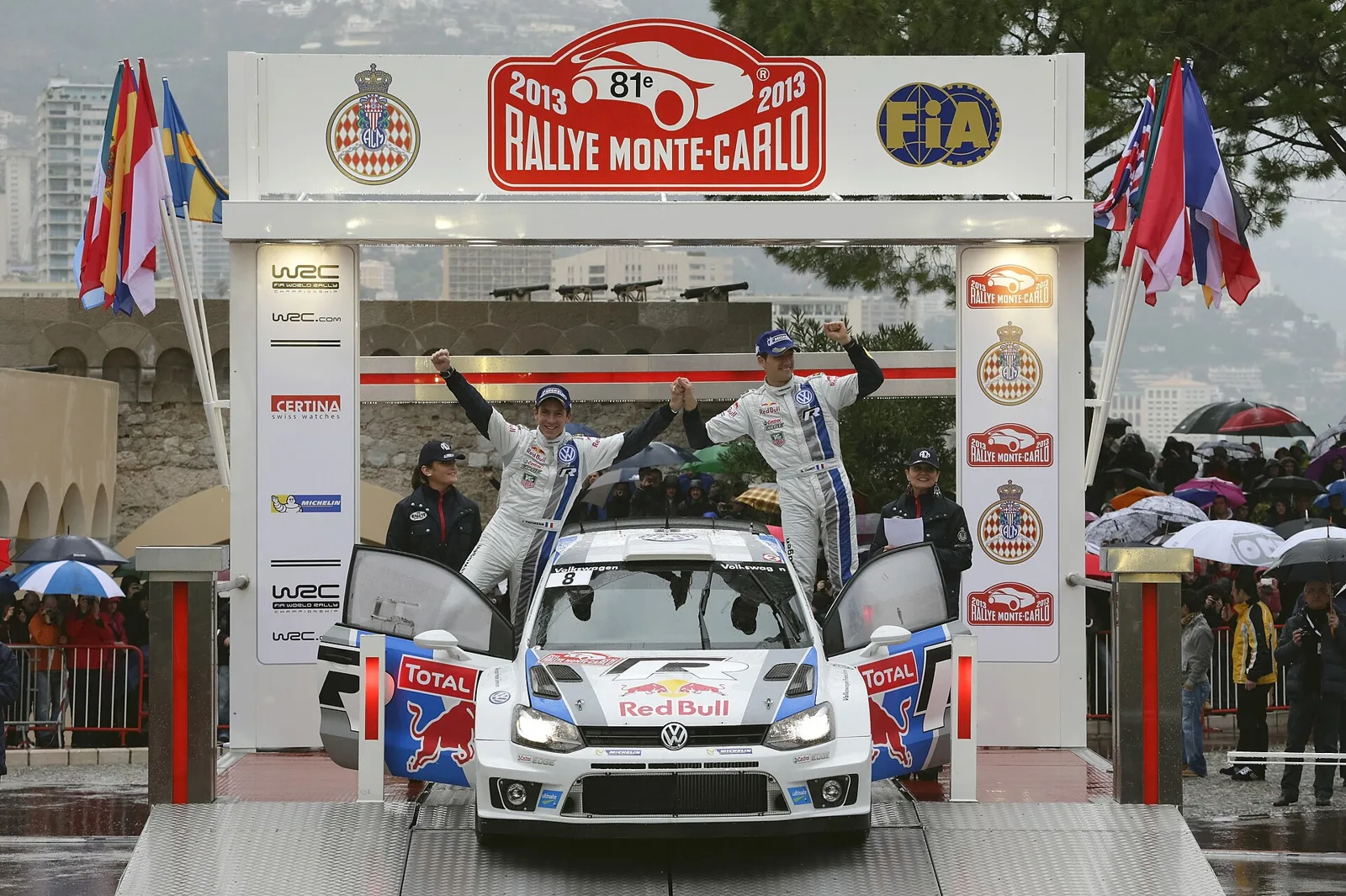
Sebastien Loeb took his seventh Monte Carlo victory in a snow-hit 81st running that opened the 2013 World Rally Championship and marked its fortieth anniversary.
Sebastien Loeb won the 2013 Monte Carlo Rally, the first round of that year's World Rally Championship, in a snow-affected event based in Valence. Ogier and Sordo completed the podium behind him, and the final two stages were cancelled because of crowds.
The 2013 Monte Carlo Rally was the 81st running of the event and the first round of the 2013 World Rally Championship. Held from 16 to 19 January, it was won by Sebastien Loeb, his seventh victory on the Monte Carlo, after a series of stages that were covered in some of the heaviest snow seen since the 2000 season. The rally also marked the fortieth anniversary of the championship.
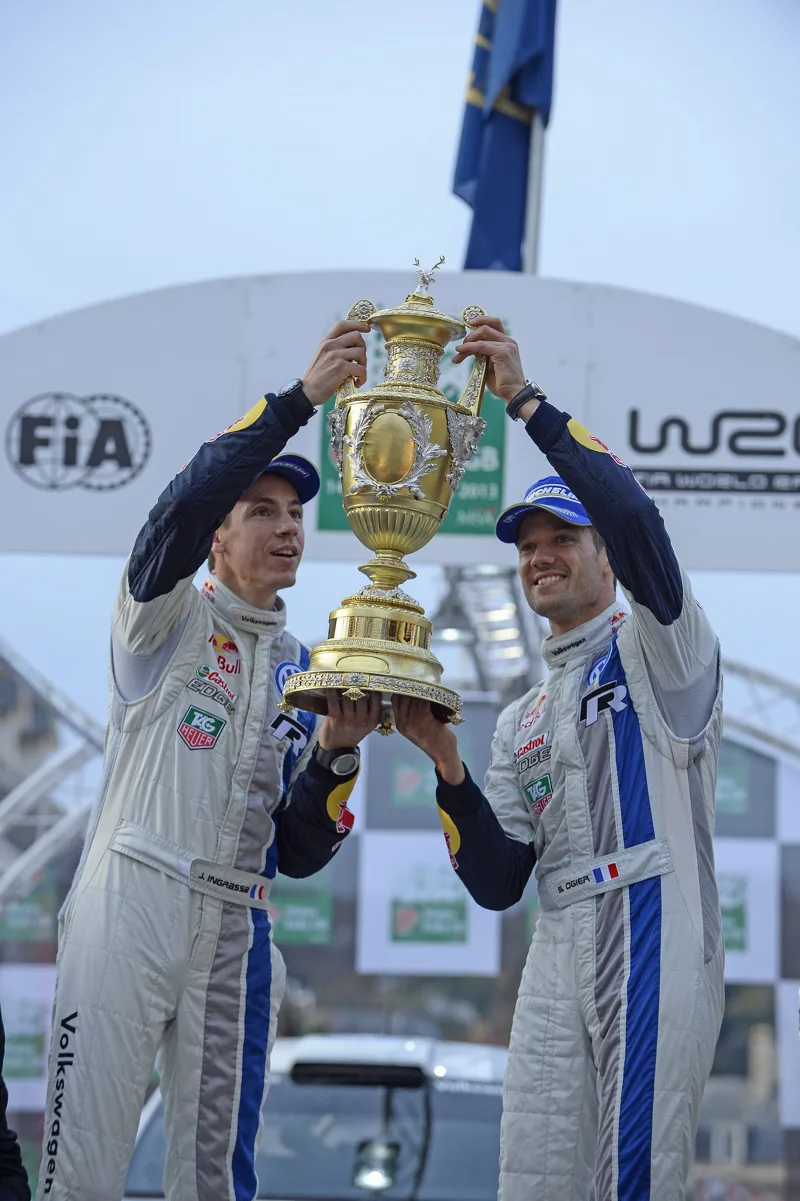
The rally was contested over four days of hard driving on snow, ice and dry mountain roads. Behind Loeb, Sebastien Ogier scored a podium on the competitive debut of the Volkswagen Polo R WRC, and Dani Sordo completed the top three in a Citroen DS3 WRC.
What was the format and route of the rally?
The rally began with a ceremonial start in Monte Carlo, but it was based in the French town of Valence. The competitive part was contested over eighteen special stages in the regions of Rhone-Alpes and Provence-Alpes-Cote d'Azur, covering 468.42 km (291.06 mi) of timed road.
The route was broadly unchanged from earlier years. Some stages had been lengthened or adjusted, and a few had been dropped or revived after a long gap. The rally was in four legs, and most of the stages were run twice in the same day.
Snow, cancelled stages and a championship opener that took Loeb to a seventh Monte Carlo win.
What changed from the 2012 route?
Several stages returned to the rally after long absences, and others were moved or lengthened. Le Moulinon-Antraigues and Burzet-St. Martial were both extended slightly from the 2012 versions, and the first leg was the longest of the four, covering some 135.40 km (84.13 mi) of competitive stages.
The third day changed the most. The Cimetiere de Vassieux-Col de Gaudissart and Montauban-sur-l'Ouveze-Eygalayes stages used in recent years were dropped. Instead the cars ran east and south of Valence to a stage that follows a difficult course over three mountain peaks. St. Nazaire le Desert-La Motte Chalancon, last used in 2009, and Sisteron-Thoard, absent since 2002, both returned that afternoon. Sisteron-Thoard covered 36.70 km (22.80 mi) of mountain climbs and technical sections.
Who entered the 2013 event?
Entries closed on 14 December 2012 and were published a week later. Eighty-four entries were received, and seventy-three teams started the event. Thirteen World Rally Cars took part. Eight crews entered the newly formed WRC-2 class for Group N and Super 2000 machinery, and three more competed in WRC-3 with two-wheel-drive cars.
Sebastien Loeb, the defending world champion, was among the thirteen World Rally Cars, and he was already a six-time winner of the Monte Carlo before the rally began. Mikko Hirvonen, Mads Ostberg, Jari-Matti Latvala and Sebastien Ogier were also among the World Rally Car crews.
How did the opening leg unfold?
The first pass through Le Moulinon-Antraigues was mostly dry, but the Burzet-St. Martial stage was covered in snow, which made tyre choice critical. Because the cars ran in the order of the 2012 championship, Loeb was the first driver through. At the end of the first stage it was clear that the dry conditions had torn the studs out of his front tyres, and that problem would affect all the leading teams.
Loeb set the early pace, finishing the opening stage seventeen seconds ahead of his team-mate Mikko Hirvonen, until Sebastien Ogier set a time three and a half seconds faster. That gave the Volkswagen Polo R WRC a stage win on its very first outing. Jari-Matti Latvala, in the second Polo R, arrived late at a time control before the second stage and picked up a thirty-second penalty.
On the second pass through Burzet-St. Martial the road was dry, because the cars had cleared the snow during the first run. Loeb set a time four minutes faster than his morning effort. Hirvonen finished second on that stage and moved into third overall, while Thierry Neuville retired with broken suspension, the first retirement among the World Rally Cars.
The opening leg also produced an odd technical fault. Timing errors falsely recorded Loeb as stopping on the first stage. The problem was fixed once Citroen shut off the GPS tracking devices fitted to the cars of Loeb and Sordo, but it took some time before the results could be confirmed. Loeb ended the leg one minute and twenty seconds ahead of Ogier, with Hirvonen a further twenty-six seconds back.
What happened during legs two and three?
Leg two was colder than the first, with snow recorded on all three stages. Ogier cut five seconds from Loeb's overnight lead on the first pass through Labatie d'Andaure-Lalouvesc. Latvala had another rough morning, surrendering fifth to Evgeny Novikov, who was quickest through St. Bonnet, with Ford taking the three fastest times on that stage.
Michal Kosciuszko, who had fallen to 21st, recovered to 16th before crashing his Mini John Cooper Works WRC on St. Bonnet, although he was able to continue to the midday service. Juho Hanninen took his first stage win on the second run through St. Bonnet, while Novikov took a second stage win on Lamastre-Gilhoc-Alboussiere. Loeb and Ogier traded seconds throughout the morning and finished the leg with another battle for the top spot.
Leg three was the shortest day at 92.00 km (57.17 mi), with the most changes to the route. Loeb won his eighth stage of the rally on St. Jean-en-Royans-La Cime du Mas, only a second and a half faster than Ogier. Bryan Bouffier spun late in that stage and lost more than a minute in his privately entered Citroen DS3 WRC, and Mads Ostberg took his first World Rally Championship stage win on St. Nazaire le Desert-La Motte Chalancon.
At the end of the third leg Loeb led Ogier by one minute and forty-seven seconds, with Novikov a further minute and a half back. Sordo held fourth, and Latvala had finally grown comfortable in his Polo R, setting the second-fastest time on Sisteron-Thoard and moving into fifth. Hirvonen dropped to sixth, frustrated by a chronic understeer problem.
How did the final leg decide the rally?
The final leg removed three of the leading contenders on the first pass of the famous Col de Turini stage. Novikov crashed halfway through and his car was beyond repair. Latvala slid off the road and could not rejoin the route. Juho Hanninen's Ford Fiesta RS WRC stopped with a mechanical fault.
Bryan Bouffier unexpectedly took the Turini stage, ahead of Ostberg in the only surviving Fiesta and Ogier. With Novikov out, Sordo moved back into third, and his stage fifteen win was the only one he took all rally. Michal Kosciuszko moved up into the points in tenth, a position he held to the end of the rally.
The Turini stage, run three times in all, is known for its long series of hairpin bends and steep climbs throughout. The Lantosque-Luceram stage was run twice across fairly flat ground before a climb over a mountain ridge, and its second running formed the power stage of the rally.
The rally then reached its finish. Organisers decided to cancel the final two stages after they were overwhelmed with spectators, and the race ended with Loeb winning by one minute and thirty-nine seconds from Ogier. Sordo finished third, Hirvonen fourth, and Bouffier fifth after taking the position from Ostberg on a difficult final stage. Martin Prokop claimed seventh after the early retirements.
Which crews retired from the rally?
Retirements were frequent, and the Monte Carlo rules meant that none of them could rejoin later. Esapekka Lappi and Luca Betti both left the WRC-2 class on the first stage, while Thierry Neuville's suspension broke on the opening day. Julien Maurin, driving a privately entered Ford Fiesta RS WRC, had an accident on the second leg and was forced out.
The Col de Turini claimed three of the leading contenders in a single stage. Novikov's car was beyond repair after his crash, Latvala slid off and could not rejoin the route, and Hanninen's Ford stopped with a fault. Poutot's rally ended on stage nine in the WRC-3 class.
What were the WRC-2 and WRC-3 classes?
Esapekka Lappi established an early lead in the newly created WRC-2 category, but he hit a rock on the first pass through Le Moulinon-Antraigues. His Skoda Fabia S2000 was too badly damaged to continue, and he retired. Peugeot 207 S2000 driver Luca Betti ran off the road on the same stage and also retired.
Sepp Wiegand, also in a Skoda Fabia S2000, took over at the front and had a minute's cushion over Armin Kremer after day one. He won all six stages of Leg 2 and extended his advantage to four minutes. On day three his battery shorted on the Nazaire stage, but he repaired it and kept a lead of nearly five minutes. Kremer charged on the last leg, but Wiegand held on to win the category and finished eighth overall. Kremer was second, with Yuiry Protasov third.
Three WRC-3 entries were received, but only two cars started after French driver Quentin Gilbert lost his licence shortly before the event. Renaud Poutot, in a Citroen DS3 built to R3T rules, had a one-minute lead over Sebastien Chardonnet on day one. Poutot retired on stage nine when he slid into a snowbank and could not restart the car, leaving Chardonnet as the only WRC-3 finisher. He drove cautiously and was classified thirteenth overall, forty-five minutes behind Loeb.
What happened to the power stage?
The power stage was to be held on an 18.95 km (11.77 mi) section between Lantosque and Luceram, where the three fastest drivers would earn bonus championship points. It was cancelled at the last minute because spectators blocked access to the stage, so no points were awarded.
What do the final results show?
| Position | Driver | Notes |
|---|---|---|
| 1st | Sebastien Loeb | Seventh Monte Carlo win, seventy-seventh career win |
| 2nd | Sebastien Ogier | Podium on the Volkswagen Polo R WRC's competitive debut |
| 3rd | Dani Sordo | Only stage win came on stage fifteen |
| 4th | Mikko Hirvonen | Fourth at the finish |
| 5th | Bryan Bouffier | Took fifth from Mads Ostberg on the final stage |
| 7th | Martin Prokop | Gained seventh after early retirements |
| 8th | Sepp Wiegand | Winner of the WRC-2 category |
The Monte Carlo does not use the Rally 2 rules that allow a retired driver to rejoin at the start of the next leg, so every retirement was permanent.
Why did the 2013 event matter?
The 2013 opener confirmed Loeb as the strongest driver in difficult conditions, and his win arrived in the season's fortieth anniversary year. The rally also showed how snow and ice can change tyre strategy, with studs lost early on the dry stages and cars needing careful management across four legs.
Ogier's second place, on the Polo R WRC's competitive debut, gave Volkswagen a strong early result, while Sordo's third place kept Citroen on the podium. The classes below the top tier also produced results, including Wiegand's WRC-2 win and Chardonnet's finish in WRC-3 after the retirements.