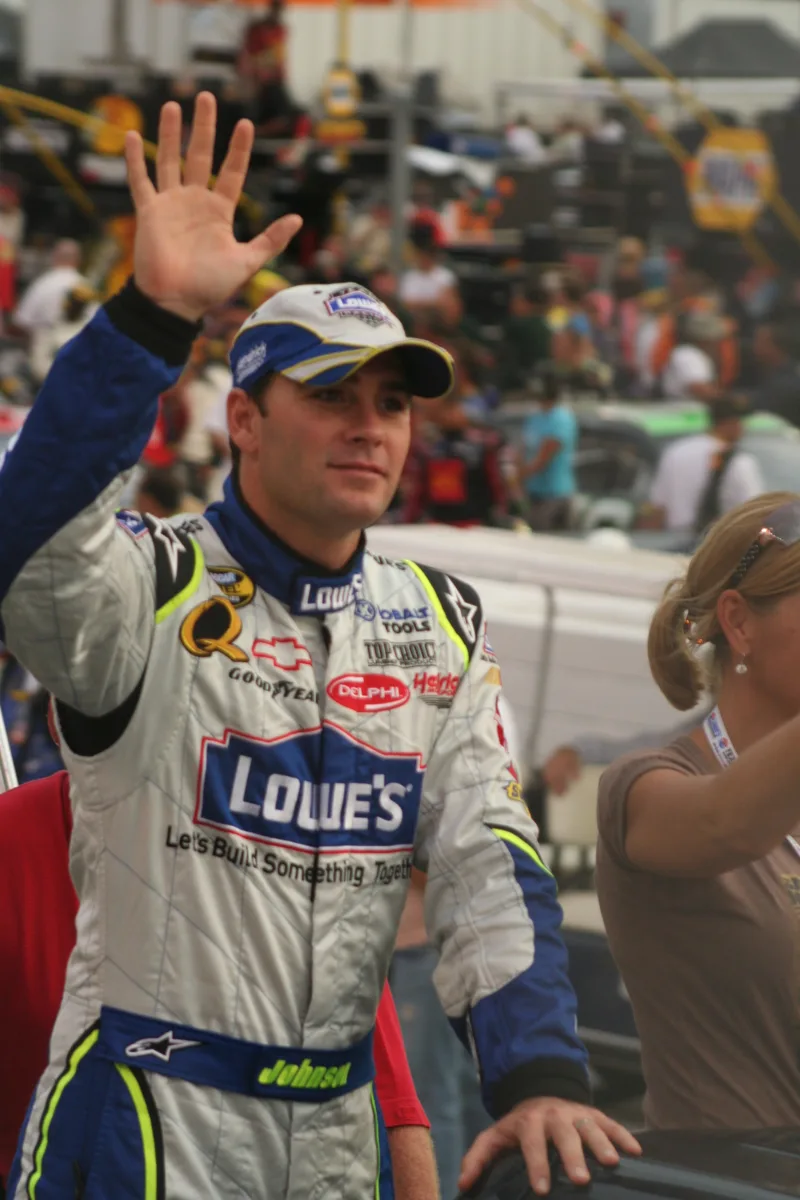
Starting 16th, Mears saved fuel over the closing laps to win his first Nextel Cup race, with J. J. Yeley second and Kyle Petty's first top five since 1997 behind him.
The 2007 Coca-Cola 600 was the 12th race of the NASCAR Nextel Cup Series, held at Lowe's Motor Speedway on 27 May 2007. Casey Mears won from 16th on the grid after a fuel-saving final stint, with J. J. Yeley second and Kyle Petty third. The race had thirteen cautions and 29 lead changes.
Casey Mears claimed the 2007 Coca-Cola 600 after starting 16th, conserving fuel over the closing laps to earn his first Nextel Cup victory at Lowe's Motor Speedway. Behind him, J. J. Yeley crossed second and Kyle Petty third in a 400-lap event that was the 12th race of the season and the 48th running of the 600.
When and where was the 2007 Coca-Cola 600 held?
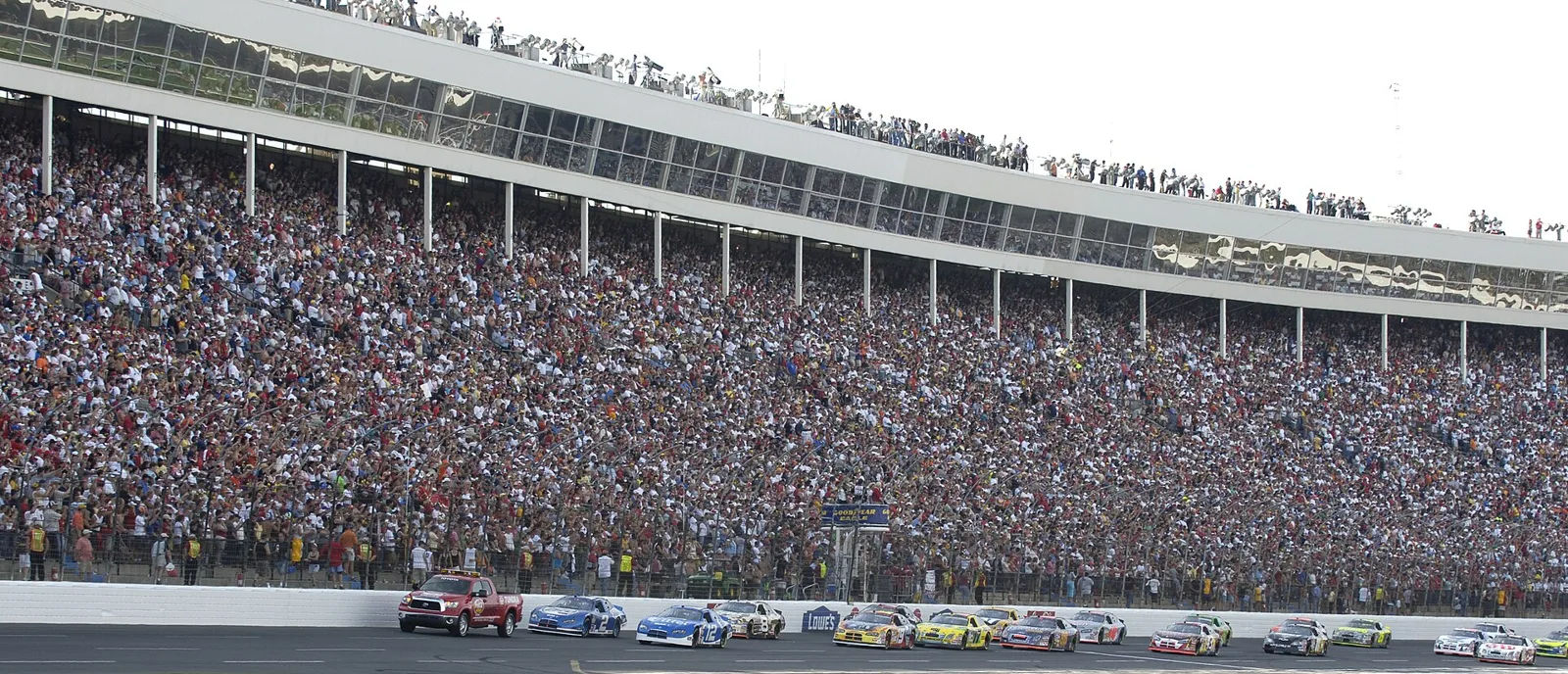
The race took place on 27 May 2007 at Lowe's Motor Speedway in Concord, North Carolina, a venue now known as Charlotte Motor Speedway. The 400 laps covered 970 km (600 miles), and Fox began its live coverage at 5:00 pm EDT before a crowd of 175,000.
The event owes its existence to Curtis Turner, the driver who built Charlotte Motor Speedway. NASCAR first staged it in 1960 as a Memorial Day weekend race to rival the Indianapolis 500, and from 1974 the two events were run on the same day.
The name has changed over time. Known as the World 600 until 1984, it took the Coca-Cola name in 1985 after the company acquired the naming rights. The only year it carried a different title since then was 2002, when it was known as the Coca-Cola Racing Family 600.
The four-turn quad-oval measures 2.4 km (1.5 miles), with turns banked at 24 degrees and both the front and back stretches banked at five degrees. Teams therefore have to balance grip and tyre wear through every corner of a long race.
A fuel-mileage finish gave Casey Mears his first Nextel Cup win and turned a 16th-place start into a race-winning drive.
What did the championship look like before the race?
Jeff Gordon led the Drivers Championship with 1,881 points, 231 ahead of his Hendrick Motorsports teammate Jimmie Johnson. Matt Kenseth was third, 68 points further back, and Hamlin and Burton sat fourth and fifth.
Chevrolet topped the manufacturers' table with 96 points, 35 ahead of Ford. Dodge held 52 points, which put it 19 ahead of Toyota in the fight for third. Kasey Kahne was the defending winner of the race.
Gordon's margin was large enough to make the early season look settled, but a 400-lap race offered every contender a chance to change the order in a single afternoon.
NASCAR held test sessions on 7 and 8 May 2007 to help teams prepare for the May races at the track. Martin Truex Jr. was quickest on the first day at 290.641 km/h (180.596 mph), and in one evening session the fastest speed of the two days was set at 300.947 km/h (187.000 mph). Denny Hamlin lost control during one session and made heavy contact with a SAFER barrier, but he was checked and released to keep testing.
Three drivers moved to the back during the pace laps for unapproved changes. Bowyer had switched to a backup car, and Ragan and Harvick had changed their engines.
William K. Thierfelder, president of Belmont Abbey College, gave the invocation, and LeAnn Rimes sang the anthem. Air temperatures were between 21 and 31 degrees Celsius (70 and 87 degrees Fahrenheit), and the track was far hotter, between 29 and 54 degrees Celsius (85 and 130 degrees Fahrenheit).
How did the field line up for the start?
Newman's 39th career pole came at 29.140 seconds. His Penske team-mate Kurt Busch lined up beside him on the front row, and Elliott Sadler qualified third, ahead of Dale Earnhardt Jr. in fourth and Matt Kenseth in fifth.
Forty-nine cars tried to qualify, but only 43 could race under NASCAR's procedure. Among the six who missed out were Michael Waltrip, Paul Menard and Ward Burton, and Jeff Green crashed during a lap and used a provisional to make the field.
Bill Elliott returned to NASCAR for part of the year at the Coca-Cola 600, driving the Wood Brothers Racing car in place of Ken Schrader. Schrader had driven the first eleven races, and Elliott had won the 1988 Winston Cup title.
Newman said he felt pressure to give Penske Racing South its first win at Charlotte, and he felt he could have bettered his pole lap had he not run wide through the first two turns.
In practice, Edwards led the final session at 30.043 seconds, and Kyle Busch damaged his right-rear quarter on a wall while keeping his car. Bowyer crashed in the first minute of the second practice and switched to a backup car, in which he set five more lap times.
How did the early laps play out?
Newman kept the lead through the first corner, but Johnson climbed from 21st to 15th by lap eight. Kurt Busch passed his teammate for the lead on the 11th lap. By the 43rd lap Hamlin had passed Earnhardt Jr. for second, trailing Busch by 1.2 seconds.
The first caution came on the 47th lap, when Greg Biffle hit the turn two wall with a cut right-front tyre. His car was badly damaged on the right side and he retired. Every driver pitted under that yellow flag, which reshuffled the leaders.
A second caution followed on the 53rd lap, as a pile-up unfolded in the middle of the pack. Allmendinger hit Johnson's car after Johnson's left-rear tyre burst, and Blaney and Stewart collided in the chaos that followed. Gilliland, Sadler and Montoya were among those caught up.
On the restart Tony Raines slid into Jeff Gordon, and Allmendinger then hit Gordon at the start-finish line, sending him airborne. That was the third caution, and Gordon was unhurt. A fourth caution came on the 78th lap when Jeff Burton hit the turn three wall, and most of the leaders pitted under it.
Newman retired with an engine failure on the 178th lap, which ended the race early for the pole-sitter.
Earnhardt Jr. had a flat tyre on lap 154 and pitted for new tyres two laps later, and Ragan moved back into the top five by lap 160. A sixth caution came ten laps after that, for debris in the turn two groove.
What happened in the middle and closing stages?
Green-flag stops started on the 112th lap, and by the 126th lap Kyle Busch was in front, holding a ten-second cushion over Johnson by the 131st lap.
Stewart's stint at the front was brief. He held the lead until his stop on the 133rd lap, when Yeley took over, and Vickers regained the lead once the pit stops were over.
The fifth caution came on the 140th lap for debris on the backstretch, and Mears was required to drop to the back of the longest line for speeding during it.
When racing resumed on the 146th lap, Brian Vickers was in front. An alternator problem struck Mears on the 149th lap, and he switched to a backup battery to keep his engine running.
The eighth caution came after Edwards cut a right-rear tyre and spun on the way to pit road. The ninth, on the 252nd lap, followed when Kyle Busch's right-front tyre sent him into the turn four wall, and a broken brake rotor sent him to the garage on the 254th lap.
Mayfield's spin on the 291st lap brought out another yellow flag, and Kurt Busch's crash on the 298th lap added the twelfth. He hit the left-hand wall on the backstretch and drove to his garage to retire, and his 107 laps led were the most of any driver.
Johnson retook the lead from Kenseth on the 311th lap, and Stewart got ahead of Kenseth for second on the 314th lap. The thirteenth and final caution came on the 337th lap, after Vickers hit the wall.
Johnson's pit crew dropped a left-rear lug nut on lap 337, which cost him time while the crew searched for it. Earlier, on lap 257, Kenseth had held a 2.2-second lead over Stewart before Stewart closed in.
After 100 laps Kurt Busch led Kenseth by four seconds, with Brian Vickers third and David Ragan fourth.
How did Mears win the race on fuel?
Hamlin pitted on the 395th lap, which handed Mears the lead. Mears then eased his pace on the advice of his crew chief, Darian Grubb, and saved enough fuel to hold the lead to the finish. Before that stint he had led for only six laps in total.
Stewart had run short on fuel and slowed on the 393rd lap, letting Earnhardt Jr. briefly take first before his own stop. On the 398th lap Mears was ten seconds clear of Yeley, who was reeling him in.
Mears said afterwards that his car had been tight through the corners, but it had a strong line along the bottom of the track once he was clear of traffic. The tank ran dry during his cool-down lap, and the engine stopped just past the line.
Mears said he had driven a fourth-place car at best. The win was the first by a driver named Mears since 1991, and it paid US$377,425.
Earnhardt Jr. and Hamlin had made similar stops late in the race, slowing to conserve fuel. Mears took the lead after both of them had pitted, and that let him finish out the race in front.
Mears said he was very excited and relieved after the win, and that he had been afraid his crew chief would call him in before the final stint was over.
How did the rest of the top ten finish?
Yeley took second, and Kyle Petty third for Petty Enterprises. It was Petty's first finish inside the top five since the 1997 MBNA 400. Sorenson finished fourth and Vickers fifth, while Stewart, Rudd, Earnhardt Jr., Hamlin and Johnson filled out the top ten.
| Finish | Driver | Note |
|---|---|---|
| First | Casey Mears | Started 16th, first Nextel Cup win, fuel-saving finish |
| Second | J. J. Yeley | Joe Gibbs Racing, closing on the leader in the final laps |
| Third | Kyle Petty | Petty Enterprises, first top five since the 1997 MBNA 400 |
| Fourth | Sorenson | Fourth-place finish |
| Fifth | Brian Vickers | Fifth-place finish |
| Sixth | Tony Stewart | Led the the 342nd lap restart |
| Tenth | Jimmie Johnson | Hendrick Motorsports, from 21st on the grid |
The race produced thirteen cautions and 29 lead changes, shared by 15 drivers. It lasted four hours, 36 minutes and 27 seconds, and Mears won by 9.561 seconds.
What did the result do to the title race?
Mears's win earned him US$377,425, while Gordon's lead in the Drivers Championship fell to 132 points after his early crash. Chevrolet's manufacturer lead over Ford grew to 41 points, while Dodge kept building its gap over Toyota in the fight for third.
Hamlin's crew chief, Mike Ford, called fuel-saving victories hollow, and Yeley said his team had suffered bad luck for two years. Kurt Busch was frustrated after his the 298th lap crash, and Allmendinger accepted responsibility for the the 53rd lap pile-up.
Gordon said afterwards that his crash looked worse than it was, and that he was fine. The 2007 race was therefore remembered less for the leader's crash than for a driver who won by managing his tank rather than by leading the field.