Ray Keech won the seventeenth Indianapolis 500 for owner Maude A. Yagle, while the favourites dropped out early and the supercharged engine formula ended.
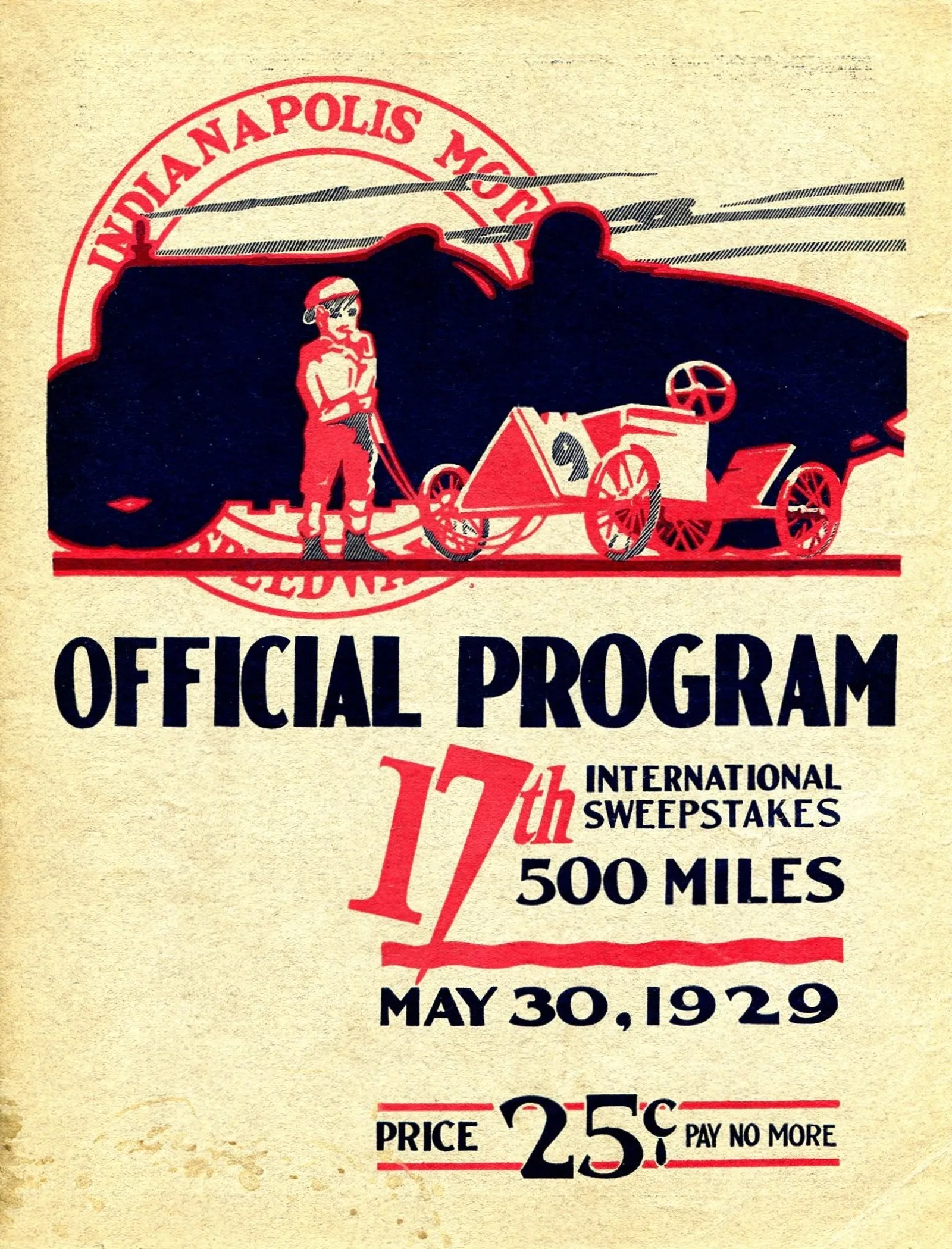
The 1929 Indianapolis 500 was held on Thursday 30 May 1929 and won by Ray Keech for owner Maude A. Yagle. It was the last year of the supercharged 1.5 L formula, and Keech died in a crash at Altoona Speedway two weeks after his win.
Ray Keech won the 1929 Indianapolis 500 on Thursday 30 May 1929, and held the front for the last time on lap 158. The victory was earned for owner Maude A. Yagle, and it was run on the last year of the supercharged 1.5 L engine formula.
Why is the 1929 race remembered?
Ray Keech's win is remembered for three things: it was the last race under the supercharged engine formula, it made Maude Yagle the only female winning owner in the race's history, and it began a tragically short reign, as Keech died in a crash two weeks later.
The race was the seventeenth International 500-Mile Sweepstakes and run within the 1929 AAA Championship Car calendar. It was also the final race of the Roaring Twenties, held before the stock market crash of 1929.
Keech had finished fourth a year earlier. His first win came after the front-runners had fallen away, and the race was defined as much by those who did not finish as by the winner.
A win for an owner, a pole sitter who finished last and a champion who had only seventeen days to enjoy the title.
What engine rules applied in 1929?
The race used the supercharged 1.5 L formula for the last time. Speedway president Eddie Rickenbacker wanted cars closer to passenger models from 1930, and the AAA Contest Board approved the changes in early January 1929. The change was driven by a wish to make racing more representative of the road.
The rule changes were not a response to the Depression, since they had been laid out as early as 1928. From 1930 the rules would once again require two-man cars with riding mechanics.
For 1929 riding mechanics were optional, but no team used them. Jimmy Gleason's car carried number 53, the first number above 50 in the race's history.
How did the entry list build up?
Entries grew steadily through April and early May. Thirteen had been announced by 27 April, and 29 had arrived by 30 April, before a late rush took the list to 43 cars by 2 May, the largest entry since before the First World War.
The list reached 46 cars by 3 May, against the traditional 33 starting positions. Time trials were set for four days, from Saturday 25 May to Tuesday 28 May, with four-lap qualifying runs and a minimum speed for making the field.
Harry Hartz, who had been injured in a crash at Salem in 1927, came back as a team owner rather than a driver. Louis Chiron arrived from Europe with two Delage cars, and he was named to the Louis Chevrolet entry.
How did May practice go?
Practice was slow to build. Rain kept cars off the track on 12 May and washed out 13 May, and by 16 May only 17 of the 46 entries had taken practice laps. Billy Arnold set the fastest lap of the year early on, hand-timed at 1:17.
Duray turned a lap of 1:15 on 9 May, and Louis Chiron's best lap was 1:23 on 10 May. Carl Marchese crashed after a bump in turn two on 24 May, and his car needed repairs before he could return.
Keech first ran on the track on 22 May. By then the favourites for the front row were Leon Duray and Cliff Woodbury, with Pete DePaolo also in contention.
How did time trials decide the front row?
Leon Duray started as the favourite, having held the one-lap and four-lap track records from 1928. Cliff Woodbury, however, put his car on top late on Saturday, and Duray settled for second when his own run could not match it.
Those who had qualified on the opening day took the front of the grid, ahead of later qualifiers whatever their speed, so the grid depended on the calendar as much as the stopwatch.
Ralph Hepburn qualified third on the outside of the front row, and fifteen cars had qualified by the end of Saturday. On Sunday the field grew to 19 cars, and 17 of them cleared the old time-trial mark.
Rain washed out Monday, when Myron Stevens's car flipped after hitting a bump in turn one, although he suffered only superficial injuries. On Tuesday Ernie Triplett was the fastest car of the day, while Bill Lindau was bumped by Cliff Bergere.
How did the race start?
The race began at 10 a.m. behind George Hunt's Studebaker President Roadster pace car. From the middle of the front row, Leon Duray grabbed the lead, but on lap 4 the pole sitter, Cliff Woodbury, lost a right-rear wheel, spun and hit the outside wall.
Ralph Hepburn's car had stalled on the pace lap earlier, but his crew push-started it and he rejoined the field.
Woodbury became the first pole sitter in the race's history to finish last, classified 33rd. Duray led the opening seven laps, with Ray Keech in second place, before Deacon Litz's hand-brake fell off on lap 8 and he slid past both into the lead.
Tragedy struck when Bill Spence crashed in turn two on lap 10, hit the wall, turned over several times and was thrown from the cockpit. He died on the way to hospital from a fractured skull, the first fatal accident during the race in ten years.
How did the middle of the race unfold?
Attrition was heavy. Ralph Hepburn retired on lap 14 after transmission trouble, and by lap 65 seven of the leading ten qualifiers had retired. Peter DePaolo had retired earlier with a broken steering knuckle. Several drivers who had started near the front were among those who fell out.
Ray Keech spent 30 seconds in the pits on lap 21 changing a right-rear tyre and fell back to tenth. He then began to charge through the field, while the leaders were thinned out around him.
Deacon Litz led until lap 56, when a broken rod put him out, and Lou Moore inherited the lead with Louis Meyer second. Litz had earlier set a record 100-mile average at the 40-lap mark.
What happened in the second half?
Barney Kleopfer relieved Lou Moore in the second half, while Ray Keech and Louis Meyer went the distance without relief. Keech stopped for the second and last time on lap 109, the same lap Meyer took the lead, and Meyer led until lap 157.
Meyer's stop on lap 157 was a disaster. The engine stalled, the crew worked on the carburettor for nearly seven minutes, and he rejoined in third place. Keech was then firmly in control, with Kleopfer, running for Moore, second.
Fred Frame had led eleven laps at the halfway point but faded to tenth. His challenge at the front was short-lived, and the leaders settled into their order.
How did the finish play out?
Ray Keech held a margin of roughly 1 minute and 14 seconds with ten circuits remaining, with third place around four minutes further back. Kleopfer's car was low on oil and sputtering, and Lou Moore took over for the last two laps. His engine threw a rod on the backstretch before he reached the line.
The rules of the day decided second place. Cars still running at the finish ranked ahead of those that had dropped out, whatever their lap count, so Moore was scored behind all the finishers. He fell to 13th, behind three cars that had completed fewer laps, and lost more than $12,000 in prize money.
Keech took home $31,350 for the win. Louis Meyer finished second, 6 minutes and 24 seconds behind, and collected $20,400. His second place came from the stop that had cost him the lead, a reminder of how fragile a long race could be.
Who else finished, and how?
Jimmy Gleason finished third despite a sore ankle from an earlier injury, and Carl Marchese came home fourth after his practice crash. Cliff Bergere was credited with ninth, the only front-wheel drive car to finish, and Billy Arnold dropped from sixth to eighth.
Billy Arnold ran out of fuel on lap 196, and a mechanic ran to him with a gas can. The delay cost Arnold two places, and he finished eighth rather than sixth.
| Position | Driver | Note |
|---|---|---|
| 1st | Ray Keech | Won for owner Maude A. Yagle; led for the final time on lap 158 |
| 2nd | Louis Meyer | 6 minutes and 24 seconds behind after a long stop |
| 3rd | Jimmy Gleason | Finished with a sore ankle |
| 4th | Carl Marchese | Crashed in practice before time trials |
| 8th | Billy Arnold | Ran out of fuel on lap 196 |
| 9th | Cliff Bergere | Only front-wheel drive car to finish |
| 13th | Lou Moore | Engine failed near the finish; scored behind all finishers |
| 33rd | Cliff Woodbury | Pole sitter; crashed on lap 4 |
Several other drivers retired early, including Litz, Hepburn and DePaolo. The table keeps to the results that shaped the race, which is why it does not list every car.
What was the legacy of the 1929 race?
Keech reigned as champion for only 17 days before he died after a crash at Altoona Speedway on 15 June 1929. He joined a small group of Indy winners who died in racing accidents in the same year as their victories.
The final race of the 91.5 cubic inch machines set no records in qualifying or in the race. DePaolo's 1924 mark for the race held for three more years, and Leon Duray's 1928 one-lap record lasted almost a decade.
The facility itself was changing. Speedway officials added a golf course that year, with nine holes outside the track and nine inside, and filming for the movie Speedway took place around the grounds, with William Haines and Anita Page on hand.
How was the race broadcast?
The race went out live on WKBF-AM through a deal with the Indianapolis News, starting at 9:30 a.m. and lasting five and a half hours. This was the fifth year running that radio carried the race in this format. Listeners across the country followed the closing laps, which ended with Keech crossing the line ahead of Meyer.
NBC came on air at 2 p.m. to cover the final hour live, with Graham McNamee's call picked up by WKBF and other NBC affiliates across the country.