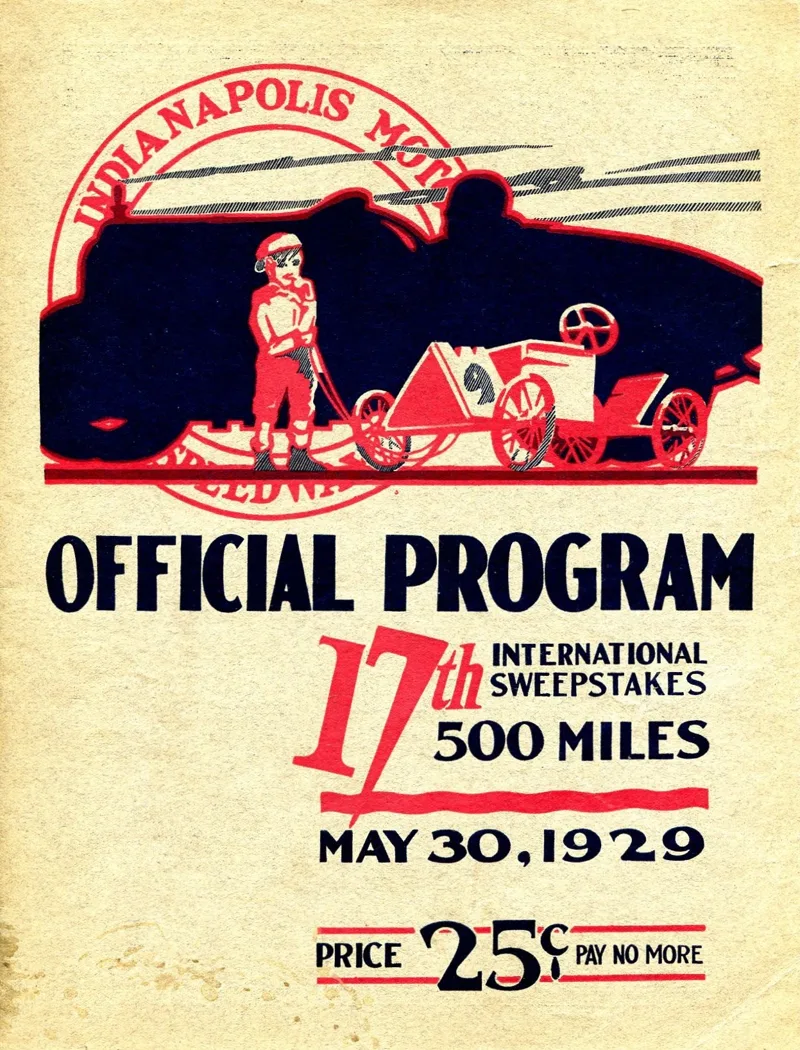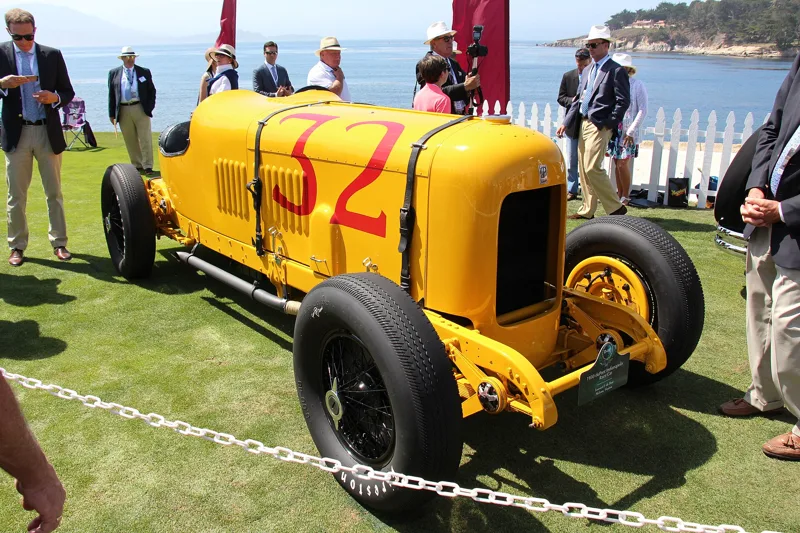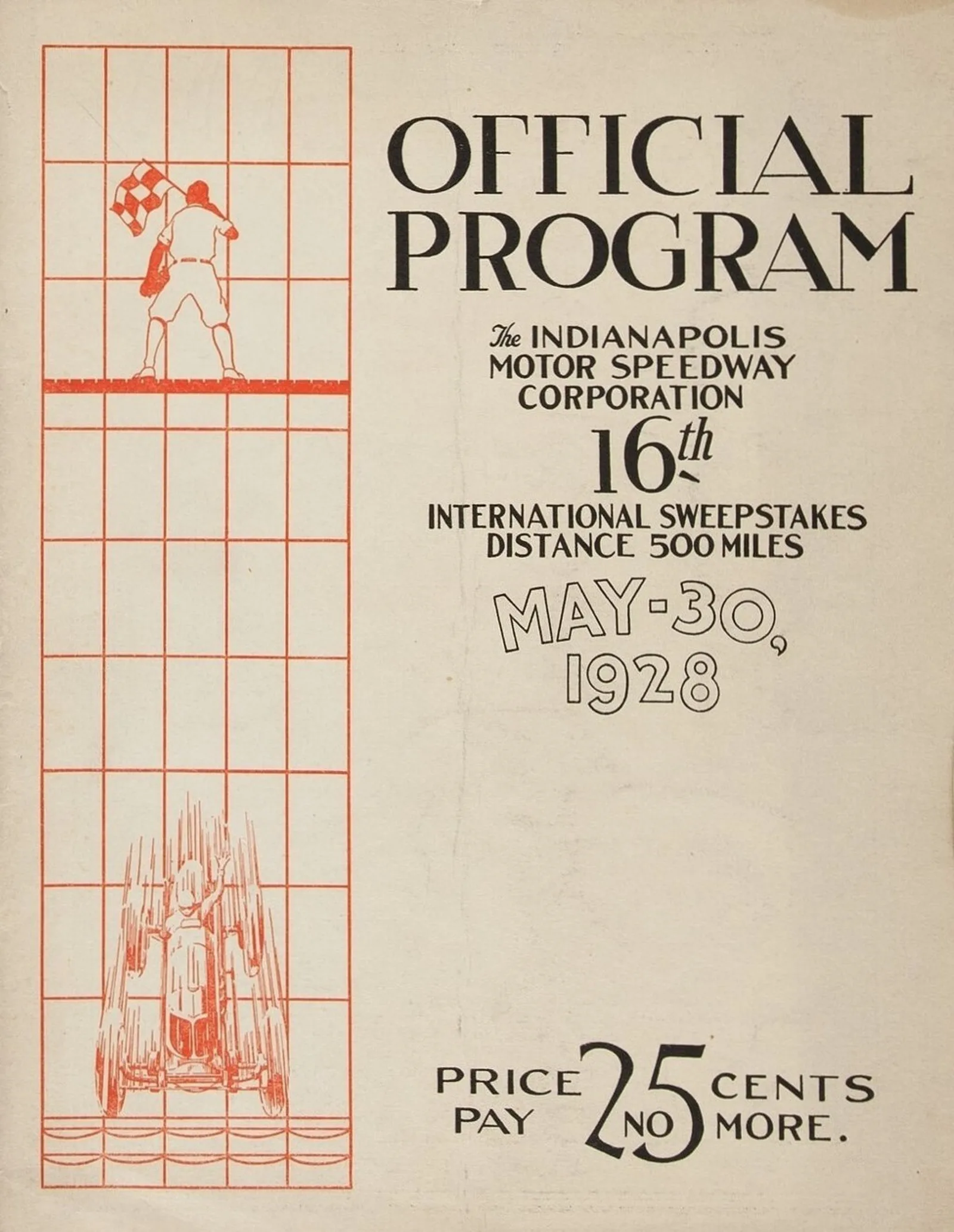
A rookie who had not secured his ride until a week before the start, a fatal Daytona crash that shook the paddock and a grid of seven supercharged front-wheel drive cars made the 16th International 500-Mile Sweepstakes a race of contrasts.
Louis Meyer won the 16th International 500-Mile Sweepstakes on Wednesday 30 May 1928, despite having secured his ride only a week before the race. Leon Duray took pole at 122.391 mph, and the race was the first to be run under Eddie Rickenbacker as Speedway president.
The 1928 Indianapolis 500 was the 16th International 500-Mile Sweepstakes, held on Wednesday 30 May 1928 at the Indianapolis Motor Speedway. It was the first race run under the new Speedway president, Eddie Rickenbacker, and it went to rookie Louis Meyer, who had only secured his ride about a week before the start.
Why does the 1928 race matter?
The 1928 race was Eddie Rickenbacker's first as Speedway president, and it was the third year run under the supercharged 1.5 L formula. Seven supercharged front-wheel drive machines were on the entry list, and in qualifying they filled the front row between them.
Rain hung over the morning, but the showers cleared in time for a start on schedule. A brief shower slowed the field near the 400-mile mark and caution flags were shown for several laps before the green returned.
A rookie with his ride secured a week before the start took the win, while the supercharged front row failed to finish in front.
Who was Louis Meyer, and how did he win?
Louis Meyer was a rookie, although he had relief-driven in 1927. His ride came together late after Phil Shafer's plan to run Wilbur Shaw in a Miller Special collapsed. Alden Sampson II bought the car and hired Meyer, and the new team lined him up 13th.
Meyer ran a steady, measured race rather than a flashy one. He led only once, over the final 19 laps, and his race average of 99.482 mph fell short of the 1926 record. It was the first of three Indianapolis wins he would collect in his career.
What happened to Frank Lockhart in 1928?
Frank Lockhart, who had won the 1926 race, left Indianapolis for Daytona Beach in mid-April to prepare another attempt at the land speed record. A crash on an earlier attempt, on 22 February, had already injured him. On 25 April, during a pass on Daytona's beach straightaway, a tyre let go, the car crashed violently and he was killed instantly.
Lockhart's death came only weeks before the Indianapolis entries closed. Having won the race two years earlier, he was a loss to the Speedway as well as to his own team.
How did the entry list come together?
Entries were due by midnight on 1 May, with postmarks on or before that date also accepted. By Tuesday 1 May 32 cars had been entered, and last-minute submissions lifted the total to 36 by Wednesday 2 May. Earl Cooper added a third Marmon entry a minute before the cut-off.
On 8 May the purse was announced at $100,000, with $20,000 set aside for the lap prize fund. Ralph DePalma, a veteran who had won in 1915, let it be known that he wanted a ride, while Ray Keech was still looking for one in the middle of May.
How fast were the practice laps?
Practice built up slowly. Cliff Bergere turned a lap at 119.52 mph on 14 May. On 17 May Leon Duray posted an unofficial one-lap record, which stopwatches timed at 1:14.40, or 120.95 mph, just quicker than Frank Lockhart's official 1927 figure of 1:14.43.
Louis Schneider ran a cut-down engine, a 122 cid unit reduced in size, and held laps between 109 and 112 mph. Peter DePaolo managed 114 mph on 22 May. Ray Keech hurt an ankle in a ball game that same day and missed a few days of work.
Wilbur Shaw, still without a dependable ride for much of the month, was dropped from Shafer's rear-wheel drive car two days after he had landed it. Meyer took the seat, and the car was sold to Alden Sampson II that same Tuesday. Shafer retained Babe Stapp to drive his front-wheel drive car.
Who took pole position in 1928?
Cliff Woodbury, driving a car from the Boyle Valve stable, which Mike Boyle owned, was the first to go after the track record on Saturday 26 May. On his third lap he set a one-lap mark of 121.081 mph, and his four-lap mean of 120.418 mph also set a benchmark.
That spot did not last long. Leon Duray, in the Miller Special, went out soon after and went to 123.203 mph on his second lap, beating the one-lap mark. His four-lap mean of 122.391 mph set a new track record and won him pole. The average equated to 196.969 km/h.
| Day | Result | Notable run |
|---|---|---|
| Saturday 26 May | 19 cars qualified; 14 places open | Duray on pole at 122.391 mph |
| Sunday 27 May | Five cars ran; field reached 24 | Pete Kreis fastest of the day |
| Monday 28 May | Deadline extended into Tuesday and Wednesday | Clarence Belt qualified a V-type engine |
| Tuesday 29 May | Three drivers completed attempts | Deadline fixed at 12 noon |
| Wednesday 30 May | Race morning qualifying | Shaw placed the repaired DePaolo car in the field |
What was Peter DePaolo's crash?
The worst incident of the first qualifying afternoon involved 1925 winner Peter DePaolo. On his first lap, approaching turn three, the car slid out of his control and rolled at least three times. DePaolo was thrown clear, and the machine skidded upside down, tearing off its cowling and damaging the supercharger.
The machine was bent at the rear axle and dented at the nose, with other damage besides. Investigators concluded the steering had locked up. DePaolo was cut and bruised, but he avoided serious injury and missed the rest of the month.
Chief mechanic Collon Henning Peters led the repair effort, in the hope of qualifying the car with another driver. That plan worked in the end, though DePaolo was not the man at the wheel.
How did elimination trials play out?
On Sunday 27 May, five cars completed runs before a crowd put at 12,000 to 15,000. Kreis was the day's quickest, and the field stood at 24 with nine places still open. Bob McDonogh and Wilbur Shaw were tipped as possible stand-ins for the damaged car.
Officials then stretched the schedule beyond the original Monday cut-off. On Monday 28 May, Clarence Belt became the first to qualify a V-type engine at the Speedway. On Tuesday, despite a slippery track, three drivers got their attempts in, and the qualifying deadline was fixed at 12 noon.
Late on Tuesday, Ted Miller was running practice laps as relief driver for Buddy Marr in the B.W. Cooke Special when he crashed at the south end. He broke an arm and suffered lacerations, and he went to hospital. The car was badly damaged, and the crew worked into the night before running out of time and withdrawing on race morning.
Why did the field finish short?
Shaw and Jim Hill applied to qualify in the early hours of race morning, at 5:00 a.m., but only Shaw went out. He put Peter DePaolo's repaired car into the field, and DePaolo arrived at the track by ambulance and cheered the team from a stretcher beside the car.
Morning practice cost the grid two more cars. L. L. Corum hit the wall in turn three, and Dutch Baumann slid out in turn two and crashed, though he was unhurt. Both cars were too badly damaged to race. Buddy Marr's machine, wrecked on Tuesday, could not be fixed in time and was scratched.
Jim Hill failed to qualify, and no alternates had been named, so the 33-car field came up four cars short. Only 29 cars lined up for the start. Damp conditions were blamed for the morning crashes.
How did the race start?
Rain threatened to postpone the start, which was set for 10:00 a.m., Central time. Showers arrived at 6:30 a.m. and again at 8:30 a.m., and after roughly fifteen minutes the showers ceased and the surface started to dry. Officials judged the surface fit for racing.
Joe Dawson led the field around once in the pace car, and the red starter's flag fell on time. Duray took the lead from pole and posted 113.279 mph for the opening lap, leaving him four car lengths clear. Woodbury ran second and Bergere third.
Russ Snowberger was the first to retire, with a broken supercharger. Bergere, who had started on the outside of the front row, was out on lap 6 after a distributor shaft broke.
How did Duray's lead fade?
Duray dominated the early laps, averaging 107.078 mph after 20 laps, which was more than a mile per hour quicker than the year before. With Bergere gone, Tony Gulotta moved into second, followed by Babe Stapp, Louis Schneider and Jimmy Gleason.
Woodbury lost close to three minutes changing spark plugs and fell two circuits behind. Benny Shoaff spun on an oil slick at the south end on lap 35, hit the outside wall and came to rest facing backwards. He had a bloody nose but no major injury, and he later relieved Fred Frame.
Wilbur Shaw, who had only joined the field that morning, started last in the car that DePaolo had crashed, and his broken timing gears ended his day after 42 laps. At 40 laps, the 100-mile mark, Duray still led with Gulotta second.
Duray had led 59 of the first 62 laps before his engine began to overheat, and he started to slide. George Souders, the defending winner, inherited the lead on lap 63 and held it for 16 laps. He found the car difficult to handle but kept a consistent pace near the front.
Woodbury, who had lined up mid-way along the front row, retired after 55 laps with broken timing gears. On lap 80, at 200 miles, Louis Meyer had climbed to fourth. Jimmy Gleason took the lead from Stapp on lap 83 and began to pull away as the halfway point approached.
Ray Keech's car was losing fuel pressure through a leaking line. He gave the car to relief driver Wilbur Shaw, who was burned on the leg by the leaking fuel and could not continue for long. Keech climbed back in and pressed on.
What happened in the second half?
Duray's race ended after 133 laps, when overheating took his car out while Woodbury was driving it. Gleason led until a stop on lap 135, when Russ Snowberger took over for 13 laps of relief and kept the lead in Gleason's car.
Ira Hall crashed out after 115 laps. Lou Wilson stepped in to relieve Louis Schneider, and Schneider then climbed into Lou Moore's car. Both men finished the race in those cars.
The final 100 miles became a three-way fight between Gleason, Gulotta and the steady Meyer, with Schneider in Lou Moore's car creeping closer. At about 2:00 p.m., with the leaders at the 400-mile mark on lap 160, drizzle started and the yellow flag came out.
The shower was brief, and after a few laps under caution the field returned to racing. On his 162nd lap, Earl Devore lost the car on the wet surface coming out of the north turns and hit the outside wall at turn one. His fuel tank was crushed, and he was out.
How was the finish decided?
With twenty laps left Gulotta led Gleason and Meyer, and only 2.04 seconds covered the top three. On lap 181 Gulotta began to slow and stalled in turn three. A tiny fuel tank leak had dropped his fuel pressure, and a clogged line made matters worse, so his crew needed an hour-long stop.
Meyer took the lead on lap 182, with Gleason close behind. Late in the race Gleason stopped for water, but a crew member missed the radiator and soaked the magneto. The engine failed with a cracked water jacket, and Gleason was out with a win in sight.
Meyer cruised home a little under a lap clear of Schneider, who was charging in Lou Moore's car. Meyer made a single pit stop, for oil, fuel and two tyres. He is recorded as a rookie winner because his earlier race experience had been in relief.
Ray Keech finished fourth, despite bad burns on his leg. All three cars on the front row retired, so the supercharged front-engined cars once again failed to take the win. The best-placed front-wheel drive car was Babe Stapp, sixth.
How was the race broadcast?
The race was carried live on WKBF-AM, in an arrangement with the Indianapolis News. The coverage began at 9:30 a.m. and ran for about six hours, and it marked the fourth straight year the race had gone out on radio in this format. WFBM also carried the broadcast.
The commentary came from the Pagoda, with extra microphones in the pit area. Chris Albion led the booth announcers, and John Mannix led the pit reporters.
NBC carried live national coverage of the final hour for the first time. At about 2:10 p.m. the call of anchor Graham McNamee was picked up by WKBF and by NBC affiliates across the country.