The FIA is swapping Rally1 for a standard chassis with Rally2 parts, a new constructors' title and a calendar that returns to the United States and Scotland.
The WRC 2027 regulations, called WRC27, replace Rally1 with a standard FIA-developed chassis carrying body panels and Rally2 engines, suspension, running gear and brakes. They aim to widen participation and cut cost, and the manufacturers' title becomes a constructors' title in 2027.
The hybrid system that defined the current top class of world rallying was dropped in 2025, because teams judged that repairing damaged units had become too expensive. That fact alone says a lot about why the World Rally Championship is about to throw out its Rally1 rulebook altogether.
What are the WRC 2027 regulations?
WRC27 is the new set of technical rules created for the 2027 season to replace the Rally1 regulations used from 2022 to 2026. Its stated purpose is to encourage greater participation. The recipe is easy to describe: take a standard chassis developed by the FIA, fix body panels to it, and put established Rally2 parts inside.
In more detail, new Rally1 cars will borrow the engine, suspension, running gear and brakes of the Rally2 class. The idea is to save time and money in development. It also loosens a tie that has lasted since the championship began in 1973, because the rules allow bespoke designs and no longer lean on a production car from a manufacturer.
The paperwork follows the engineering. The title now called the World Rally Championship for Manufacturers will be known as the Championship for Constructors from 2027. Constructors' points can be scored only by makers running WRC27 cars, although crews may still enter cars complying with Groups Rally1 to Rally5.
Take a standard chassis, fix body panels to it, and put established Rally2 parts inside.
Why is the WRC moving away from Rally1?
To understand the exit, look at why Rally1 was created. The move to a new formula was approved in June 2018 as part of a complete overhaul of the cars and championships in the Rally Pyramid. According to the series, the call for new cars came from the competing manufacturers themselves, who wanted to reflect changes in consumer marketing and technology and to bring costs down to a sustainable level.
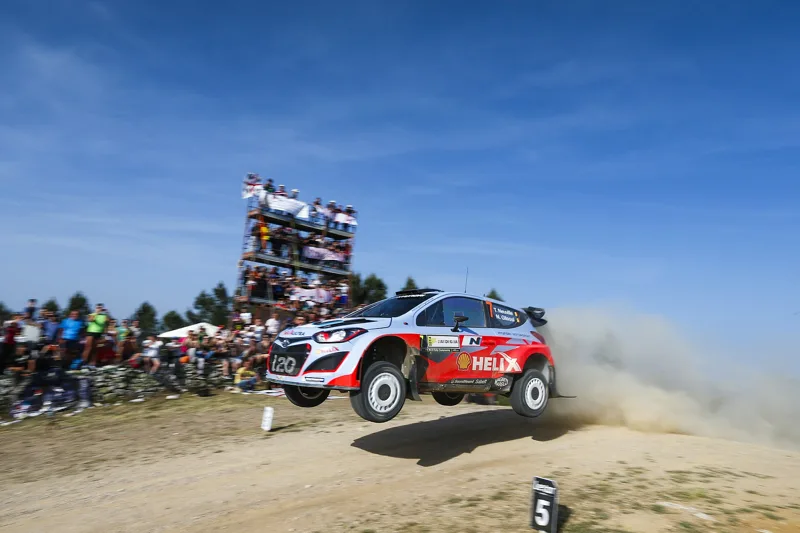
The first Rally1 cars competed in the 2022 season and replaced the World Rally Car, which had been the top specification from 1997 to 2021. They carried two big changes. One was hybrid electric power, used in the WRC for the first time. The other was subtler: Rally1 cars did not need homologating in Group A or N, and so had no series-production requirement. They were purpose-built competition cars, though they still had to be identifiable as based on a production model.
Other changes were aimed at simplicity and cost. Gearboxes dropped from six speeds to five, and the flappy-paddle shift was removed. The active central differential disappeared, liquid-cooled brakes were banned, the turbo was simplified, and the rear diffuser and some other aerodynamic parts were removed. The existing 386 PS 1.6-litre global race engine stayed.
Then came the hybrid. The system was supplied to every team by a third party and was used to run the cars in fully electric mode on liaison sections. On special stages it added as much as 100 kW (136 PS) of boost to the petrol engine, and it recovered energy under braking. Think of the driver choosing a map rather than pressing a button: there were three options for deploying the boost and three for recovering energy, all chosen before the stage, so the driver could not decide when within the stage to use the boost.
The unit added 84 kg to the car's gross weight and ran at 750 volts, which is why the cars wore HY identification on the door, white letters on a red background, and why crews had to carry high voltage gloves. In 2025 hybrid power was dropped, with teams concluding that mending damaged units cost too much.
How do Rally1 and WRC27 compare?
| Area | Rally1 (2022 to 2026) | WRC27 (2027 onwards) |
|---|---|---|
| Chassis | Tubular space frame or production shell, with a common safety cell designed with the FIA | Standard FIA-developed chassis with body panels fixed on |
| Engine and running gear | 386 PS 1.6-litre global race engine, hybrid unit until 2025 | Rally2-specification engine, suspension, running gear and brakes |
| Link to production cars | No series-production requirement, but must be identifiable as based on a production model | Bespoke designs allowed |
| Aerodynamics | Some parts removed, hidden cooling ducts banned | Optional WRC Kit aerodynamics package for Rally2 makers in 2027 and 2028 |
| Manufacturers' title | Manufacturers' championship | Renamed Constructors' championship |
| Who scores | Manufacturers must register and compete in every rally with Rally1 cars | Only makers with WRC27 cars score constructors' points |
What is Rally2, and what is the WRC Kit?
Rally2 matters because WRC27 borrows from it. The class was known as R5 until 2019, when it was renamed Group Rally2, and its rules were developed ahead of the 2012 season. Rally2 cars have a 1.6-litre turbo engine, four-wheel drive, with weight capped at 4.2 kg for each horsepower. They race in the WRC2 support championship and in many continental and national series.
These are cars with a production heritage. A Rally2 car is defined as a touring car or large-scale series production car with a supercharged petrol engine, and the base car must be a touring car of which at least 2,500 identical units have been built, homologated in Group A, with the Rally2 changes approved as an extension.
For the 2027 and 2028 seasons the FIA is also offering Rally2 manufacturers the option of a Rally2-WRC-Kit. It is an aerodynamics package and allows a 10 kg weight cut to 1220 kg, with the aim of bringing the cars closer to the performance of the new-generation Rally1 machines so that they can compete in the top category.
Who is building WRC27 cars?
Toyota Gazoo Racing was first to announce a new Rally1 build and began testing in 2026. Toyota is also due to change its entrant name to Gazoo Racing, a change that reflects a reshuffle of its racing divisions in several series, among them the WRC and the World Endurance Championship.
The surprise is Prospeed. The Belgian circuit racing team, mostly known for Porsches, announced its Project Rally One ambition in 2025 and began testing in 2026. It is the first constructor under the new rules with no past as a car builder, and in September 2026 it was first to publicly launch a car, though without a name. The design resembles a Porsche Macan road car, but neither the project nor the team receives official support from Porsche. Prospeed is set to enter selected rallies in 2027 with two Rally1 cars of its own construction.
A third constructor, WRT Rally1 Spain, was announced in April 2026. It is a collaboration between the Spanish company RMC Motorsport and the national motorsport federation RFEDA, and it is set to make its debut at the 2027 Croatia Rally.
M-Sport is retiring the Ford Puma Rally1. Its 2027 entry will be a kit car developed from the Fiesta Rally2 it already runs. Ford itself announced in October 2026 that it would return to the championship as a full factory team, partnering M-Sport to build a Rally1 for the 2029 season.
What does the 2027 WRC season look like?
The 2027 season is the 55th in the championship's history, and it is set to run to fifteen rounds that take in Europe, Africa, Asia and America. The plan is to open at Monte Carlo in January and close with Rally Saudi Arabia in November. A typical WRC season has 13 rallies, each made up of 15-25 special stages against the clock on as much as 350 km (220 mi) of closed roads.
Rallies are run against the clock, and the order of starting matters. Rally1 crews hold Priority 1 status and contest the stages first, WRC2 crews run immediately afterwards as Priority 2, and WRC3 crews follow as Priority 3. Any crew entering a WRC rally can score in the drivers' and co-drivers' championships, whatever its car class.
The support ladder beneath the top class is worth knowing. WRC2 is for Rally2 cars only, WRC3 is aimed at privateers with lower entry costs, and Junior WRC is an arrive-and-drive series over five events for drivers under 29, in Ford Fiesta Rally3 cars supplied by M-Sport.
The calendar has some notable changes. Portugal's round was left off even though it held a contract, a casualty of clashes with other events. Sardinia makes way for the Rally di Roma Capitale, planned as a tarmac event with Rome as its base. The championship heads back to the United States for the first time since 1988 with the Rally US, a gravel event expected to be based in Knoxville, Tennessee. It also returns to Britain for the first time since 2019, with the round moving from Wales to Scotland and its headquarters planned for Aberdeen.
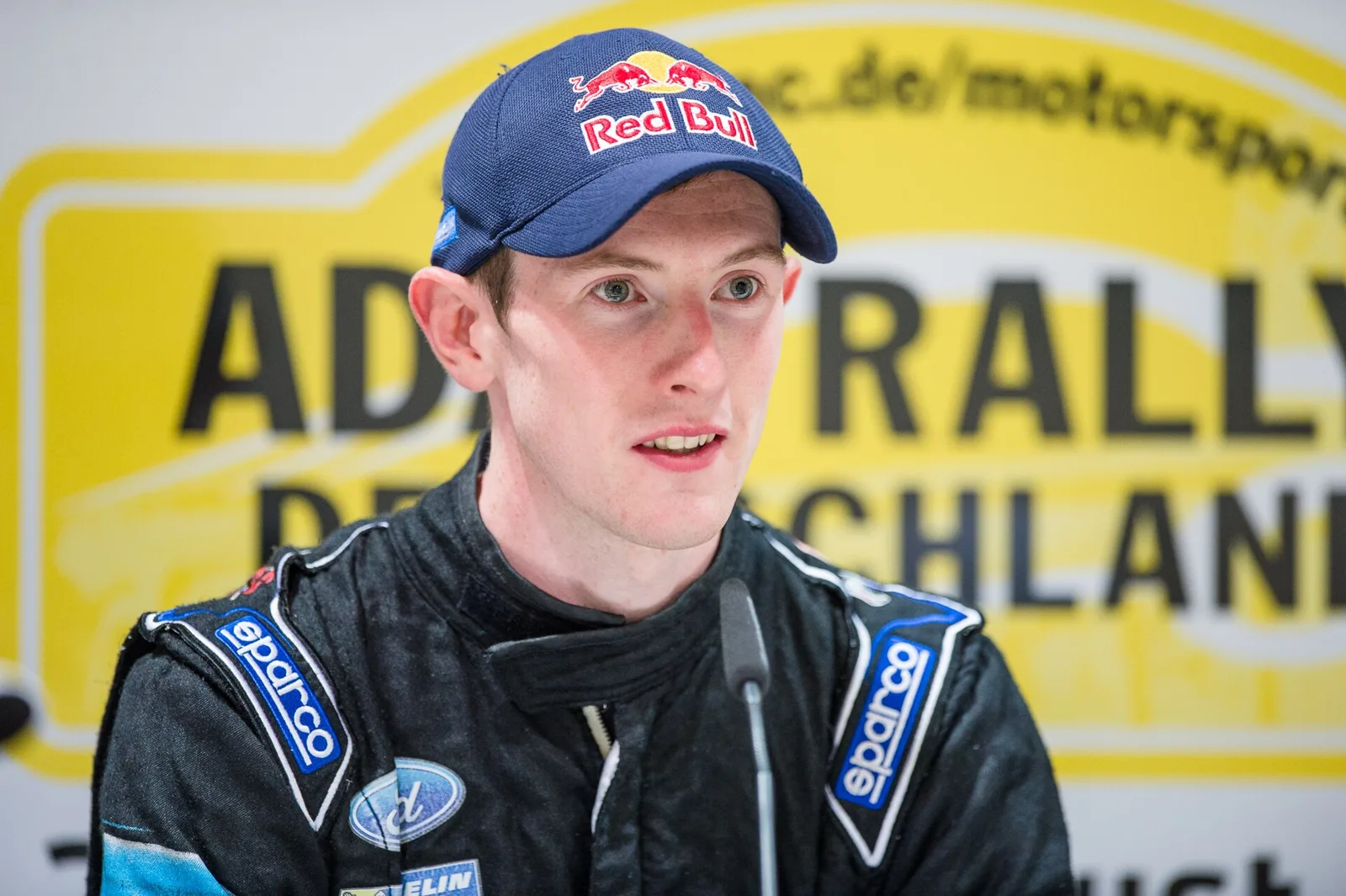
On the entry side, the reigning champions are Elfyn Evans and Scott Martin, who won the 2026 drivers' and co-drivers' titles at Rally Italia Sardegna, while Toyota hold the manufacturers' crown. Esapekka Lappi announced his retirement from professional rallying after the 2026 Rally Chile.
A short history of top-class rally rules
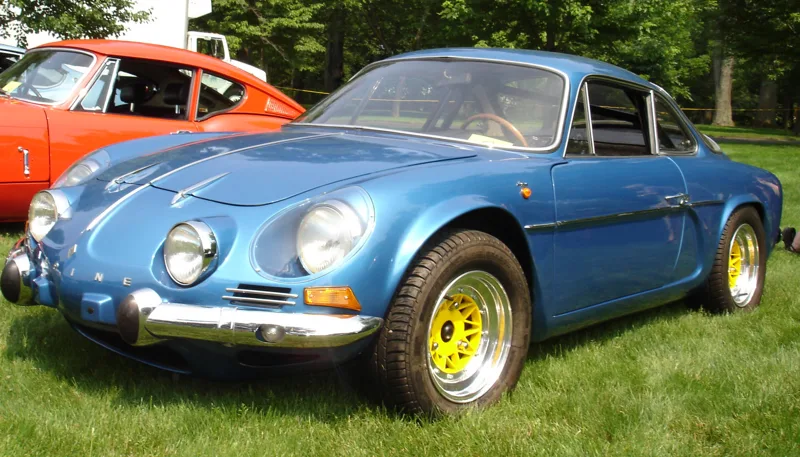
This is not the first time the rulebook has been torn up. The WRC began in 1973, and Alpine-Renault won the first manufacturers' title with the A110, followed by Lancia, whose Stratos was the first car designed and built specifically for rallying. Group B arrived in 1982 with almost unlimited power, and it was banned from 1987 after the 1986 season took a dramatic turn. Group A then became the standard until 1997, and Lancia took six manufacturers' titles in a row from 1987 to 1992. The World Rally Car rules replaced Group A in 1997 and lasted until Rally1 arrived in 2022.
What does this mean if you buy or drive a rally-bred car?
For road drivers the link is Rally2. Under WRC27 the top category borrows its mechanical hardware from cars that customers can buy from several manufacturers, and Rally2 has always required a production base of at least 2,500 identical cars. The new top-class cars, by contrast, are allowed to be bespoke, so the showroom connection that Rally1 kept alive on paper is no longer required.
The practical effect for a buyer is indirect. Rally2 cars still anchor the sport's cost and technology, and the WRC2 support championship runs on them. Anyone following a favourite make should watch which brands choose Rally1 builds, which choose the WRC Kit route, and which do not appear at all.