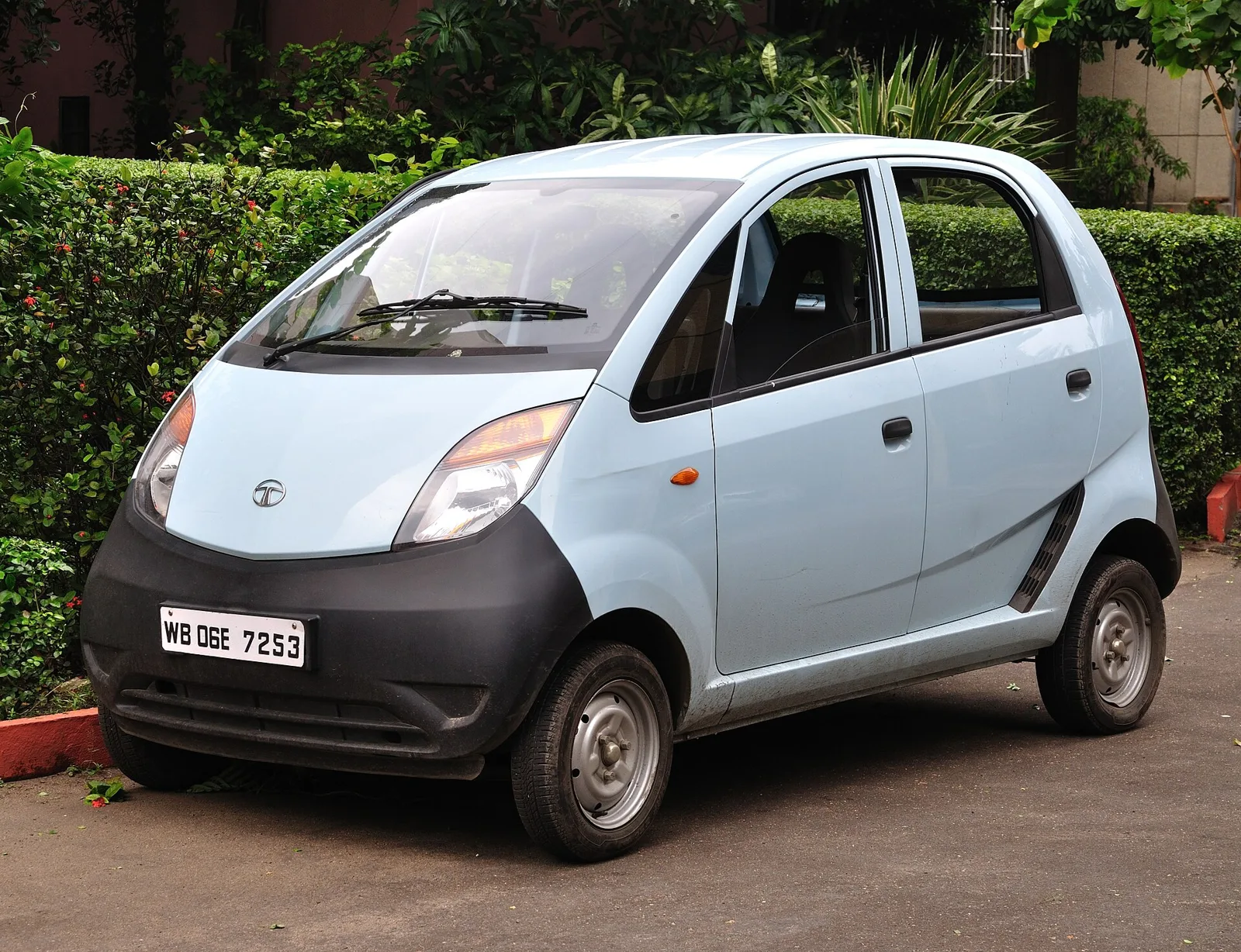
A rear-engined city car launched at 100,000 rupees, loaded with cost cuts, hit by fires and crash-test results, and gone from production by 2018.
The Tata Nano was a rear-engined city car built by Tata Motors from 2008 to 2018 and launched at 100,000 rupees as the lowest-priced production car in the world. It never reached the 250,000 annual sales Tata projected, and production ended in 2018 with no direct successor.
Tata Motors planned to build 250,000 Nanos a year. The best year it ever managed was 74,527, and by June 2018 the plant at Sanand assembled exactly one.
The Nano was meant to put a family on four wheels at a price within reach of motorcycle riders, an idea that Ratan Tata conceptualised and spearheaded. How the car was stripped back to hit its price, and what went wrong between the showroom and the factory gate, is the story of this attempt at the cheapest car in the world.
What was the Tata Nano?
The Nano was a city car manufactured and sold by Tata Motors from 2008 to 2018, mainly in India, where it was aimed at people who rode motorcycles and scooters. The engine sat at the back and drove the rear wheels. The first cars were four-door saloons with no opening at the rear for luggage, and a five-door hatchback joined the range in 2015.
The Nano followed a smaller success. After launching the low-cost Tata Ace truck in 2005, the company began work on an affordable passenger car for the many Indians who rode motorcycles. Some promotional material labelled the result "The People's Car".
Tata planned 250,000 Nanos a year; its best year was 74,527, and in June 2018 it built one.
Ratan Tata and the Nano
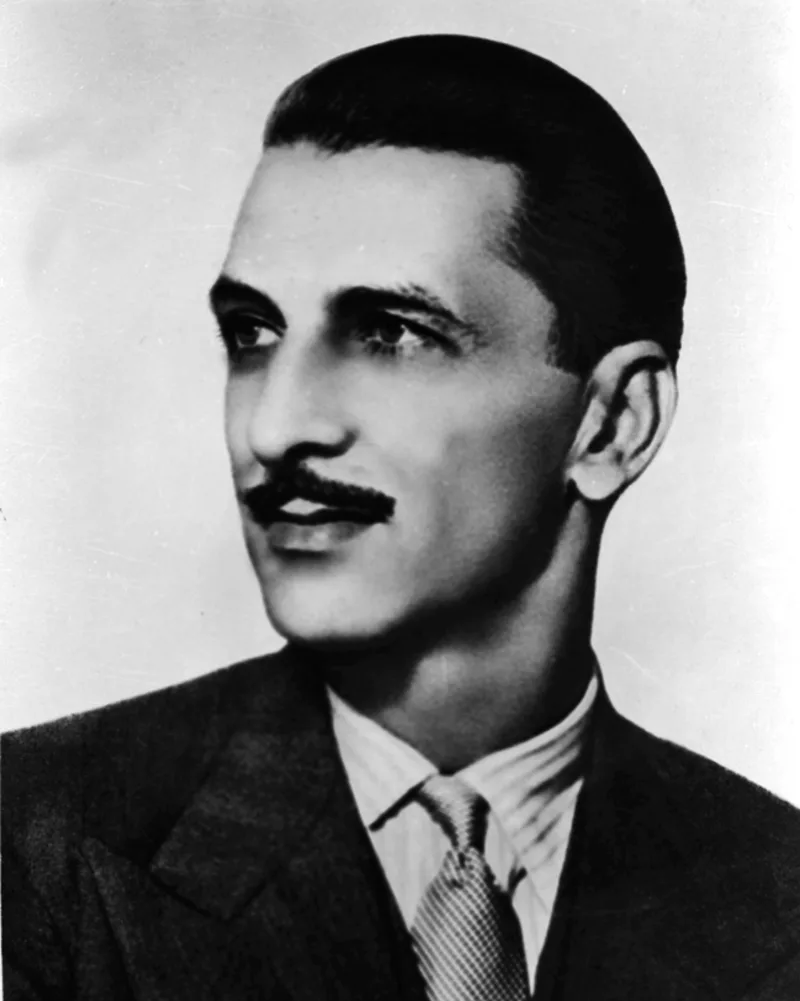
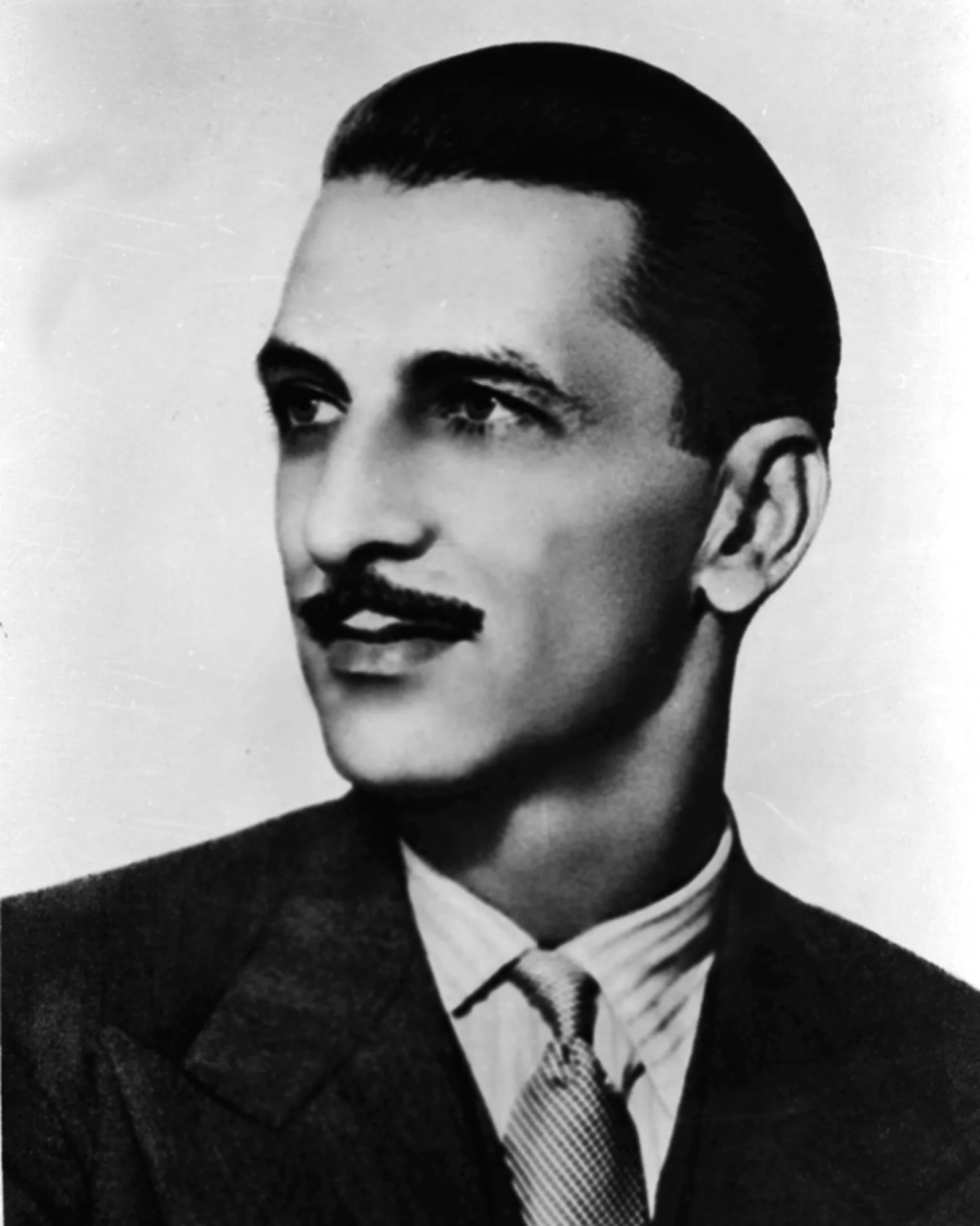
Ratan Tata, who died on 9 October 2024, chaired Tata Sons and the Tata Group from 1991 to 2012. He conceptualised and drove the Nano project after the diesel Tata Indica had done well, a car that helped bring ownership within reach of the average Indian consumer.
His record at the group was one of expansion abroad. Over the 21 years he led it, revenue grew more than 40 times and profit more than 50 times, with acquisitions that included Tetley, Jaguar Land Rover and Corus. He stepped back from executive duties on 28 December 2012, on turning 75, though he returned as interim chairman from October 2016 to February 2017.
In July 2012, shortly before he retired, he said the Nano had immense potential in the developing world, and admitted that early opportunities had been wasted because of initial problems.
Tata Nano price: from 100,000 rupees to 215,000
Billed as the cheapest production car anywhere, the Nano carried a launch price of 100,000 rupees, or one lakh. That was worth roughly US$2,000 to US$2,500 at the time, and only the very first customers paid it. By 2017 the basic car started at around 215,000 rupees (US$3,400), and rising material costs may be to blame.
Even at the original figure, the Nano was cheap by car standards but still high set against what an Indian factory worker or farmer earns on average. The comparisons that circulate are instructive. A Mexican-built Volkswagen Beetle was priced at US$5,300 in 1990, about US$13,061 in 2022 money, and the Ford Model T started at roughly US$850, equal to US$30,458 in 2022. The Nano's price was only just above the inflation-adjusted cost of the 1910s Briggs & Stratton Flyer, which sold for US$125 (US$1,767 in 2016) but is arguably more a go-kart than a car.
How Tata built the cheapest car in the world
The price came down by dispensing with most nonessential features, using less steel and relying on low-cost Indian labour. The cuts were physical and visible. The Nano had a wing mirror on the driver's side only, a single wiper blade, three lug nuts on each wheel and a fuel tank with no filler cap.
The engine was a two-cylinder, 624 cc petrol unit at the back of the car. Tata described it as the first two-cylinder petrol car engine to be paired with a single balancer shaft. In its 2012 form it made 38 PS (28 kW; 37 hp) and complied with Bharat Stage 4 emissions rules, roughly the equivalent of Euro 4. The development work led to 31 design patents and 37 technology patents.
Singur, Sanand and a delayed start
Tata announced in 2006 that the Nano would be built in Singur, in West Bengal. Local farmers soon began protesting against what they described as the forced acquisition of their land for the factory. Tata first delayed the launch and then decided to build the car in another state, Gujarat. The relocation to Sanand cost time, and delays during the move are among the reasons cited for the slide in sales.
Expectations that outran the showroom
The hopes for the car were out of proportion to what happened. A 2008 study by the Indian rating agency CRISIL projected that the Nano would expand the national car market by 65 percent. Used car prices fell by 25 to 30 percent before the launch, and sales of the nearest rival, the Maruti 800, dropped 20 percent immediately after the Nano was unveiled.
The buyers did not follow. By late 2012, news reports were describing an underwhelming response, and Tata's own figures show the pattern.
Tata Nano sales by financial year
| Financial year | Units sold |
|---|---|
| 2009-2010 | About 30,000 |
| 2010-2011 | 70,432 |
| 2011-2012 | 74,527 |
| 2012-2013 | 53,848 |
| 2013-2014 | 21,129 |
| 2014-2015 | 16,903 |
| 2015-2016 | 21,012 |
| 2016-2017 | 7,591 |
| 2017-2018 (April to October) | 1,502 |
Why the small car struggled to sell
Several things worked against it. The factory relocation caused delays. Early cars caught fire. And the aggressive cost cutting left the Nano with a reputation for being unsafe and short on quality.
Indian buyers gave it a mixed reception. For some it was still too expensive compared with a motorcycle, and delivery involved a wait of a few months. There was also a social problem. Although the Nano was the most affordable car on sale, a more expensive second-hand car signalled higher status, and the Nano came to be seen as a poor man's vehicle, which turned some customers away.
The project lost money, according to the former Tata Sons chairman Cyrus Mistry and to Tata Motors management in 2017.
The fires and the warranty
There were reports of several fires involving the Nano. The company denied that they were connected to the car's design or parts, and pointed instead to "foreign electrical equipment" sitting on the exhaust. The company offered to refit the exhaust and wiring, yet declined to recall the cars. In early December 2010 it extended the warranty, including on cars already sold, from 18 months to four years.
Tata Nano crash test: what Global NCAP found
In 2014 Global NCAP crash-tested an Indian-market Nano at the ADAC facility in Germany, as part of its Safer Cars for India project, using a 64km/h frontal impact into an offset deformable barrier. It also ran the car in the UN R94 configuration. Tata had said publicly that a Nano built for Europe had passed R94 and that it expected a four-star Euro NCAP result.
The Indian car did not match that. It failed R94 and earned no stars at all for adult or child occupant protection. It carried no airbags, not even for the driver, and no ABS. During the 64km/h test, the passenger compartment became unstable, and Global NCAP recorded very high intrusion of the steering column and of the A-pillar at waist level, which it said put the driver's head, neck and chest at high risk of life-threatening injury.
The rear seats had only static two-point belts, and none of the child seats sold in India passed the installation check. Global NCAP therefore judged the Nano unsuitable for carrying children safely, and it earned zero points in every area of the child assessment.
GenX Nano: the 2015 relaunch
In May 2015 Tata tried to revive the model with changes inside and out, and renamed it the GenX Nano. The range grew to 21 versions, including a five-speed automated manual gearbox. Top models offered electric power steering, air conditioning and a Bluetooth radio, along with new colours and alloy wheels.
Tata stiffened the body and altered both bumpers, which stretched the length slightly to 3,164 mm. The interior received new fabrics and better soundproofing, and the car gained a rear hatchback and approval for five seats. The engine was unchanged: the two-cylinder 624 cc (38.1 cu in) unit with 38 hp.
Tata Nano electric, CNG and other versions
The Nano was a petrol car. Several variants were proposed, and most never reached production.
In 2007, Tata Motors signed an agreement with Motor Development International, a French company, for a compressed-air Nano. The car was supposed to travel about 200 km (120 mi) on US$3 of electricity used to compress the air, but in late 2009 Tata's vice-president of engineering systems confirmed that range was still a problem.
For a Tata Nano electric, the company showed an electric car at the 2010 Geneva Motor Show, but it never came to market. The expectation had been a highly affordable electric car with lithium-ion batteries and a range of 80 miles (130 km), with the Norwegian specialist Miljobil Grenland AS named as a proposed partner. A different electric car did arrive: the Jayem Neo EV, built by Jayem Automotives for fleet operators such as Ola. Only 400 were made before it was discontinued.
The Nano CNG emax went on sale in October 2013 as a bi-fuel car running on petrol or compressed natural gas. It was aimed at Delhi, Lucknow and parts of Maharashtra, wherever fuel outlets stocked CNG. On gas it made 33 horsepower and 45 Nm, and the CNG tank held 32 litres.
At the far end of the range was the Super Nano. At the Autocar Performance Show in December 2014, JA Motorsport of Coimbatore unveiled a 1.3-litre, 230 hp Nano under that name, complete with a body kit, slicks, a bolt-on cage, carbon-fibre parts, Recaro seats and paddle shifters on the steering wheel.
A more upmarket concept, the Nano Europa, appeared at Geneva in 2009, but nothing came of it in production or marketing.
Recognition and the end of production
The car won plenty of praise from judges. In 2010 it was Indian car of the year from Business Standard Motoring and car of the year from Bloomberg UTV-Autocar, took first place in the transportation category of the Edison Awards and won a Good Design Award. It was named India's Most Trusted hatchback in the Brand Trust Report in 2014.
In 2017 Tata Motors said building would carry on, citing an emotional attachment to the car, but production was halted in 2018. In June 2018 only a single Nano was assembled, against 275 in June 2017, and dealers had stopped placing orders. Tata Motors confirmed that production was over, with no direct successor.
Where the Nano story goes next
The Sanand plant moved on to other hatchbacks, notably the Tiago and Tigor. Sanand has since started turning out the Tigor Electric as well, and Tata described that car as a way to "fast-forward India's electric dream". The Nano itself has no direct successor.